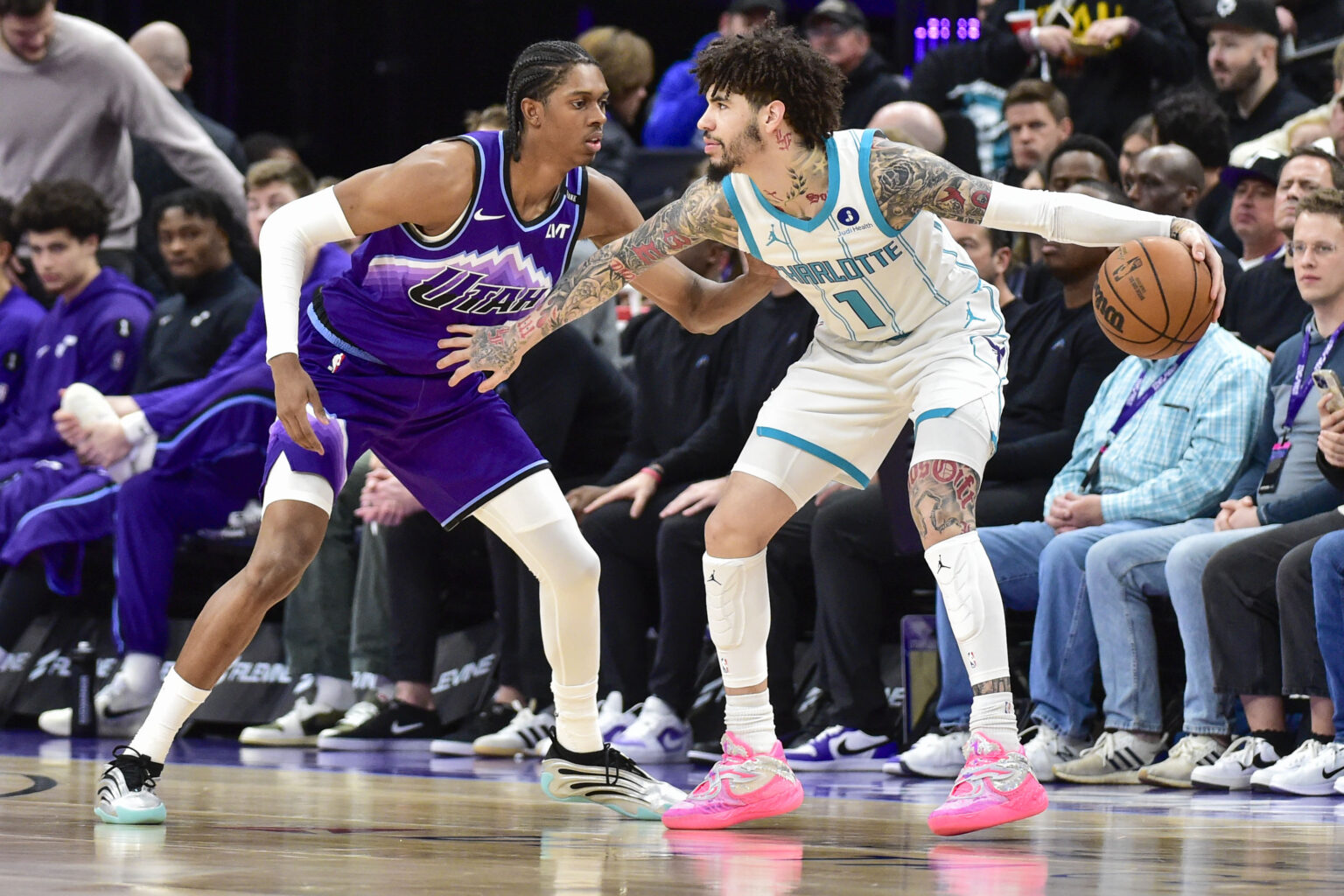
What unfolded in Charlotte on Friday night barely resembled a competitive NBA game. By the time the Hornets jogged into the locker room at halftime, the outcome was already decided, the margin stretched to a staggering 47 points, and the Utah Jazz looked like a team searching for answers that simply weren’t there.
Charlotte raced out to a historic offensive night and never took its foot off the gas, cruising to a 150-95 demolition that felt lopsided almost from the opening tip. The Hornets scored at every level, dominated the glass, and turned missed Jazz shots into instant offense the other way.
Utah never recovered from the early avalanche, falling behind by as many as 57 points while shooting under 25% from three and getting overwhelmed physically. Charlotte, meanwhile, looked loose, confident, and ruthless, piling up one of the most explosive performances the league has seen this season.
Charlotte’s First Half Was Over Before It Began
From the opening possessions, it was clear Utah wasn’t ready for the pace Charlotte intended to play. The Hornets pushed after every miss, swung the ball side-to-side, and forced the Jazz into defensive rotations they couldn’t complete. By the time the game found any rhythm, the margin had already ballooned into something unmanageable.
Charlotte’s shooting efficiency told part of the story, 53 made field goals and 24 threes, but the real separation came from how easily those looks were generated. The Hornets finished with 35 assists and only 13 turnovers, while Utah struggled to even get organized offensively. The 47-point halftime deficit didn’t feel fluky; it felt inevitable given how one-sided the execution was.
LaMelo Ball Controlled The Game Without Forcing It
LaMelo Ball’s stat line won’t jump off the page compared to some of his bigger scoring nights, but this game never required that version of him. He scored 17 points on 5-of-12 shooting, knocked down five triples, and handed out five assists, all while keeping the offense humming without pressing.
What stood out most was his restraint. Ball didn’t force shots early, didn’t try to extend the lead on his own, and instead let the game come to him. When Utah sagged, he pulled. When they chased shooters, he attacked gaps. His +37 plus-minus reflected how thoroughly Charlotte controlled things whenever he was on the floor.
The Hornets Won The Physical Battle By A Landslide
The rebounding margin wasn’t just wide, it was demoralizing. Charlotte finished with 65 rebounds to Utah’s 31, including 21 on the offensive end. That meant missed shots didn’t matter, because second and third chances kept coming.
Moussa Diabate and Ryan Kalkbrenner repeatedly extended possessions, while wings like Miles Bridges and Brandon Miller crashed down to clean things up. Utah simply couldn’t finish defensive stops, and over time that wore them down. Extra possessions turned into kick-out threes, dump-off finishes, and easy put-backs that kept the lead growing.
Utah Had No Answer For Charlotte’s Bench
Charlotte didn’t coast once the starters sat. The second unit came in aggressive and played as if the game were still up for grabs. Tre Mann was the spark, pouring in 20 points on 7-of-10 shooting in just 12 minutes, including four threes that kept the crowd engaged.
Grant Williams and Collin Sexton added physicality and downhill pressure, and even the deeper rotation players stayed connected defensively. The Hornets’ bench didn’t simply maintain the lead, it stretched it. Utah’s reserves never found the same cohesion, and whatever slim chance existed of a run disappeared quickly.
The Jazz Looked Overwhelmed From The Opening Minutes
For Utah, this was a long night with very few bright spots. The Jazz shot just 40.9% overall and a rough 22.6% from three, numbers that reflected both poor shot-making and rushed decision-making. Turnovers piled up, spacing disappeared, and defensive communication broke down early.
Even the players who scored did so in isolation rather than flow. Brice Sensabaugh’s 26 points came without shifting momentum, and Isaiah Collier’s playmaking couldn’t compensate for how often Utah was scrambling defensively. The Jazz trailed for virtually the entire night, and by the fourth quarter, the outcome had long since been decided.