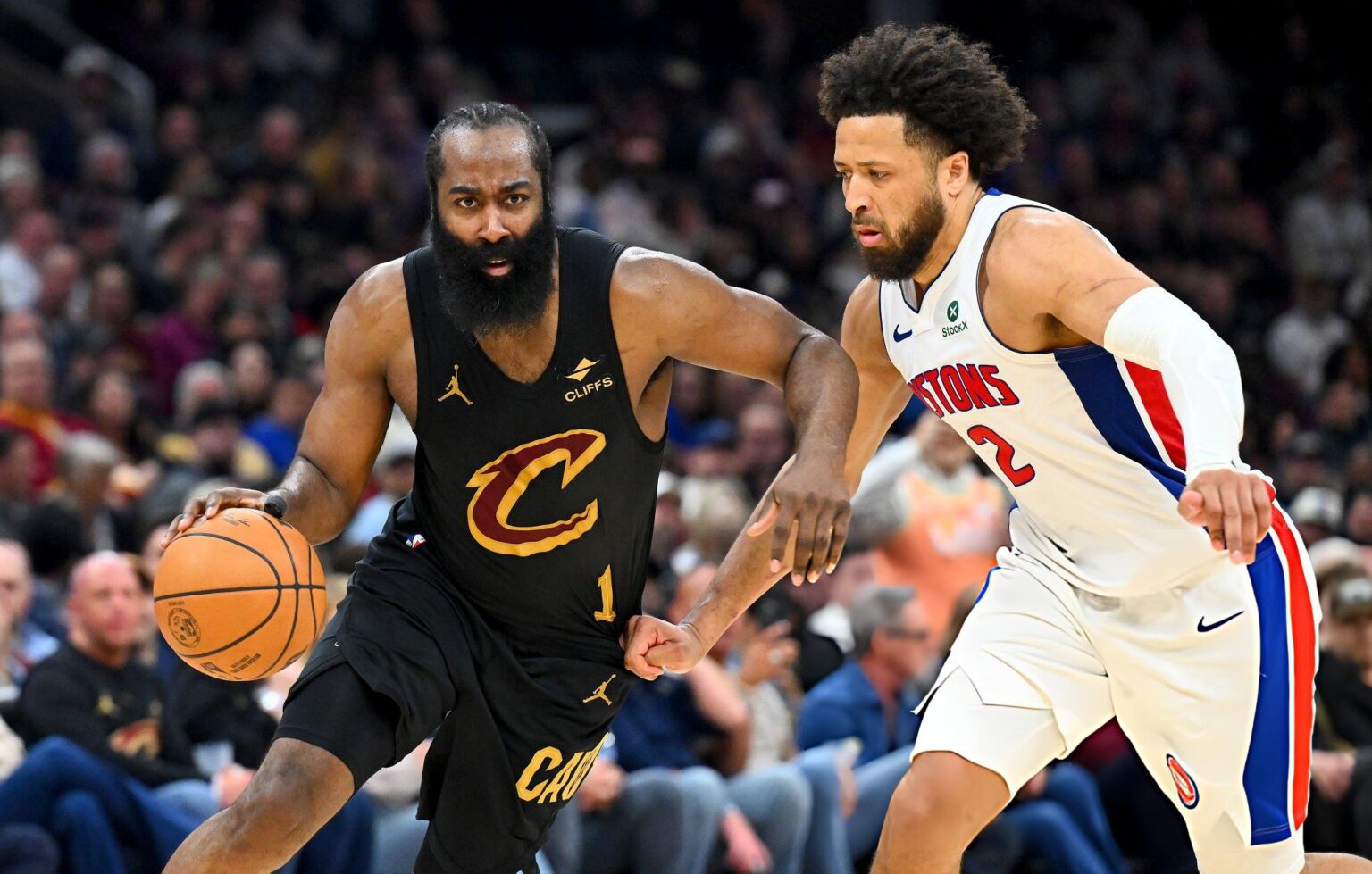
After both survived Game 7s, the Pistons and Cavaliers meet in the Eastern Conference semifinals. The Pistons enter as the No. 1 seed after a 60-22 regular season, while the Cavaliers arrive as the No. 4 seed after finishing 52-30. Game 1 is Tuesday, May 5, at Little Caesars Arena, where the Pistons went 31-9 during the regular season. The Cavaliers went 25-16 on the road, so this is not a soft opening for either side.
The Pistons reached this point by completing a 3-1 comeback against the Magic. Cade Cunningham had 32 points and 12 assists in Game 7, Tobias Harris added 30 points, and Jalen Duren had 15 points and 15 rebounds in a 116-94 win. It was the Pistons’ first playoff series win in 18 years, and they became the 15th team in NBA history to come back from a 3-1 deficit.
The Cavaliers had their own test, beating the Raptors 114-102 in Game 7. Jarrett Allen controlled the game with 22 points and 19 rebounds, while Donovan Mitchell also scored 22 points and James Harden added 18. The Cavaliers needed a second-half push after trailing earlier, and that matters here because the Pistons are stronger, bigger, and more physical than the Raptors were.
The regular-season series was split 2-2, so there is no easy read from the head-to-head sample. The Cavaliers won the first meeting 116-95, the Pistons answered with a 114-110 road win, and the later games stayed tight enough to suggest this series can become more about matchups than seed lines.
Injury Report
Pistons
Kevin Huerter: Questionable (left adductor strain)
Cavaliers
No players listed.
Pistons Analysis For The Series
The Pistons have the stronger overall case because they own the best defensive identity in the series. During the regular season, they allowed 97.7 points per game, far better than the Cavaliers’ 110.1. They also averaged 10.4 steals and 6.4 blocks, which shows how much pressure they put on the ball and at the rim. That is the first real test for a Cavaliers offense that has more shot creation but can get loose with the ball.
Cunningham is the center of everything. He averaged 23.9 points, 5.5 rebounds, and 9.9 assists during the regular season, and his first-round finish was elite. He had 45 points in Game 5 to keep the Pistons alive, then followed with 32 points and 12 assists in Game 7. That is the version the Pistons need against the Cavaliers. Not just scoring, but total control.
The matchup issue for the Pistons is that the Cavaliers have more guards who can create. Mitchell averaged 27.9 points, 4.5 rebounds, and 5.7 assists while shooting 48.3% from the field and 36.4% from three. Harden averaged 23.6 points, 4.8 rebounds, and 8.0 assists. That is a very different challenge from the Magic, who leaned heavily on Paolo Banchero after Franz Wagner went down.
The Pistons’ answer has to be size and discipline. Ausar Thompson, Harris, and Duren give them length across multiple positions. Thompson can take the toughest perimeter assignment. Harris can punish switches and steady the offense. Duren can make the Cavaliers feel every miss. If the Pistons defend without fouling, they can shrink the floor and force the Cavaliers into late-clock jumpers.
Duren is especially important because the Cavaliers’ frontcourt can be punishing. Duren averaged 19.5 points, 10.5 rebounds, and 2.0 assists during the season, and his Game 7 double-double against the Magic was his best game of the series. The Pistons need him to hold up against Allen and Evan Mobley without getting into early foul trouble. If he does, the Pistons can keep their defensive structure clean.
The biggest concern for the Pistons is shooting. Their defense can carry them, but the Cavaliers will test their half-court offense. If Cunningham is the only reliable creator for long stretches, the Cavaliers can load up with Mobley, Allen, Dean Wade, and bigger wings. Harris’ Game 7 was a strong sign, but the Pistons need enough spacing from Duncan Robinson, Daniss Jenkins, and possibly Huerter if he is cleared.
Cavaliers Analysis For The Series
The Cavaliers have a real path because they have more proven shot creation. Mitchell and Harden can both run pick-and-roll, both can create late-clock looks, and both can punish defensive mistakes. That is important against a Pistons team that will try to win games in the mud. If the Cavaliers can keep the pace controlled and make shots early, they can take pressure off their frontcourt.
Mitchell is the obvious swing. His Game 7 line against the Raptors was not explosive, but it was steady enough. He had 22 points on 9-of-20 shooting, and the Cavaliers won because Allen controlled the paint and the third quarter changed the game. Against the Pistons, Mitchell has to get deeper into the lane. If Thompson or Cunningham keeps him outside the paint, the Cavaliers’ offense becomes too dependent on tough pull-ups.
Harden gives the Cavaliers another layer. He averaged 23.6 points, 4.8 rebounds, and 8.0 assists this season, and he can punish the Pistons if they overhelp on Mitchell. The key is shot quality. Harden cannot settle for step-back threes early in the clock. He has to get Allen and Mobley touches near the rim, force rotations, and create corner threes.
The Cavaliers’ frontcourt gives them the clearest matchup advantage. Mobley averaged 18.2 points, 9.0 rebounds, and 3.6 assists, while Allen averaged 15.4 points, 8.5 rebounds, and 1.8 assists on 63.8% from the field. That is a lot of size, efficiency, and rim pressure. The Pistons have Duren, but they do not want him defending every high-value action for 40 minutes.
The problem is defense. The Cavaliers had a 115.1 defensive rating in the regular season, while the Pistons were at 109.7. That gap is not small. The Cavaliers can score enough to win this series, but if they cannot contain Cunningham without sending constant help, the Pistons will find enough offense through rebounds, cuts, and free throws.
The Cavaliers also cannot lose the possession battle. The Pistons are too good at creating extra chances. They force turnovers, they rebound, and they can turn ugly games into an advantage. If the Cavaliers give up live-ball turnovers to Thompson and Cunningham, they will spend the series playing against a set defense on one end and transition pressure on the other.
Key Factors
Ausar Thompson is the best defensive swing piece in the series. He averaged 9.9 points, 5.7 rebounds, and 3.1 assists during the regular season while shooting 52.5% from the field. His scoring is not the main point. His value is in the way he can defend Mitchell, switch onto Harden, crash the glass, and create open-floor chances.
The Pistons had a plus-7.8 net rating with Thompson this season, and that tracks with how they win. He gives them athletic chaos without needing touches. Against the Cavaliers, that chaos has to be controlled. If Thompson fouls jump shooters or gets ignored in the half-court, the Cavaliers will live with him. If he turns defense into offense, he can tilt the series.
Tobias Harris may be the Pistons’ most important offensive stabilizer after Cunningham. His regular-season line of 13.3 points, 5.1 rebounds, and 2.5 assists does not jump off the page, but Game 7 showed why his role matters. Harris had 30 points against the Magic and became part of the Pistons’ first 30-point playoff duo since 1977.
The Cavaliers will send size at Cunningham. Harris has to punish that. If he hits catch-and-shoot threes, attacks closeouts, and creates from the mid-post, the Pistons become much harder to defend. If he is passive, the Cavaliers can overload toward Cunningham and live with the rest.
Evan Mobley is the Cavaliers’ best defensive answer to the Pistons’ size. He has the length to bother Duren, the mobility to switch in space, and enough offensive skill to attack from the elbows. His 18.2 points, 9.0 rebounds, and 3.6 assists show how much he can do without needing every possession called for him.
Mobley has to be more than a helper in this series. The Cavaliers need him to score when the Pistons trap Mitchell or shade help toward Harden. If Mobley catches at the nail and makes quick reads, the Cavaliers can beat pressure. If he hesitates, the Pistons will recover and turn possessions into late-clock problems.
Jarrett Allen enters the series with momentum after a 22-point, 19-rebound Game 7 against the Raptors. That performance was not just a box-score game. It was the reason the Cavaliers survived. He dominated the third quarter, and the Cavaliers used that stretch to pull away.
Allen’s matchup with Duren is one of the series’ core battles. If Allen wins the glass, the Cavaliers can control tempo and protect their defense. If Duren wins it, the Pistons will turn missed shots into offense. Allen does not need to score 20 every night, but he has to make Duren work on every possession.
Series Prediction
This feels like a long series because both teams arrive with real strengths and real flaws. The Cavaliers have more proven shot creation, and Mitchell or Harden can win a game with tough scoring. Their frontcourt is also good enough to challenge Duren directly. But the Pistons have the better defense, home-court advantage, and the best two-way structure in the matchup. Cunningham is playing like a true playoff engine, and the Pistons just survived the kind of pressure that can harden a young team fast.
The Cavaliers will make this uncomfortable, especially if Mitchell gets downhill and Mobley wins his inside battle. Still, the Pistons’ defense, rebounding, and home-court edge should carry them. My read is that the Pistons win two ugly games, the Cavaliers win two shot-making games, and Cunningham closes the series at home.
Winner: Pistons in 7