The Dallas Mavericks are undergoing some major organizational changes this offseason. The Nico Harrison era is truly over six months after the organization fired him, with Anthony Davis traded, Jason Kidd fired, and Masai Ujiri now running the franchise as their newly-appointed Team President.
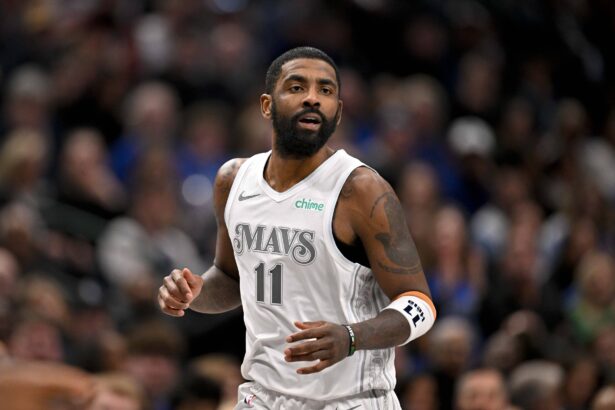
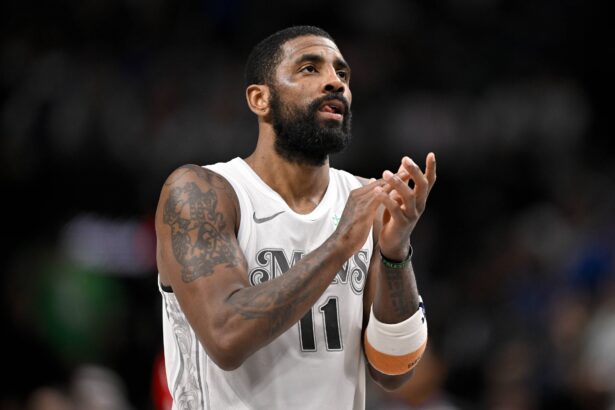
The franchise’s only focus now is building around Cooper Flagg, with Ujiri making it clear that the team won’t be looking to aggressively push to win now at the expense of sensible team-building. This has made everyone question Kyrie Irving’s future with the franchise, as the 34-year-old guard might prefer being on a win-now team instead of taking the future-oriented approach Ujiri’s Mavs are planning.
As a result, Bleacher Report’s Zach Buckley has suggested an interesting trade where the Charlotte Hornets make a win-now move by acquiring Irving and the No. 9 pick in a trade for the No. 14 and No. 18 picks in the 2026 Draft.
Charlotte Hornets receive: Kyrie Irving, No. 9 pick
Dallas Mavericks receive: LaMelo Ball, No. 14 pick, No. 18 pick
This is a wild trade scenario, but let’s take a deeper look at the feasibility of this deal and how it impacts both franchises going into the 2026-27 NBA season and beyond.
Hornets Take A Huge Risk To Break Their Playoff Drought
The Hornets have come close to breaking their 10-year Playoff drought in the six years LaMelo has led the franchise, but they haven’t cracked the code just yet. The Hornets likely could just progress with their young core featuring Kon Knueppel and Brandon Miller, also, and make the Playoffs next season, but a trade for someone like Kyrie ($39,491,282) would indicate something else entirely.
Irving averaged 24.7 points, 4.8 rebounds, and 4.6 assists in his last full season in 2024-25 before tearing his ACL in March 2025. He is the easiest star guard to fit into an already-existing competitive core, given his versatility as a combo guard.
Despite his size, Irving has usually been a positive defender and is one of the most lethal scorers in the NBA. Even assuming he’s not going to be the same player as the one we saw before his ACL tear, Irving still promises to be a 50-40-90 caliber scorer who can either lead as a No. 1 option or adjust to let others shine.
Irving is a proven winner and a former NBA Champion who has been heralded as a fantastic locker room influence over his time with the Mavericks. Bringing those habits to a Hornets franchise that hasn’t had any winning success over almost 30 years, with a strong roster around Kyrie, might yield tremendous short and long-term benefits for the franchise. Miller can likely take a step up as a true No. 1 option, while Knueppel can continue developing his game outside of just being a corner shooter.
Acquiring the No. 9 pick could allow the Hornets to select someone like Aday Mara to fulfil their long-term needs at center, with Mara unlikely to be available at No. 14. The Mavericks can move down the lottery to select a comparable talent, potentially a long-term development prospect, alongside another player at No. 18 give Ujiri’s strong history at developing players.
The Mavericks Put Their Long-Term Duo In Place
With the Hornets having a successful season, with other stars like Miller and Knueppel also having breakout seasons, it’s proven to many that Ball ($40,770,520) might not be the No. 1 option everyone assumed he would be. He averaged 20.1 points, 4.8 rebounds, and 7.1 assists last season, with the team’s success coinciding with Ball becoming more of a pass-first guard. If he can continue performing as a star-level No. 2 option, he would be the perfect guard to put next to Flagg.
Ball’s playmaking will help Flagg get easier opportunities, while also giving their offense the kind of structure a pass-first point guard can. While Ball is not Doncic, he can replicate many of the elements of what made Dallas’ offense so successful when Luka was running the franchise. Even if Ball can’t be as productive or game-changing as Doncic, he would have Flagg next to him to be the true leader of this squad.
This deal might allow the Mavericks to keep an eye on the future while improving enough to make a Playoff run next season. The Mavericks don’t control their own draft picks between 2027 and 2030, so they have no inherent incentive to tank. Pairing Ball with Flagg and a forward-heavy Mavericks roster might bring out the best in everyone.
Outside of Brayden Burries, there really is no target the Mavericks could select at No. 9 and hope to make an immediate impact on the franchise. Moving down a couple of spots to open up room to select some of the high-potential players with low floors as developmental prospects might work well.
Is This Worth It?
No.
If the Hornets want to trade Ball’s upside at age 24, they wouldn’t do it for a player like Irving. There’s no guarantee they get the same version of Irving we’ve seen in Dallas, both on and off the court.
Irving’s knee might require him to take some time to adjust to full-speed NBA basketball again, especially in identifying how differently he needs to operate now after his injury. Doing that on a rebuilding Mavericks squad where he’s beloved in the locker room and will have their support makes a lot more sense than doing it on the Hornets after they traded away their franchise cornerstone for you.
This deal does serve the Mavericks a lot more than the Hornets. Even if Ball winds up being a bad fit, he’s young and valuable enough to be traded for someone else before Flagg’s rookie contract is up. If Irving doesn’t excel at the Hornets, he’ll likely be hamstrung in his contract extension negotiations and be forced to enter free agency with an uncertain future. This deal doesn’t make sense primarily because Irving could leave Charlotte after one season if he wanted to, while Ball is under contract till 2029.
It’s best if both teams stick with what they have instead of trading franchise cornerstones to move up a few spots at the bottom of the Draft lottery.