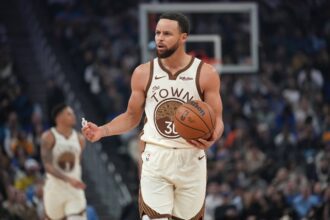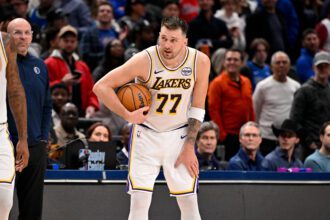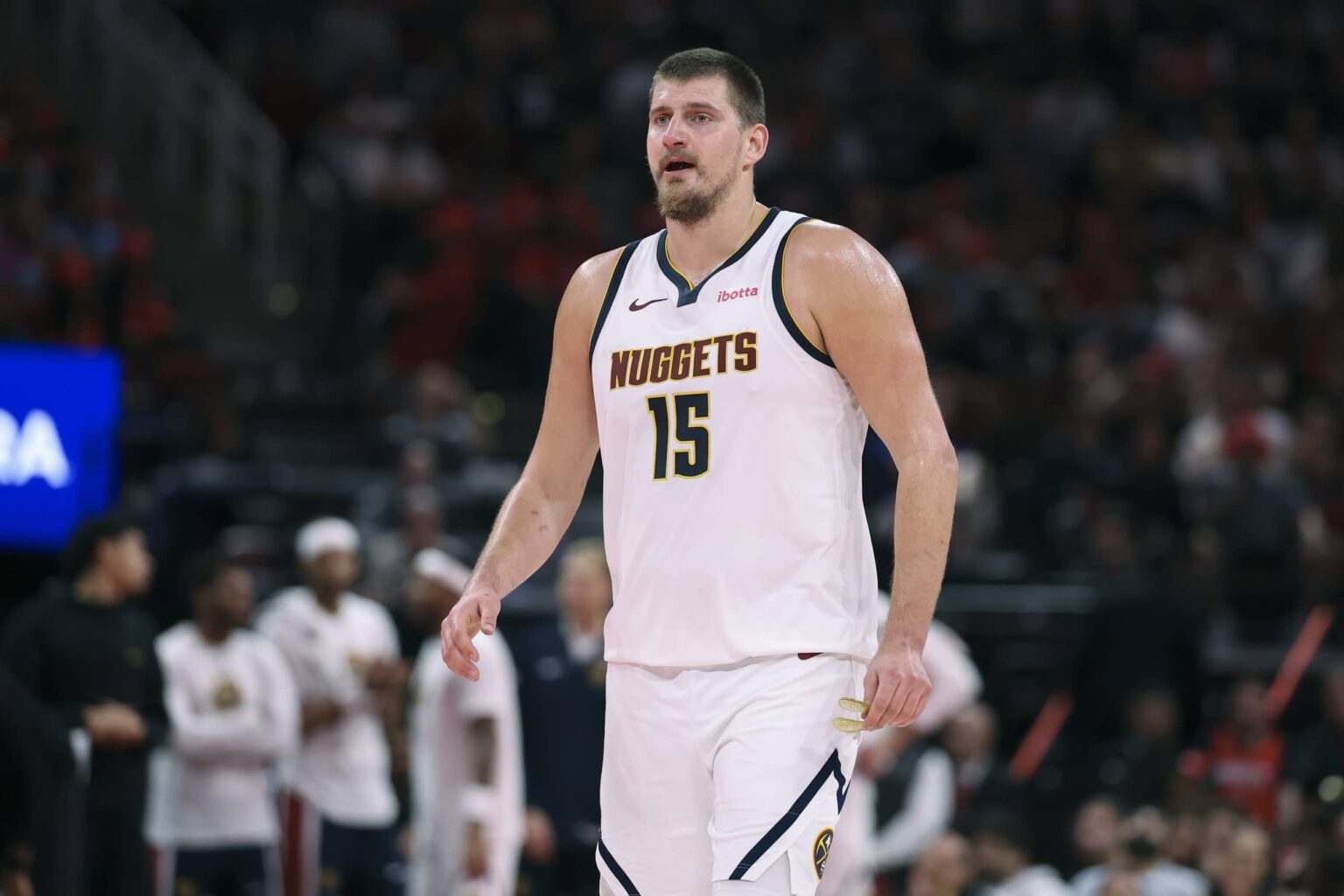
The NBA season has hit its most defining stretch. The trade deadline is done, rotations are tighter, and the All-Star break has sharpened the focus on who is actually driving wins. The league’s top tier is also unusually fluid this year, with the MVP race still live and team hierarchies shifting week to week. Shai Gilgeous-Alexander has held the top spot on the NBA’s MVP ladder entering the break, while Nikola Jokic and Luka Doncic remain right behind him, keeping the standard at the very top extremely high.
This ranking is built around what translates: shot creation, efficiency, playmaking, defensive influence, and scalability next to other elite talent. The margins are thin, and the ordering is meant to reflect that.
30. Lauri Markkanen
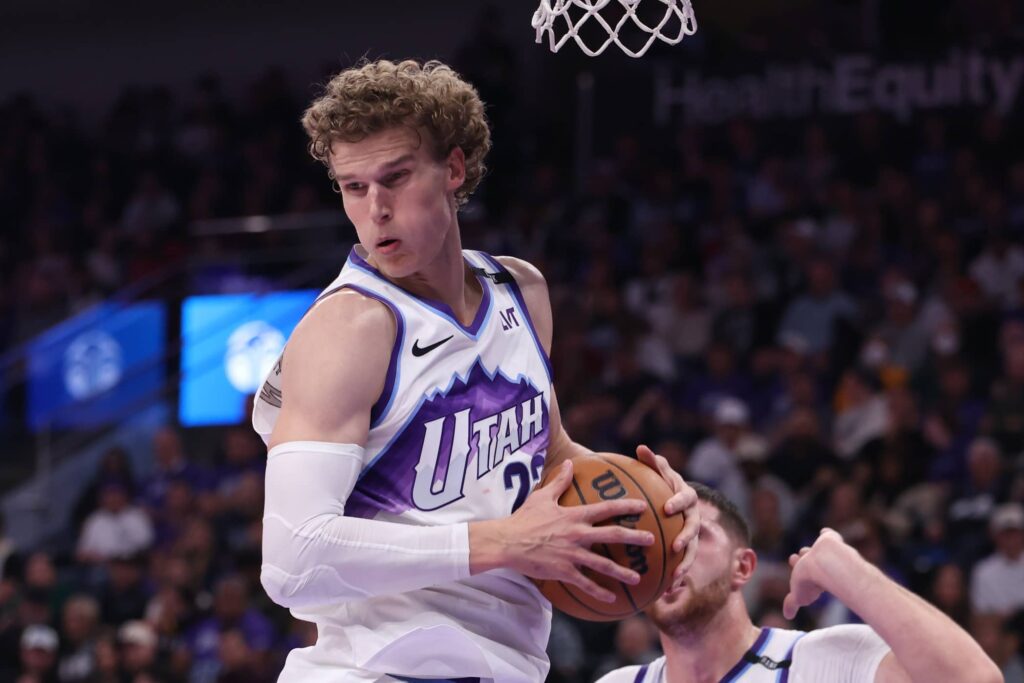
Stats: 26.7 PPG, 7.0 RPG, 2.1 APG, 1.0 SPG, 0.5 BPG, 47.8% FG, 36.3% 3P%
Lauri Markkanen makes sense here because the season has been star-level production in a losing context, and the scoring is still efficient enough to matter. He’s at 26.7 points per game on 47.8% from the field, with 36.3% from three on real volume. That combination is why he stays in the top 30. He’s not just a shooter anymore. He’s a legitimate first option who can score in multiple ways without the offense needing to be perfect.
The Jazz are 18-38 and sitting 13th in the West, so this hasn’t been a “wins and awards” season. But that’s also why the evaluation has to be honest. Losing teams usually make scoring harder: less spacing, fewer easy transition looks, and more defenses loading up on the one guy who can hurt them. Markkanen has still kept his efficiency in a good place while carrying a big chunk of the offense. The 7.0 rebounds are steady, the 2.1 assists tell you he’s not a hub, and that’s the main reason he’s 30 instead of pushing higher.
What keeps him valuable is how his scoring scales. He can play as a spacer next to a high-usage guard and still punish help. He can also be the matchup hunter late in the clock because his size lets him shoot over smaller wings, and his touch makes contesting him feel pointless sometimes. The jumper is still the swing skill, and his 36.3% from three is high enough that teams can’t treat him like a non-shooter. That opens up his best work: quick drives, straight-line attacks, and finishing over the top.
You can also see why his name stays in trade conversations every year. A 7-footer who gives you 26.7 a night, spaces the floor, and doesn’t need to dominate the ball is a clean fit almost anywhere.
29. Karl-Anthony Towns
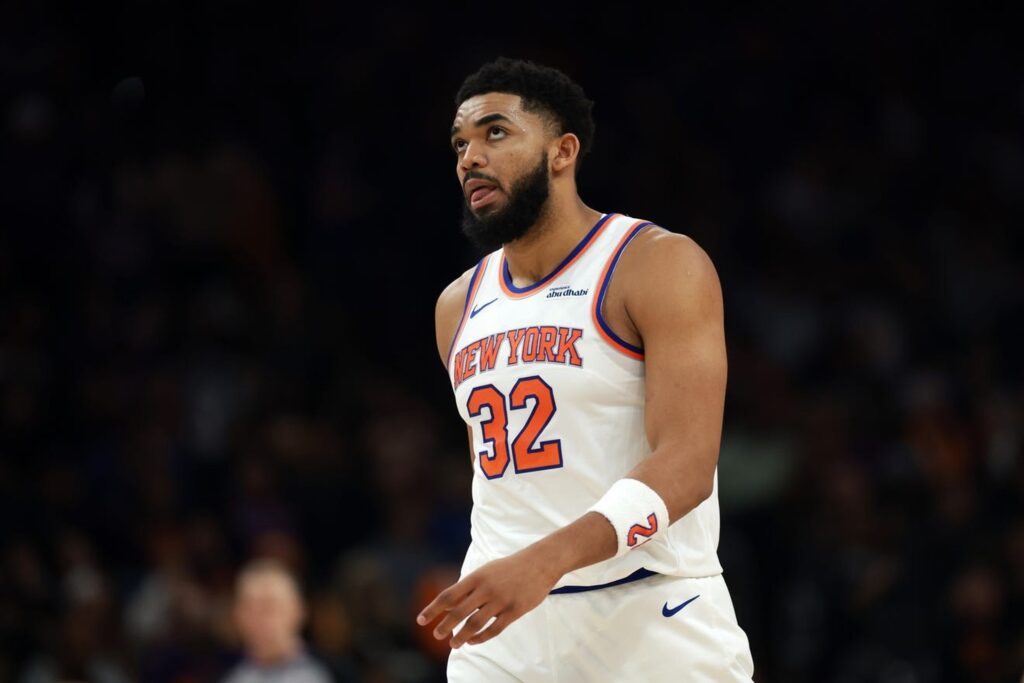
Stats: 19.8 PPG, 11.9 RPG, 2.9 APG, 0.9 SPG, 0.6 BPG, 46.6% FG, 35.1% 3P%
Karl-Anthony Towns lands here because the season has been productive, but not dominant in the way a top-20 case usually needs. The baseline is still valuable: 19.8 points, 11.9 rebounds, and a workable passing line at 2.9 assists. He’s also taking and making enough threes (35.1%) to keep the floor spaced at the five or the four, even if it’s not peak-Towns shooting.
The Knicks are 35-20 and in the top three of the East, which gives him a stronger “impact on a real team” argument than a lot of names in this range. But it also highlights the limitation: the Knicks’ offense is still driven by guard creation, and Towns’ role has leaned more toward finishing, rebounding, and keeping spacing intact than carrying possessions. That is a very good player. It’s just not always the same as “best player.”
There’s also the defensive piece. He isn’t a true rim eraser (0.6 blocks), and he’s not consistently changing the geometry the way the elite bigs do. That’s the separator when you’re comparing him to players with similar usage but more two-way leverage.
So why is he still top 30? Because the combination of rebounding, spacing, and reliable scoring is hard to replace, and it translates in playoff basketball when lineups get small, and every possession is a matchup hunt.
28. Chet Holmgren
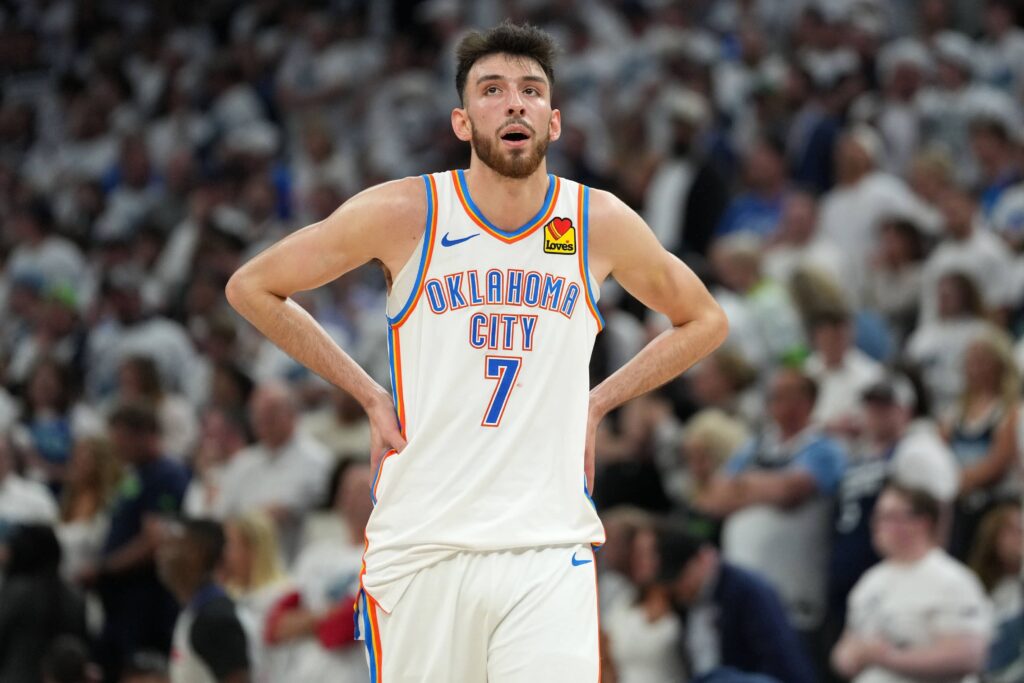
Stats: 17.5 PPG, 8.6 RPG, 1.6 APG, 0.5 SPG, 1.9 BPG, 56.3% FG, 35.7% 3P%
Chet Holmgren is ranked ahead of Towns and Markkanen because his two-way value is more “structural.” He’s not giving you 25 a night, but he’s giving you a defense that can actually change its ceiling. The stat line shows it: 1.9 blocks per game on elite efficiency (56.3% from the field), plus respectable three-point shooting at 35.7%. That’s a rare mix: rim protection with real floor spacing.
The Thunder are 42-14 and first in the West, and Holmgren’s value pops most in that context because it’s so cleanly tied to winning habits. He anchors actions defensively without needing the ball, then stretches the floor offensively without forcing touches. That makes him one of the easier stars to build around because he doesn’t create friction.
The reason he’s 28 and not higher is simple: the on-ball creation is still light. At 1.6 assists, he’s not yet a hub big, and he doesn’t consistently punish switches with self-generated offense the way the top bigs do. He’s more of a play finisher and advantage extender than an initiator.
But the defense travels, and the efficiency is bankable. If the list is “best players right now,” Holmgren belongs comfortably inside the top 30 because he impacts both ends without needing conditions to be perfect.
27. De’Aaron Fox
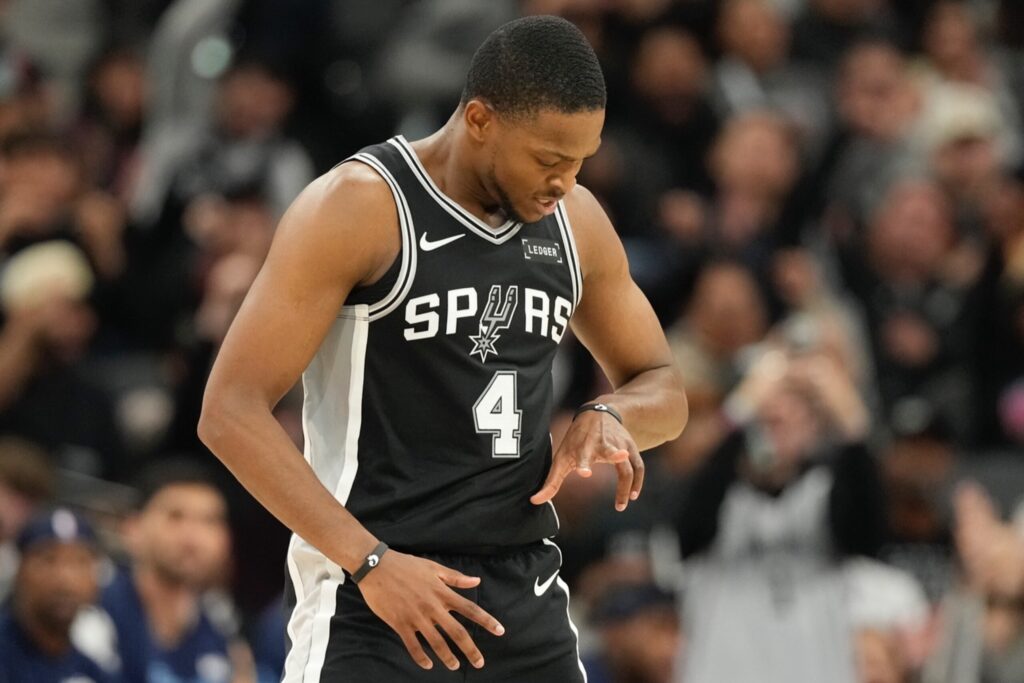
Stats: 19.4 PPG, 3.8 RPG, 6.3 APG, 1.3 SPG, 0.3 BPG, 48.4% FG, 35.3% 3P%
De’Aaron Fox lands at 27 because his season has been very good, but not quite loud enough to beat the bigger engines and the bigger two-way wings above him. The baseline is still strong: 19.4 points and 6.3 assists with solid efficiency for a lead guard. He’s also still a pace weapon. When Fox gets downhill, the defense has to collapse early, and that creates clean looks before the opponent’s help is set.
The context matters here. The Spurs are 38-16 and second in the West, and Fox has fit into a structure that already had a clear identity. His job is not to be a one-man offense every night. It’s to keep pressure on the rim, keep the ball moving, and punish any stretch where teams overreact to the other threats. That makes his value feel smaller on paper than it is on the floor, because the Spurs don’t need him to “win the possession” with a tough shot the way some other guards do.
The argument for Fox being higher is simple: he gives you real playmaking, real rim pressure, and he’s still disruptive enough defensively to avoid being a target. The 1.3 steals per game tracks with that. The reason he’s 27 is also simple: the scoring volume is more “high-level All-Star” than “top-15 superstar,” and the three-point shot is good, not terrifying.
He’s a high-end guard in the right kind of environment. On a team this good, that matters.
26. Brandon Ingram
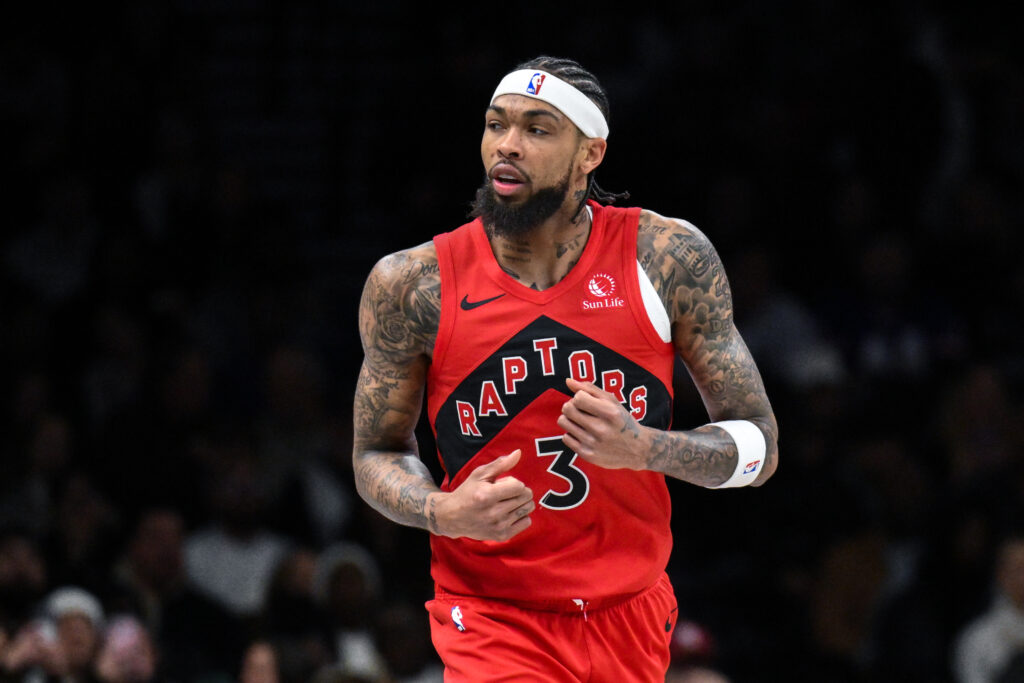
Stats: 21.8 PPG, 5.7 RPG, 3.7 APG, 0.8 SPG, 0.8 BPG, 47.4% FG, 36.5% 3P%
Brandon Ingram is 26 because he’s still giving you a clean, reliable scoring profile, but the season hasn’t had the same “tilt the whole game” feel as the guys above him. He’s at 21.8 points per game on 47.4% shooting, with real shot-making from the midrange and enough three-point volume to keep defenders attached. The passing is solid, too. 3.7 assists is not point-forward stuff, but it’s enough to punish doubles and keep the offense honest.
He’s also been a steadier two-way presence than he sometimes gets credit for. The steals and blocks are both at 0.8, which lines up with what the film shows: he competes, he uses his length, and he’s capable of making plays without selling out. He’s not a stopper, but he’s not a liability either.
Team context helps and hurts him. The Raptors are 32-23 and fifth in the East, so these numbers are coming on a real playoff-level team, not in empty minutes. But it also means his role can shift night to night based on who has it going. Ingram’s value is at its peak when he is the main creator, because the diet of tough shots is part of his advantage. In a more balanced offense, he sometimes becomes a high-end scorer who’s slightly less central than his talent suggests.
He’s still top 30 because wings who can create their own shot, pass, and hold up defensively are rare. This year, he’s just been more “very good” than “unavoidable.”
25. Scottie Barnes
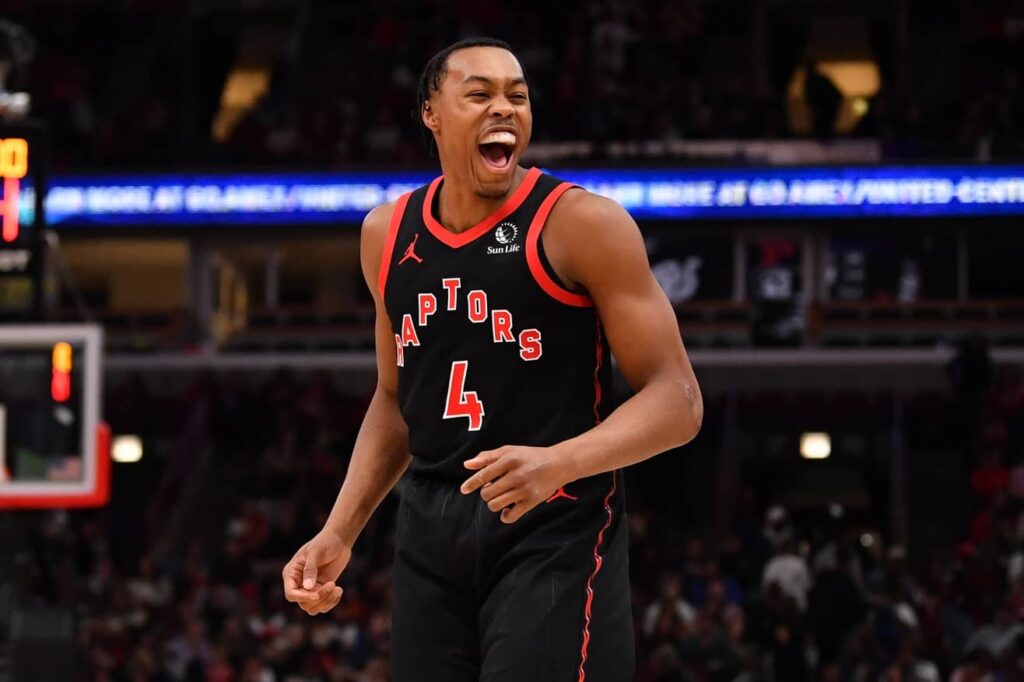
Stats: 19.3 PPG, 8.4 RPG, 5.6 APG, 1.3 SPG, 1.6 BPG, 50.4% FG, 30.1% 3P%
Scottie Barnes is 25 because his value is built on versatility that shows up every night, even when the scoring isn’t the headline. The line is loaded: 19.3 points, 8.4 rebounds, 5.6 assists, plus strong defensive playmaking with 1.3 steals and 1.6 blocks. That’s not a normal stat profile for a forward. It’s a “touch every part of the game” profile.
Barnes’ case is that he can function as a connector, a secondary creator, and a defensive problem at the same time. The 50.4% shooting is important here, because it shows he’s finishing efficiently in the areas where he should dominate: in transition, at the rim, and on quick decisions. He’s also a real passer. The assists aren’t empty. He sees the floor, he hits cutters, and he can run offense in short bursts without it collapsing.
The weak spot is obvious: the three-point shot. At 30.1% from three, teams will still test him and shrink the floor in certain matchups. That’s part of why he’s 25 instead of pushing toward the teens. The other part is that his half-court scoring package is still more about strength and angles than pure shot creation against elite defense.
The team context is solid. The Raptors being fifth in the East matters because it ties Barnes’ all-around production to winning basketball. If the jumper comes along even a little, the “best player” ceiling starts to look much closer than 25.
24. Norman Powell
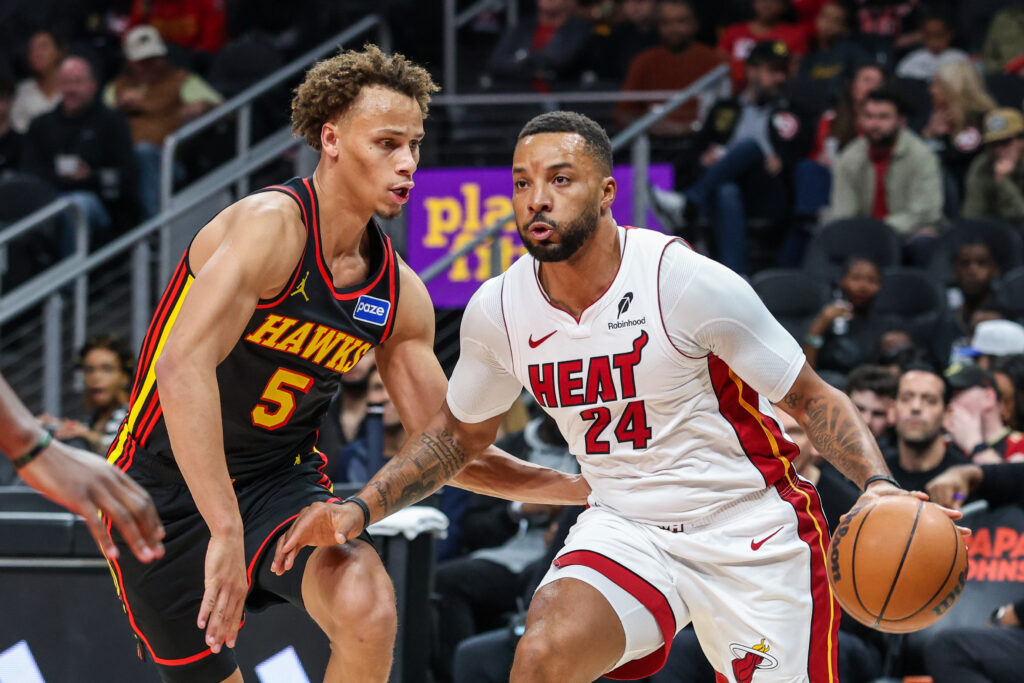
Stats: 23.0 PPG, 3.6 RPG, 2.6 APG, 1.2 SPG, 0.2 BPG, 47.4% FG, 39.6% 3P%
Norman Powell has played like a primary scorer all season, even though his game is built to fit next to other stars. Twenty-three points per night with a 47.4% field-goal mark and 39.6% from three is the kind of profile that bends defenses without needing to dominate the ball. The appeal is how repeatable it is. Powell gets you points off movement, quick-trigger threes, and downhill attacks against closeouts. It’s not fragile offense, and it’s not matchup-dependent in the way some “microwave” seasons can be.
The Heat are 29-27 and sitting eighth in the East, and that context matters because their margin has been thin. Powell’s scoring has functioned as a stabilizer: when the offense bogs down, he can manufacture a clean shot without forcing a bad one, and when teams load up on other creators, he punishes the help with spacing and instant decisions. His assist number (2.6) isn’t the point. He’s not being asked to run the whole thing. He’s being asked to finish possessions and tilt quarter stretches.
The reason he lands 24 instead of pushing higher is the same reason his fit is so clean. He’s a scorer first, and his overall impact isn’t built around being a hub or a defensive eraser. He competes, he makes plays (1.2 steals), but he’s not changing the structure of an opponent’s offense.
Still, this season’s version of Powell is too productive and too efficient to ignore. A wing who can give you 23 on this shot quality, without hijacking possessions, is one of the most valuable complementary star profiles in the league right now.
23. Pascal Siakam
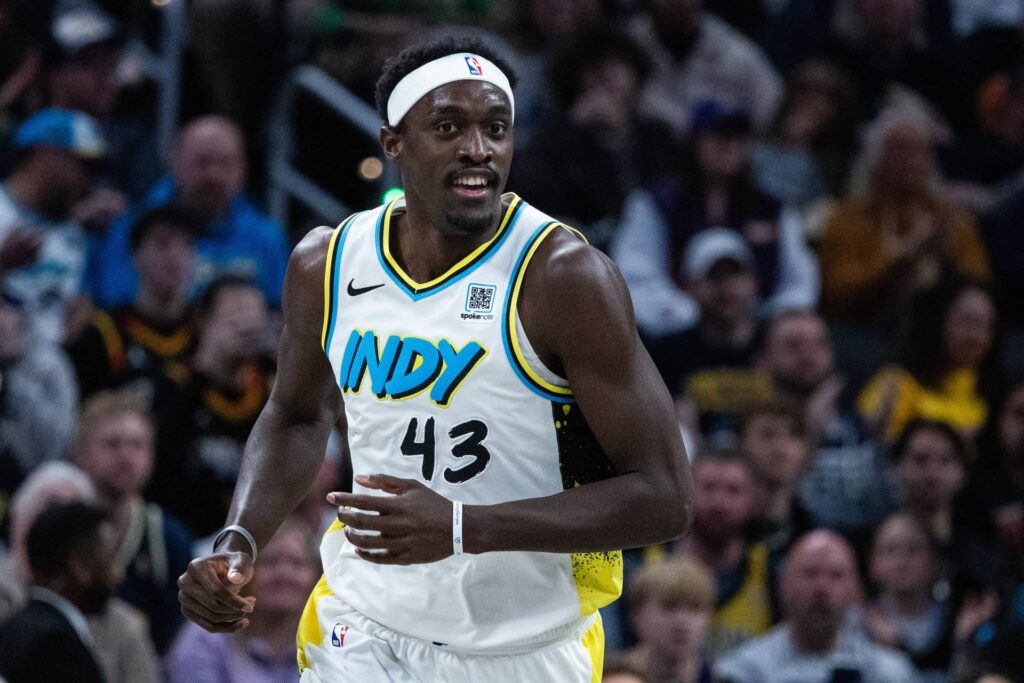
Stats: 23.7 PPG, 6.7 RPG, 3.9 APG, 1.1 SPG, 0.5 BPG, 48.0% FG, 36.9% 3P%
Pascal Siakam’s season is the clearest example of a star maintaining his level even when the team context doesn’t flatter him. The box score is strong across the board: 23.7 points, 6.7 rebounds, 3.9 assists, plus real defensive activity. The shooting profile matters too. At 36.9% from three, teams can’t just sit on the drive, and that opens up the part of his game that’s still elite: downhill pressure, quick post work, and finishing through contact.
The Pacers are 15-40 and sitting 13th in the East, which is exactly why this placement is tricky. On one hand, losing seasons can inflate counting stats. On the other, bad spacing, limited creation around you, and constant “load up” coverages make efficiency harder, not easier. Siakam has stayed efficient anyway. That’s the strongest argument for him staying in this range rather than sliding toward the back end of the list.
What separates him from the teens on your ranking is leverage. Siakam can carry stretches, but he’s not consistently warping the entire scouting report the way the true offensive engines do. He’s more about stacking good possessions than forcing a defense into one coverage all night. The passing is good (3.9 assists), but he’s not dictating every rotation. Defensively, he’s active and versatile, but he isn’t anchoring a top unit by himself.
He still belongs at 23 because the archetype is rare and valuable: a forward who can score efficiently, punish mismatches, hit enough threes to keep the floor honest, and stay functional defensively in almost any lineup. In a better environment, this season would look even louder. The level is real either way.
22. Jalen Johnson
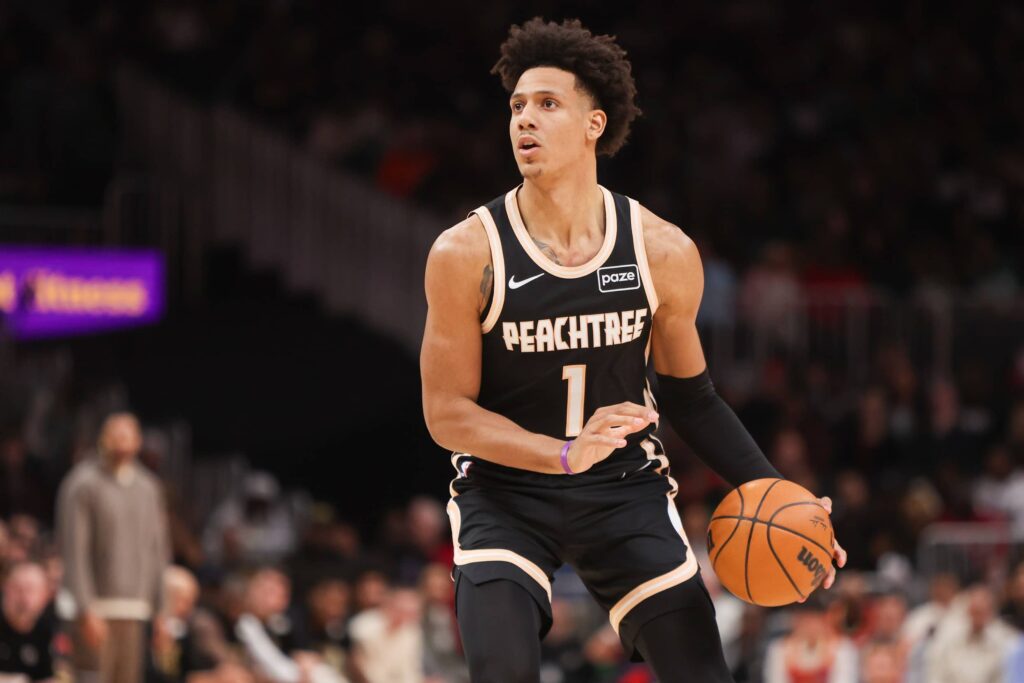
Stats: 23.3 PPG, 10.6 RPG, 8.2 APG, 1.3 SPG, 0.5 BPG, 50.2% FG, 35.3% 3P%
Jalen Johnson has put together one of the most unusual stat lines in the league, and it reads like a player who is doing three jobs at once. Twenty-three points, double-digit rebounds, and 8.2 assists as a forward is not normal production. It signals real on-ball responsibility, not just “nice all-around numbers.” Johnson is initiating possessions, creating advantage, and then finishing the play when the defense overreacts. The efficiency supports it: 50.2% from the field with enough three-point accuracy (35.3%) to keep defenses from ignoring him.
The Hawks are 26-30 and 10th in the East, so the season hasn’t turned into a clean winning story. But this is where the evaluation has to stay honest. Carrying a big creation load on a mid-tier team often exposes weaknesses. With Johnson, the opposite has happened. The passing volume is elite for the position, and it’s not empty. When a forward is averaging 8.2 assists, he’s bending help rules and forcing rotations that defenses normally reserve for high-usage guards.
Why isn’t he higher? Two reasons. First, playoff translation is still a projection. High-usage creators get squeezed, and Johnson’s turnovers (3.4 per game) are the obvious pressure point opponents will hunt. Second, while he’s a good defender with tools, he’s not yet a nightly “erase your best option” wing defender or a backline anchor.
At 22, the message is simple: this season has been too productive, too versatile, and too real to treat as a fluke. Johnson looks like a player who can be a top-end connector on a contender, or a lead initiator on the right roster build.
21. Alperen Sengun
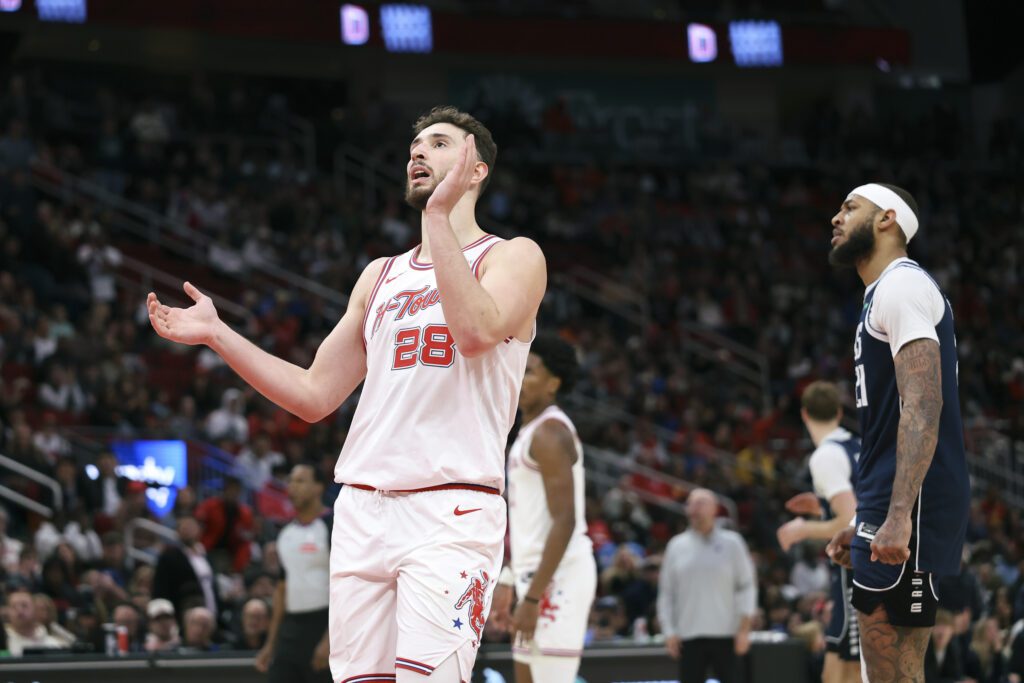
Stats: 20.7 PPG, 9.4 RPG, 6.3 APG, 1.3 SPG, 1.0 BPG, 49.7% FG, 29.9% 3P%
Alperen Sengun has been one of the cleanest “your offense runs through a big” seasons in the league. The headline is the all-around line: 20.7 points, 9.4 rebounds, and 6.3 assists, with real defensive production on top. The bigger point is how the offense looks when he’s involved. The ball moves. The reads are early. The possessions don’t die. He’s not just piling up assists with handoffs. He’s making decisions that change coverages.
The Rockets are 33-20 and fourth in the West, and that record matters because it places Sengun numbers inside a real, high-stakes season. He’s doing this while opponents build entire game plans around crowding his touch points and forcing him into tough finishes. His 49.7% from the field is solid, and the 29.9% from three explains why he’s 21 and not higher. Teams will still live with some of those threes, and that affects spacing in tight games.
Defensively, he’s been better than the lazy reputation. The 1.0 blocks and 1.3 steals show activity, not dominance, but they matter because they reflect engagement and timing. He’s not a pure rim eraser like the elite centers above him, so the Rockets still need structure behind the ball. That’s the separator from the top tier.
This spot is basically the vote for skill and influence. Sengun has been a hub, a scorer, and a playmaker at once. Even without a reliable three, that kind of offensive gravity is rare, and it wins possessions in the playoffs.
20. Jamal Murray
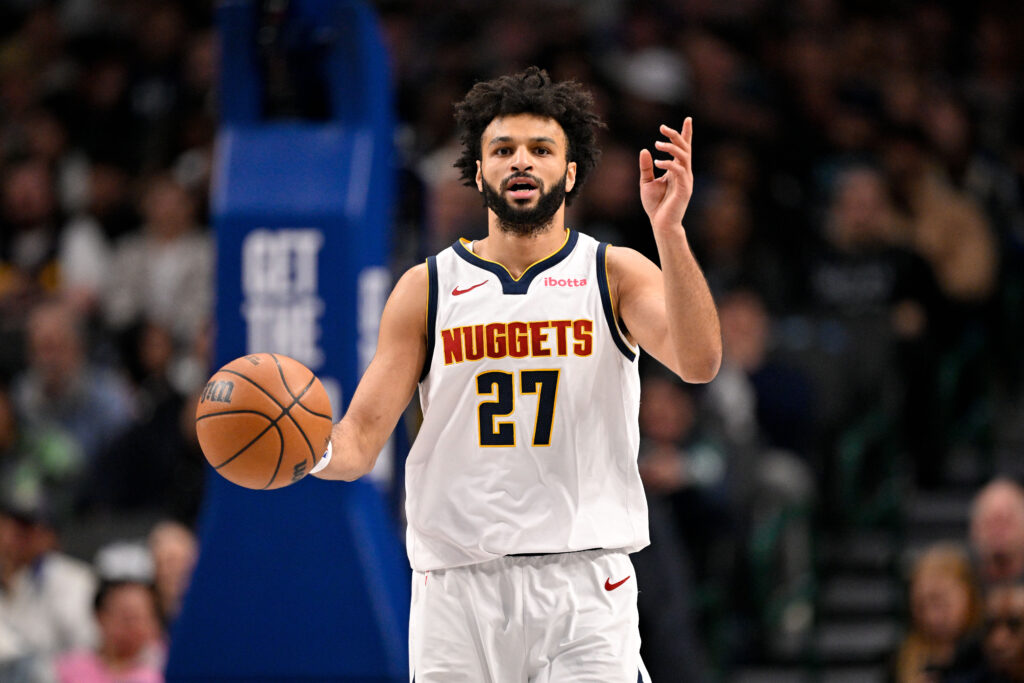
Stats: 25.7 PPG, 4.4 RPG, 7.6 APG, 1.0 SPG, 0.4 BPG, 48.5% FG, 42.5% 3P%
Jamal Murray has played like a No. 1 scoring guard for long stretches, and the efficiency is what makes it convincing. Twenty-five and change per game on 48.5% shooting and 42.5% from three, while also giving you 7.6 assists, is star-level production. The part that holds up in big games is the shot profile. He can score in every playoff zone: off the dribble, late clock, and in two-man actions that force switches.
The Nuggets are 35-20 and third in the West heading into the break, having missed Nikola Jokic for almost all of January. That matters because it frames Murray’s season as winning offense, not just high-usage numbers. The Nuggets can run through Jokic, but the possessions that decide the series often come down to whether Murray can create a clean shot when the first option gets crowded. This year, he’s done that more consistently than most guards in the league.
There’s also a simple scaling point. Murray’s efficiency doesn’t require him to dominate the ball for the whole possession. He can play on the ball, then off it, then back on it, without losing rhythm. That’s why the 42.5% from three is a major marker here. It changes how teams can help off him, and it forces opponents to guard him honestly.
Why isn’t he higher? The defensive impact is good enough, not special, and he’s not carrying the same nightly burden as the true engines above him. He benefits from structure and elite talent around him at times. That’s not a knock. It’s just the separator when you’re ranking the very top of the league.
19. LeBron James
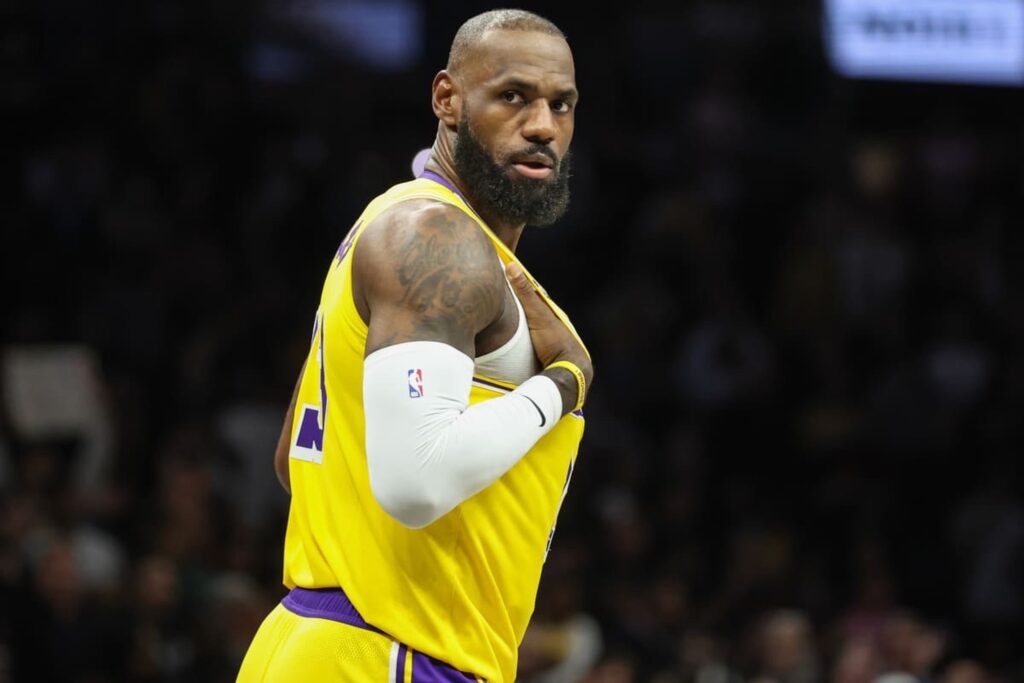
Stats: 22.0 PPG, 5.8 RPG, 7.1 APG, 1.1 SPG, 0.6 BPG, 50.2% FG, 30.5% 3P%
LeBron James still possesses one of the smartest minds in basketball history. The raw scoring is down from peak years, but the control is still there: 22.0 points, 7.1 assists, and efficient finishing at 50.2% from the field. He can still bend the game with pace changes, mismatch hunting, and the kind of passing that creates layups without needing a perfect play call.
The Lakers are 33-21 and fifth in the West, and they’re living in the part of the standings where every small edge matters. That’s why LeBron lands in this range. Night to night, he’s not trying to be the scoring champ anymore. He’s trying to win the game. That shows up in how he picks his spots, how he organizes the spacing, and how he keeps the floor from tilting into chaos when lineups get messy.
The 30.5% from three is the one clear weakness in the stat line, and it’s part of why he isn’t higher. Teams are more willing to duck under actions and help off the perimeter in certain matchups. But the counter is still obvious: if you over-help, he’s finding the cutter or the corner. If you switch small, he’s going to the post. If you stay home, he’s getting to the rim.
This ranking is basically the compromise between season-long workload and playoff leverage. Even at 41, LeBron is still a playoff-level problem because he solves possessions. That is value that doesn’t show up in one number, but it shows up in every tight fourth quarter.
18. Austin Reaves
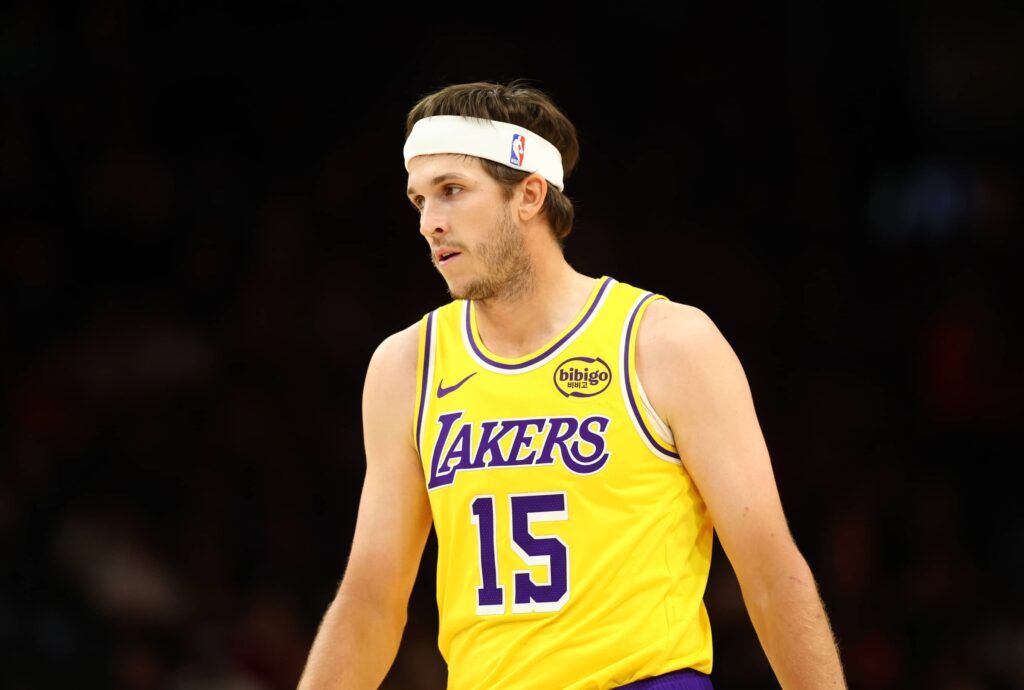
Stats: 25.4 PPG, 5.0 RPG, 6.0 APG, 1.0 SPG, 0.2 BPG, 50.8% FG, 36.3% 3P%
Austin Reaves has produced like a lead guard this season, and the efficiency is what separates it from a hot run. He’s at 25.4 points and 6.0 assists on 50.8% from the field, plus 36.3% from three. That’s not “nice complementary player.” That’s a primary creator line, with real shot-making and real foul pressure.
The context is important. The Lakers are fifth in the West as we just said, and Reaves’ jump has been tied to winning minutes, not empty usage. When the Lakers need creation, he’s been the steady option: pick-and-roll reads, pocket passes, and enough pull-up shooting to punish teams that go under. His decision-making has also tightened. He’s not playing wild. He’s playing like someone who understands which shots keep the offense alive.
The reason he’s 18 and not higher is simple: sample size and role stability. He’s only played 28 games, which matters when you’re ranking “this season” and not just “best player at peak.” The other separator is defensive leverage. He competes, and he’s smart, but he’s not changing matchups the way the elite two-way wings do.
Still, this is one of the most important names because he forces the conversation. If Reaves is giving you 25 a night at this efficiency while also creating for others, that’s top-20 production. The only real question is how well it holds when defenses sell out in a playoff series. So far, the numbers say it’s real.
17. James Harden
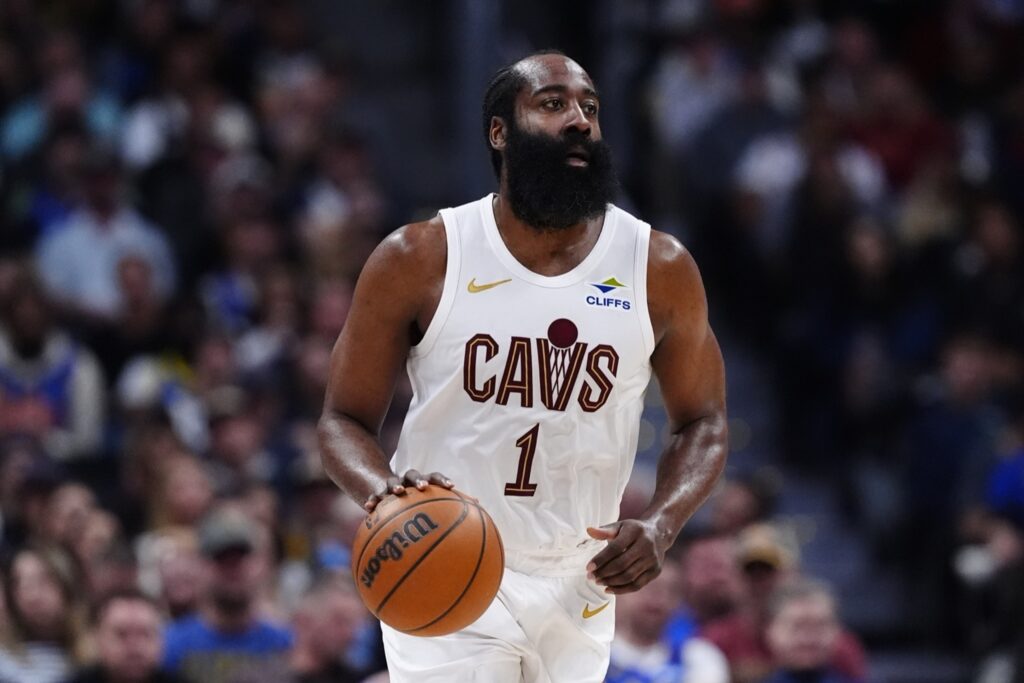
Stats: 25.0 PPG, 4.9 RPG, 8.2 APG, 1.2 SPG, 0.4 BPG, 42.0% FG, 35.0% 3P%
James Harden has been one of the league’s biggest offensive workloads again, and the passing is the loudest part. He’s at 8.2 assists with 25.0 points, which is still “run the whole offense” production. The efficiency is more complicated. The 42.0% from the field is low for this tier, but the total scoring impact stays high because he gets to the line, hits enough threes, and constantly forces rotations.
The Cavaliers are 34-21 and fourth in the East, and they’ve been rolling into the break since the trade, with a short, unbeaten run. Harden’s season value is that he gives them a steady half-court organizer. The ball gets to the right spots. The weak-side help gets tagged. The bigs get easy finishes. Even when he isn’t shooting well, the possessions are structured.
This placement is also about proving it in the playoffs. Harden can still punish switches because defenders have to respect the step-back. He can still create advantages because he reads help early. And he’s still strong enough to survive physical defenders without getting knocked off his line. The 35.0% from three keeps the geometry honest.
Why isn’t he in the top 15? Defense and efficiency at the rim aren’t what they used to be, and he’s not the same two-way player as the wings above him. He’s also more dependent on whistle and spacing than the biggest superstars. But as a pure offensive driver this season, he has been too productive to push down the list.
16. Joel Embiid
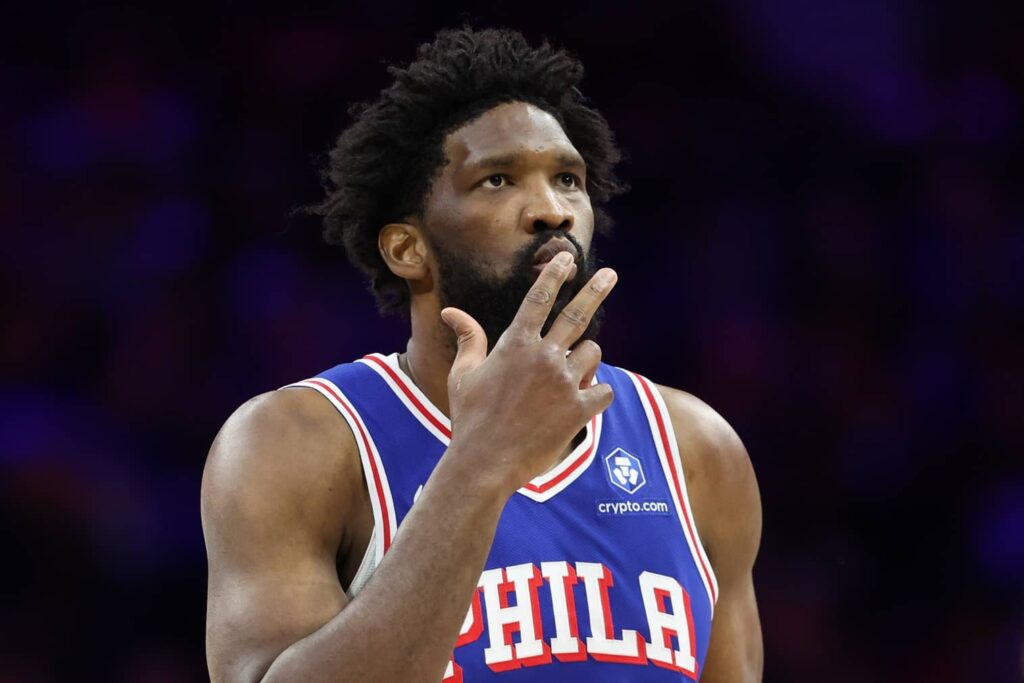
Stats: 26.6 PPG, 7.5 RPG, 3.9 APG, 0.6 SPG, 1.1 BPG, 49.4% FG, 32.0% 3P%
Joel Embiid is the hardest player in this range to place because the level is still obvious, but the season has been choppy. When he’s on the floor, he’s still a top-end scoring big: 26.6 points on 49.4% shooting, with enough passing to punish doubles. He can still win a game with shot-making from the nail, post power, and foul pressure that forces opponents into early rotation decisions.
The Sixers are 30-24 and sixth in the East. That record is basically the story of the season: good enough to matter, not stable enough to feel safe. Embiid’s presence is the swing. The offense looks normal without him. With him, it becomes a constant math problem for defenses because you have to send help somewhere, and every help decision leaves a shot behind it.
The reason he’s 16 is availability and two-way consistency. He’s played 31 games, and it’s hard to rank him above players who have been elite for a longer stretch this season. Defensively, the blocks (1.1) are fine, but he hasn’t been a nightly “erase the rim” anchor in the same way the very top defensive bigs have been.
But the ceiling still matters. In a playoff series, Embiid can still force single coverage to fail. That’s why he stays in the top 20 even with the missed time.
15. Devin Booker
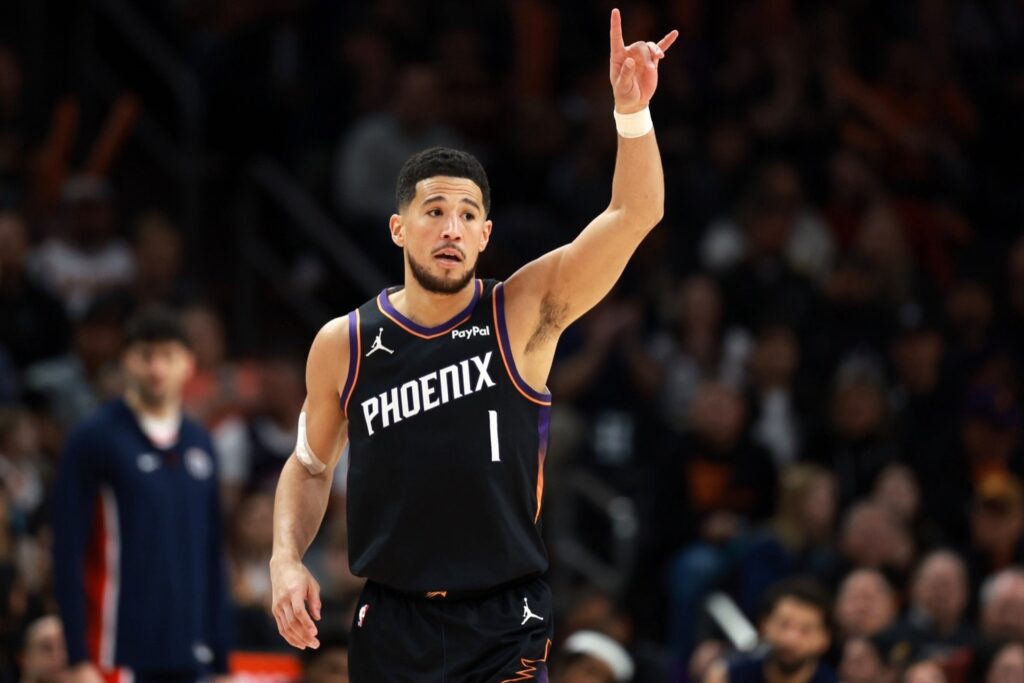
Stats: 25.2 PPG, 4.0 RPG, 6.3 APG, 0.9 SPG, 0.3 BPG, 45.5% FG, 31.1% 3P%
Devin Booker is still one of the league’s most reliable “solve the possession” scorers, even in a season where the efficiency profile has been a little uneven by his standards. The points and playmaking are exactly what you expect from a No. 1 guard: 25.2 points and 6.3 assists, with a steady shot diet that includes tough pull-ups, late-clock bailouts, and a lot of self-created offense against set defenses.
The Suns are 32-23 and sitting seventh in the West, which is basically the definition of a high-pressure season. When you live in that part of the bracket, every fourth quarter becomes a test of who can generate a clean look when the opponent knows exactly what’s coming. Booker’s value is that he can get to his spots without needing perfect screening or broken coverage. He’s a midrange scorer in a league that tries to take midrange away, and he still creates clean attempts because his footwork and balance are elite.
The one number that explains why he’s 15 and not higher is the three-point accuracy. At 31.1% from deep, teams can be a little more aggressive with their help rules in certain matchups, especially when the Suns’ spacing lineups aren’t perfect. Booker still draws attention because of his reputation and volume, but the shot hasn’t consistently punished defenses the way it does for the top guards on this list.
He remains top 15 because the total offensive package is still real. The passing keeps the offense moving, the scoring comes in every context, and he has enough defensive engagement (0.9 steals) to avoid being a target. In a playoff setting, the Suns will still trust him to take the shot that matters, and that is the clearest definition of “best player” value.
14. Kevin Durant
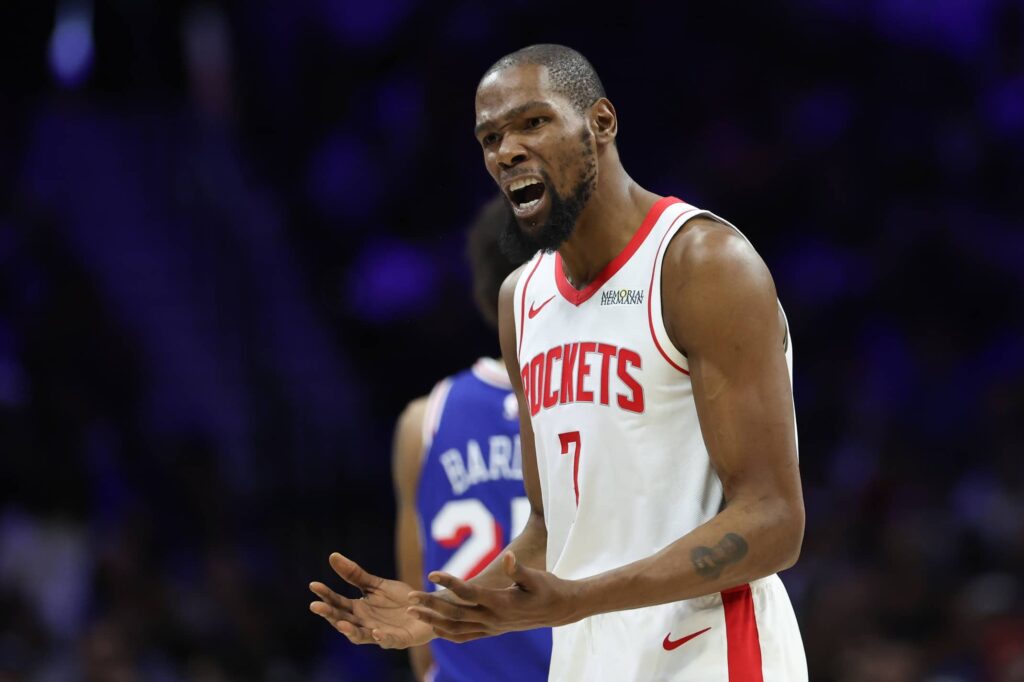
Stats: 25.8 PPG, 5.3 RPG, 4.4 APG, 0.8 SPG, 0.9 BPG, 50.6% FG, 40.3% 3P%
Kevin Durant’s season is the cleanest argument for timeless scoring. The efficiency is elite, the volume is real, and it’s coming without needing the offense to be built entirely around him. He’s at 25.8 points per game on 50.6% from the field and 40.3% from three, which is basically “automatic points” territory for a wing scorer.
The Rockets are 33-20 and fourth in the West, and the record matters because it frames Durant as the driver of a real contender-level season rather than a star putting up numbers in neutral games. The Rockets’ identity has leaned defense-first, but the reason the offense doesn’t collapse in the half court is Durant’s shot-making. He can punish switches, shoot over the top of late contests, and force teams to keep a second defender in his vicinity even when he isn’t touching the ball. That changes spacing for everyone else.
What separates him from the top 10 on this list is mostly workload and creation burden. Durant still creates, but he’s not carrying the same possession-by-possession orchestration as the elite engines, and the 4.4 assists reflect that. He’s also not a one-man defense at this stage, even though he’s been productive there (0.9 blocks) and still uses his length to bother shots.
This placement is basically the balance between impact and role. He has been a top-tier scorer, he’s been efficient enough to lift an entire offense, and he’s doing it on a team that’s winning at a high level. If you need one bucket late, there are still very few players you’d rather hand the ball to. That’s why 14 is more about the names above him than any real decline in what he does nightly.
13. Tyrese Maxey
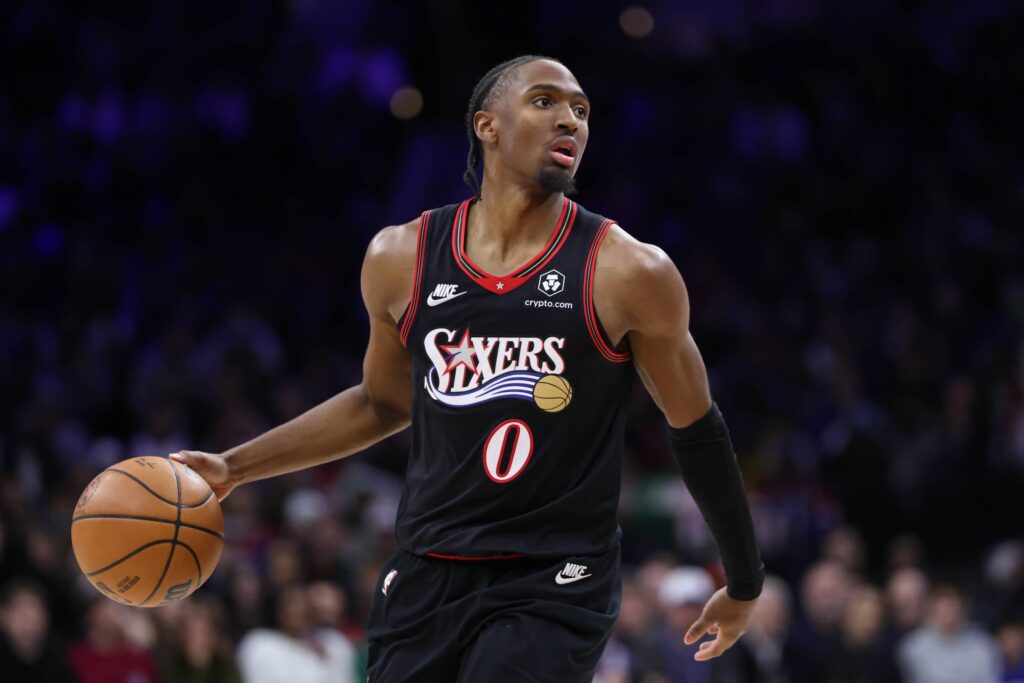
Stats: 28.9 PPG, 4.1 RPG, 6.8 APG, 2.0 SPG, 0.8 BPG, 46.9% FG, 37.9% 3P%
Tyrese Maxey has played like one of the league’s true offensive engines this season. 28.9 per game with 6.8 assists, strong shooting, and real defensive playmaking is not just an All-Star line. It’s a top-tier burden line. The thing that jumps off is how constant the pressure is. Maxey attacks early, he attacks late, and he forces opponents into retreat mode even when they’re set.
The 76ers are 30-24 and sitting in the playoff mix in the East, and that context matters because the offense has needed Maxey to be the stabilizer night after night. When a guard is playing 38.6 minutes per game and still producing like this, it’s usually because the team’s margin demands it. His shot profile is strong: 37.9% from three on real volume, plus enough rim pressure to keep defenses from just chasing him off the line.
The defensive numbers matter too. Two steals per game is not accidental, and the 0.8 blocks is a sneaky indicator of how active he’s been at the point of attack and as a help defender rotating down. He’s not a big guard, but he plays with real energy, and that shows up in possessions that swing because of one extra deflection.
Why is he 13 and not higher? The answer is mostly leverage against elite postseason defenses. Smaller guards can be schemed into tougher looks when teams load up and switch more aggressively. Maxey’s counters have been strong, but the very top of this list is reserved for players who can dominate regardless of coverage. Still, as a season-long performance, he’s been one of the most productive guards in basketball.
12. Jalen Brunson
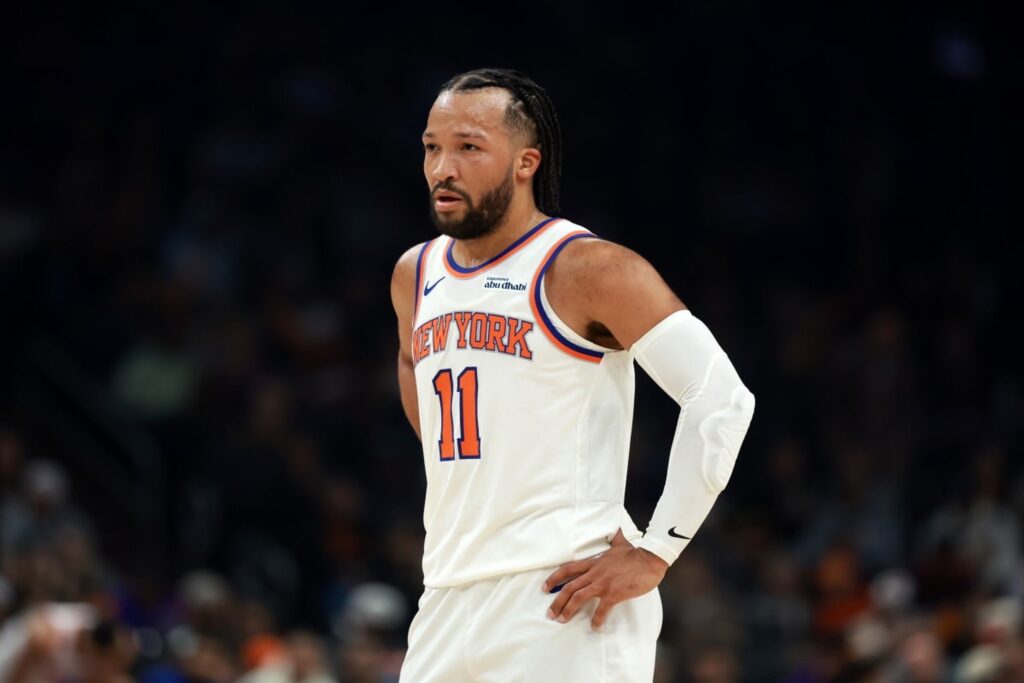
Stats: 27.0 PPG, 3.3 RPG, 6.1 APG, 0.7 SPG, 0.1 BPG, 47.0% FG, 37.4% 3P%
Jalen Brunson has been the simplest case of high-end guard scoring that actually holds the offense together. The numbers tell you the shape of it: 27.0 points and 6.1 assists on solid efficiency, with enough three-point shooting to force real coverage decisions. Brunson isn’t a vertical athlete, so everything is built on craft, timing, and footwork. That’s why his scoring translates. He can generate a clean look without needing chaos.
The Knicks are 35-20 and third in the East, and they’ve played like a team that trusts its half-court identity. Brunson is the reason that identity survives tough matchups. In close games, the ball ends up in his hands because he can beat single coverage without forcing bad shots. He’s also one of the better guards in the league at manipulating help defenders. If you bring the big up too high, he snakes back into the lane. If you sit, he rises into the jumper. If you send help, he finds the corner.
He’s 12 because the defensive ceiling and physical profile still matter in a “best players” ranking. He’s not a disruptive defender, and the steals and blocks reflect that. He also doesn’t have the same rim pressure as the most dominant guards, so there are matchups where teams can switch and live with contested pull-ups.
But he stays high because the offense is real and repeatable. He creates efficient shots for himself, he creates structure for everyone else, and he has done it on a team that’s been consistently strong. That is the core of a top-12 season.
11. Kawhi Leonard
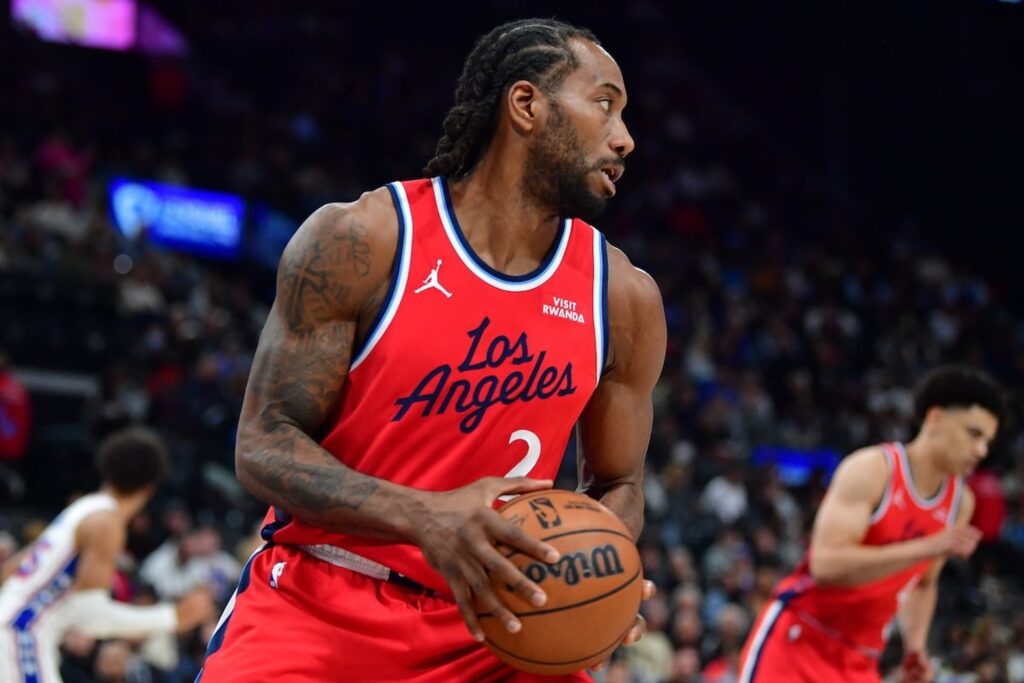
Stats: 27.9 PPG, 6.4 RPG, 3.7 APG, 2.1 SPG, 0.5 BPG, 49.1% FG, 38.3% 3P%
Kawhi Leonard’s season has been a reminder of what elite wing scoring looks like when it’s paired with real defensive playmaking. The production is heavy: 27.9 points on 49.1% shooting, with strong three-point accuracy and a steal rate (2.1) that still changes possessions. There are very few wings who can score like a top option and still take away actions defensively with strength, timing, and hands.
The Clippers are 26-28, which is not the record you expect to see next to a player at No. 11. That’s exactly why Leonard ranks here based on individual performance. He has been excellent, and the team context has not always matched the level. When the Clippers need a bucket, he still gets to his midrange spots as cleanly as anyone in the league, and the shot quality is high because defenders can’t crowd him without giving up drives and fouls.
His case is also about two-way reliability. The steals are not just gambling. They’re the product of reading actions early and being strong enough to play through contact. He’s not a center-level rim protector, but he is a lineup stabilizer because he can guard up, guard down, and take the toughest wing matchup without needing help every possession.
He’s just outside your top 10 because the season-long value is always tied to availability and team lift. But if you’re ranking how good the player has been when he’s out there, Leonard has absolutely played like a top-12 force this year.
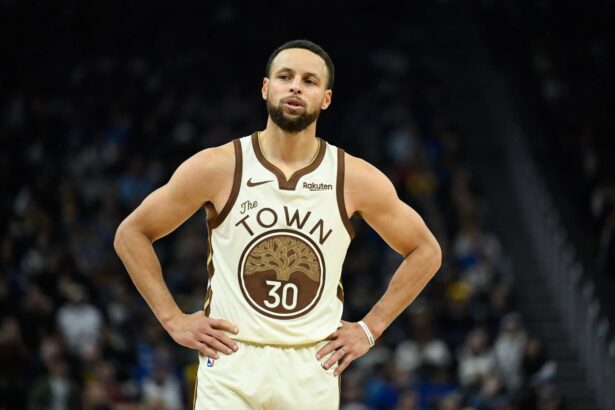
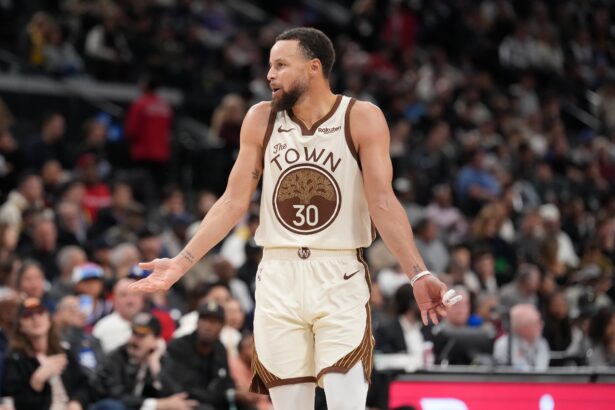
10. Stephen Curry
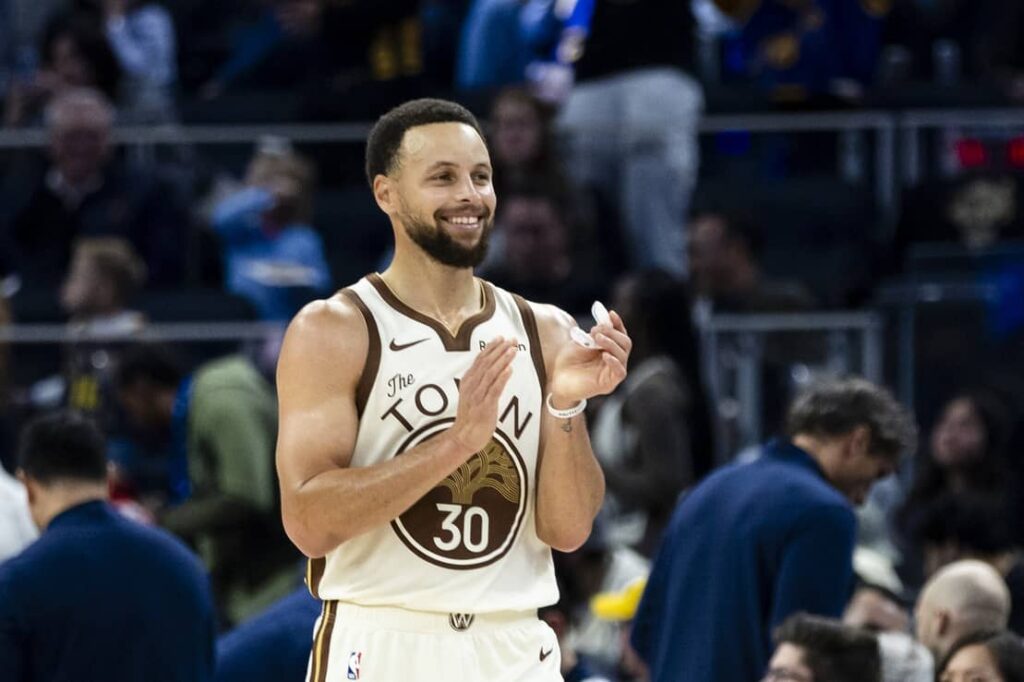
Stats: 27.2 PPG, 3.5 RPG, 4.8 APG, 1.1 SPG, 0.4 BPG, 46.8% FG, 39.1% 3P%
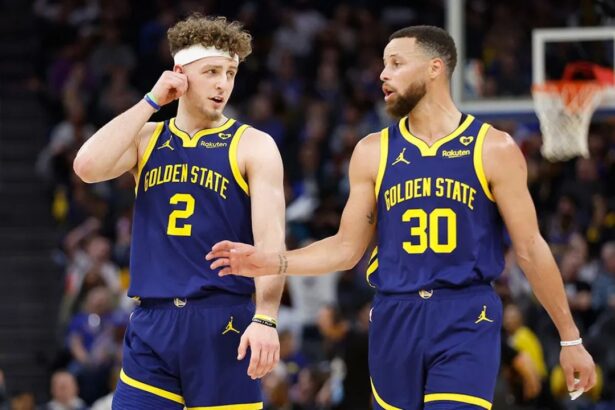
Stephen Curry is still the most portable offense in basketball. Even in Year 17, he bends the floor in a way nobody else can. The raw line is elite: 27.2 points on 46.8% from the field and 39.1% from three, with 4.8 assists and his usual off-ball gravity doing the hidden work.
The Warriors are 29-26 and sitting eighth in the West, and the split without him has been rough. That context matters for this ranking, because Curry’s season has not been “numbers in comfort.” When he’s out there, defenses still treat him like an emergency. They top-lock him, they trap, they switch aggressively, and the entire game becomes a sprint of decisions.
There’s also a real, current wrinkle: the knee issue has cost him time, and it’s the one reason he isn’t higher. He’s missed a chunk of games and even had to pull out of All-Star weekend. But when you isolate performance, the level stays obvious. The shooting is still premium. The efficiency is still premium. And his presence still changes every rotation decision an opponent makes.
If you want the short version of his case, it’s this: you can play Curry with almost any lineup and still get an elite offense because he creates spacing without holding the ball. That’s why his impact doesn’t track perfectly with assists. The ball moves better around him because defenders panic early.
At 10, it’s less about decline and more about availability and the two-way monsters above him. But on pure offensive influence, he’s still in the inner circle.
9. Cade Cunningham
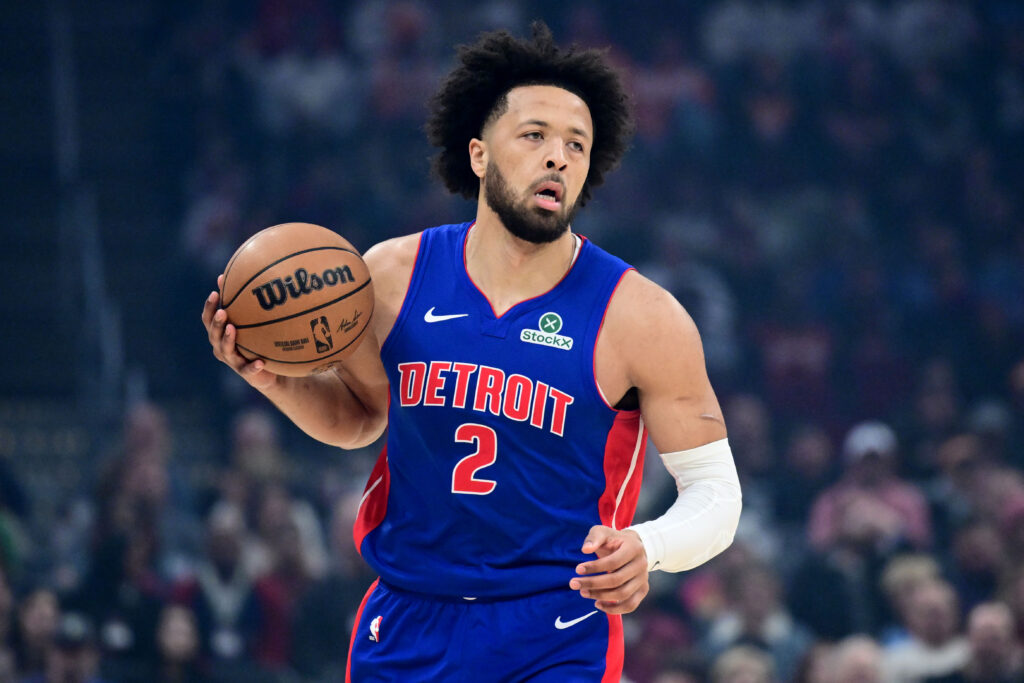
Stats: 25.3 PPG, 5.6 RPG, 9.6 APG, 1.5 SPG, 0.8 BPG, 46.2% FG, 33.0% 3P%
Cade Cunningham has been the season’s cleanest “do everything” guard. He’s basically carrying a No. 1 scoring load and a No. 1 creation load at the same time: 25.3 points and 9.6 assists, with real defensive production layered in. The profile reads like a top-tier engine, not a young star trending up.
The Pistons are 40-13 and first in the East, and that record is a major part of his case. This is not empty production. Detroit is winning at a top level, and Cunningham is the organizer who makes their possessions predictable in the best way. He gets them into actions early, he punishes mismatches without rushing, and he’s comfortable living in the midrange pockets where playoff defenses usually try to funnel you.
The efficiency isn’t perfect. The 33.0% from three is the number that keeps him from climbing even higher, because elite teams will test that shot in a series. But the counter is that he doesn’t rely on threes to control a game. He gets downhill, he lives at the elbows, and he sees second-line helpers before they even commit. That’s why the assists are so high. It’s not “drive and kick only.” It’s manipulation.
Defensively, he’s been more than passable. The steals and blocks show activity and timing, and it matches the eye test: he’s engaged, he’s using his size, and he’s not getting hunted the way some lead guards do.
If your list is only about this season’s performance, Cunningham has a real top-10 argument. You’re buying the nightly burden, the playmaking, and the fact it’s translating to wins.
8. Jaylen Brown
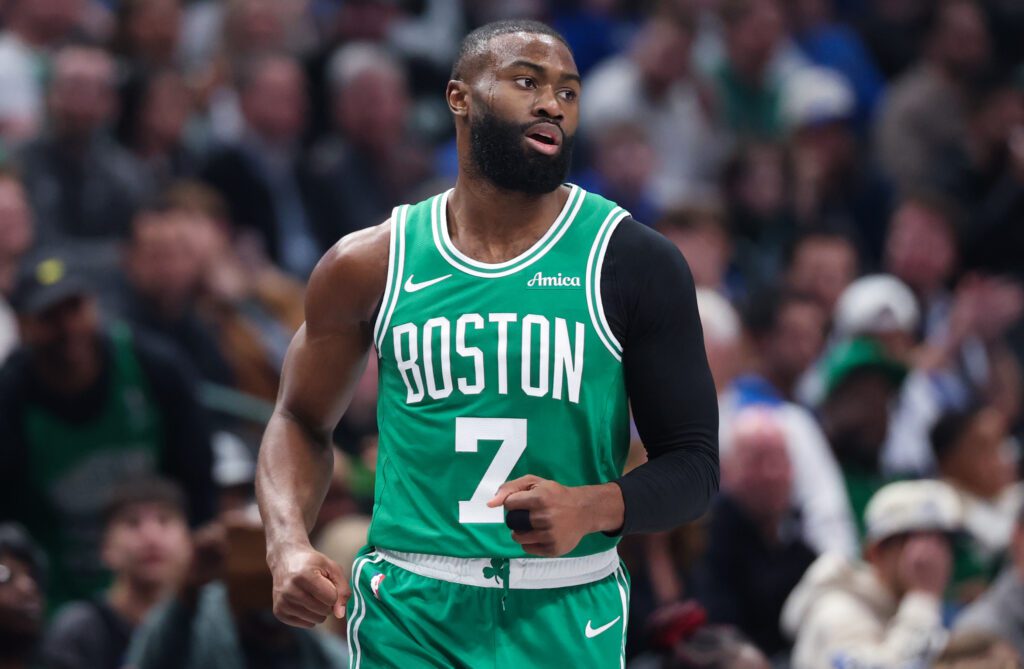
Stats: 29.3 PPG, 6.9 RPG, 4.7 APG, 1.0 SPG, 0.4 BPG, 48.3% FG, 34.8% 3P%
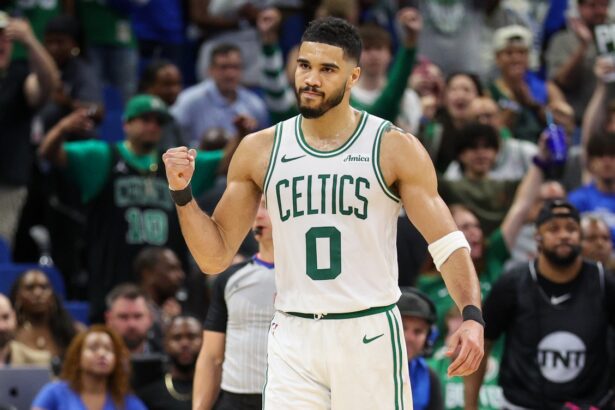
Jaylen Brown has put up superstar scoring volume without Jayson Tatum this season. The line is loud without being sloppy: 29.3 points on 48.3% from the field, plus 6.9 rebounds and 4.7 assists. This isn’t a “great second option” season anymore. It’s a top-end wing usage season.
The Celtics are 35-19 and second in the East, so it’s happening inside a high-pressure, high-expectation year. Brown’s value has been how consistently he can win a possession without the offense needing to be creative. Give him a mismatch, and he punishes it. Give him a switch, he attacks the hip and gets to the paint. Load the help, and his passing has been strong enough to punish the second defender more often than people assume.
The separator from the very top of the list is still shot profile and playmaking control. The three-point number (34.8%) is fine, not devastating, and he’s not quite the kind of passer who dictates every rotation the way the elite guard engines do. But that’s also why he’s such a clean playoff bet. His scoring isn’t dependent on one coverage. He can score against drop, switch, and show-and-recover because it’s built on strength and footwork, not just speed.
Defensively, he’s been solid even if the defensive stats don’t scream. He’s physical, he can take hard assignments, and he holds up when teams try to hunt matchups late. That matters in a “best players” list more than a steal number.
Brown at 8 is basically the reward for a true No. 1 scoring season on a contender-level team. If the jumper ticks up a little, the case gets even louder.
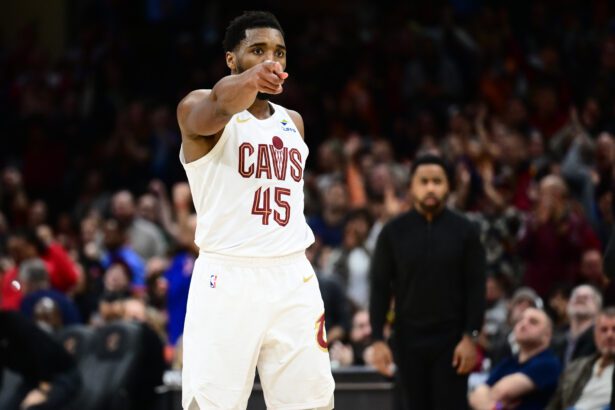
7. Donovan Mitchell
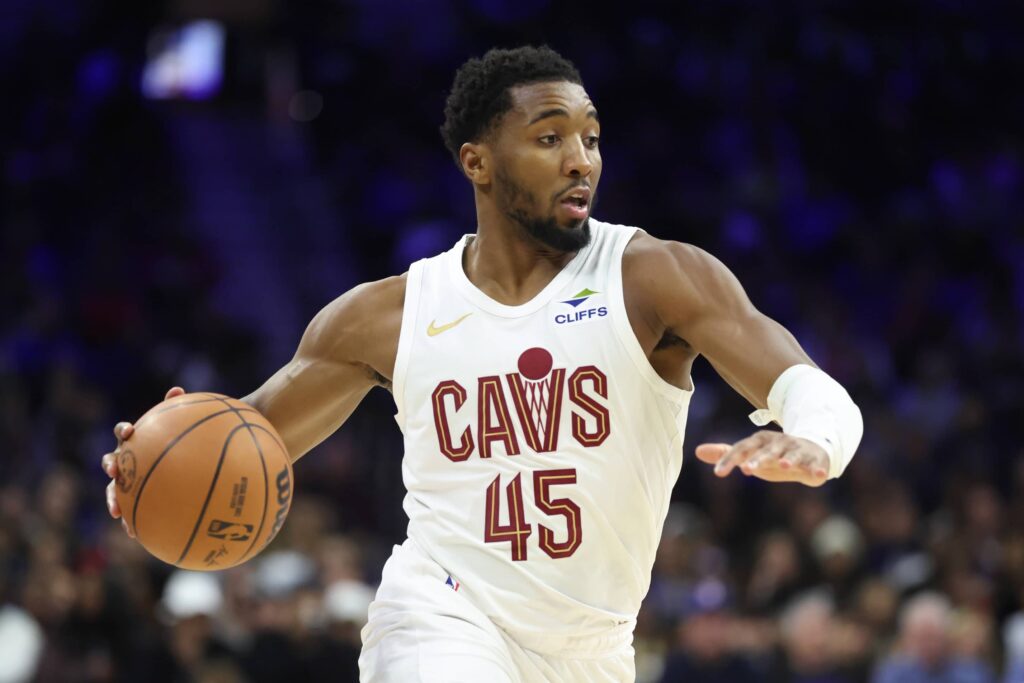
Stats: 29.0 PPG, 4.5 RPG, 5.9 APG, 1.5 SPG, 0.3 BPG, 48.7% FG, 37.6% 3P%
Donovan Mitchell has been a problem all season. The combination is exactly what separates elite guards from good ones: volume and efficiency together. He’s at 29.0 points on 48.7% from the field and 37.6% from three, with 5.9 assists and real defensive playmaking.
The Cavaliers are 34-21 and fourth in the East, and Mitchell is the main reason their offense has a late-game identity. When the game tightens, he can get a clean look against a set defense. That sounds basic, but it’s the entire postseason economy. He’s comfortable in pick-and-roll, he’s comfortable taking a switch, and he’s comfortable living in the pull-up zones where bigs can’t fully contest.
His passing has been good enough to keep defenses honest. He’s not a pure table-setter, but he’s not a scorer-only guard either. Those 5.9 assists are tied to real reads: hitting the roller early, finding the corner when the low man tags, and making the extra pass when a defense over-commits.
Defensively, he’s been active. The 1.5 steals per game fit with what you see: pressure at the point of attack and hands that disrupt passing lanes when teams try to swing out of traps. He’s not a wing stopper, but he’s also not a target you can ignore when you game-plan.
At 7, you’re basically saying this is one of the league’s best scoring seasons, and it’s attached to winning. I buy it. The only thing keeping him outside the top five is that the players above him either control the game with size on both ends or carry a bigger “system” burden.
6. Anthony Edwards
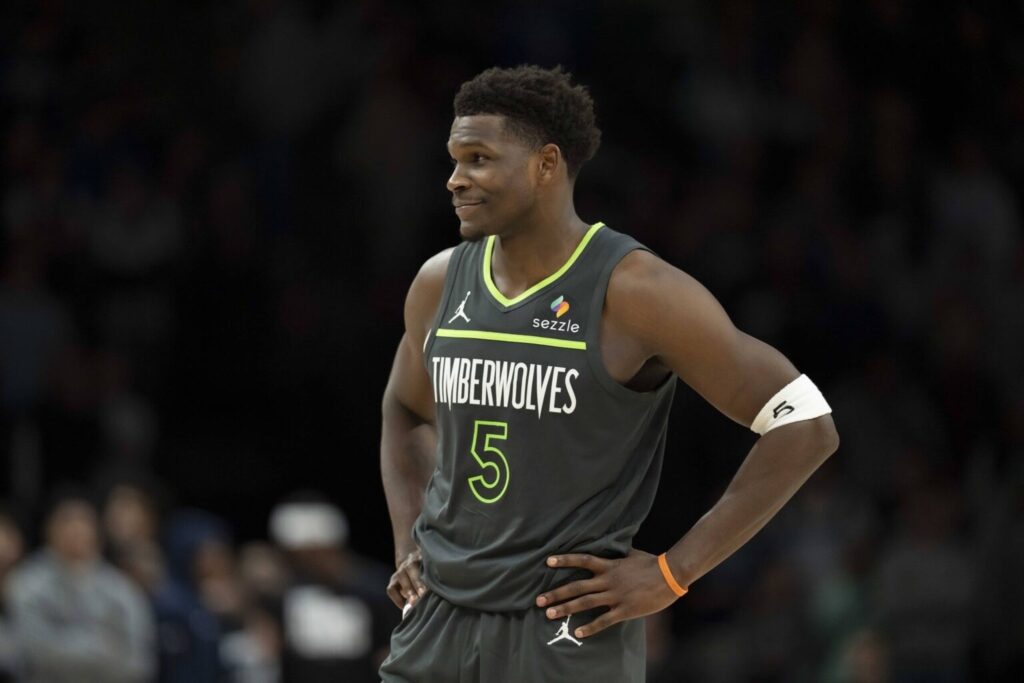
Stats: 29.3 PPG, 5.2 RPG, 3.7 APG, 1.3 SPG, 0.8 BPG, 49.3% FG, 40.2% 3P%
Anthony Edwards has been one of the most violent scorers in the league this season, and the shooting is what upgrades it from highlight to dominance. He’s at 29.3 points on 49.3% from the field and 40.2% from three. That’s elite guard-wing scoring with elite spacing impact.
The Timberwolves are 34-22 and sixth in the West, and Edwards is the clear center of gravity for what they do offensively. The playmaking (3.7 assists) isn’t the point of his season. The point is that he forces help so early that everyone else’s job becomes simpler. If the defense stays home, he gets to the rim or rises into a clean pull-up. If it sends help, he has gotten better at making the basic pass on time. That’s enough when your scoring pressure is this constant.
The biggest growth marker is the three. At 40.2%, teams can’t play the “go under and live with it” coverage that used to be the default against him. That changes everything. It pulls bigs higher. It opens lanes. It creates more transition because long rebounds turn into runouts.
Defensively, he’s been active without being perfect. The steal and block numbers show he’s engaged, and when he locks in, he can take tough matchups. The reason he’s 6 and not higher is simple: the very top of the list includes players who control both ends with size, or control the entire offense with passing. Edwards is closer than ever, but he’s still primarily a scorer first.
This has still been a top-six season. The efficiency jump makes it undeniable.
5. Victor Wembanyama
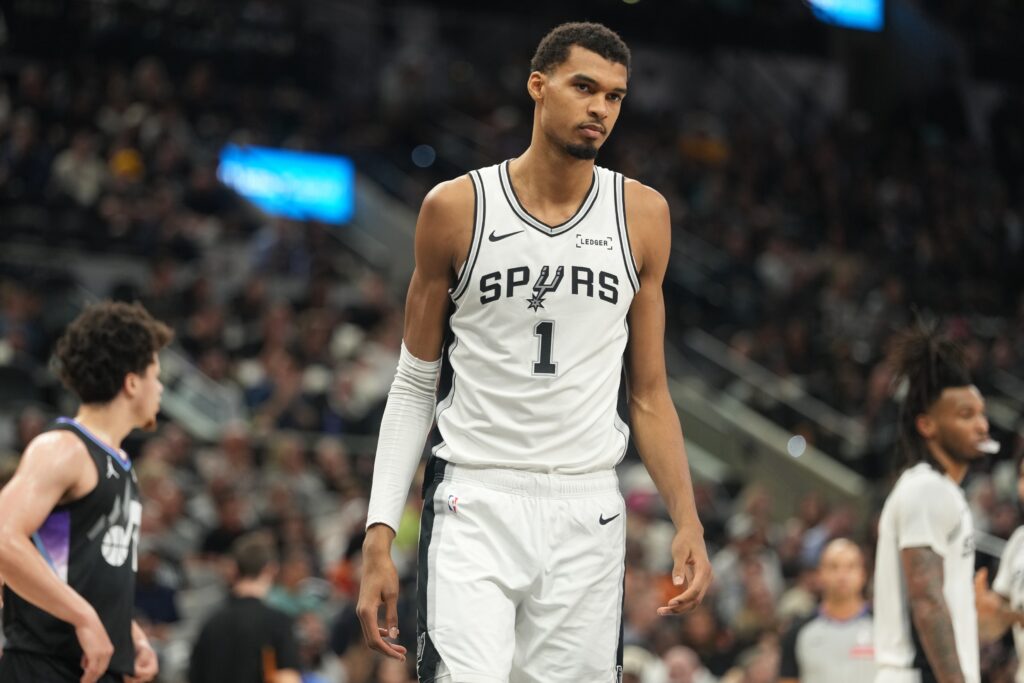
Stats: 24.4 PPG, 11.1 RPG, 2.8 APG, 1.0 SPG, 2.7 BPG, 51.1% FG, 36.3% 3P%
Victor Wembanyama is already a top-five player because his impact is structural. He changes what shots opponents can take. He changes how they run pick-and-roll. And he changes what lineups they feel comfortable playing. The box score shows it: 24.4 points, 11.1 rebounds, and 2.7 blocks, with real three-point shooting at 36.3%.
The Spurs are 38-16 and second in the West, and Wembanyama is the reason their defense has a ceiling that feels unfair. His rim protection isn’t just about blocks. It’s deterrence. Teams pull up early. They float shots. They avoid the paint. That changes shot quality for 48 minutes, and it travels in the playoffs.
Offensively, he’s become more efficient without losing aggression. The 51.1% from the field matters because a lot of his attempts are difficult by design, and he’s still converting. The three-point number matters because it forces bigs to guard him higher than they want to, which opens up cuts, slips, and second actions for the rest of the lineup. He doesn’t need to be a post hub to be a massive offensive piece.
The one thing keeping him from the top three is still creation polish. The assists (2.8) are fine, but he’s not yet dictating entire offensive possessions like the elite engines. That’s normal. What isn’t normal is being this dominant defensively while also scoring like a star and spacing like a wing.
At 5, you’re basically acknowledging the reality: his two-way impact is already championship-level. The only question is how quickly the offensive control catches up to the defensive dominance.
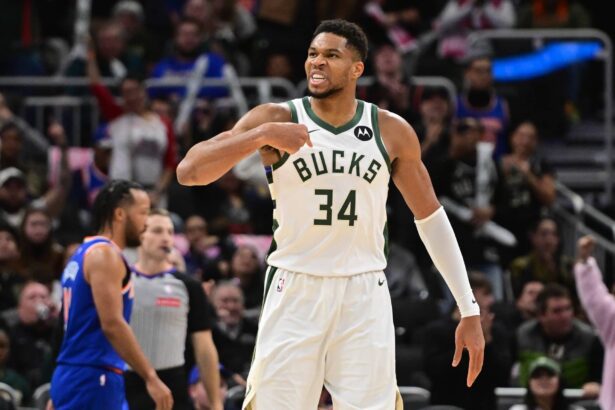
4. Giannis Antetokounmpo
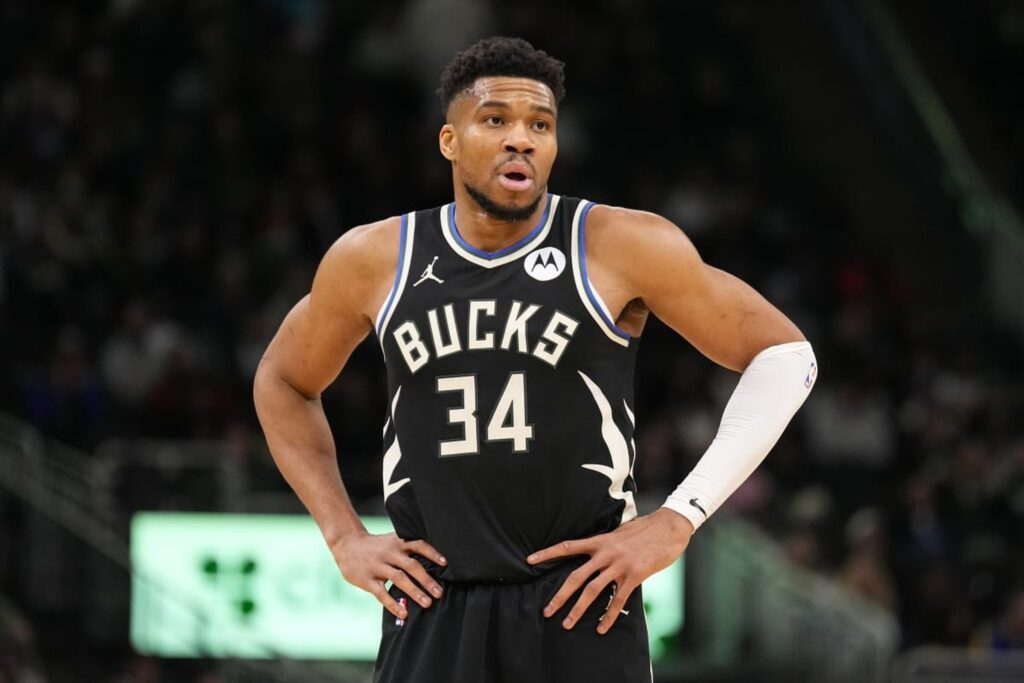
Stats: 28.0 PPG, 10.0 RPG, 5.6 APG, 0.9 SPG, 0.7 BPG, 64.5% FG, 39.5% 3P%
Giannis Antetokounmpo has been the most overwhelming paint force in the league again, and the efficiency tells you why it still breaks matchups. He’s scoring 28.0 a night while shooting 64.5% from the field, with 10.0 rebounds and 5.6 assists layered on top. That is not normal volume efficiency for a player who lives at the rim and still draws the defense’s entire attention on most possessions.
The Bucks’ season context is messy: 23-30 and 12th in the East. That record matters because it underlines how thin their margin has been, and it also changes how opponents play them. Teams can load up, crowd the paint, and dare spacing to beat them. Antetokounmpo has remained productive because his offense isn’t built on a single read. If you stay single, he gets to the rim. If you send help early, he’s improved at firing passes to the dunker spot or the weak-side corner. The 5.6 assists per game is the proof that the ball is coming out more reliably.
The injury note matters, too. He’s been dealing with a right calf strain and missed All-Star weekend because of it. That’s the only reason he isn’t pushing even harder for the top three based strictly on season value. But on pure level, he’s still a two-way matchup problem. Even without being a block machine, he changes rim decisions through presence, and he’s still one of the few players who can drag a defense into rotation on command.
At No. 4, you’re basically rewarding the nightly certainty: elite rim pressure, elite efficiency, real playmaking, and a physical edge that still determines how opponents have to build their game plan.
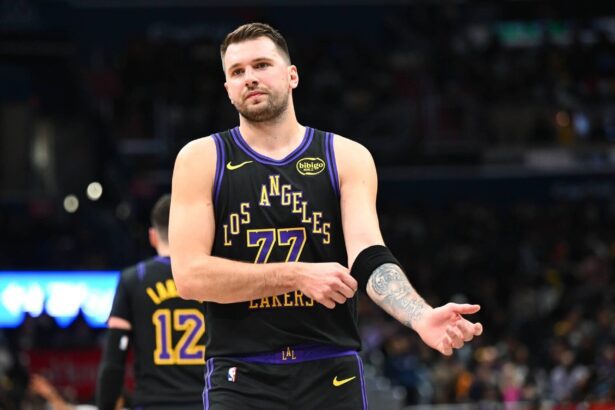
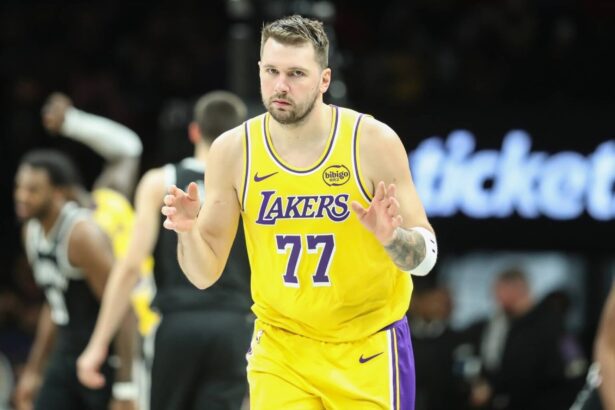
3. Luka Doncic
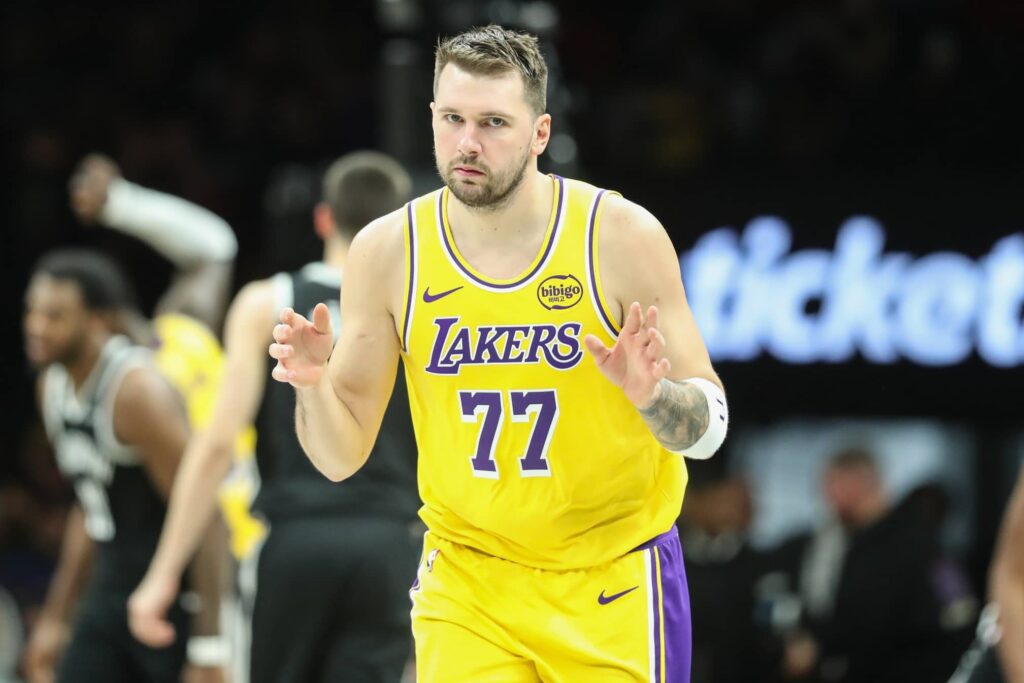
Stats: 32.8 PPG, 7.8 RPG, 8.6 APG, 1.5 SPG, 0.5 BPG, 47.3% FG, 34.5% 3P%
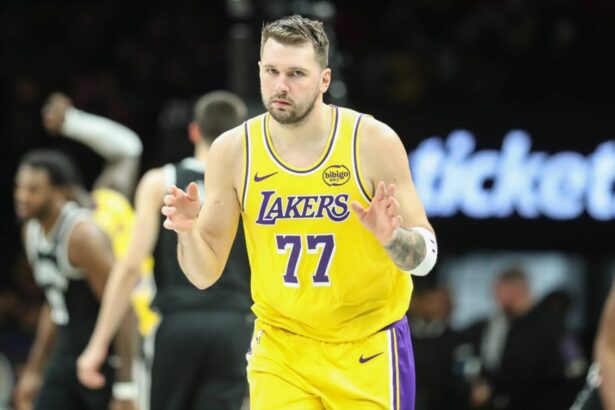
Luka Doncic has been the league’s most complete half-court offense this season, and the numbers read like a player controlling every possession type. He’s at 32.8 points, 8.6 assists, and 7.8 rebounds, with enough defensive playmaking to avoid being a one-way star. The scoring volume is top-tier, but the real separator is how he gets it. He can hunt switches, live in the middle, punish drop with floaters and pull-ups, and create a clean look late in the clock when the play breaks.
The Lakers are 33-21 and fifth in the West, which matters because this is production tied to real stakes. Their offense has leaned heavily on Doncic’s ability to generate advantages without needing pace or transition. When games slow down, he’s still creating efficient attempts because he manipulates help defenders as well as any guard in the league. His assist number is strong, but it understates the amount of offense he’s creating with “hockey assists,” quick swing passes, and paint touches that force rotation.
The one number that keeps him at No. 3 instead of No. 1 is the defensive effort and the efficiency gap compared with the very top. The 47.3% from the field is good at this volume, but it isn’t the absurd efficiency profile that separates the top spot. And while he competes defensively, he’s not changing shot quality the way the best two-way bigs do.
Still, if you’re ranking 2025-26 performance only, Doncic belongs here because his offense is a system. You can build any lineup around him and get a top offense, because he solves spacing, shot creation, and passing in one package. When the playoffs arrive, that kind of “coverage-proof” creation is exactly what wins series.
2. Shai Gilgeous-Alexander
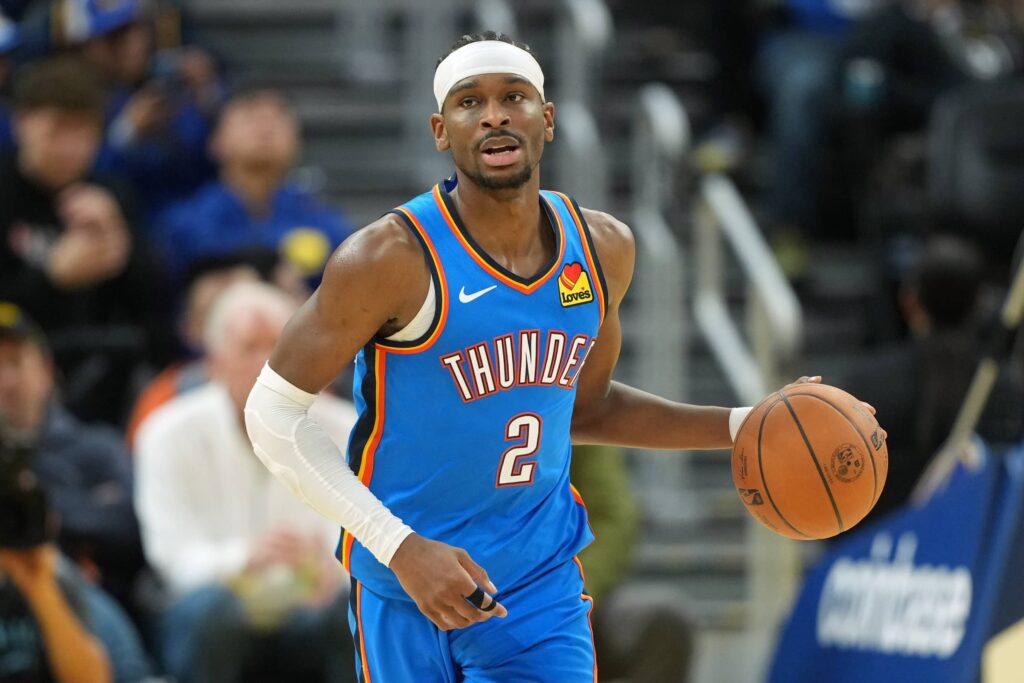
Stats: 31.8 PPG, 4.4 RPG, 6.4 APG, 1.3 SPG, 0.8 BPG, 55.4% FG, 39.0% 3P%
The reigning MVP, Shai Gilgeous-Alexander, has combined superstar volume with efficiency that normally only shows up in smaller roles. 31.8 points per game on 55.4% shooting, plus 6.4 assists and strong defensive production, is the profile of a player dictating the game every night. The scoring isn’t built on one shot, either. He gets to the rim, lives in the middle, draws fouls, and hits enough threes (39.0%) that defenses can’t play him for the drive.
The Thunder are 42-14 and first in the West, and that context matters because his production is attached to the league’s best record in the conference. The Thunder’s attack is fast and modern, but it still comes down to whether Gilgeous-Alexander can create a good shot against a set defense. This season, he has been the cleanest answer in the league at that job. He doesn’t waste possessions. He doesn’t force bad early-clock threes. He gets into the lane and makes the defense choose between a foul, a midrange look, or a rotation.
There is one complication: he’s currently sidelined with an abdominal injury, which is why he needed an All-Star replacement. But when he has been on the floor, the level has been top-two. At No. 2, you’re basically crediting the modern superstar blueprint: elite scoring volume, elite efficiency, real playmaking, and enough defensive activity to swing possessions.
His availability has been almost perfect; the case for No. 1 would be even louder considering how much he’s played. The production has been that strong. The No. 1 player in the league has just been impossible to match.
1. Nikola Jokic
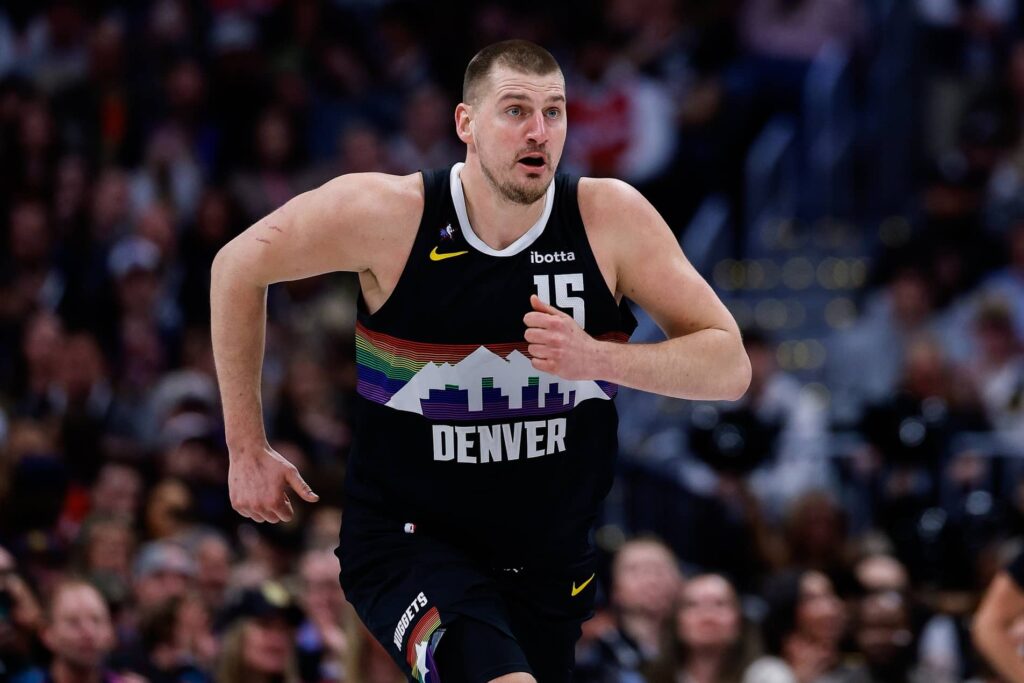
Stats: 28.7 PPG, 12.3 RPG, 10.7 APG, 1.4 SPG, 0.8 BPG, 59.0% FG, 42.0% 3P%
Nikola Jokic has been the best player in basketball this season because he’s doing the hardest thing to do at a historic level: running an elite offense without sacrificing efficiency. A near triple-double is almost normal for him now, but it still shouldn’t be treated like background noise. He’s at 28.7 points, 12.3 rebounds, and 10.7 assists, while shooting 59.0% from the field and 42.0% from three. That combination doesn’t exist anywhere else in the league.
The Nuggets are 35-20 and third in the West, and their entire identity still starts with Jokic as the hub. The offense isn’t just “give him the ball and hope.” It’s a constant sequence of reads: post catches that become layups for cutters, handoffs that become open threes, short rolls that become corner skips. Jokic’s passing is the system, and because he’s also a dominant scorer, teams can’t pick a single coverage to live with. If you stay home, he scores. If you help, he creates a better shot than the defense can give up.
The efficiency is the separator in a No. 1 case. Plenty of stars can put up 30. Very few can create for everyone else while staying this efficient on their own attempts. Jokic is doing both. And unlike most high-usage creators, his offense travels because it isn’t dependent on burst or whistle. It’s dependent on skill, timing, and leverage.
That’s why he’s No. 1, even with his 16 straight games missed in January. He’s producing like a scoring star, rebounding like a big man, and passing like the best point guard in the league, all at once.