The Houston Rockets badly needed a response, and they finally delivered one. After a rough stretch over the past few weeks and back-to-back losses against the Los Angeles Lakers that knocked them down to the fifth seed in the Western Conference, Houston entered this matchup searching for momentum.
Instead of another tight battle, they produced their most convincing performance in weeks, dismantling the Atlanta Hawks in a dominant 117-95 blowout.
From the opening quarter, the Rockets looked like a completely different team.
The offense flowed, the defense forced mistakes, and the energy that had been missing during their recent skid finally returned. Let’s get into the five main things we learned.
1. Kevin Durant Set The Tone Early
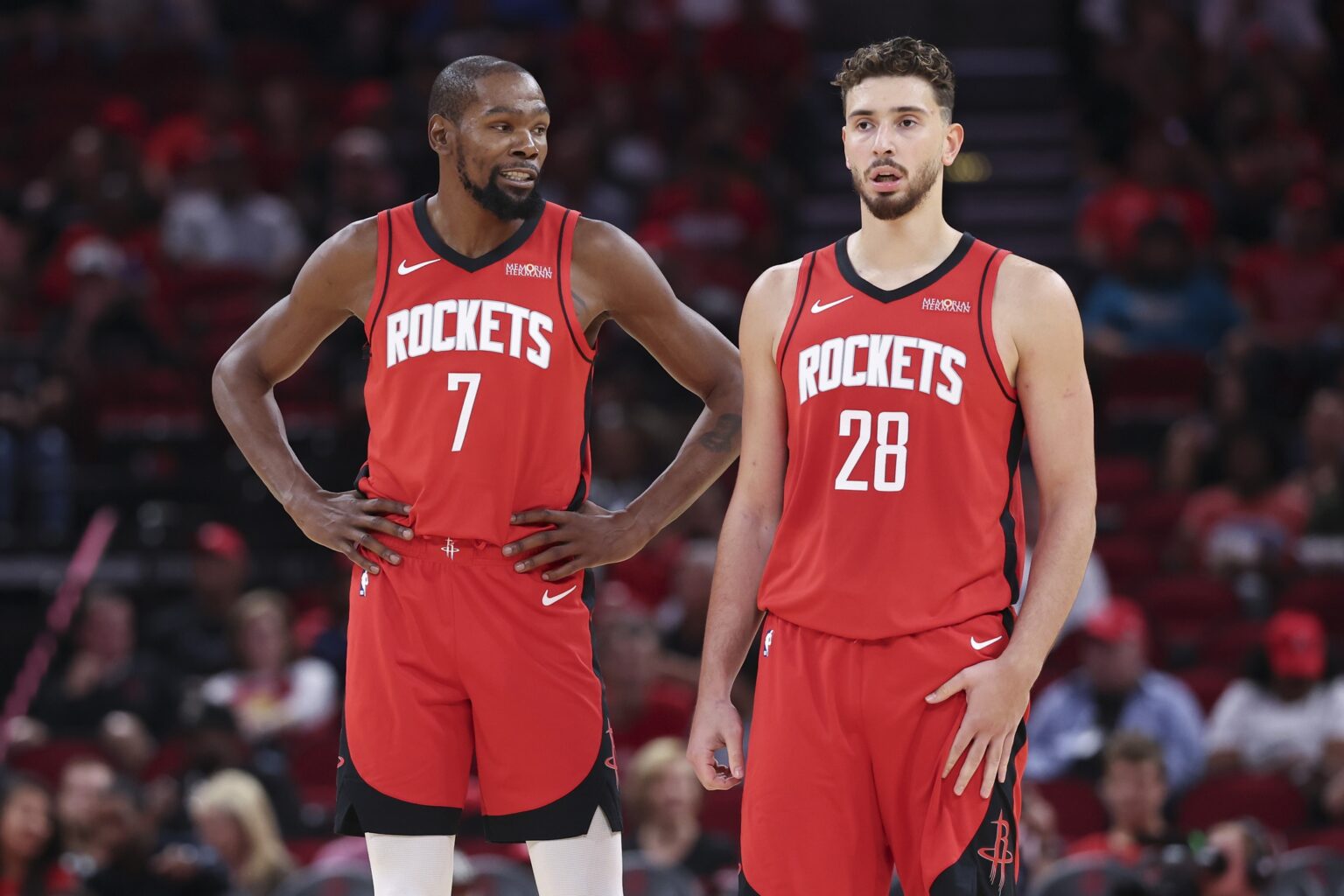
When a team is trying to snap out of a slump, it often starts with its biggest star, and Kevin Durant made sure Houston came out with the right mindset. He finished with 25 points on 9-15 shooting, adding six assists while controlling the offensive tempo.
More importantly, Durant played with aggression from the start. He attacked mismatches, moved the ball quickly, and made sure the Rockets built early momentum instead of falling into another sluggish start.
That kind of leadership matters for a team trying to stabilize its season. When Durant plays with that level of control, the Rockets look far more dangerous.
2. Alperen Sengun Anchored the Offense
Alperen Sengun put together one of the most complete performances of the night. His 15 points, 10 assists, and 9 rebounds showcased the versatility that makes Houston’s offense work.
Even with six turnovers, Sengun’s playmaking opened the floor. He consistently found cutters, kicked the ball out to shooters, and punished Atlanta whenever they collapsed into the paint.
When Sengun is facilitating like this, Houston becomes much harder to guard because their offense no longer depends solely on isolation scoring.
3. Houston’s Three-Point Shooting Finally Returned
Deep shooting has been integral to their success and also their downfall. It was good to see them make a strong number of their 3-point attempts.
The Rockets sank 14-30 from three (46.7%) against Atlanta, which aided their spacing. Reed Sheppard and Jabari Smith Jr. were excellent, constantly putting pressure on the defenders.
The more Houston hit threes, the more Atlanta let the game slip from their control.
4. Houston Dominated The Glass
Rebounding was yet another area of control for the Rockets. They finished the game with a 51-37 advantage on the boards, which included 12 offensive rebounds, leading to more second-chance opportunities.
Smith and Sengun were two players who helped Houston transform offensive rebounds into points as they dominated the physical battles in the paint. The bench also contributed, as did players like Tari Eason, who provided an extra possession and some energy.
Those extra rebounds kept Atlanta from building any momentum while also ensuring Houston maintained their pressure.
5. Atlanta Never Found Offensive Rhythm
The Hawks weren’t able to find any offensive comfort. They shot 42.4% from the field and a miserable 25.7% from 3, and they had a ton of long scoring droughts.
Although CJ McCollum and Nickeil Alexander-Walker enjoyed some offensive success, Atlanta was not able to do much when the Rockets’ defense put pressure on them.
As Houston transformed Atlanta’s unforced errors and misses into fast breaks, the game became much less close than it should have been.