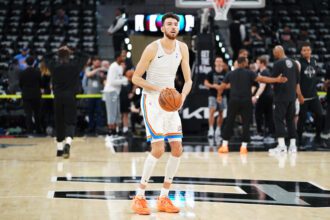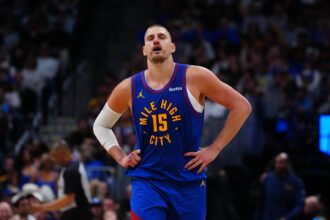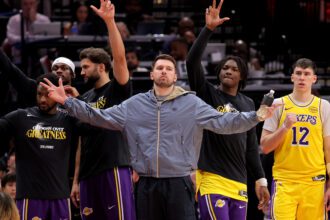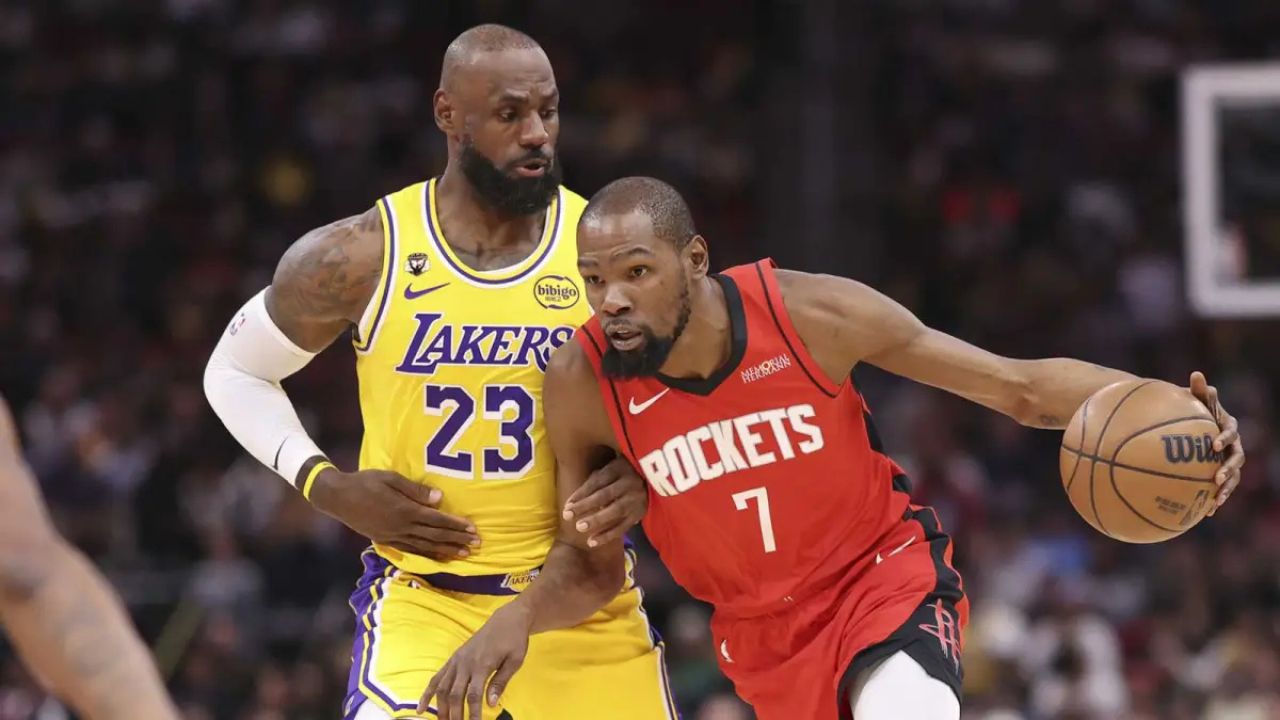
Game 1 opens with a strange setup. The Lakers have home-court advantage and have won the season series. The Rockets look like the healthier team, and maybe the more stable one, too.
The Lakers open the series against the Rockets on Saturday, April 18, at 8:30 PM ET at Crypto.com Arena. This is the West’s 4-5 matchup, with the Lakers coming in as the No. 4 seed and the Rockets right behind them at No. 5.
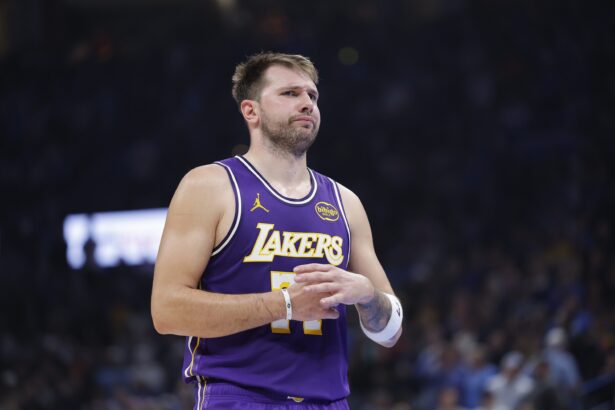
The Lakers took the regular-season series 2-1, but that needs context right away: Luka Doncic scored 76 total points in the two March wins, and he will not be on the floor for the opener.
That is why this does not feel like a normal Game 1. The Lakers closed the regular season without Doncic and Austin Reaves, while the Rockets won eight straight down the stretch and arrived here with a top-five defense again.
If the Lakers were healthy, the shape of the matchup would be easier to read. Without their top two scorers, it becomes much more about control, rebounding, and which team can get to its preferred style first.
LeBron James is still the biggest figure in the game for the Lakers. He finished the regular season with 20.9 points, 6.1 rebounds, and 7.2 assists, and the Lakers were still plus-11 points per 100 possessions in his minutes without Doncic and Reaves.
The Rockets bring the stronger, healthier top end right now with Kevin Durant at 26.0 points per game and Alperen Sengun at 20.4 points, 8.9 rebounds, and 6.2 assists. That is the real tension in this opener. The Lakers still have the smartest player on the floor. The Rockets have more of their usual offense available.
Injury Report
Lakers
Luka Doncic: Out (left hamstring strain)
Austin Reaves: Out (left oblique muscle strain)
Rockets
Fred VanVleet: Out (right knee ACL repair)
Steven Adams: Out (left ankle surgery)
Kevin Durant: Questionable (right knee contusion)
Why The Lakers Have The Advantage
The one clear season-long stat case for the Lakers is still their paint offense. They led the league in field goal percentage in the paint at 63.0%, and that becomes even more important now. Without Doncic and Reaves, the Lakers are not built to win this game by playing fancy offense for 48 minutes. They need direct offense. LeBron James getting downhill, early seals, short-roll touches, and finishes at the rim. That is the simplest version of their path.
The real Lakers’ edge in Game 1 is that they know exactly what they need to do. Pressure the Rockets’ ballhandling, shrink the floor on Sengun, and force the Rockets to play through second and third reads instead of letting them settle into a clean half-court rhythm. The Rockets committed 15.7 turnovers per 100 possessions in the regular season, the fourth-highest rate in the league. That is not a small weakness in this matchup. If the Lakers are going to score enough without their injured guards, transition chances are probably the easiest way to do it.
This is also a game where Marcus Smart becomes more important than his stat line. The Lakers do not need him to score 20. They need him to hit the Rockets first, defend the ball, and help LeBron James keep the game organized. If Smart can bother the first action and keep the Rockets from getting comfortable early, the Lakers can drag this game toward the kind of slower, more physical opener they should want. That is a big deal because the Rockets are at their best when the possession starts clean, and the defense has to react to Durant or Sengun in space. If the possession starts late or sideways, the game gets harder for them.
The other Lakers edge is that the Rockets can still be forced into uncomfortable matchups on the other end. If the Lakers use LeBron James as the organizer and keep spacing around him with Luke Kennard and Rui Hachimura, they can make the Rockets choose between helping on James or staying attached to shooters. The Lakers do not need beautiful offense here. They need enough decent offense to stay attached, and then they need to win the margin possessions with pressure, loose balls, and timely shot-making. At home, that is still a real formula.
Why The Rockets Have The Advantage
The one big season-long number that leans clearly toward the Rockets is point differential. The Rockets outscored opponents by 5.4 points per 100 possessions during the regular season, while the Lakers were at plus-1.5. That gap usually tells you which team was more stable over time. Add in a top-five defense for the second straight year, and the Rockets have a real base coming into this opener.
The bigger edge in Game 1 is simpler. The Rockets have more of their normal shot creation available. If Durant plays, they have the best healthy scorer in the series. Even if he is limited, they still have Sengun as a hub and Amen Thompson as the main downhill pressure point. That is a lot for a Lakers team already missing two primary creators. The Lakers can scheme some of it away. They probably cannot scheme all of it away for a full game.
The matchup also gives the Rockets some clean places to attack. They should put the Lakers’ weaker defenders into actions early and often, especially if Hachimura and Kennard are out there together. That means forcing switches, screening into the Lakers’ guard line, and making LeBron James defend more actions than he wants to in an opener. The Rockets do not need to play fast to do damage.
X-Factors
Marcus Smart is a real X-factor for the Lakers because his role is now much bigger than the box score. He finished the regular season with 9.3 points, 2.8 rebounds, 3.0 assists, and 1.4 steals. The Lakers need his defense first, but they also need his control. If Smart can pressure the ball, keep the Rockets from flowing into their offense too easily, and give the Lakers some steady secondary playmaking, he changes the feel of the game. This is the kind of opener where his toughness can matter more than his scoring.
Rui Hachimura is another big one for the Lakers because he has to score now. He posted 11.5 points and 3.3 rebounds this season while shooting 51.4% from the field and 44.3% from three. He should get some time on Durant while also needing to help keep the offense afloat. If Hachimura hits open threes and attacks closeouts with force, the Lakers can keep the floor from shrinking too much around LeBron.
Reed Sheppard is a huge swing piece for the Rockets because his role can change the shape of the spacing. He averaged 13.5 points, 2.9 rebounds, 3.4 assists, and 1.5 steals while shooting 39.4% from three. If he hits threes and survives defensively, the Rockets get much harder to guard. If the Lakers target him and win those minutes, the game tightens fast.
Jabari Smith Jr. is another big one because he touches both of the Rockets’ main advantages in this matchup. He averaged 15.8 points and 6.9 rebounds this season, and he gives the Rockets size, spacing, and another body on the glass. That is important against a Lakers team that needs to keep rebounding by committee. If Smith is a plus in his minutes as a shooter and a rebounder, the Rockets become much harder to push out of their comfort zone.
Prediction
Game 1 should be tighter than the injury report suggests because LeBron is still smart enough to control long stretches, and the Lakers are at home. But this matchup keeps coming back to the same problem. The Lakers are missing too much creation, and the Rockets have too many ways to turn that into a slow possession battle. If the Lakers cannot force turnovers and keep the Rockets to one shot, they are going to spend too much of the night trying to score uphill.
I think the Lakers hang around because James keeps the game under control for long stretches, and Smart gives them enough edge defensively. But the healthier team still has more clean answers. If Durant plays, that swings even harder toward the Rockets. Even if he is limited, Sengun, Thompson, and the offensive rebounding should be enough to carry the opener late.
Prediction: Lakers 108, Rockets 113