The Dallas Mavericks are officially stuck in it. What started as a rough patch has turned into a full-blown slide, and Friday night only made things worse. Phoenix walked into Dallas and never let the game breathe, cruising to a 120-111 win that handed the Mavericks their seventh straight loss and exposed just how fragile this group looks right now.
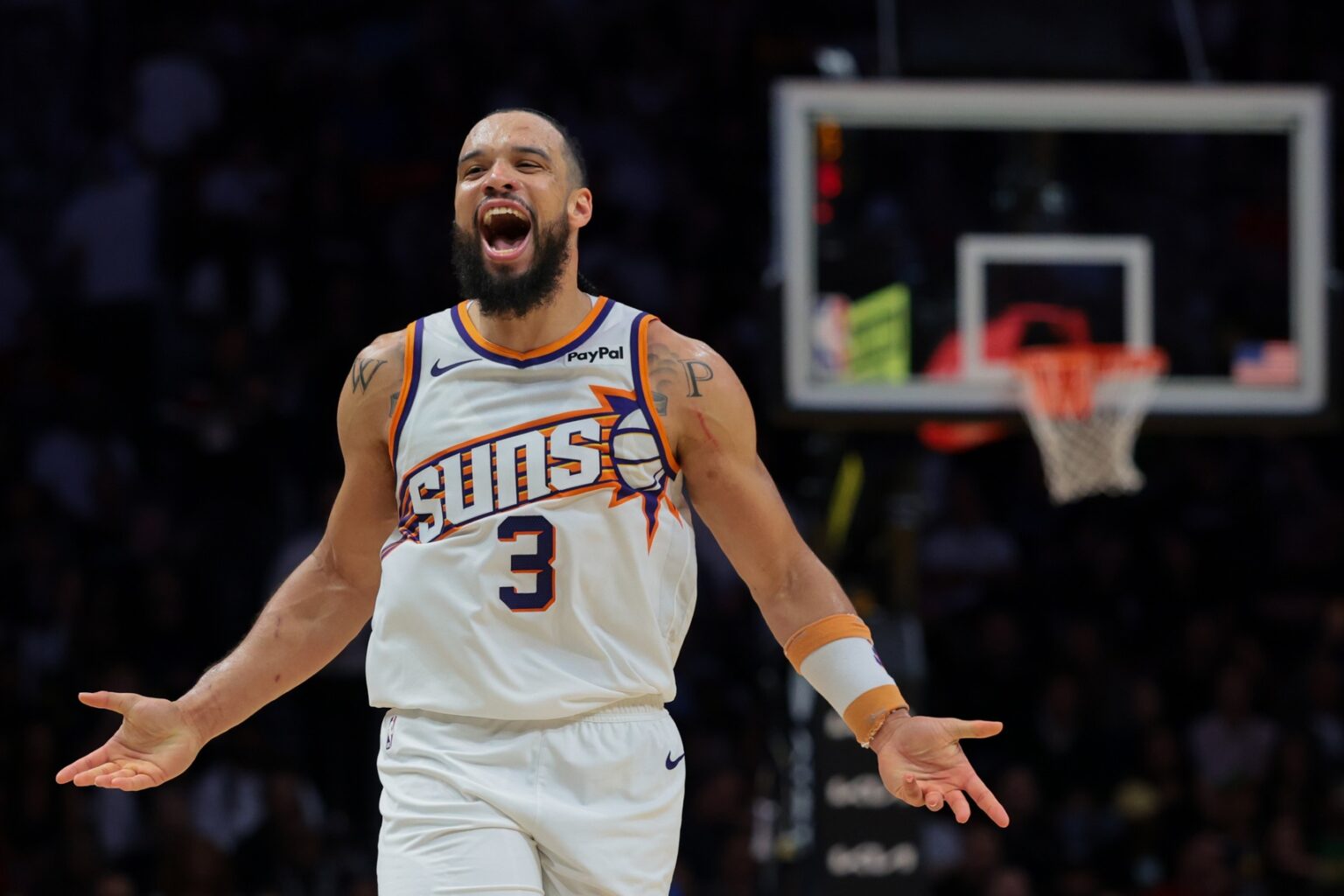
While the Suns got balanced contributions across the board, the tone was set by Dillon Brooks, who played with edge, confidence, and just enough chaos to keep Dallas off balance all night. Phoenix led for 96% of the game, built a lead as large as 31 points, and never looked threatened once they seized control midway through the first quarter.
1. Dillon Brooks Set The Emotional And Physical Tone
Brooks didn’t have a hyper-efficient shooting night, but he completely dictated the feel of the game. He finished with 23 points on 11-of-26 shooting, and while the 1-of-10 from three jumps off the page, his relentless downhill attacks kept Dallas scrambling defensively.
Time and again, Brooks attacked closeouts, forced mismatches, and made the Mavericks defend longer than they wanted to. Dallas struggled to contain him off the dribble, and his physicality wore on their perimeter defenders over the course of the night. Even when shots didn’t fall, Brooks stayed aggressive – and Phoenix fed off it.
Defensively, Brooks helped limit Dallas’ wings, forcing tough looks and contributing to the Mavericks’ 5-of-22 shooting from deep. His presence didn’t show up in the plus-minus column, but his influence was unmistakable from start to finish.
2. Dallas’ Three-Point Shooting Completely Fell Apart
The Mavericks simply couldn’t space the floor. Dallas finished the night shooting 22.7% from three, hitting just five triples as a team. That lack of perimeter shooting allowed Phoenix to pack the paint and challenge everything inside without consequence.
Even when Dallas got to the rim and drew fouls, they attempted 44 free throws, compared to Phoenix’s nine; they couldn’t convert enough jumpers to close the gap. Phoenix was content to concede free throws, knowing Dallas couldn’t punish them from outside.
The numbers tell the story: Dallas shot 48.1% overall, but those makes were almost exclusively twos. When Phoenix answered with 16 made threes, the math simply didn’t work in Dallas’ favor.
3. Cooper Flagg Showed Star Potential, But He Was Left On An Island
If there was one bright spot for Dallas, it was Cooper Flagg. The rookie delivered a strong all-around performance, finishing with 27 points, five rebounds, and 11-of-14 from the free-throw line in 36 minutes.
Flagg attacked the rim confidently, absorbed contact, and didn’t shy away from responsibility even as the deficit grew. He was the Mavericks’ most consistent offensive threat and posted a +10 plus-minus, a rare positive in a tough night for the starters.
The issue? He got very little help. Dallas’ starting backcourt combined for seven points, and Flagg was often forced to create late in the clock against a set defense. His growth is evident, but the burden on him right now is enormous.
4. Phoenix’s Depth And Ball Movement Crushed Dallas Late
Phoenix didn’t rely on one scorer to put this game away. They recorded 32 assists on 49 made field goals, carving up Dallas with ball movement and patient execution. When the Mavericks overhelped, Phoenix made them pay.
The Suns dominated the glass as well, winning the rebounding battle 49-42 and grabbing 18 offensive rebounds. Those extra possessions repeatedly stalled any momentum Dallas tried to build and led to clean second-chance looks.
Off the bench, Phoenix received strong contributions across the rotation, including Oso Ighodaro’s 10 points and 10 rebounds in just 23 minutes. Dallas simply couldn’t match that energy or execution once the game tilted.
5. The Mavericks’ Losing Streak Is Starting To Look Structural
Seven straight losses rarely happen by accident, and the cracks are becoming harder to ignore. Dallas committed 16 turnovers, struggled to generate assists (just 18), and often looked disconnected on both ends of the floor.
Despite scoring 52 points in the paint, Dallas couldn’t sustain defensive stops. Phoenix shot 48.0% overall, got whatever they wanted early, and forced Dallas to play catch-up for nearly the entire game.
Most concerning: Dallas only led for 3% of the night. This wasn’t a collapse – it was a game they never truly controlled. Until the Mavericks rediscover spacing, cohesion, and defensive urgency, this slide isn’t going anywhere.