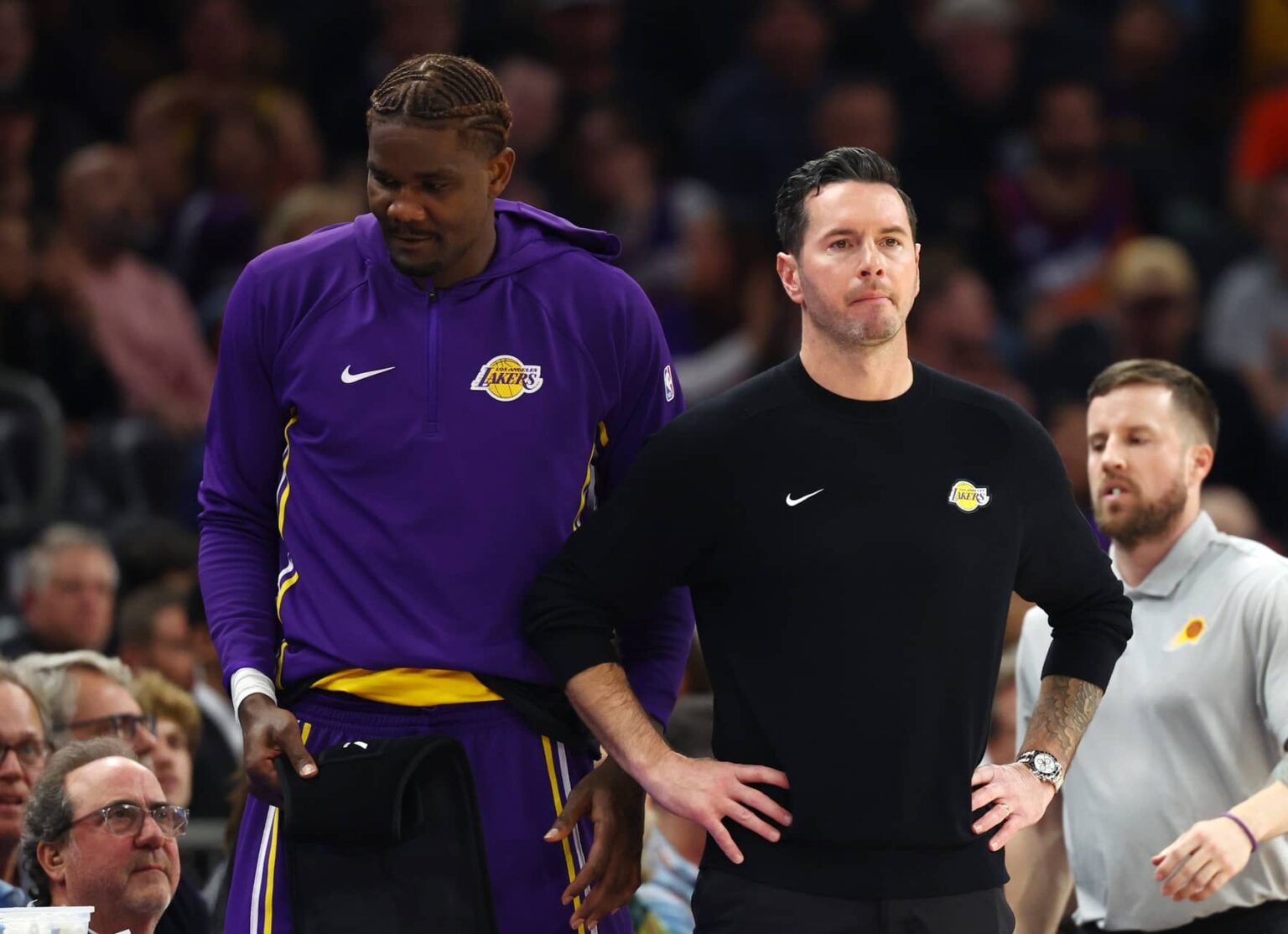
JJ Redick did not overthink it. When asked why Jaxson Hayes closed the game over Deandre Ayton in the 128-121 win over the Memphis Grizzlies, the Los Angeles Lakers head coach offered a four-word answer that said everything:
“He was playing better.”
That blunt explanation summed up the night perfectly.
Ayton, who entered the game averaging a solid 14.3 points and 8.5 rebounds on 61.0% shooting, simply did not show up with the presence the Lakers needed. He finished with just four points and six rebounds in 25 minutes, attempted only four shots, and played less than a minute in the fourth quarter. For long stretches, he looked disengaged, especially once the offense stopped running through him early.
Hayes, on the other hand, flipped the game with energy. Coming off the bench, he delivered 12 points on 5-of-6 shooting, added two steals and a block, and brought constant movement on both ends. Redick trusted him enough to play nearly the entire fourth quarter, and the decision paid off immediately. The Lakers outscored the Grizzlies during Hayes’ closing stretch and protected their lead with far more activity at the rim.
This was not about box score dominance. It was about effort, urgency, and fit. Hayes sprinted the floor, finished plays without hesitation, contested shots, and stayed locked in defensively. Ayton, by contrast, drifted when touches were limited. That has been a recurring issue throughout his career, and on a night when the Lakers needed edge and responsiveness, Redick had no reason to stay loyal to the depth chart.
Redick’s handling of the situation also signals something larger. This Lakers team is trying to establish accountability, especially during a stretch where wins have been harder to come by. Sitting a starting center in crunch time is not a subtle message. It is a reminder that minutes are earned possession by possession, not guaranteed by reputation or contract.
Hayes is not a perfect solution. He averages just 6.4 points and 3.9 rebounds on the season, and his role is clearly limited. But on this night, he gave the Lakers exactly what they needed: effort without hesitation. Redick recognized it in real time and leaned into it.
The message was unmistakable. Playing time is not about status, touches, or past production. It is about who is impacting the game right now. Ayton has heard this criticism before in Phoenix and elsewhere. Whether this benching becomes a wake-up call or another data point in a troubling pattern depends entirely on how he responds.
For now, Redick’s four words stand as both explanation and warning. If Hayes is playing better, he will play. The Lakers are done waiting for effort to arrive on its own.