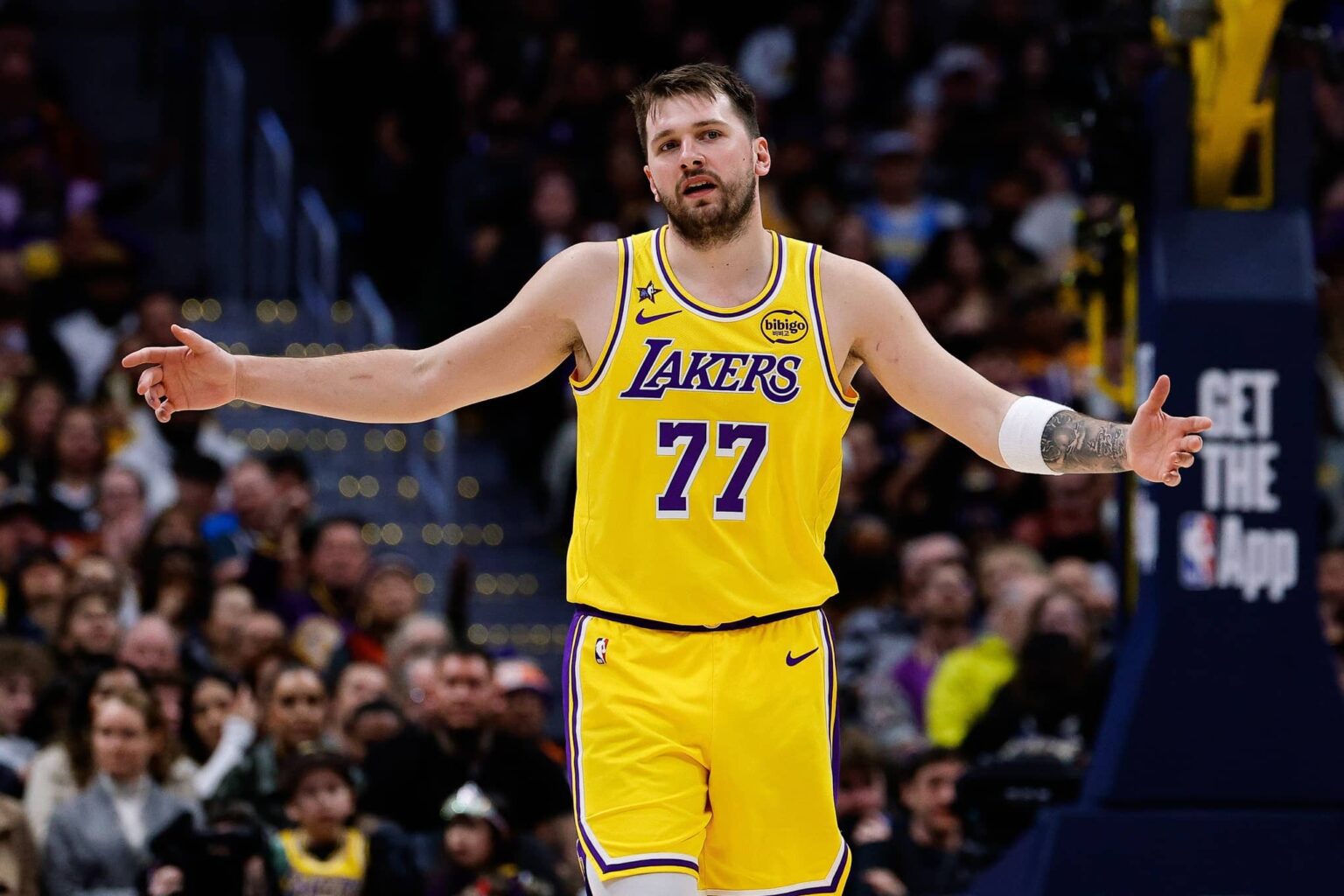
Luka Doncic has built a reputation as one of the most unstoppable offensive engines in basketball, and if games ended at halftime, he might be running away with every scoring title in sight. Through 44 games this season, Doncic is averaging 19.6 points, 5.0 assists, and 4.0 rebounds in just 18.9 first-half minutes per game. He is shooting 49.3% from the field, 37.9% from three, and posting a blistering 63.7% true shooting mark.
Those numbers are not just elite, they are dominant. He leads the league in first-half scoring by a wide margin.
Then the second half begins, and the production shifts in a way that is difficult to ignore.
In second halves this season, Doncic is averaging 13.8 points, 3.9 rebounds, and 3.7 assists in 17.4 minutes per game. His efficiency dips to 44.3% from the field, 32.3% from three, and 57.8% true shooting. The drop is not minor. It is significant in both volume and efficiency. He ranks ninth in the league in second-half scoring, which is still strong, but relative to his first-half dominance, it is a sharp decline.
What makes this even more fascinating is that it is not new.
Last season, the pattern was nearly identical. In 2024 to 25, Doncic averaged 16.1 first-half points on 45.9% shooting and 38.5% from three, with a 61.1% true shooting mark. In the second half, that fell to 12.2 points on 43.7% from the field, 34.2% from three, and 55.7% true shooting.
Among the 22 players who averaged at least 12 second-half points last season, Doncic was the second least efficient scorer, ahead of only Paolo Banchero. His efficiency and scoring drop-offs were the largest of that group.
This year tells the same story. Of the top 15 second-half scorers in the league, only Doncic and Tyrese Maxey post a lower true shooting percentage in the second half compared to the first. Maxey’s dip is modest, dropping 0.8 points in volume and about five percentage points in efficiency. Doncic, on the other hand, drops 5.5 points and nearly six percentage points in true shooting. Relative to his peers, it is a statistical anomaly.
Minutes do not explain it. He plays roughly 17 to 18 minutes in second halves, which is in line with other stars. Fatigue could be a factor, but most elite players either maintain or improve efficiency late in games when rotations tighten, and stars take over.
Interestingly, Doncic still averages 32.8 points, 7.7 rebounds, and 8.5 assists for the full game, shooting 47.1% from the field, 35.5% from three-point range, and 61.2% true shooting.
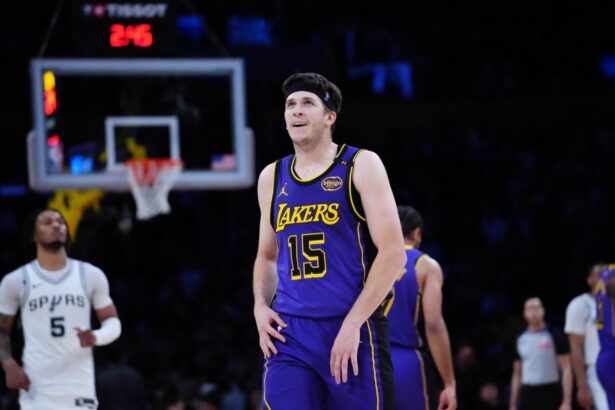
He leads the league in first-quarter scoring at 11.9 points per game, ranks second in second-quarter scoring at 7.7 points, and even sits third in third-quarter scoring at 9.3 points. Yet in the fourth quarter, he drops all the way to 35th in the league at just 5.3 points per game. Often, Austin Reaves and LeBron James assume more of the late-game scoring burden for the Los Angeles Lakers.
This is not an indictment of Doncic’s greatness. He remains one of the most productive players in basketball. However, the contrast between his first-half brilliance and second-half regression is real and unusually consistent. For two straight seasons, he has been historic early and merely average late.
For a player chasing championships and individual accolades, that second-half trend is one of the few statistical quirks in an otherwise legendary offensive profile.