Scoring volume is often treated as a shortcut to team success, but NBA history has shown that even high-level individual production does not always lead to a playoff berth. Some stars have spent years putting up major scoring outputs before ever appearing in the postseason, whether because of injuries, weak supporting casts, or long rebuilding cycles.
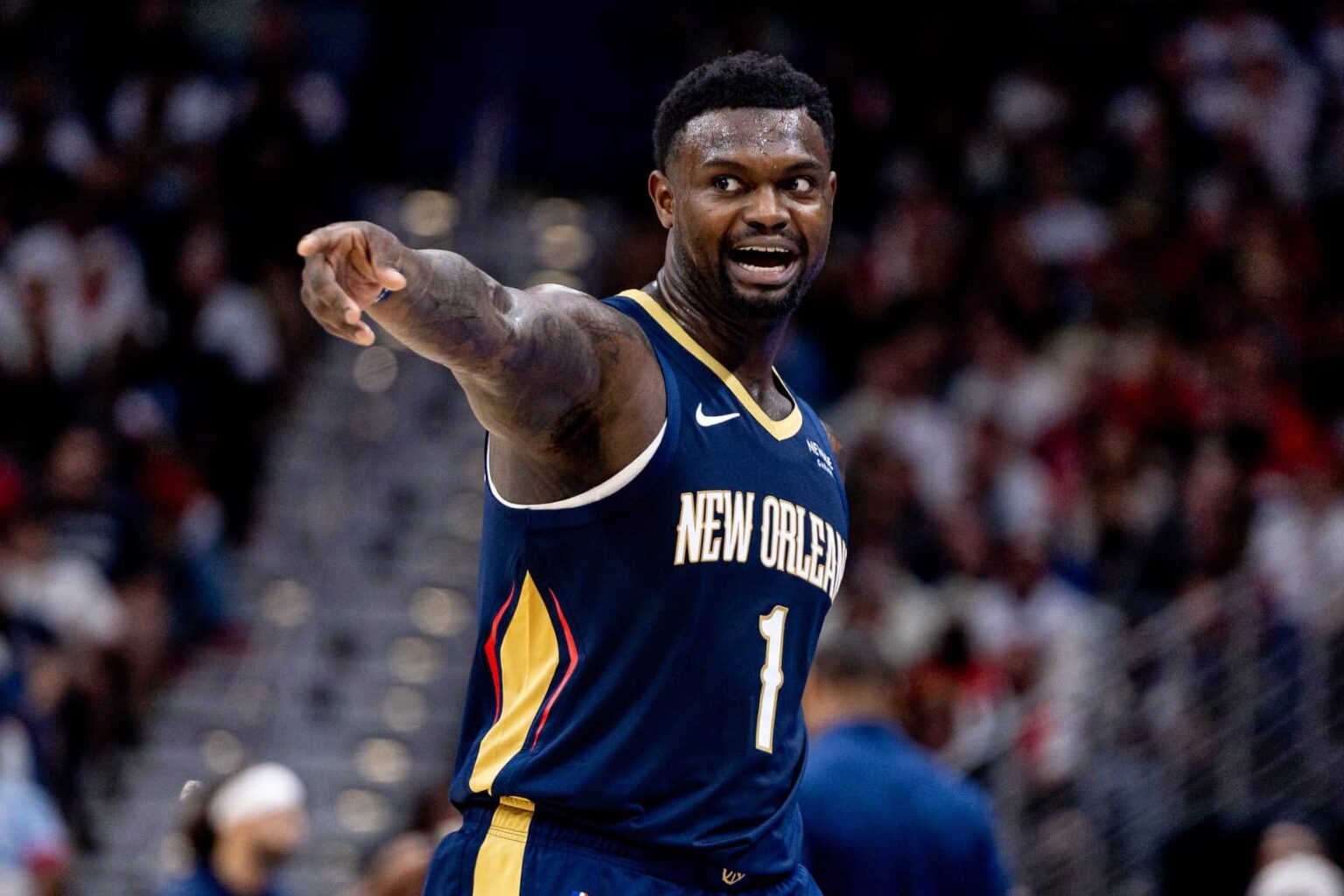
Zion Williamson is one of the clearest recent examples. When available, he has produced at an All-Star level and scored with rare efficiency, yet the Pelicans still struggled to turn that into a stable playoff run during his tenure. Kevin Love carried a similar distinction for years in Minnesota, where his numbers consistently ranked among the league’s best even as the Timberwolves remained outside the Western Conference playoff picture.
This list looks at the NBA players who scored the most career points while never making an appearance in the playoffs, a reminder that individual production and team success do not always arrive on the same timeline.
10. Ryan Gomes – 4,926 Points
Ryan Gomes built a long NBA career without ever reaching the postseason. He appeared in 487 regular-season games across eight seasons and finished with 4,926 points, placing him on this list as one of the most productive players to miss the playoffs for his entire career. He averaged 10.1 points, 4.6 rebounds, and 1.5 assists per game, and he did it mostly through steady rotation value rather than star-level usage. Gomes never made an All-Star team, but he was a reliable forward for several non-playoff groups and logged major minutes early in his career.
After being selected by the Celtics with the No. 50 pick in the 2005 NBA Draft, Gomes earned All-Rookie Second Team honors and quickly established himself as a dependable frontcourt scorer. He played 61 games as a rookie, then 73 in his second season, averaging 12.1 points and 5.6 rebounds in 2006-07. His role grew even more after he was included in the Kevin Garnett trade and landed with the Timberwolves, where he produced the best numbers of his career. In 2007-08, Gomes averaged 12.6 points and 5.8 rebounds in all 82 games. In 2008-09, he again played all 82 games and posted a career-high 13.3 points per game.
That durability made his playoff drought more striking. Gomes was available, productive and consistently in the rotation, but the teams he played for never broke through. He later spent time with the Clippers and Thunder, but by then his role had declined sharply. Even so, his total scoring output remained significant because of how much he played during his prime years. Gomes was never the type of player who would carry a team on his own, but his place on this list shows how a solid, lengthy career can still unfold entirely outside the postseason.
9. Deni Avdija – 5,300 Points
Deni Avdija has already made his way into superstar talks without appearing in a playoff game, which is striking given the level he has reached this season. Through March 16, 2026, Avdija is up to 5,300 career points and has turned this year into a clear breakout campaign, averaging 24.1 points, 6.9 rebounds, and 6.7 assists for the Trail Blazers. He was rewarded with his first All-Star selection in February, becoming the first Israeli player to make the NBA All-Star Game.
That context is what makes his place on this list stand out. Avdija is no longer just a promising forward on a rebuilding team. He is producing like a lead option and doing it with real offensive responsibility. He has carried a major creation load, scored efficiently enough to justify that usage, and given the Trail Blazers a player who can function as a scorer, secondary ball-handler, and transition engine in the same game.
His rise has also pushed the Trail Blazers into the postseason conversation, even if they are still on the outside looking in for now. As of mid-March, they sit 10th in the Western Conference at 32-36, which puts them in the Play-In range but still short of an official playoff berth.
Avdija’s case is different from many of the older names on this list because he is still in the middle of building his résumé. He is only 25, he has already made an All-Star team, and his playoff drought is more about timing than stagnation. As the 9th pick in the 2020 draft for the Wizards, right after they made their last postseason appearance with Russell Westbrook and Bradley Beal, he’s always been a piece of rebuilding cycles.
Still, until the Trail Blazers finish the job, the points continue to count here. That is what puts Avdija in this ranking: star-level production, growing team relevance, and still no postseason appearance yet.
8. LaMelo Ball – 5,963 Points
LaMelo Ball entered the league as the No. 3 pick in the 2020 NBA Draft and immediately became the face of a rebuilding Hornets team. He won Rookie of the Year in 2020-21 after averaging 15.7 points, 5.9 rebounds, and 6.1 assists, but the team finished 10th in the East and lost in the Play-In Tournament.
The next season, Ball made his first All-Star team and helped the Hornets go 43-39, yet that year also ended in the Play-In rather than the playoffs. Since then, injuries, roster instability, and uneven team progress have kept him from reaching the postseason. Through March 16, 2026, he has appeared in 288 regular-season games and still has not played a playoff game.
What stands out is that Ball has continued to produce at a high level despite that team context. For his career, he has averaged 20.7 points, 5.7 rebounds, and 7.3 assists per game, giving the Hornets a primary creator who can score, pass, and control pace. This season, he is averaging 19.3 points, 4.8 rebounds, and 7.1 assists, numbers that do not fully capture how important he has been to one of the league’s better late-season runs.
The difference now is that the Hornets finally look positioned to end the drought. Entering the last stage of the regular season, they are 34-34 and sit 10th in the East, firmly in the Play-In race. The Hornets had gone 11-1 in their last 12 road games before the March 14 loss to the Spurs, and the team was also 8-3 since late February.
Ball has remained central to that push, including an 11-game win streak and a 30-point outing in a March 12 win over the Kings. If the Hornets finish the job, this should be the season that removes him from this list.
7. Brandon Knight – 5,499 Points
Brandon Knight entered the NBA as the No. 8 pick in the 2011 draft, joining a Pistons team that was already stuck outside the playoff picture. He made the All-Rookie First Team in his first season and quickly took on a major role, but the team never got into the postseason during his time there. The same pattern followed him through the rest of his career. He put up points, handled real offensive responsibility, and still never appeared in a playoff game.
The peak years of Knight’s career came with the Bucks and Suns. In 2014-15, split between those two teams, he averaged 17.8 points, 4.3 rebounds, and 5.4 assists per game. The next season with the Suns, he posted a career-high 19.6 points per game while adding 5.1 assists and 3.9 rebounds. Those were not empty bench numbers.
Knight was a starting guard playing heavy minutes and creating a significant share of his team’s offense. Across his NBA career, he played 451 regular-season games and averaged 14.0 points, 3.9 assists, and 3.1 rebounds while shooting 35.2% from three and 80.7% from the line.
His playoff drought is tied as much to circumstance as to performance. The Pistons were rebuilding when he arrived. The Suns never stabilized around him. Injuries also disrupted the second half of his career and limited his ability to sustain that mid-career momentum. By the time he reached later stops with the Rockets, Cavaliers, another short stint with the Pistons, and then the Mavericks, he was no longer in the same role.
Knight finished his NBA career with 5,499 points and no playoff appearances, which is why his name lands this high on the list. He was productive for long enough, and in large enough roles, to build a substantial total without ever getting the postseason opportunity.
6. Zion Williamson – 6,091 Points
Zion Williamson’s case is one of the strangest on this list because the talent has never been in question. He entered the league as the No. 1 pick in the 2019 NBA Draft and, from the start, looked like a franchise-level scorer. In his first healthy season, he averaged 27.0 points, 7.2 rebounds, and 3.7 assists while shooting 61.1% from the field, earning his first All-Star selection in 2020-21. The Pelicans still finished 11th in the West and missed even the Play-In field.
That pattern has followed him for most of his career. The Pelicans did reach the playoffs in 2021-22 after finishing 36-46 and then winning two Play-In games, but Williamson missed the entire season and never appeared in that postseason run. In 2022-23, he averaged 26.0 points, 7.0 rebounds, and 4.6 assists, yet the Pelicans finished 42-40, landed ninth, and were eliminated in the Play-In Tournament. In 2023-24, the team won 49 games and finished seventh, but Williamson was again unavailable for the playoff series after suffering a hamstring injury in the Play-In opener.
What separates Williamson from most names here is the level of production. For his career, he has averaged 24.0 points, 6.5 rebounds, and 4.1 assists while shooting 58.8% from the field, a rare blend of volume and efficiency for a frontcourt scorer.
This season, he is averaging 21.4 points, 5.9 rebounds, and 3.3 assists in 51 games. Even as the 13th seed in the West, the Pelicans have shown signs of life lately, winning seven of 10 before their March 14 loss to the Rockets, but Williamson still remains on this list because none of that production has yet led to a single playoff appearance on the floor.
5. Keldon Johnson – 6,599 Points
Keldon Johnson’s place on this list is mostly about timing. He was drafted by the Spurs with the No. 29 pick in 2019, right as the franchise was moving out of its long playoff era and into a reset. His first season in San Antonio ended at 32-39, outside the playoff field in the bubble year. The Spurs then reached the Play-In Tournament in both 2020-21 and 2021-22, finishing 10th each time, but they lost before reaching an actual playoff series. After that, the franchise shifted fully into a rebuild and finished 14th, 14th, and 13th in the West over the next three seasons.
That stretch left Johnson with strong career production but no postseason games. He has played 437 regular-season games, all with the Spurs, and has averaged 15.1 points, 5.4 rebounds, and 2.0 assists. He peaked as a scorer in 2022-23, when he put up 22.0 points per game on a rebuilding roster and carried a much larger offensive burden than he does now. Over time, his role changed from featured scorer to a more balanced piece within a deeper rotation, but the point total kept growing because he stayed productive for years before the team became relevant again.
This season gives the story a very different ending. Johnson is averaging 12.8 points and 5.5 rebounds in a bench role, while the Spurs have climbed to 49-18 and sit second in the West entering Monday’s game against the Clippers. The Spurs are one of the league’s hottest teams, and the standings now make it clear that Johnson’s drought is about to end. Barring a collapse, he is finally going to reach the playoffs after spending the first seven years of his career on the wrong side of the bracket.
4. Eddy Curry – 6,820 Points
Eddy Curry is one of the clearest examples of how this kind of streak can build in unusual ways. He was the No. 4 pick in the 2001 draft and developed into an efficient interior scorer early with the Bulls. By 2004-05, he was leading the team in scoring at 16.1 points per game while shooting 53.8% from the field, and the Bulls finally returned to the postseason for the first time since 1998. But Curry never got to play in that run. An irregular heartbeat ended his season in April 2005 and kept him out of the playoffs entirely.
That moment changed the shape of his career. Instead of making his playoff debut with the Bulls, Curry was traded to the Knicks before the next season and spent the rest of his prime on teams that never got there. His best individual year came in 2006-07, when he averaged 19.5 points and 7.0 rebounds in 81 games while shooting 57.6% from the field. He was a productive low-post scorer, drew fouls, finished efficiently, and for a few years gave the Knicks real offensive value even as the roster around him kept falling short.
By the time Curry finally landed with the Heat in 2011-12, he was no longer the same player. He appeared in only 14 regular-season games that year and did not appear in the postseason on a title team built around LeBron James, Dwyane Wade, and Chris Bosh. That is what makes his placement here so specific. Before he ever got onto a playoff team roster, and before his career reached that late Heat chapter, Curry had already piled up 6,820 regular-season points.
Across 527 regular-season games, Curry averaged 12.9 points and 5.2 rebounds while shooting 54.5% from the field. His career never fully matched the expectations that came with his draft status, but the scoring volume was still substantial enough to put him near the top of this list.
3. Miles Bridges – 7,674 Points
Miles Bridges has spent his entire NBA career with the Hornets, and most of it has unfolded in the gap between individual production and team progress. He was selected with the No. 12 pick in the 2018 draft, arriving on a roster that was already headed toward a reset. The Hornets finished 39-43 in his rookie season and missed the postseason, then entered a longer rebuilding stretch around a younger core. Bridges developed from an athletic complementary forward into one of the team’s main scorers, but that growth did not immediately change the results.
There were a few near-misses. The Hornets reached the Play-In Tournament in 2020-21 and again in 2021-22, but both seasons ended before the playoffs began. Bridges was productive in that window, especially in 2021-22, when he averaged a career-high 20.2 points, 7.0 rebounds, and 3.8 assists. That season looked like the start of a different phase for both player and franchise, but it did not lead to a playoff berth, and his career point total kept rising without a postseason appearance attached to it.
His overall body of work is larger than people tend to remember. Bridges has played 487 regular-season games and owns career averages of 15.9 points, 6.1 rebounds, and 2.8 assists. This season, he has remained a key piece, averaging 17.6 points, 5.8 rebounds, and 3.4 assists in 63 games.
Now, unlike some of the older names on this list, the drought looks close to ending. They sit 10th in the East, while they had gone 23-11 since January 1 and 8-3 since late February before the loss to the Spurs. Bridges has been part of that push, including 26 points against the Kings and 22 against the Spurs in two of their recent wins and competitive outings. The playoff spot is not secured yet, but for the first time in his career, there is a clear path for Bridges to leave this list soon.
2. Collin Sexton – 8,883 Points
Collin Sexton entered the league as the No. 8 pick in the 2018 draft, arriving on a Cavaliers roster that had just lost LeBron James and was beginning a full reset. From the start, he was asked to score. He averaged 16.7 points as a rookie, then raised that to 20.8 in his second season and 24.3 in his third. Those early Cavaliers teams were not close to playoff level, finishing 14th, 15th, and 13th in the East in his first three seasons. Sexton produced, but the team context never gave him a path to the postseason.
The closest he came was 2021-22, when the Cavaliers reached the Play-In Tournament, but Sexton played only 11 games that season because of a torn meniscus. The Cavs lost in the Play-In, which meant his playoff drought remained intact. He was later traded to the Jazz, where the same pattern followed. In Utah, Sexton stayed outside the bracket, first as a competitive non-playoff team and then as a clearer rebuilding group. Across his career, Sexton has played 477 regular-season games and averaged 18.6 points, 3.0 rebounds, and 4.2 assists.
What makes his place this high on the list notable is how much scoring he has done without ever having the stage that usually comes with that kind of total. He has had multiple 20-point seasons, has consistently put pressure on the rim, and has functioned as both a lead guard and a secondary scorer depending on the roster around him.
This season, he has split time between the Hornets and Bulls, continuing to add to that total while still waiting for a first playoff appearance. Sexton’s career is a straightforward example of how a productive scorer can spend years on unstable teams and keep climbing a list like this almost by default.
1. Lauri Markkanen – 9,869 Points
Lauri Markkanen’s path is different because his career has included both steady production and a genuine star turn, but still no playoff games. He was selected with the No. 7 pick in the 2017 draft and immediately became an important part of the Bulls’ frontcourt. He averaged 15.2 points and 7.5 rebounds as a rookie, but those Bulls teams were in transition and never reached the postseason.
He later moved to the Cavaliers, who made the Play-In Tournament in 2021-22 but did not advance to the playoffs. After that came the trade to the Jazz, where his individual career took off even as the team moved further from contention.
Markkanen has been far more than a compiler on losing teams. He became an All-Star and won Most Improved Player in 2022-23 after averaging 25.6 points and 8.6 rebounds. That season established him as a legitimate offensive centerpiece, a seven-footer who could score at all three levels and carry real usage without sacrificing efficiency.
For his career, he has played 492 regular-season games and averaged 18.9 points and 7.2 rebounds. That kind of output, sustained across multiple stops, is why he sits at the top of this list.
The team results are what kept him here. The Jazz has fallen well out of the race this season and has dropped 17 of its last 22 games entering March 16. They continue to lose ground, with younger players carrying much of the scoring load late in the year. Markkanen’s individual résumé is already much stronger than most names in this ranking, but until he reaches the postseason, the drought remains attached to him. In that sense, he is the cleanest example on the list: high draft status, major production, an All-Star peak, and still no playoff appearance.