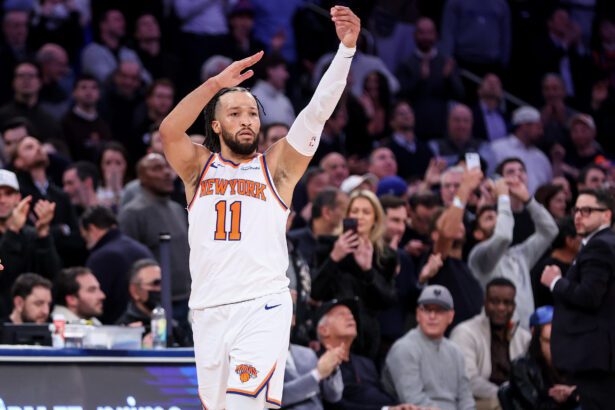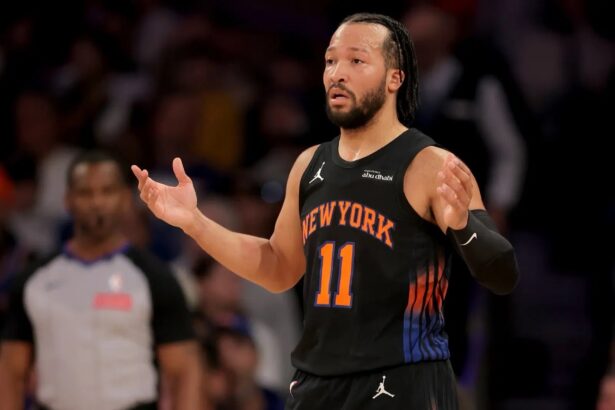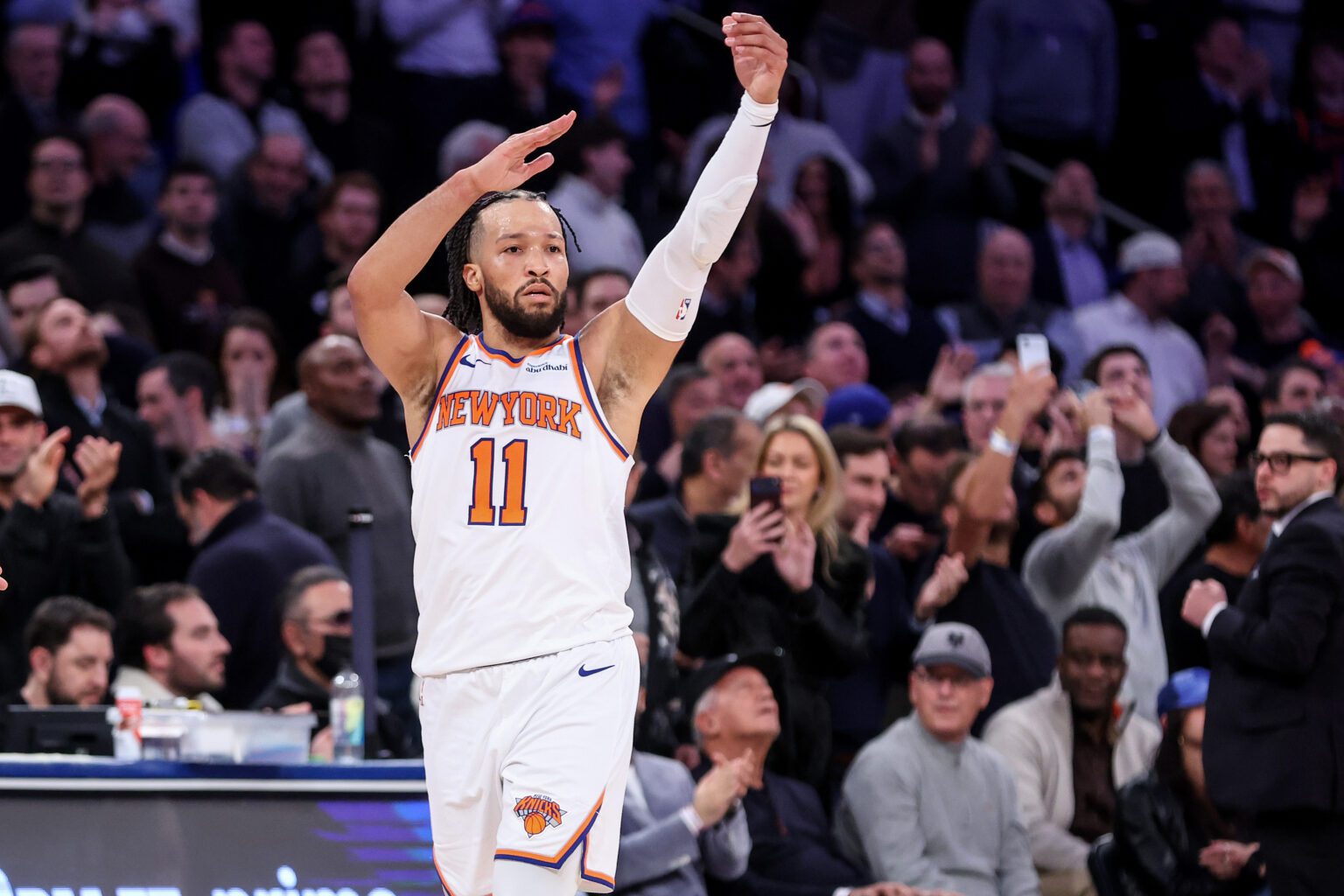
The New York Knicks endured a close one. In a tightly contested game where momentum swung repeatedly, Jalen Brunson once again proved why he’s one of the NBA’s most dominant closers, lifting New York to a 108-105 win over the Atlanta Hawks.
Atlanta actually led for 52% of the game and controlled stretches with perimeter shooting, but when execution mattered most, the Knicks were sharper. Brunson’s late-game control ultimately separated two teams that were otherwise locked in a physical, possession-by-possession fight.
1. Jalen Brunson Took Over In Winning Time
Jalen Brunson once again showed elite composure under pressure, finishing with 30 points and 13 assists while shooting 11-26 from the field. More importantly, he controlled the final minutes, dictating pace and creating high-quality looks when the Knicks needed them most.
Despite committing three turnovers, Brunson consistently responded with poise. Whether it was navigating pick-and-roll coverage or attacking mismatches, he ensured New York got organized offense down the stretch.
In close games, execution is everything, and Brunson’s ability to deliver in those moments continues to define the Knicks’ identity.
2. Knicks Won The Interior Battle Decisively
While Atlanta leaned on perimeter shooting, New York imposed its will inside. The Knicks outscored the Hawks 52-34 in the paint, creating a consistent source of offense even when outside shots weren’t falling.
Karl-Anthony Towns led that effort with 21 points, 12 rebounds, and 6 assists on an efficient 9-12 shooting. His ability to score and facilitate from the interior gave New York a reliable offensive foundation.
Mitchell Robinson added 12 rebounds and 3 blocks off the bench, helping anchor the defense and limit second-chance opportunities despite Atlanta grabbing 19 offensive boards.
3. Hawks’ Three-Point Shooting Kept Them Alive
The Atlanta Hawks stayed competitive largely due to their perimeter production, knocking down 16-42 from three (38.1%).
Nickeil Alexander-Walker was the standout, pouring in 36 points on 12-19 shooting, including 7-11 from beyond the arc. His shot-making gave Atlanta a constant scoring threat and helped erase deficits throughout the game.
Jalen Johnson contributed 21 points and 11 rebounds, but outside of those performances, Atlanta struggled to generate consistent offense. The reliance on tough perimeter shots ultimately made sustaining runs difficult.
4. Second-Chance Opportunities Nearly Swung The Game
Atlanta’s 19 offensive rebounds were a major factor, giving them extra possessions and keeping pressure on New York’s defense. Dyson Daniels and Onyeka Okongwu combined to create multiple second-chance opportunities that could have flipped the outcome.
However, the Hawks couldn’t consistently convert those chances into points. Despite the rebounding advantage (48-47 overall), they shot just 40.0% from the field, which negated the extra possessions.
On the other side, the Knicks were more efficient with fewer opportunities – a critical difference in a three-point game.
5. Knicks’ Efficiency And Execution Made The Difference
New York’s field goal percentage of 50%, compared to Atlanta’s 40%, defined the outcome. Even with 17 turnovers, New York’s possession management was as good as it could get.
Unlike most teams, New York was able to get some of the scoring done by their bench. OG Anunoby helped New York a lot with 22 points and great two-way play. Mikal Bridges helped a lot as well with good efficiency and 15 points. Other than Brunson, no player was relied on to carry the team.
New York’s defensive game was a game winner. They were able to keep Atlanta from scoring high-percentage shots in the winning moments and that’s what really helped New York win the game.