The New York Knicks came into this season looking like a real heavyweight; they stacked wins early, grabbed the NBA Cup, and rolled into January sitting in the No. 2 spot like it was business as usual. Then everything snapped.
They’re 25-18 now, down to the No. 3 seed, and the freefall is loud: nine losses in their last 11 games, with the Garden booing and the whole thing suddenly feeling less like “contender bumps” and more like “something’s broken.”
The wild part is it’s not one fluky week. Since they lifted the Cup, they’ve gone 7-11, and the efficiency has flipped from elite to shaky on both ends.
The Knicks didn’t just “cool off.” They flipped into a different team, and the numbers are loud enough that you can’t hand-wave it as random variance anymore.
Now let’s actually connect the nerdy stuff to what you’re seeing on the floor, because the eye test and the spreadsheets are saying the same thing.
The Defense Is Starting To Crack
If you want the clearest explanation for why the floor collapsed, start here. During the last 10 games, the Knicks have posted a 119.5 defensive rating and a net rating of -8.9. That is not a minor slump, that’s “you’re getting punched every night” territory.
The points allowed tell the same story in a simpler language. They’ve given up 115.7 points per game across this 10-game stretch, while scoring only 107.1. That gap is basically a built-in L unless you shoot lights-out, and they haven’t.
Now the “why” behind the numbers matters. The Knicks’ defensive problem hasn’t been one single thing; it’s been the chain reaction. The moment their initial containment slips even a little, they start scrambling. That scramble has created open threes, and it’s showing up loudly: they’ve allowed 39.8% from three over the last 10 games. That’s not “a few unlucky nights.” That’s a structural leak; teams are getting comfortable looks.
And when the three-point line burns you, it changes how you defend everything else. You start closing harder. You start rotating earlier. You start leaving the corners half a step too soon. That is how you get stuck living in “help mode,” and once you live there, you’re not really guarding anymore, you’re reacting. That’s how a team can look fine for six minutes, then suddenly give up a 10-2 run, and everybody’s hands are on their hips.
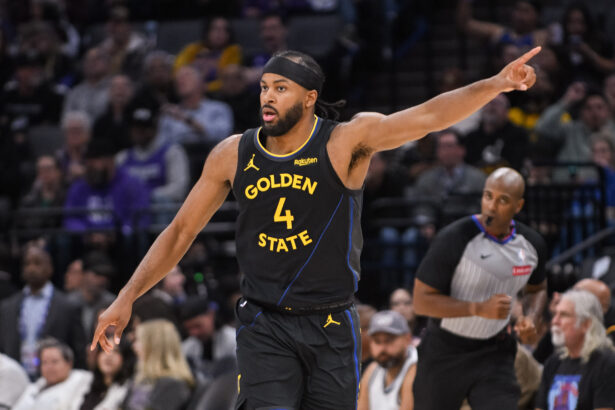
You can see the night-to-night pattern in the results. In the last 10, the Knicks have given up 130 to the 76ers, 121 to the Pistons, 126 to the Warriors, and 114 to the Mavericks. Those aren’t all elite offenses, but they all found ways to generate clean shots, especially after the Knicks’ first action defense broke down.
The Offense Lost Its Easy Buttons
The frustrating part is that the Knicks aren’t even playing super slow. Their pace over the last 10 games is 96.7. That’s not a team that’s walking the ball up every possession and milking the clock.
So why do they feel like they can’t score? Because pace doesn’t equal quality. Their offensive rating in the last 10 is 110.7, which pairs with that defensive rating to create the net disaster.
The real “feel” issue is shot quality and shot confidence. In the last 10 games, they’re at 43.3% from the field, 33.7% from three, and a 53.9% true shooting mark. Those are ugly efficiency numbers for a roster that’s supposed to have multiple creators and shooters on the floor at all times.
And the game logs show how often they’ve landed in the mud. They scored 99 on the Hawks while shooting 37.1% overall and 21.4% from three. They scored 90 against the Pistons in a 31-point loss. They scored 101 against the Kings while shooting 39.0% and just 19.5% from three. Then they scored 97 against the Mavericks while hitting 29.0% from deep and only 60.0% at the line. That is four different flavors of “nothing is easy.”
This is where the “nerd stuff” actually matters. When your true shooting dips, it’s rarely just “shots didn’t fall.” It’s usually the shot diet getting worse. More late-clock pull-ups. More contested threes because the first two actions didn’t bend the defense. More empty possessions where the ball gets stuck on one side, then someone bails you out with a tough attempt. That’s what it looks like when an offense loses its easy buttons.
It also lines up with what’s been reported about their overall drop since the Cup run. Pre-Cup, they played like a top-tier offense. Post-Cup, the efficiency fell hard, and the defense went from respectable to a mess. That’s not just a cold week; that’s a longer trend.
The Brunson Problem Is Bigger Than The Injury
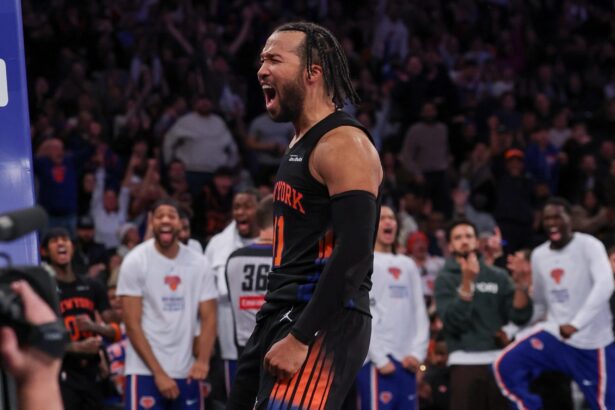
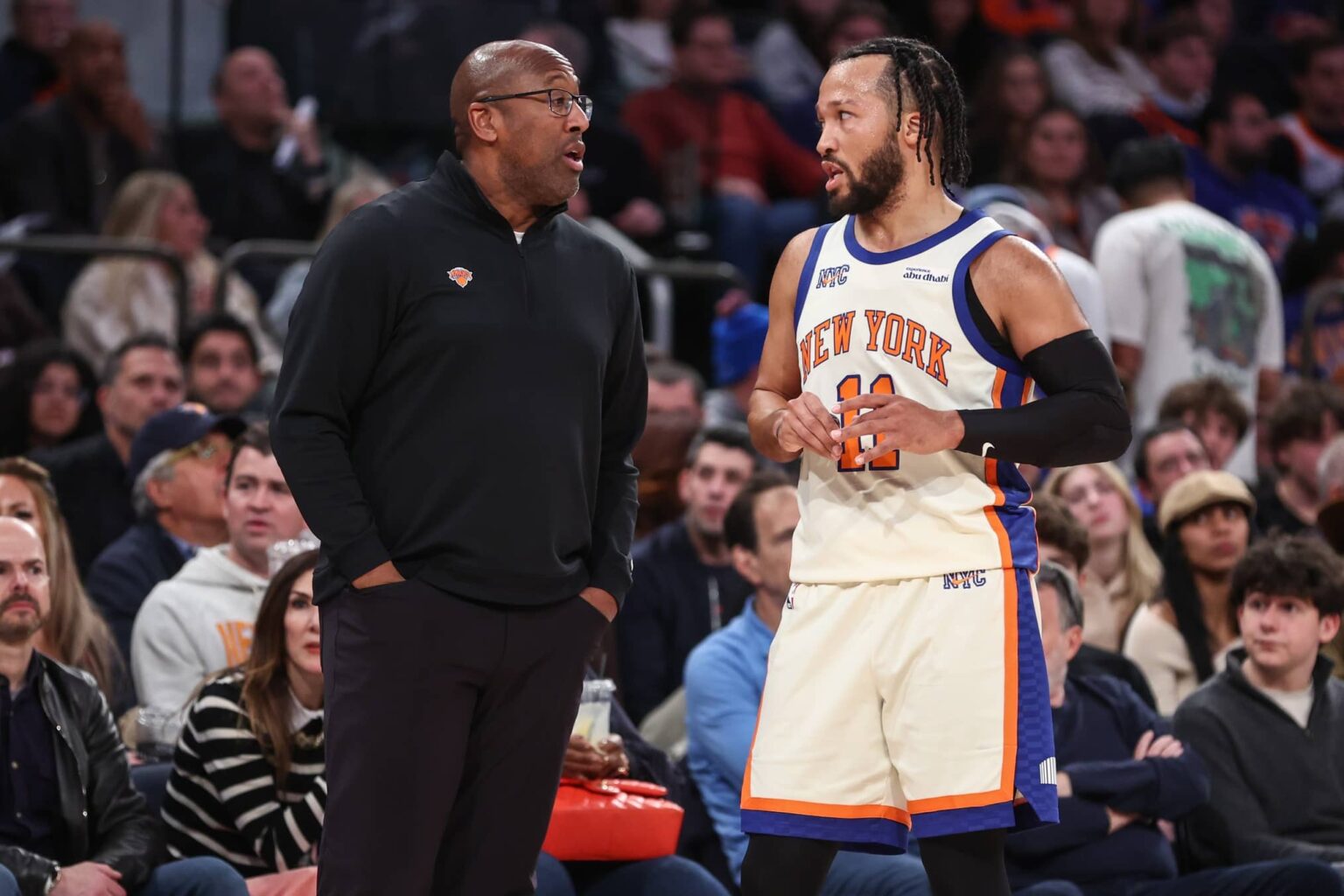
Jalen Brunson has been an All-Star starter again, and his season line still screams “alpha”: 28.2 points and 6.1 assists per game on 48.1% shooting and 38.8% from three. That’s elite production.
But the slump has exposed how thin the margin is when he isn’t at full tilt, or when he misses time. In the Knicks’ loss, Brunson hurt his ankle early and barely played, and that game spiraled quickly because the Knicks couldn’t organize their offense the same way.
Even when he’s on the floor, the last 10 games have been a different version of the offense. Brunson is averaging 24.2 points and 5.3 assists in that span, which is still good, but it’s meaningfully down from his season level.
And you can see why the Knicks have looked so shaky in their half-court possessions. Brunson is the guy who turns a messy possession into something clean. He forces two defenders to make a choice. When he’s not generating that pressure consistently, everything else becomes harder. Your spot-up guys start catching the ball a half-second later. Your big catches it farther from the rim. Your second-side action never gets to the “advantage” stage.
That’s when you get the kind of games where you hit 40.2% from the field, like the 99-point loss to the Suns, and it feels like you played 48 minutes for 18 made shots that actually looked good.
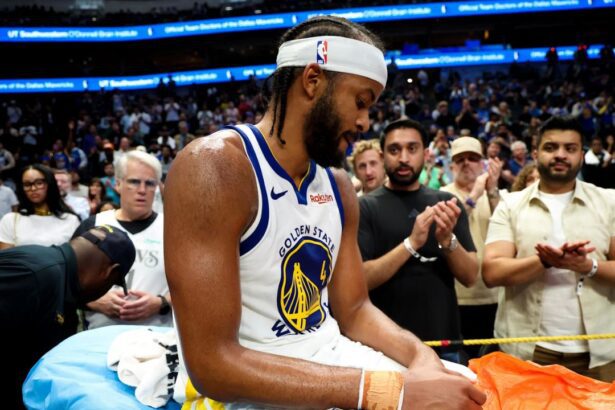
The Warriors game is the bluntest example. Brunson didn’t play, and the Knicks put up 113, which looks fine until you see the context: the Warriors erased a 17-point deficit and shot 53.9% from the field and 44.4% from three. That’s what happens when your offense can’t control the game, because offense isn’t just scoring, it’s also what it does to your defense. When you’re missing shots and turning it over, your transition defense gets stressed.
So yes, the ankle matters, but the bigger “problem” is dependency. The Knicks built an ecosystem where Brunson is the sun, and when the sun isn’t blazing, everybody else gets colder than they should.
Towns And The Spacing Mirage
Karl-Anthony Towns is still producing on the season: 21.0 points, 11.6 rebounds, and 3.0 assists per game with strong efficiency and real spacing value.
But the slump has made something clear: “having shooting” and “getting spacing” aren’t the same thing. Towns is down to 17.4 points in this stretch, shooting 43.7% from the field. When the Knicks’ perimeter shot quality dips, defenses start taking calculated risks. They’ll tag the roll. They’ll dig down on Brunson’s drives. They’ll sit in the gaps and dare the next pass to turn into a clean shot.
That’s why these numbers matter together: the Knicks are still taking a ton of threes, but they’re converting just 33.7% in this last-10 stretch while opponents hit 39.8% against them. That’s the double-whammy. You’re losing the math battle, and you’re losing it on both ends.
Towns also represents a defensive stress point in certain matchups. When teams pull him into actions repeatedly, the Knicks’ help-and-recover scheme gets tested over and over. If the first rotation is late, it becomes a wide-open three. If the rotation is early, it becomes a straight-line drive. That’s how you end up giving up 115.7 points per game while also feeling like you’re constantly “almost” in position.
This is where the advanced ratings from the broader post-Cup stretch help contextualize it. Their offense has fallen from elite-7 to middle-of-the-pack, while the defense has cratered into the 15th tier during that run. It’s not just a Towns thing; it’s a whole-team slippage, but Towns’ role as both a spacing engine and a coverage target makes him central to how the Knicks either stabilize or keep sliding.
The solution isn’t “Towns needs to be better,” it’s more specific. The Knicks need their perimeter creators to punish help early in possessions, so Towns’ gravity actually bends the floor. And defensively, they need cleaner communication so Towns isn’t constantly defending two problems at once.
The Fix Is Real, But It Has To Be Aggressive
Here’s the good news: a slump this loud is also a roadmap. The Knicks don’t need a rebrand. They need corrections that show up in the exact places the numbers are screaming.
The first correction is defensive discipline. If you’re giving up 39.8% from three over 10 games, your closeouts and your help timing are off. Period. You can live with some opponent shot-making. You can’t live with consistently comfortable opponent shot-making. That’s the difference between “variance” and “breakdown.”
The second correction is offensive simplicity. In the last 10, the Knicks are averaging 107.1 points, and it’s coming with 14.8 turnovers per game. That’s too many empty possessions for a team that already isn’t finishing efficiently. They need fewer possessions where the ball sticks, and more possessions where the first advantage becomes the second advantage. That’s the “connected nerd stuff” people miss: a good possession isn’t “we got a shot,” it’s “we forced the defense to guard two things at once.” The Knicks haven’t done that nearly enough in this stretch.
The third correction is rotation clarity. When Brunson is limited or out, the Knicks can’t rely on vibes and hope the bench creates offense by accident. The Warriors’ comeback game showed how quickly things can tilt when the offense stops controlling the temperature of the game.
If your offense isn’t stable, your defense gets put in constant scramble mode, and your defensive rating balloons. That’s not theory, it’s literally what the last 10 games look like in the ratings.
And finally, coach Mike Brown has basically acknowledged that changes are coming. That matters because it tells you the building knows this isn’t sustainable. The Knicks are still 25-18, still in the top group in the East, but the direction is the real story. If they keep playing like an -8.9 net team, the standings will catch up to the vibes fast.
This is fixable, but only if they stop treating it like a “shots will fall” problem. The defense has to tighten, the offense has to generate better first looks, and the Brunson dependency has to be managed with structure, not hope. If they do that, the slump becomes a nasty two-week scar. If they don’t, this turns into the kind of midseason spiral that changes what you are by April.