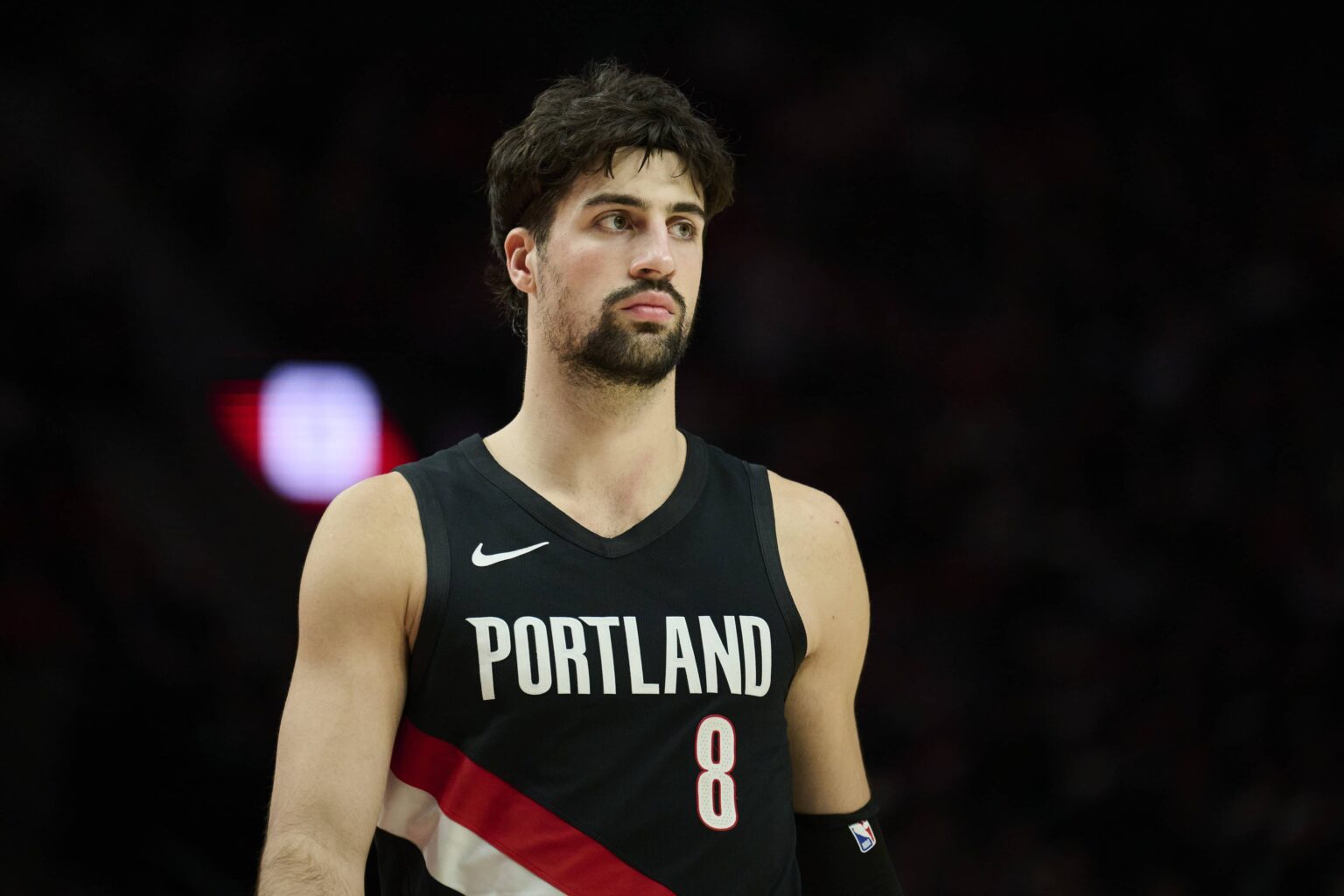
Deni Avdija has waited years for this moment. At 25, he has finally broken through as one of the NBA’s most complete and productive players, putting together an All-Star caliber season with the Portland Trail Blazers while carrying a depleted roster. Yet as his profile has risen, so has a type of backlash he never asked for and never wanted. In an interview with Jason Quick of The Athletic, Deni Avdija addressed the frustration of having his nationality dragged into conversations that should be about basketball.
“I’m an athlete. I don’t really get into politics, because it’s not my job. I obviously stand for my country, because that’s where I’m from. It’s frustrating to see all the hate. Like, I have a good game or get All-Star votes, and all the comments are people connecting me to politics.”
“Like, why can’t I just be a good basketball player? Why does it matter if I’m from Israel, or wherever in the world, or what my race is? Just respect me as a basketball player. You don’t have to love what I stand for or how I look, but if I’m a good player, give props. All this hate … for no reason. Like, I’m deciding things in the world.”
“I’ll be honest: What do people expect me to do? This is my country, where I was born, where I grew up. I love my country; there are a lot of great things about my country. But obviously, not everyone is educated and knows what is going on, and that’s what pisses me off.”
“Because if you are educated and know what is going on, it’s fine to say what you think and say who you think is right or wrong. But if you are not educated and you are not part of the Middle East, and you don’t understand how long this goes back and understand the consequences and everything … just don’t say anything. I’m from there, and I respect my country, and I stand behind it.”
“I’m a proud Israeli, because that’s where I grew up. I wouldn’t be where I am today if it weren’t for Israel and the support the people and fans gave me. But all the extra stuff around it? It’s just unnecessary.”
This season, that question carries even more weight. Avdija is averaging 26.2 points, 7.1 rebounds, and 6.9 assists while shooting efficiently from the field and from three. He has been one of the most versatile forwards in the league, functioning as a scorer, facilitator, and physical presence every night.
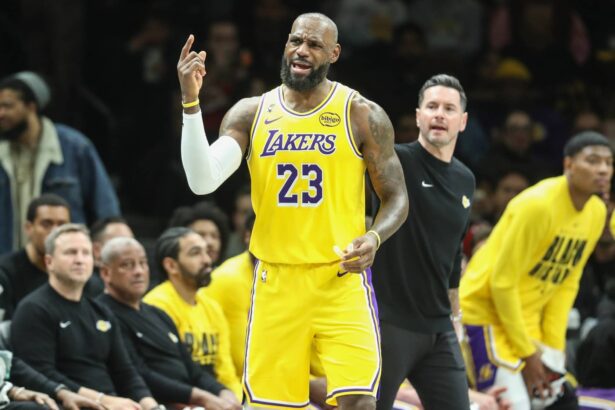
His production put him in elite company, joining the rare statistical territory occupied by Nikola Jokic and Luka Doncic. That level of play earned him massive fan support, finishing fifth in Western Conference fan voting ahead of LeBron James, Kevin Durant, Victor Wembanyama, and Anthony Edwards.
Still, the voting gap revealed the tension he is describing. While fans embraced him, Avdija ranked lower with players and media, landing seventh overall in the West. He is expected to be selected as a reserve for Team World, but the disparity only amplified the noise around him. Instead of celebrating a breakout season, much of the conversation drifted toward politics, something Avdija believes is rooted in ignorance more than informed opinion.
Avdija’s frustration does not exist in a vacuum. A large part of the criticism he has been receiving is tied directly to the ongoing Israel–Palestine conflict, a deeply emotional and polarizing issue that has spilled far beyond the Middle East and into American public life. As Avdija explained, what troubles him is not disagreement itself, but the way a global conflict has been projected onto him personally simply because he is Israeli.
The current phase of the conflict has drawn intense international scrutiny, particularly after large-scale civilian casualties in Gaza following Israel’s military operations against Hamas. Thousands of Palestinian civilians have been killed since the escalation began in late 2023, according to international humanitarian organizations, while Israel has maintained that its actions are aimed at dismantling Hamas following deadly attacks on Israeli civilians. The human cost on both sides has fueled outrage, grief, and anger worldwide, especially on social media, where nuance is often lost.
That environment has inevitably spilled into sports. Athletes with any connection to Israel have found themselves targeted online, regardless of their role or lack thereof in political decision-making. For Avdija, that has meant comment sections flooded with political accusations after big performances, All-Star vote updates, or even routine highlights.
Avdija is not asking to be celebrated beyond his play. He is asking for fairness. Judge him by his effort, his production, and his impact on winning. Let the game speak. For a player finally reaching his ceiling, that should not be too much to ask.