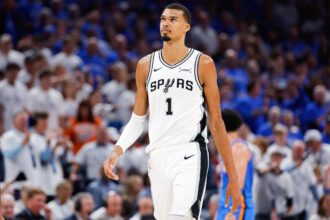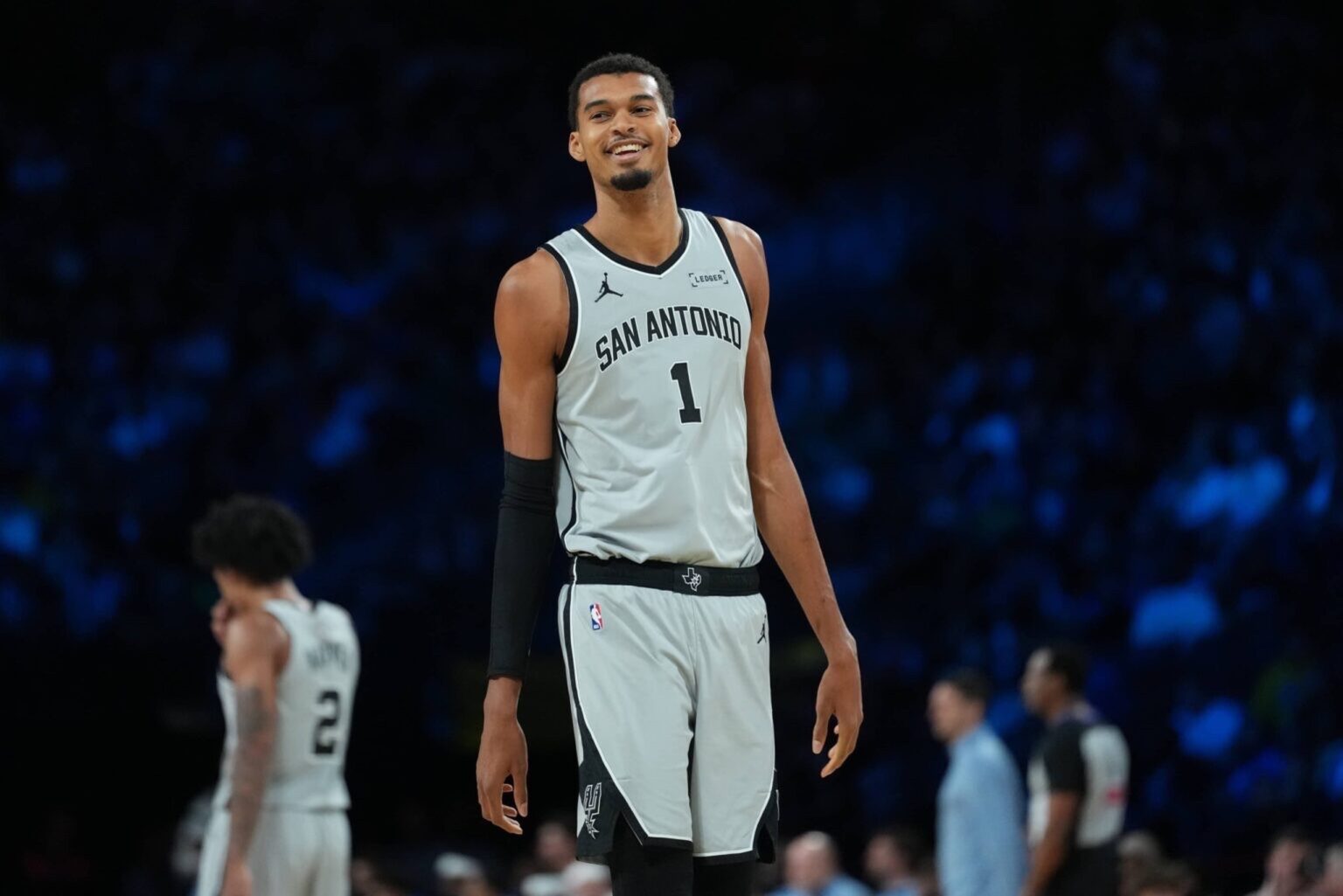
Former NBA player and current analyst Rashad McCants provided me with an honest assessment that Victor Wembanyama is the best player in the league and the current MVP favorite. Contrary to popular belief, the answer comes down to more than just scoring.
“I think Victor Wembanyama is the best player in the NBA. Hands down, there’s no debating it when it comes down to it.”
McCants’ argument is rooted in what a player does on both ends of the floor. For him, Victor Wembanyama’s defensive presence alone separates him from the rest of the field, while his offensive growth is catching up to make him truly unstoppable.
“My vote for Victor comes with one, playing both sides of the ball… being able to sweep OKC with their best players on the floor… and looking at Shai Gilgeous-Alexander.”
The comparison to Shai Gilgeous-Alexander, widely considered the frontrunner in the MVP race, is central to McCants’ stance. While acknowledging SGA’s incredible offensive production and control as a lead guard, McCants draws a clear distinction in overall impact.
“Yes, he’s consistently giving you 30… but he doesn’t affect the game defensively like Victor does. And Victor does affect the game offensively more than what Shai does…”
McCants’ critique of SGA is based on the player’s reliance on mid-range scoring, pick-and-roll actions, and frequent trips to the free-throw line. In contrast, he views Wembanyama’s production as more organic and less dependent on referees and picks from his big men.
“Wemby doesn’t have to do any of those things… and we’re talking about a guy who was on minutes restriction, putting up the numbers that he’s doing, helping his team win at a tremendous pace.”
Spurs’ Dominance Reinforces Wembanyama’s Case
Team success has strengthened Wembanyama’s candidacy for the MVP award. The San Antonio Spurs have surged to the No. 2 seed in the Western Conference, with a shot at dethroning the Oklahoma City Thunder for the top spot.
Wembanyama’s influence on that rise has been obvious. He is not only the frontrunner for Defensive Player of the Year and the most dominant defender in the league, but teams don’t know how to prepare for him.
Offensively, his game is expanding. From perimeter creation to interior scoring, Wembanyama has evolved into a multi-level threat, and the numbers prove that. Wemby is averaging 24.2 PPG on 50.5% from the field, 35.1% from three, and 81.8% from the stripe.
Remember, this is a 22-year-old in only his third season with 175 total career games. He is coming to prove there is no player that can match his dominance on both ends, and the Spurs are winning because of that.
Explaining MVP Criteria With Kobe Bryant’s Example
McCants goes further to challenge the framework of MVP voting itself. He points to historical examples, specifically Kobe Bryant’s career, as evidence that two-way dominance has often been undervalued.
“Kobe Bryant being shorted for so many years… all defense, all NBA… I think this time they should start rewarding the guys that play this type of basketball.”
That begs the question: Should MVP recognition prioritize offense or total impact?
“Defense is 50% of basketball… and for it not to be considered in the MVP races… even the offensive side of the game, there’s more than just scoring. And I think Wemby does all of it.”
The Bigger Picture
Wembanyama’s case cannot be ignored. As both a DPOY favorite and a top-tier MVP candidate, currently just behind Gilgeous-Alexander in many projections, his impact is obvious.
For McCants, it is clear that Wemby is the MVP of the league. In an era dominated by offensive numbers, Wembanyama represents a return to balance—a player who not only produces, but dictates outcomes on every possession.
If the MVP race reflects a “complete body of work,” as McCants suggests, then Wembanyama’s trophy win might be guaranteed at this point. For more in-depth commentary and analysis from Rashad, check out Raw Rashad.