The Toronto Raptors didn’t just beat the Miami Heat again – they controlled them. In a 128-114 win, Toronto overcame Miami’s red-hot 56% shooting by dominating the details: a +19 edge at the free throw line, a +9 turnover margin, and a commanding grip on the game flow, leading for 84% of the night and building a lead as large as 26.
This was a textbook example of how discipline, pressure, and star power can outweigh pure shot-making.
1. Brandon Ingram Is Playing Like A Franchise Star
Brandon Ingram was simply unguardable, finishing with 38 points on 13-23 shooting while adding 7 rebounds and 7 assists. He scored at all three levels, hit 2-3 from deep, and repeatedly got to the line where he went 10-11. Every defensive look Miami threw at him, single coverage, help, switches, he calmly picked apart.
What made his performance even more impactful was the timing. Ingram didn’t just pile up numbers – he controlled momentum. When Miami cut into the lead, he responded with efficient isolation scoring or playmaking, helping Toronto maintain separation. His all-around stat line and +13 plus/minus underline just how much he dictated this game.
2. Turnovers And Defense Tilt The Game
Toronto forced 15 Miami turnovers while committing just 6 of their own, and that gap translated into a 24-9 advantage in points off turnovers. The Raptors were active defensively, jumping passing lanes and turning live-ball steals into easy transition points.
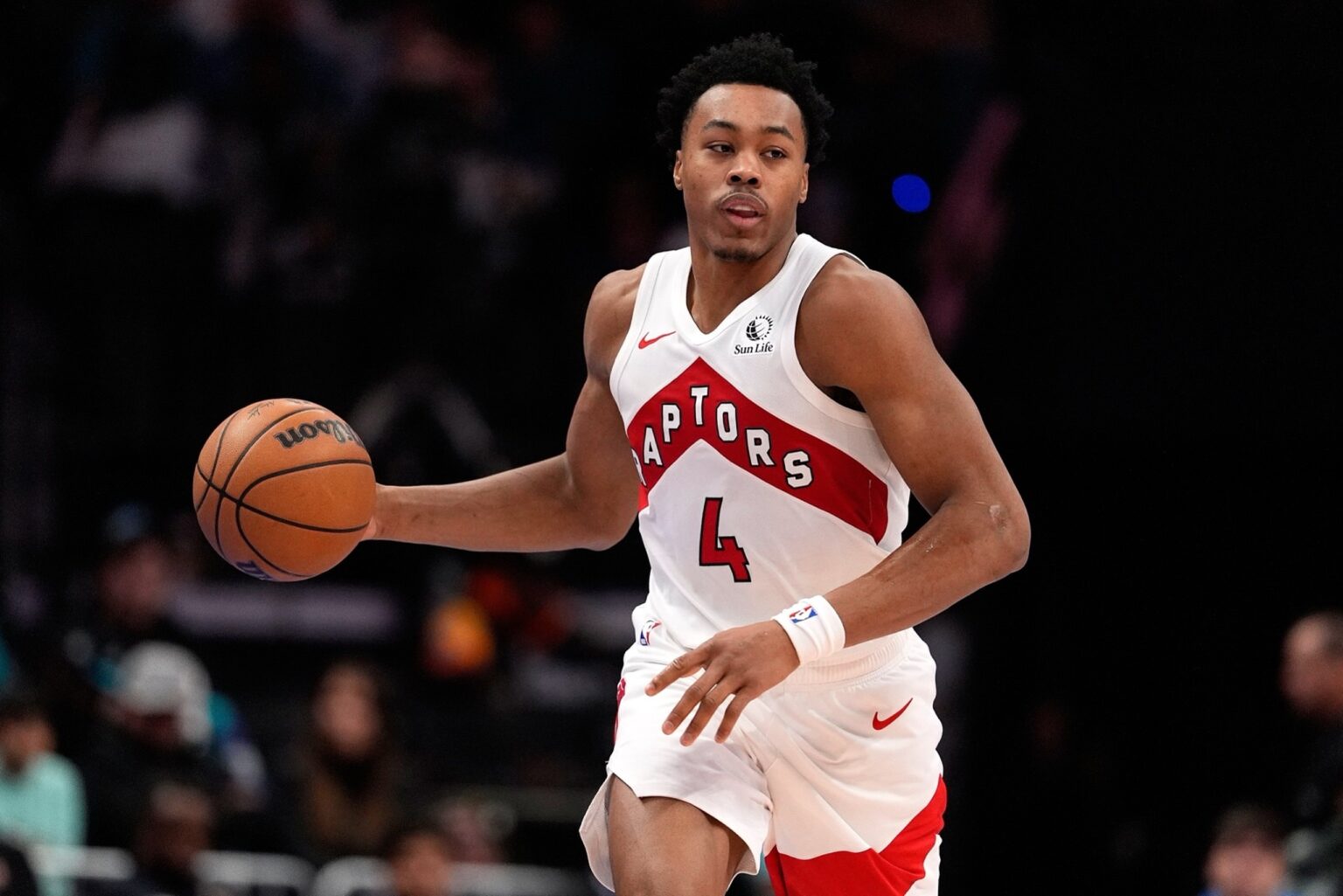
Scottie Barnes contributed across the board with 13 points on 4-6 shooting, plus strong defensive activity, while RJ Barrett added 22 points and attacked aggressively. Even though Miami shot 56% from the field, their lack of ball security and just 1 total team steal meant they couldn’t control possessions or rhythm.
3. Free-Throw Dominance Was A Major Factor
The biggest statistical difference came at the free-throw line. Toronto went 27-34 (79%), while Miami managed just 8-14 (57%), creating a massive +19 advantage in made free throws. In a 14-point game, that gap alone tells the story.
The Raptors consistently put pressure on the rim, with Ingram and Barrett combining for 19 made free throws. Barrett in particular was relentless, going 9-10 at the line, while Ingram added 10-11. Miami, despite efficient shooting, simply didn’t generate the same physical pressure, and it cost them.
4. Bench Production Altered Momentum
Toronto’s bench was a major difference-maker, combining efficiency with impact. Collin Murray-Boyles delivered a perfect 7-7 shooting night, scoring 17 points while grabbing 8 rebounds and finishing with a +21 plus/minus.
Jamal Shead added 8 points and 3 assists with a +13, while Gradey Dick chipped in 7 points and spacing with a +18. Toronto’s second unit didn’t just hold the line – they extended it, outplaying a Miami bench that struggled to generate consistent offense outside of brief spurts.
5. Miami’s Efficiency Wasn’t Enough
Despite the loss, Bam Adebayo had a standout performance with 24 points, 11 rebounds, and 8 assists on 9-14 shooting. Tyler Herro added 15 points on 6-12 shooting, including 3-5 from beyond the arc, while Davion Mitchell dished out 11 assists.
But the issues were too significant to overcome. Miami committed 15 turnovers, had just 1 steal as a team, and allowed 9 Toronto steals that led to easy scoring chances. Even with a 56% field goal percentage, they were outworked in the margins, rebounding (40-34), free throws, and overall control, leading to a game where they never truly dictated the pace.