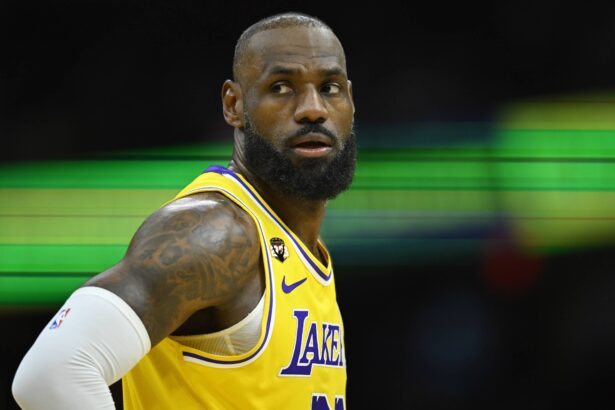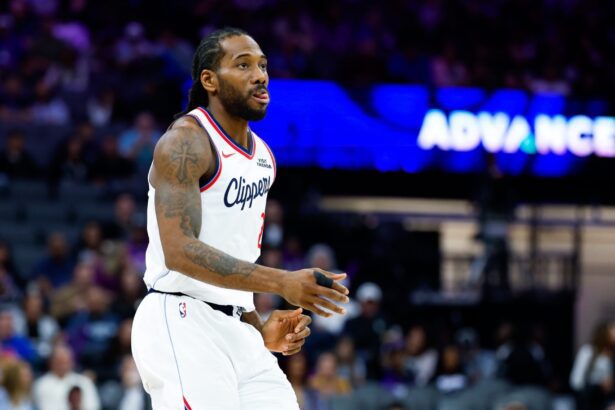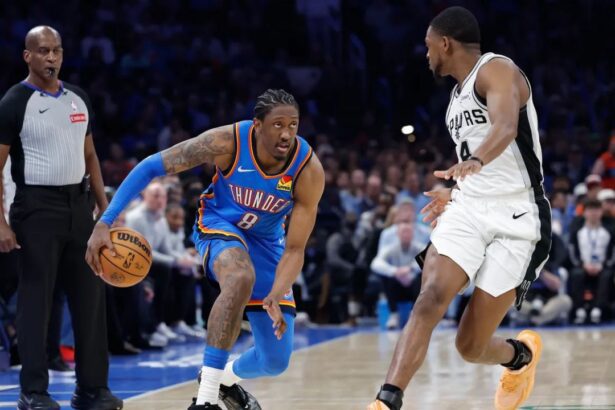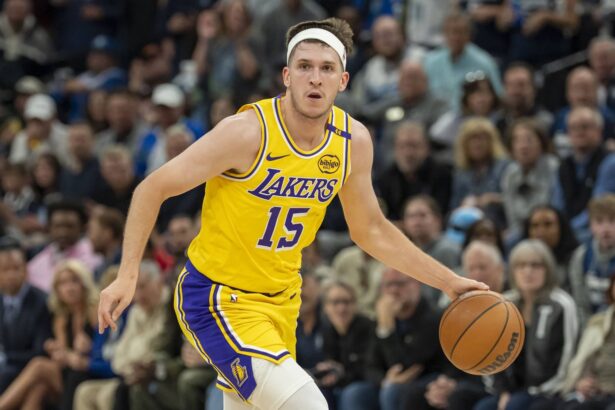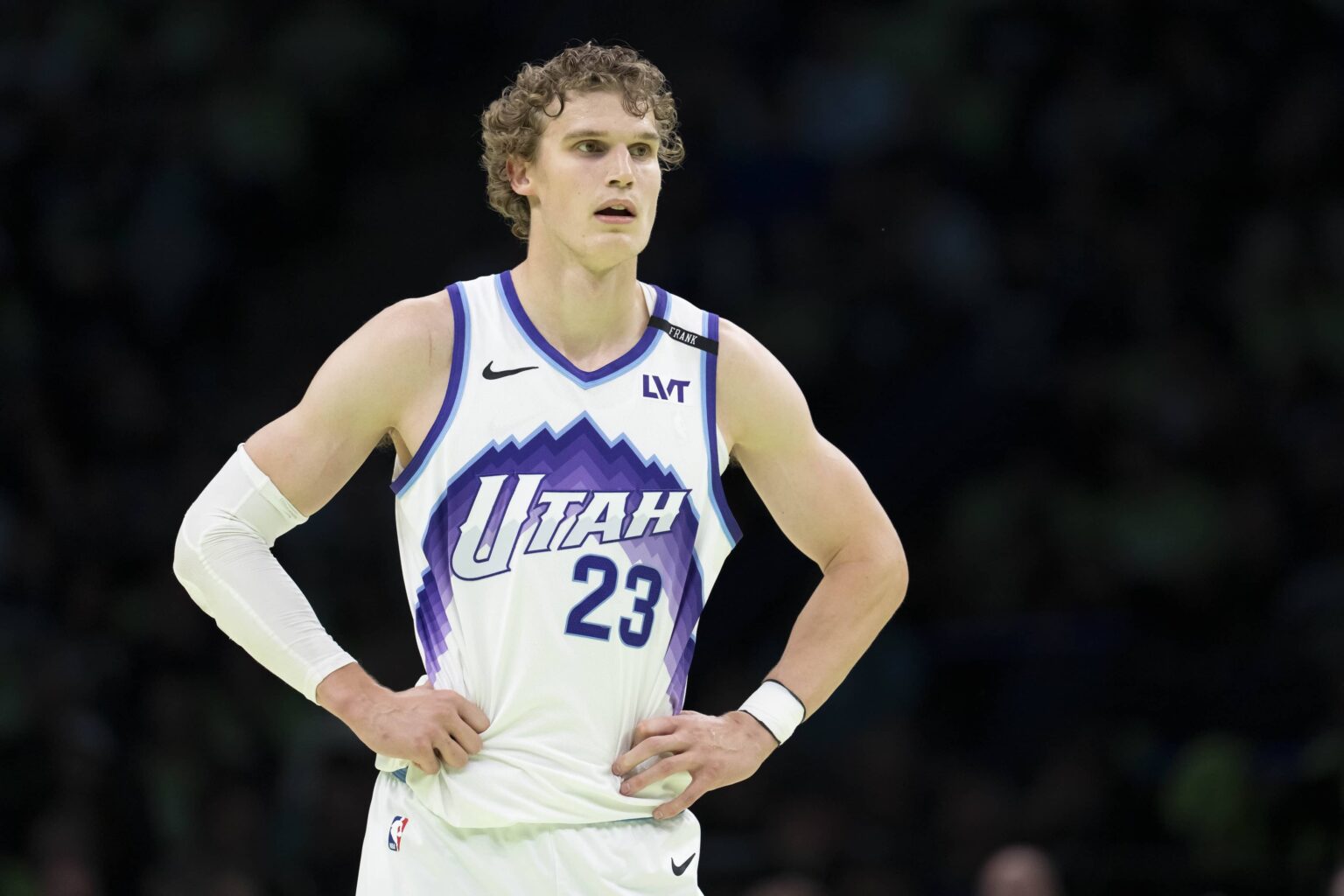
Lauri Markkanen is the kind of player who makes trade season messy because the Jazz can justify almost any direction. They’re sitting at 15-30 and buried in the West, which is exactly where the “timeline” conversations start getting real, even if the front office never says the quiet part out loud.
Markkanen is also playing like a franchise guy, which is why this topic never dies. He’s at 27.9 points, 7.2 rebounds, and 2.2 assists on 48.3% from the field, basically a walking mismatch who can space like a wing and score like a primary option.
So here’s the setup: Markkanen is expensive and valuable, making $46.3 million this season, which means the Jazz don’t move him unless an offer is so ridiculous it forces their hand.
And even though some reporting has suggested he’s more likely to stay put, that’s exactly why the fun exercise is “what would it actually take,” the kind of packages that would make the Jazz stop hanging up the phone and agree to a deal.
1. The Jazz Walk Away With A Full Rebuild Kit From The Warriors
Golden State Warriors Receive: Lauri Markkanen, Brice Sensabaugh
Utah Jazz Receive: Jonathan Kuminga, Moses Moody, Buddy Hield, Brandin Podziemski, 2026 first-round pick, 2028 first-round pick
For the Jazz, this is the rare “star out, ecosystem in” package. You’re not just taking one centerpiece and praying, you’re taking four rotation-level players on movable money plus two clean firsts that keep your timeline flexible.
And because Markkanen’s salary is $46.394 million, the Jazz can justify prioritizing depth, contracts, and pick volume over the usual “one prospect and filler” structure.
The headliner is Jonathan Kuminga, and the Jazz would be betting on environment as much as talent. He’s at 12.1 points, 5.9 rebounds, and 2.5 assists this season, and the recent reporting around him has been loud enough to matter: trade request, minutes ramping, and the general sense that his market value is tied to showcasing.
In a Jazz context, that’s not a problem, it’s the point. You can actually give him the reps to see if he’s a long-term forward next to your young guards, or a future flip when a different team falls in love.
Moses Moody and Brandin Podziemski are the part contenders usually hate giving up, because they’re the “we can play you in real games” tier. Moody’s putting up 10.7 points, 3.0 rebounds, and 1.5 assists, and he’s on $11.5 million, which is a very tradable slot if the Jazz want to keep cycling assets.
Podziemski is even more valuable to a rebuilding team because he’s productive now and still cheap: 12.2 points, 4.4 rebounds, 3.4 assists, plus a team-leading 40.9% from three, with a $3.6 million salary. That profile gives the Jazz options. He can be a long-term connector guard, or the extra sweetener in a later star trade.
Buddy Hield is the “convertible contract.” He’s at 8.0 points, 2.4 rebounds, and 1.4 assists, and his deal sits in the roughly $9 million range, which is exactly the kind of number that gets rerouted at the deadline for additional seconds if the Jazz want to squeeze more value out of the deal over time.
The Warriors are getting a long-sought target in this move. Markkanen is a clean fit because he scales, he doesn’t need to hijack possessions to matter, and he gives the Warriors frontcourt scoring and spacing without changing who they are.
After not including their younger pieces for Markkanen in 2024, this time, the more desperate Warriors, at 8th in the Western Conference, finally land a frontcourt piece to pair Stephen Curry with another superstar after Jimmy Butler’s season-ending injury.
2. Turning A Star Into A Pick Avalanche With The Spurs
San Antonio Spurs Receive: Lauri Markkanen
Utah Jazz Receive: Harrison Barnes, Keldon Johnson, Kelly Olynyk, 2026 first-round pick (ATL swap), 2026 second-round pick (via UTA), 2027 first-round pick (via ATL), 2028 second-round pick (via NOP), 2030 first-round swap rights (DAL or MIN)
This is the “draft-control” version of a Markkanen deal, and it’s the kind of structure the Jazz would love because it keeps them dangerous in every direction.
Reports around the Jazz stated in the early season that the team wasn’t shopping Markkanen at all, and at least three future first-rounders were his price. Here, the Jazz are buying multiple bites at the apple: picks in different years, a swap hook, and enough mid-size contracts to keep making trades even after the headline move.
The player side is mostly about functionality and flexibility. Harrison Barnes is the classic veteran slider contract: 10.7 points, 3.0 rebounds, 2.1 assists, and a clean $19 million salary that can be kept for stability or moved later as matching money.
Keldon Johnson is the more interesting on-court bet, because he’s actually producing starter-level counting stats at 13.4 points and 6.0 rebounds (1.3 assists), and his $17.5 million number sits right in the sweet spot for future deal-making.
Kelly Olynyk is the smaller-role piece, but still useful for the Jazz’s asset cycle: 3.5 points, 1.9 rebounds, 1.3 assists, and a $13.4 million expiring contract that can be rerouted if a team needs a big man who can pass and space a little.
Where the Jazz really win is in the pick mechanics. The 2026 swap is the kind of detail that becomes gold when a season goes sideways for the other team. Add a second, add another first via a different pipeline, then layer in a far-out swap, and suddenly the Jazz aren’t just rebuilding, they’re positioning themselves to strike. That’s how you become the team that can outbid everyone when the next unhappy star hits the market.
For the Spurs, the fit is the simple part, and it pairs Victor Wembanyama with a new star 7-footer. Markkanen is the type of scoring forward who makes their roster even harder to scheme against, because you can’t sell out on the paint and you can’t hide a slow defender on him either.
3. The Jazz Grab A Real Backcourt Piece From The Bulls
Chicago Bulls Receive: Lauri Markkanen
Utah Jazz Receive: Nikola Vucevic, Coby White, Ayo Dosunmu, 2026 first-round pick (via POR), 2027 first-round pick, 2029 first-round pick
From the Jazz angle, this is the “get a legit guard plus draft equity” version, and it’s the one that actually lines up with what rebuilding teams usually need most: a lead ball-handler you can evaluate at volume, plus multiple draft capital.
Coby White is the centerpiece of the return because he’s already producing like a primary guard, not a prospect. He’s averaging 18.5 points, 3.5 rebounds, and 4.6 assists this season, and his contract is a clean $12.8 million, which matters because it’s movable if the Jazz want to flip him for more draft assets, with the Timberwolves reportedly looking at him, or valuable if they decide he’s worth re-signing as his deal is expiring.
Ayo Dosunmu is the “fits any timeline” add. He’s at 14.6 points, 2.6 rebounds, and 3.6 assists while shooting 51.8% from the field and 46.1% from three, and he’s on a $7.5 million deal. That’s the kind of combo guard contract that can either become a long-term rotation staple or a deadline chip the moment a contender needs perimeter depth.
Nikola Vucevic is the veteran ballast and the matching-salary glue, but he’s not dead money. He’s averaging 16.8 points, 9.1 rebounds, and 3.8 assists on 50.4% from the field and 37.3% from three, and he’s on $21.4 million (also expiring), which is big enough to help the Jazz build future trades without being so massive that it traps them. If the Jazz don’t want a veteran big hanging around, he’s the type of expiring money teams still call about.
Then the picks are what make the Jazz comfortable saying yes. A 2026 first via Blazers, plus additional firsts in 2027 and 2029, gives the Jazz draft control across multiple years instead of one swing. That’s how you keep optionality, you can draft, trade up, or package picks when the next opportunity appears.
For the Bulls, the fit case is simple at the end: Markkanen gives them a true scoring forward who changes their offensive ceiling immediately next to Matas Buzelis, which is exactly why the price here has to be heavy on the Jazz side.
4. The Jazz Secure A Long-Term Lead Guard And Keep Draft Control
Toronto Raptors Receive: Lauri Markkanen
Utah Jazz Receive: Immanuel Quickley, Ochai Agbaji, Gradey Dick, 2026 first-round pick, 2028 first-round pick swap
The Jazz angle here is simple: you’re not just grabbing picks, you’re grabbing a real organizer for the next era. The Raptors are 28-19 and sitting near the top of the East, which is exactly why this is even plausible. A team that good starts thinking about “one more real scorer” instead of “patience.”
The headliner for the Jazz is Immanuel Quickley, because he’s the rare incoming piece who can actually run an NBA offense every night. He’s at 17.0 points, 4.2 rebounds, and 6.5 assists this season, and he just posted a 20-point, 8-rebound, 7-assist line in a recent win, which is basically the Quickley sales pitch in one box score.
Contract-wise, Quickley is on a $32.5 million salary, so the Jazz aren’t getting a cheap flyer. They’re getting a real money, real responsibility guard who you can either build around or later reroute as a premium “starting PG” contract if they decide to keep Keyonte George as the lead guard.
Ochai Agbaji is the “quietly useful” part of the return. His $6.3 million slot is exactly the kind of number teams love having during a rebuild because it never blocks anything. Last season, he posted 10.4 points, 3.8 rebounds, and 1.5 assists for the Raptors, and he could find that form again coming back to the Jazz, who drafted him 14th in 2022.
Gradey Dick is the development swing. His $4.9 million number stays tiny, the runway stays long, and the Jazz can afford to live with the growing pains while they try to turn him into a reliable movement shooter next to Quickley, as he’s not getting much floor time with the Raptors right now.
The Raptors’ deadline chatter has been loud about them making calls, exploring bigger upgrades, and being willing to move significant pieces in the process. Whether you buy every rumor or not, the general tone matches a team that thinks it can win a round or two and wants to raise its half-court ceiling.
The picks matter because they keep the Jazz from getting trapped. A clean 2026 first gives you immediate draft value, and the 2028 swap gives you future leverage, the kind that becomes massive if the Raptors hit a timeline snag later. That’s the Jazz win: real guard play, two young wings to develop, and draft control that extends beyond one season.
If the Raptors are going “win now,” Markkanen is a lineup fixer: size scoring, spacing gravity, and a forward who changes how teams can load up in the half-court with Scottie Barnes and Brandon Ingram in the frontcourt.
5. Cashing In On A Top Seed With Youth, Picks, And A Clean Reset
Detroit Pistons Receive: Lauri Markkanen
Utah Jazz Receive: Tobias Harris, Jaden Ivey, Ron Holland, 2026 first-round pick (top-eight protected), 2028 first-round pick, 2026 second-round pick, 2027 second-round pick
This is the “contender tax” package, and it makes sense because the Pistons are 31-10 and sitting 1st in the East. When a team is that good, the market starts linking them to “final piece” names, and Markkanen has been directly floated as a target in that exact context.
For the Jazz, the priority is what comes back that can still be something. Jaden Ivey is the most important basketball bet here. The selling point isn’t what he is today, it’s that the Jazz can hand him the reps and responsibility a top team often can’t.
Even if his role has been inconsistent, he’s still the type of young guard whose value can spike fast with a bigger on-ball workload and a green light to attack. Ron Holland is the other upside chip, the type of athletic wing swing rebuilding teams actually need to take, because hitting on even one high-end two-way wing changes your rebuild timeline.
Then you’ve got Tobias Harris as the money engine. For the Jazz, Harris isn’t “part of the future,” he’s the mechanism that makes the deal work while keeping flexibility intact. He’s on a $26.6 million contract, which is big enough to be useful as matching salary in later trades, and short enough in spirit that it doesn’t permanently clog your books. The key is that the Jazz don’t have to be precious about him. Keep him for competence, or reroute him the second a different deal needs a clean mid-to-large contract.
The real reason the Jazz don’t refuse is the draft layering. A 2026 first that’s top-eight protected isn’t perfect, but it’s still a first, and the Jazz also get a 2028 first plus multiple seconds across 2026 and 2027. That’s the kind of spread that lets the Jazz keep taking swings, and just as importantly, keep trading.
One of the most consistent themes in Pistons deadline coverage has been “they don’t need to do anything,” which is exactly why the Jazz would demand a package that makes the risk worth it.
The Pistons fit in almost perfect. If they’re truly going for it, Markkanen is the kind of scorer who reduces playoff stagnation, punishes switching, and makes it harder to load up on their primary creators when possessions get tight.
6. The Jazz Add A No. 1 Pick Wing And Three Draft Levers
Atlanta Hawks Receive: Lauri Markkanen
Utah Jazz Receive: Kristaps Porzingis, Zaccharie Risacher, 2026 first-round pick (swap rights: Spurs, Cavaliers, Timberwolves, or Jazz), 2028 first-round pick (swap rights: Jazz or Cavaliers), 2030 first-round pick
The Hawks are 22-25 and stuck in that annoying middle where “pretty good” still isn’t good enough, while the Jazz are 15-30 and should be thinking like an asset hoarder, not a quick-fix team. That’s why this structure screams Jazz logic: you’re taking a real player now, a real long-term bet, and three separate draft mechanisms that can swing your rebuild when the league gets weird.
Start with Kristaps Porzingis, because the Jazz would be buying both his on-court value and his contract shape. He’s on a $30.7 million expiring, and he’s still producing when he plays (17.1 points, 5.1 rebounds, 2.7 assists), but he’s also been dealing with many injuries this season.
For the Jazz, that’s fine. You can manage his minutes, keep him as a floor-spacing big who anchors lineups, or flip him again later as a “playoff-caliber big contract” if a contender gets desperate for size and shooting.
Then the real rebuild piece: Zaccharie Risacher. First overall pick, still early, still raw, but already at 11.2 points and 3.3 rebounds while shooting 46.2% from the field. His $13.2 million salary is exactly what rebuilding teams want, cost-controlled, easy to carry, and still movable if the timeline changes.
The Hawks were reportedly engaged with the Mavericks on an Anthony Davis trade, as the Mavs reportedly sought a return of Porzingis, Risacher, and the Pelicans pick in exchange. For the Hawks, this is a way better deal: they actually land a superstar who is producing, healthy, and capable of launching their offense to another level.
The picks are where this gets nasty in the best way for the Jazz. Two swaps plus a clean 2030 first is how you create multi-year leverage. Swaps are the quiet killers, because you’re basically betting on variance, injuries, front office pivots, and timeline collisions.
You don’t need the Hawks to collapse for this to matter, you just need one season where things get bumpy, and suddenly that swap has teeth.
7. The Jazz Walk Away With A Real Young Haul
Portland Trail Blazers Receive: Lauri Markkanen
Utah Jazz Receive: Jerami Grant, Scoot Henderson, Donovan Clingan, 2028 first-round pick (via Magic), 2030 first-round pick (Bucks swap rights)
The Blazers are 23-23 and hovering around the play-in line, which is exactly the profile of a team that talks itself into a “one move that changes everything” deadline push.
For the Jazz, this is the kind of return that can jump-start multiple parts of a rebuild at once: one proven scorer you can flip, one high-upside guard bet, one young center who already looks like a foundation piece, plus two future draft chips.
Jerami Grant is the immediate-value asset. He’s at 19.2 points, 3.7 rebounds, 2.5 assists, and he’s on a $32.0 million salary that still plays as matching money in basically any big trade ecosystem. The Jazz don’t have to treat him like a long-term cornerstone. They can rehab his value, position him as a “contending wing scorer,” and reroute him for more picks later. That’s how rebuilds turn one deal into two.
Scoot Henderson is the swing piece, and the Jazz would be making a bet on talent and timeline more than production. Contract-wise, he’s at $10.7 million. And the context matters: he’s not played this season, but showed promise of an upside last year with 13.0 points, 4.6 assists in their last 20 games.
If the Jazz want to take a real shot at finding a future lead guard next to breakout star Keyonte George, this is exactly the kind of distressed-asset gamble you make.
Donovan Clingan is the cleanest part of the package. He’s already at 11.3 points, 10.9 rebounds (top-five in the league), and 1.9 assists on 53.5% shooting, and he’s on $7.1 million. For the Jazz, that’s a potential long-term rim anchor who fits any style, slows down the opponent’s paint, and lets you build defensive identity while the rest of the roster evolves.
The picks are the finishing touch. A 2028 first via the Magic is a clean asset, and a 2030 swap via the Bucks is the kind of far-out leverage teams love because you can’t predict what rosters look like that deep into the future. Even if neither becomes a premium lottery hit, they’re still currency.
The Blazers fit is massive. Markkanen gives them a legit frontcourt scorer who punishes switching, stretches the floor, and makes their offense a lot harder to scheme against when games slow down. Trading Donovan Clingan would be almost unrealistic, but if the return is a unicorn star that can guide them to the postseason, that might be a worthy gamble.
Final Thoughts
Markkanen is the rare Jazz player who creates leverage just by existing. He’s good enough to raise a team’s ceiling immediately, clean enough as a fit that almost any contender can talk themselves into him, and expensive enough that only serious buyers can even get into the conversation. That combination is why the Jazz shouldn’t be in a rush to blink. The second they act like they’re eager, the market starts trying to lowball them with “one prospect and a late first” packages, and that’s exactly the type of deal that locks a team into mediocrity for years.
If the Jazz do move him, the blueprint is obvious from these offers. They’re not chasing “replacement scoring,” they’re chasing control. Another guard you can hand the keys to, at least one young wing you can develop into a two-way piece, and draft equity that stretches across multiple seasons, ideally with swaps baked in. That’s how you turn one star into multiple outs, because you can draft, you can consolidate, or you can re-route contracts the next time the league gets chaotic.