The Detroit Pistons aren’t some desperate bottom-feeder looking for a shortcut. They’re 32-10, sitting first in the East, and they’ve started to look like a real, grown-up team that can win ugly, win close, and win with defense.
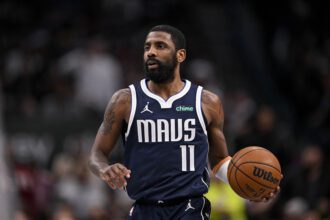
In this context, heading to the trade deadline, ESPN’s Tim Bontemps floated the idea that Kyrie Irving is basically the archetype the Pistons need, while also acknowledging the obvious caveat, his health, and how realistic it is to even pry him loose:
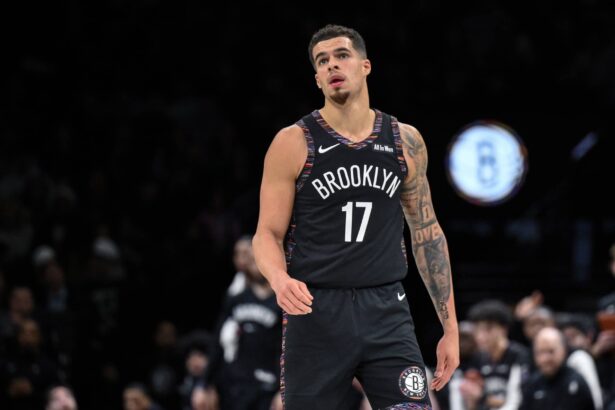
“The guy they need is Kyrie Irving… I would want to know where Kyrie’s health is at & what the chances of him playing are. That’s the call I’d be making. Michael Porter would help them, but, I don’t think Michael Porter is changing their destiny. The realized version of Kyrie Irving playing next to Cade, like he played next to Luka, like he played next to LeBron as a proven playoff scorer — that’s who they need.”
The Kyrie context is complicated. He’s been out while recovering from a left ACL tear suffered in early March 2025, and ESPN reporting last spring framed the expectation as a possible return around January 2026, with the Mavericks hoping to have him back in the mix later in the season to help their tanking efforts.
Even with the injury uncertainty, the contract math is very real: Kyrie is on $36.6 million for 2025-26, which instantly turns any “go get him” talk into a serious cap and asset conversation.
On the Mavericks’ side, the season hasn’t been smooth either. They’re 19-26 and reportedly shopping their veteran pieces, and that makes rival fanbases start sniffing around and pitching “blockbuster shakeup” scenarios.
So the hook is simple: a top seed with real momentum gets publicly linked to a star guard who might be available only if the Mavericks decide the timeline and the health risk aren’t worth it.
Now comes the fun part, what a realistic package would look like, and whether the Pistons should actually do it.
The Trade
Pistons Receive: Kyrie Irving
Mavericks Receive: Tobias Harris, Jaden Ivey, 2029 first-round pick, 2031 first-round pick, 2031 second-round pick (via DAL)
On the surface, this is a simple “contender buys a star” idea. Under the hood, it’s two problems getting solved at once: the Pistons chasing the exact archetype ESPN’s Tim Bontemps floated, and the Mavericks deciding whether Kyrie’s timeline still lines up after the ACL tear.
The salary math is the clean part, which is rare for a blockbuster. Kyrie Irving is at $36.6 million in 2025-26. Tobias Harris is at $26.6 million, and Jaden Ivey is around $10.1 million, which gets the Pistons into Kyrie territory without stapling on five extra contracts just to make it legal. In other words, this deal doesn’t need to become a 10-player accounting exercise, it can stay a real basketball trade.
From the Pistons’ angle, you’re converting a veteran forward contract plus a young guard who hasn’t popped in his current role into a single elite shot-maker. Harris has been steady value, but he’s a “help you win regular-season games” piece more than a “solve playoff possessions” guy. Ivey is the emotional part, but if the Pistons believe his ceiling isn’t matching their timeline, he becomes the type of young name you move to get the closer you don’t currently have.
From the Mavericks’ angle, the picks are the real lever. Two future firsts is the modern price of entry for star talent, even with injury uncertainty, and the extra second is the little sweetener that front offices still value because it’s another cheap bite at rotation help later.
So the trade isn’t Kyrie for stuff. It’s the Pistons buying late-game offense, and the Mavericks buying flexibility and control.
Why This Could Work For The Pistons
The Pistons are 32-10, top of the East, and the profile looks real, not fluky. They’re scoring 117.2 points per game while allowing 109.9, with a net rating that backs up the record. That’s the exact foundation you need before you even consider a “swing big” move.
But being great in January is not the same as being terrifying in May. Playoff basketball is slower, more physical, and way more possession-by-possession. Eventually, the game turns into a half-court stress test where your best player gets trapped, your second-best option gets forced into tough shots, and you need someone who can manufacture clean looks anyway. That’s Kyrie Irving.
Even with the injury cloud, the player is still the player. In 2024-25, Kyrie averaged 24.7 points, 4.8 rebounds, and 4.6 assists, shooting 47.3% from the field. That’s three-level creation, and it’s the kind that doesn’t depend on perfect spacing or a perfect play call. Switch him, he cooks. Play drop, he pulls up. Blitz him, he hits the release valve and relocates into a dagger.
The fit next to Cade Cunningham is the real sell. Cade is at 25.7 points and 9.8 assists, operating as a big creator who can punish mismatches and keep a structured offense humming. Add Kyrie, and suddenly the Pistons can run a true two-handler ecosystem where you can’t load up on one guy without the other one making you pay. Trap Cade, Kyrie attacks the bent floor. Trap Kyrie, Cade becomes a pressure passer who can slice you apart.
From an X-and-O standpoint, it also helps with lineup flexibility. The Pistons’ defense has been elite because they’ve been able to control games with structure and physicality. Kyrie isn’t a stopper, but he also doesn’t need to be if the team is already built to defend. His job is to be the closer, the guy who turns a two-point lead into a seven-point lead because the other team can’t survive two straight possessions of shot-making.
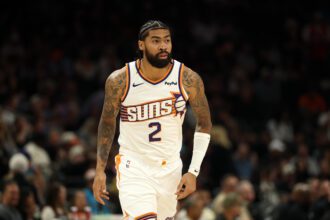
And what they give up is meaningful, but not fatal. Harris is productive, but he’s a replaceable archetype. You can find “solid wing scoring” in other places. Kyrie’s late-clock offense is not replaceable. As for Ivey, the numbers this season suggest he’s not a core pillar in the current version of the Pistons anyway. If the Pistons are top of the East while Ivey is at 8.4 points a night, it’s fair to ask whether his value to them is still more theoretical than practical.
The only true downside is health. Any Kyrie trade today is a bet on the recovery curve, and the Pistons would be doing it with the expectation that the payoff is spring basketball, not a February box score.
If the Pistons are serious about converting “best team right now” into “real Finals threat,” Kyrie is the type of add that can actually raise the ceiling.
Why The Mavericks Would Accept It
This is where the logic flips from basketball romance to timeline management.
The Mavericks are 19-26. That doesn’t force a teardown by itself, but it does force clarity, especially with Kyrie rehabbing a torn ACL and the roster already living on contingency plans. If the franchise is truly entering a Cooper Flagg era, the core question becomes simple: do you want to carry $36.6 million of injury risk at this point of the timeline, or do you convert that slot into assets and younger pieces that can grow with the new centerpiece?
This package gives the Mavericks a coherent reset kit.
Tobias Harris is not a franchise player, but he’s a stabilizer. He can absorb minutes, score without needing a system built around him, and keep the floor from completely collapsing while younger players develop. His 13.6 points, 4.7 rebounds, and 2.5 assists profile is exactly the type of “professional production” a retooling team can use without pretending it’s a star solution.
Jaden Ivey is the upside play. His numbers are down this season at 8.4 points, 2.1 rebounds, and 1.7 assists on 46.1% from the field, but that can be a feature for the Mavericks, not a bug. You’re buying low on a former top pick and betting that a new environment, a clearer role, and a new timeline turn him back into the downhill pressure guard people thought he’d be. If Ivey hits next to Flagg, the Mavericks suddenly have a young two-man core that can run, create, and put constant stress on the rim.
Then there are the picks, which are the real reason a front office signs off. A 2029 first and a 2031 first are premium timeline assets. Those are far enough out that you cannot fully predict what the other team will look like. If the Pistons change directions, get hit by injury luck, or simply age out, those picks can become gold. The extra second is the kind of small add that still matters because it’s another cheap swing later.
The other quiet benefit is optionality. If the Mavericks decide to pivot further, having extra picks and fewer long-term commitments is how you avoid being trapped. And given Kyrie’s recovery uncertainty, there’s a real argument that moving him now is cleaner than waiting and risking a scenario where his market value gets muddier.
In short, the Mavericks would accept this because it looks like a plan, not a panic move. It’s a retool package that sets a Flagg-era foundation and keeps the franchise flexible.
Final Thoughts
For the Pistons, the appeal is obvious. They’re already winning at a high level, but Kyrie is the kind of late-game shot-making addition that can separate a great regular-season team from a real playoff closer.
For the Mavericks, the case is timeline clarity. If the organization believes it’s stepping into a new era, converting an expensive, injured star into two firsts, a young guard, and a stabilizing veteran is the kind of move that gives you control instead of uncertainty.
The only reason it doesn’t happen is also simple: the Mavericks deciding the Kyrie risk is worth it and keeping the door open to compete immediately. But if the franchise is truly leaning into the next era, this is the type of framework that actually makes sense on paper and in the long run.