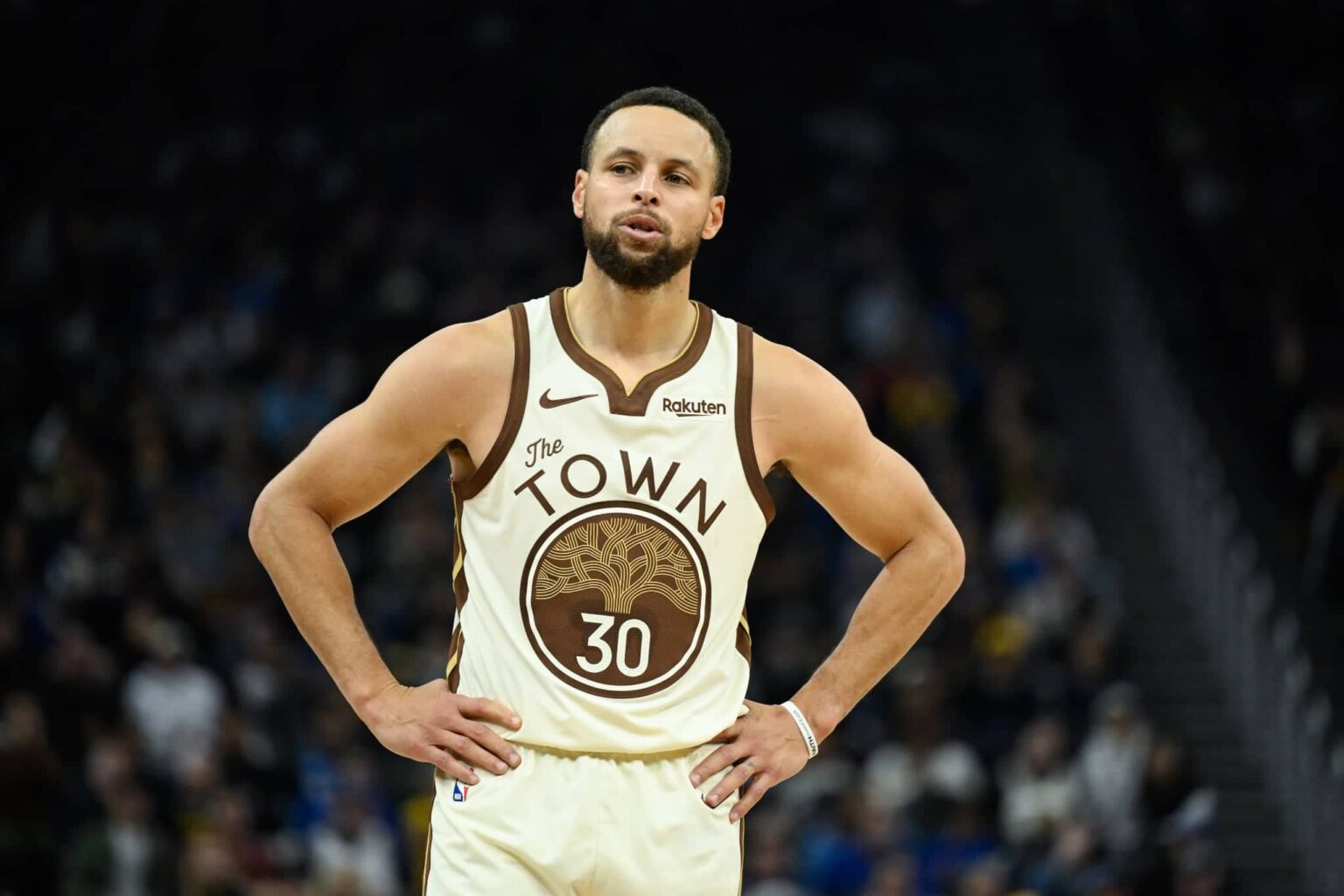
Stephen Curry is out of the 2026 All-Star Game, and the league now has to solve a problem that is part basketball, part business. The Warriors guard has been ruled out with patellofemoral pain syndrome in his right knee, and Steve Kerr said the plan is to hold him out through the All-Star break.
Curry’s absence matters more than most. He is still the sport’s cleanest “turn the TV on” player, and this year’s event is designed to feel sharper and more competitive. The NBA is running a U.S. vs. World format with a round-robin tournament, and the All-Star Game will be played at Intuit Dome.
The replacement is not a formality either. Shai Gilgeous-Alexander already withdrew and was replaced by Alperen Sengun, so the league is now filling another high-end spot with roster balance and optics in mind.
This is where “most deserving” and “most useful” intersect. The next name should be a guard with an All-Star season, but also someone who fits Team USA’s structure and can actually help the game. Here are the five candidates I’d line up first.
1. James Harden
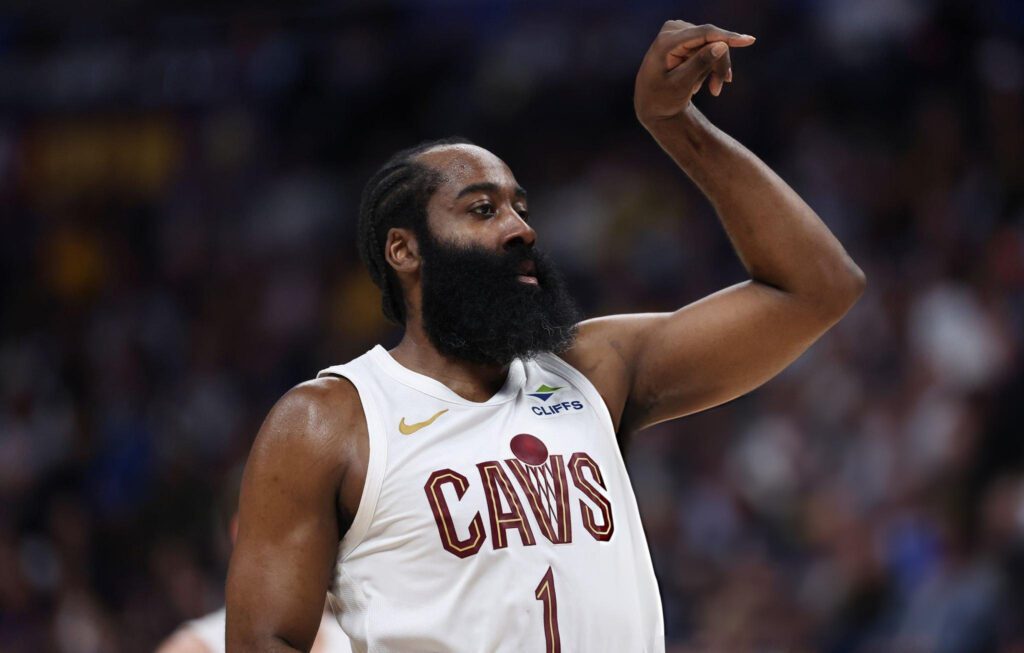
If the NBA wants the most straightforward replacement for Stephen Curry, James Harden is the cleanest fit. It is not just about reputation. It is about production, role, and the way team context tends to shape the final All-Star decisions when there is a close call.
Before the trade, Harden was putting up All-Star numbers on a Clippers team that sat 9th in the West at 25-27. That matters because borderline selections often get framed through winning, even when the player’s individual season is strong.
The Clippers were living in the Play-In tier, and Harden’s case lived in that same uncomfortable space: clearly excellent, but easier for the league to pass over when building the original roster.
Now the setting is different. Harden is on the Cavaliers, who are 33-21 and 4th in the East. That is a contender’s profile. It also makes the optics simple: you are not adding a “fun story,” you are adding a star-level guard to a team that has actually earned visibility through results.
The early returns have been immediate. Harden has played two games since the deal, and both looked like a player stepping into a structure that needs his specific skills.
In his Cavaliers debut against the Kings, Harden posted 23 points, eight assists, two rebounds, and one steal in 32 minutes. He shot 7-for-13 from the field, went 5-for-8 from three, and was perfect at the line (4-for-4). It was not just scoring. The offense played with more order, and the read-based possessions late in quarters looked cleaner because Harden is still one of the league’s best at turning small advantages into a quality shot.
Then came Monday night in Denver, which is the game that snaps attention back onto the résumé. The Cavaliers won 119-117, and Harden finished with 22 points and 10 rebounds in his second appearance. His late shot-making fueled the comeback, with the Cavaliers winning nine of their last 10 games overall. In a single national spot, Harden got to show the value that he carries: stabilize the offense, hit the big shots, and close the game with composure.
On the season, the profile is still what it was before the trade, just with a better team frame around it. Harden is averaging 25.3 points, 8.1 assists, and 4.9 rebounds in 46 games, with shooting splits of 42.1% from the field, 35.1% from three, and 90.4% at the line. Those are lead-guard numbers with real efficiency, and the games played piece matters here: he has been available enough to justify the nod as a replacement, not a ceremonial pick.
If you are trying to predict what the league will do, Harden feels like the most likely answer because he combines credibility, current form, and a clear narrative pivot: the same All-Star season, now attached to a top-four team.
2. Austin Reaves
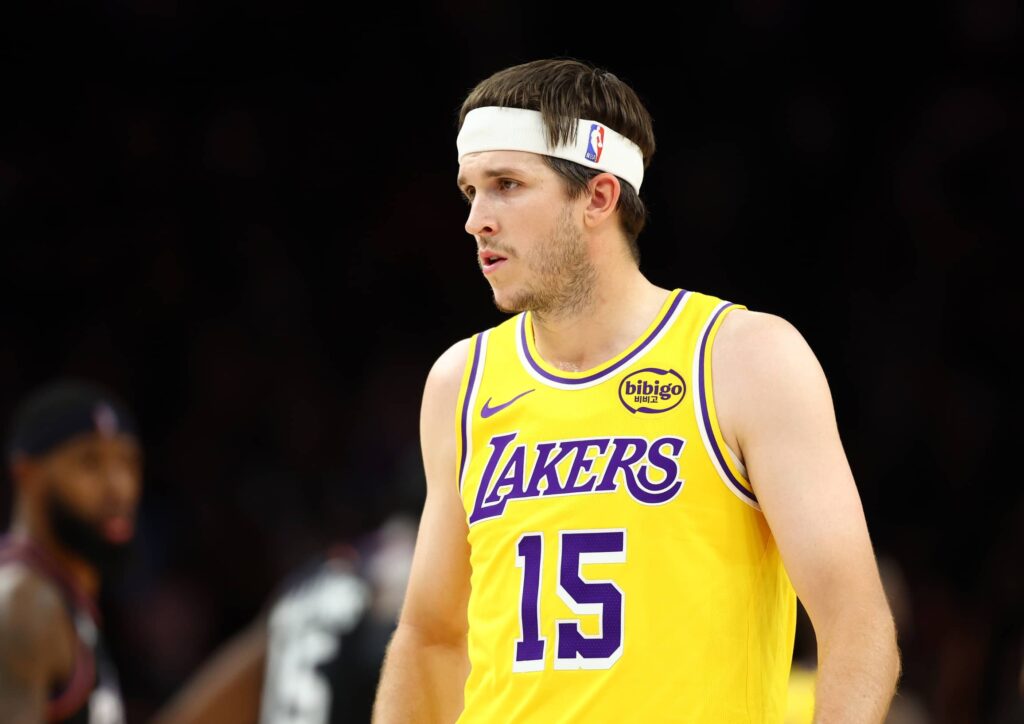
Austin Reaves has a real statistical case to be the Curry replacement, even if the selection logic usually leans toward a bigger-name, higher-volume creator. The basic argument is simple: when Reaves has been on the floor this season, he has produced like an All-Star guard, and he has done it with efficiency that is hard to ignore. The complication is availability. His Christmas injury took him out of the rhythm of the season and, more importantly, out of the “constant visibility” window that tends to decide replacement debates.
Reaves missed time with a left calf injury. The Lakers announced in late December that he would be sidelined at least four weeks due to a strained gastrocnemius muscle in his left calf, and he ultimately returned after a 19-game absence. That gap matters for All-Star replacements because the league is not just filling a box score slot. It is filling a spot in a short showcase, where the decision makers tend to prioritize players who have been present, durable, and central to winning for months at a time.
Still, the production is loud. Reaves is averaging 25.7 points, 5.1 rebounds, and 6.0 assists in 27 games this season, and he is doing it on 50.8% from the field. That is not “nice complementary guard” output. That is lead guard usage with top-tier efficiency, and it explains why his candidacy keeps resurfacing every time the replacement list comes up.
Since returning, he has been on a minutes restriction, but the form has been immediate. In his first game back against the Nets on February 3, he scored 15 points off the bench in 21 minutes, with the Lakers explicitly managing his workload.
Two nights later, he erupted for 35 points on 12-for-17 shooting (5-for-8 from three) in a win over the 76ers, which is the kind of single-game spike that reminds people how real his offensive ceiling has been this year.
He followed that with a steady all-around line against the Warriors (16 points, eight assists, two steals) as he ramped back toward full minutes. And on Monday against the Thunder, he added 16 points and seven assists, again functioning as a primary organizer with Luka Doncic sidelined.
Team context helps him. The Lakers are 32-20 and sitting 5th in the West, which is strong enough that adding an All-Star replacement from their backcourt does not feel like a reach. If the NBA wants a pick that rewards elite per-game impact and efficiency, Reaves belongs near the top of the list. The question is whether the missed time pushes him behind a more durable, more established name when the league makes the final call.
3. Julius Randle
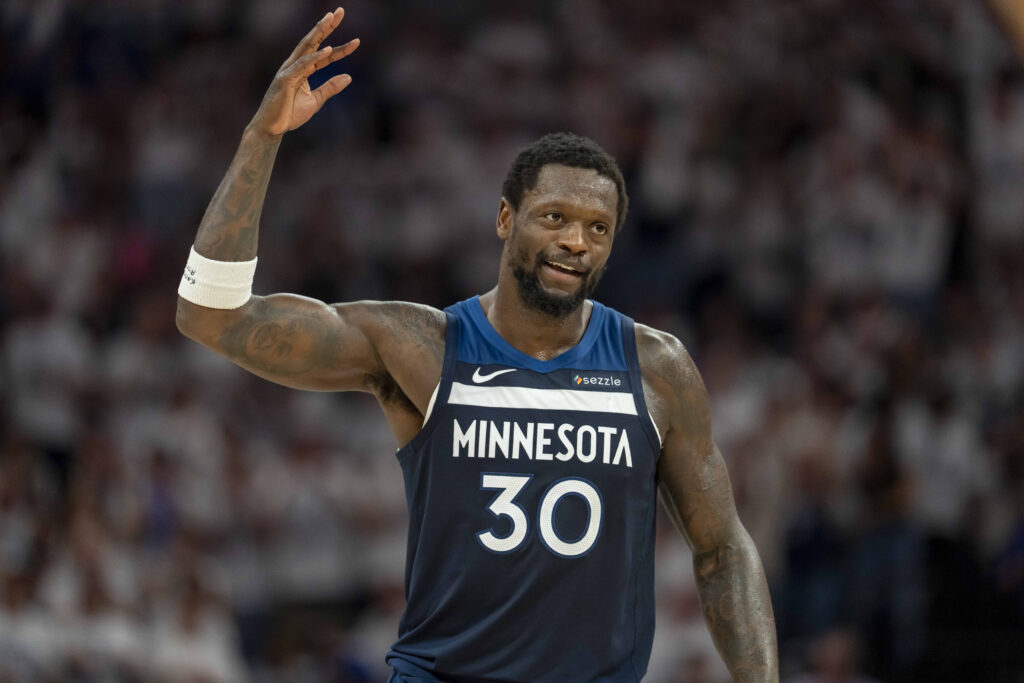
Julius Randle is the kind of replacement the league goes to when it wants a “no debate, this guy has been an All-Star level engine” answer. Even though Stephen Curry’s injury opens a backcourt spot, replacements are not always one-for-one by position. They are often about rewarding a player whose season has stayed consistently high-level, and Randle fits that profile.
Start with the production. Randle is at 22.1 points, 6.9 rebounds, and 5.4 assists in 54 games, with 48.8% from the field, 32.2% from three, and 82.0% at the line. The efficiency is solid, and the playmaking is the separator.
The team context helps. The Timberwolves are 32-22 and 6th in the West, which puts them in the competitive list where All-Star representation tends to feel “right” to the league office.
And he is heading into the break with momentum. On Monday night against the Hawks, Randle posted 18 points, 12 rebounds, and 10 assists in a blowout win, which is basically a one-game summary of why he belongs in these conversations. He can score, he can organize, and he can end possessions on the glass.
Randle is a high-probability selection if the NBA wants the replacement to represent a sustained two-way workload rather than a pure “skills contest” fit. Curry’s absence removes a headline guard, but the league could easily decide the cleanest solution is to add another proven, high-usage creator who has played almost every night and kept a top-six team afloat.
4. LaMelo Ball
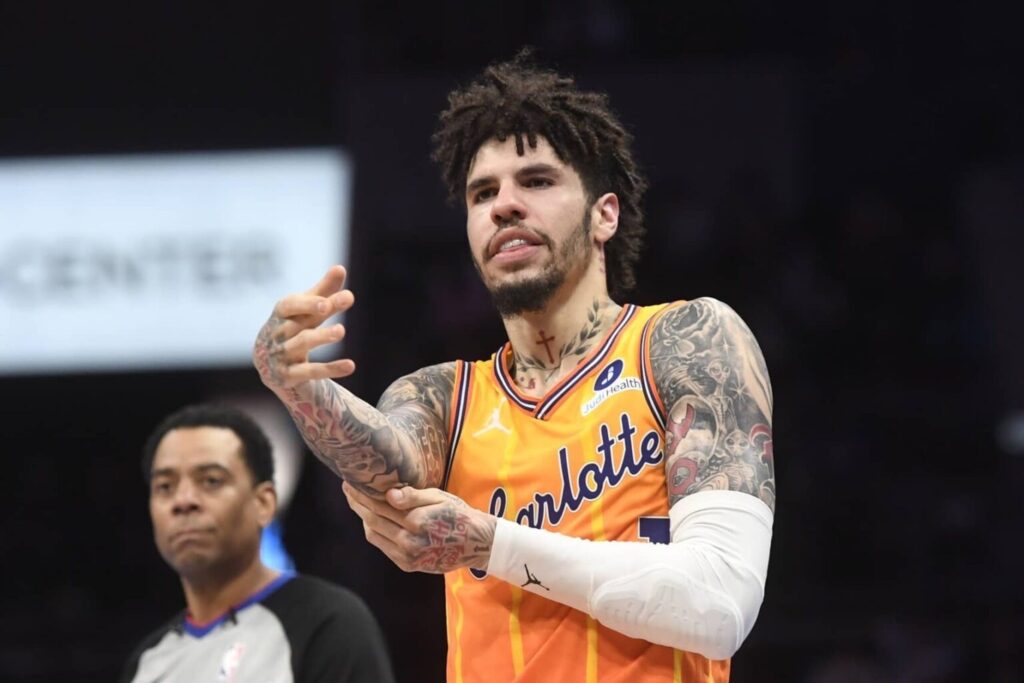
LaMelo Ball is the more direct stylistic replacement for Curry, because he brings the same basic ingredient the event wants: guard creativity that looks good in a showcase. The issue is that his candidacy is a little messier than the highlights. It is not about talent. It is about efficiency, availability, and whether the NBA wants to reward a player whose team has lived closer to the Play-In line.
Ball is averaging 19.2 points, 4.8 rebounds, and 7.4 assists in 44 games, with 40.2% from the field, 36.2% from three, and 88.4% from the line. His true shooting is 53.3%, which is fine, but not the kind of efficiency that forces the league’s hand the way elite scorers do.
Team context is the other piece. The Hornets are 25-28 and 10th in the East. That is not disqualifying, but it does mean Ball’s argument has to lean harder on his role and impact rather than the standings.
The recent form is real, though. He has been back in the lineup after a brief absence, and the Hornets have been winning enough for people to notice. The nine-game win streak snapped Monday against the Pistons still came with Ball scoring 20, and he has been active in the lead-guard role again.
If the league wants the replacement to “feel” like Curry, Ball is the best aesthetic choice on the board. But if the NBA is picking the most airtight résumé, his case is more vulnerable because the efficiency is ordinary for an All-Star guard, and the Hornets are still in the middle tier of the East.
5. Michael Porter Jr.
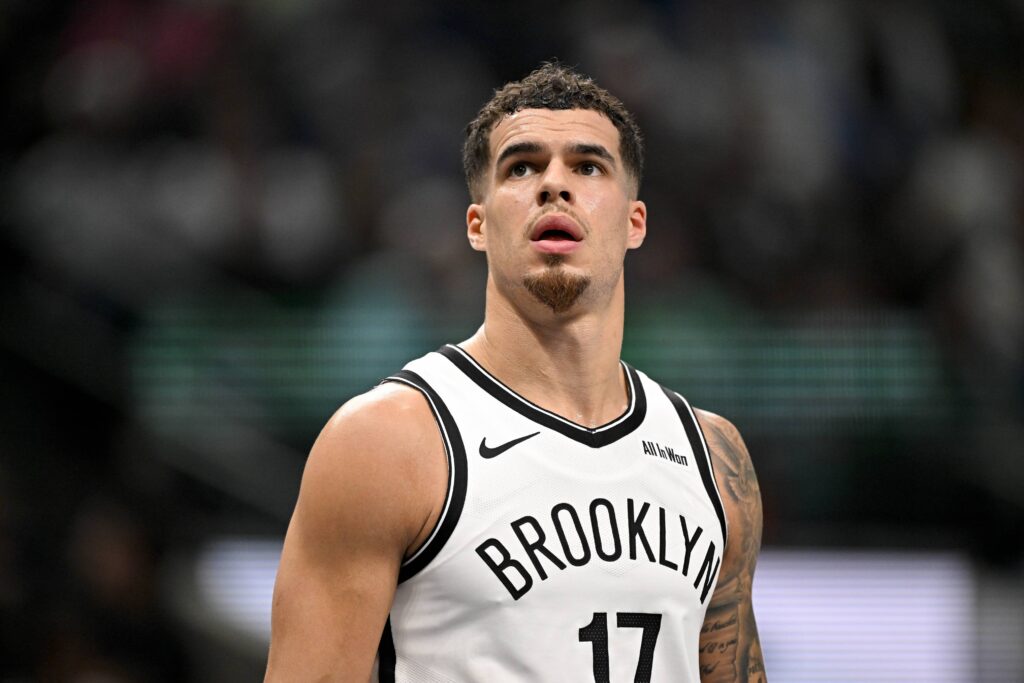
The loudest “how is this guy not in?” case on the board is a wing putting up true No. 1 scoring volume with real efficiency, even while playing on a roster that has spent most of the season in the lottery. That tension is basically the entire Michael Porter Jr. All-Star argument: the numbers scream replacement, the team context explains the omission.
Porter has been a top-shelf scorer all season. He is averaging 25.0 points, 7.2 rebounds, and 3.2 assists in 41 games, shooting 47.4% from the field, 38.5% from three, and 85.3% at the line. His true shooting is 60.9%, which is the part that makes the case hard to dismiss. He is not getting there on empty 30-shot nights. He is scoring efficiently while carrying a heavy shot diet.
The obvious counter is the Nets’ record. The team is 15-37, 13th in the East. Coaches pick the reserves, and coaches tend to reward winning, especially when they are choosing between similar tiers of production. This is how players become “snubs” even when the box score says otherwise.
But calling Porter a snub is not just fan whining. The public framing has been consistent: he’s been one of the top omissions, pointing directly at the combination of 25-plus scoring and the Nets’ record as the reason he got squeezed out. And honestly, it’s very unusual to see that stat profile relative to the usual reserve cut line, especially for a player scoring on elite shot-making volume.
What makes him a real Curry-replacement candidate is that the league is not looking for a “positional match” as much as a player who can function as a legitimate All-Star-level talent in a short game. Porter absolutely fits that.
He can score at all three levels, he bends defensive coverages as a shooter, and he has had the type of recent stretch that looks like an audition. He had back-to-back explosions of 36 and 38 points in late January, the kind of production that forces the conversation back onto him.
The only wrinkle right now is health. Porter missed Monday’s win over the Bulls with right knee tendinitis, and the team framed it as precautionary. If he is cleared, I think he is the best “pure performance” replacement option available. If the league is serious about rewarding the most deserving season, this is the lane where it corrects the original mistake.