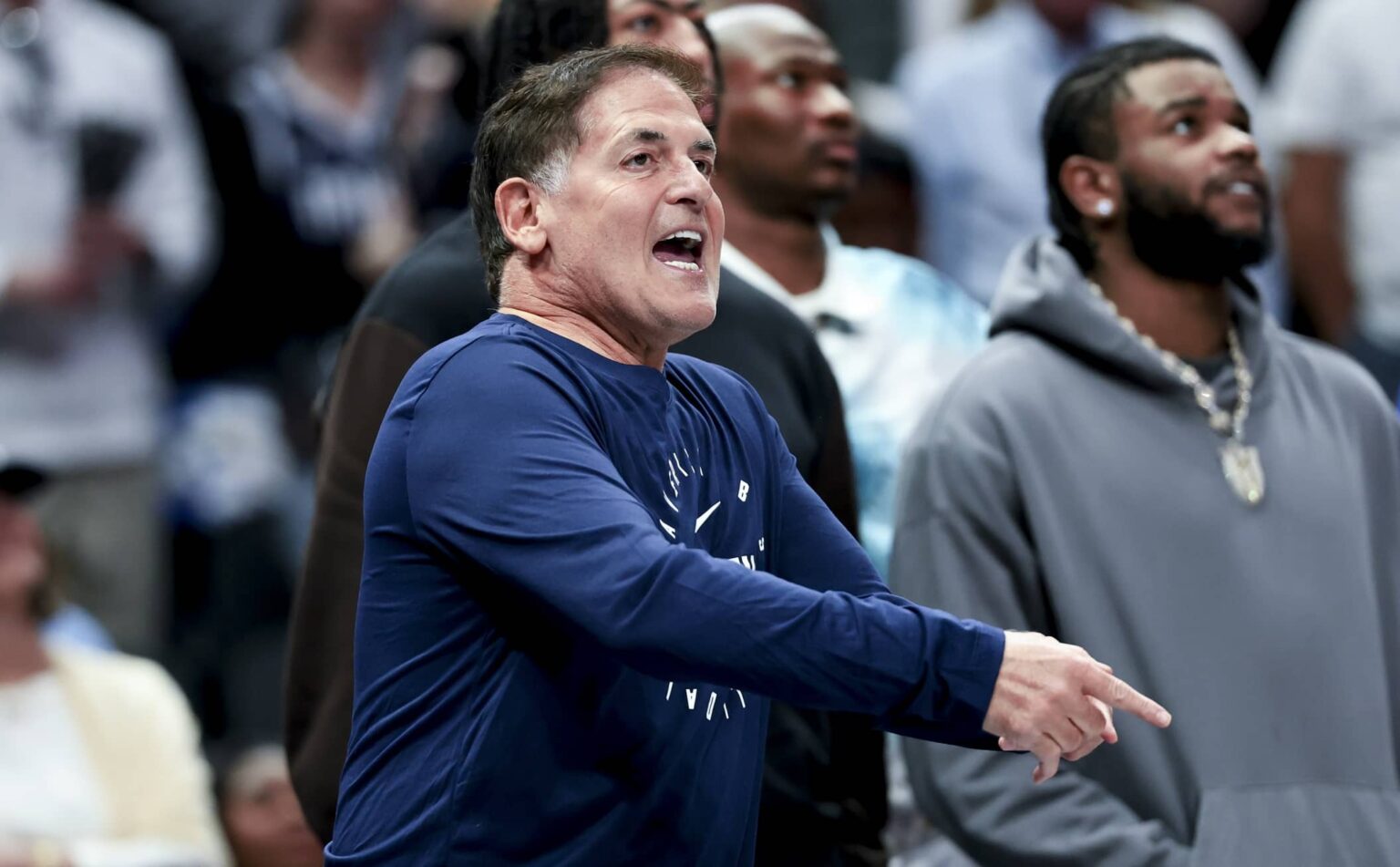
Tanking in the NBA has become a rampant issue that the league cannot ignore any longer. While several sources have come forward to present their own solutions to address tanking, former Dallas Mavericks owner Mark Cuban proposed a unique method to address the problem.
Mark Cuban took to X to share his thoughts on tanking, addressing how he had been lobbying for changes since his time as the Mavericks’ owner. He began by tweeting:
“Since tanking is getting everyone’s attention, back in the day, when we were winning 50 games every year and never got a good pick, here is what I floated: ‘Make the draft more like free agency.’ Except that the worst record gets the salary slotted to the first draft pick. The next worst record gets the next amount.”
Mark Cuban’s initial idea involved having teams compete for a “rookie cap room” instead of a draft pick. With the teams with the poorest records receiving the most amount of cap space, the flexibility to recruit talented players with better deals becomes more feasible. The same logic applies to the second round.
Theoretically, this approach seems sound. In practice, however, it may not achieve much as teams would still be rewarded for poorer performances. Although Cuban noted that players have the capacity to choose a better team for less pay, this may not be a significant factor in dictating decisions.
In light of these shortcomings, the businessman noted that this idea was shot down without further consideration. However, this didn’t stop him from lobbying for changes.
“Separately, I ALWAYS advocated for four rounds in the draft,” Cuban continued. “One of the DUMBEST things that happens during the draft, particularly now with two-ways, is that when the draft hits about 45, and players have fallen much further than expected, the phone lights up with calls from agents telling those with remaining picks NOT TO DRAFT their player.”
“They would prefer to pick the team they want. Simultaneously, teams are trying to buy a pick or swap a future pick for one of the remaining picks. Then finally, after @ShamsCharania tells us the 60th pick, every draft room goes into overdrive and will spend HOURS trying to get players they like to fill out their summer league teams.”
Mark Cuban’s justification for four rounds in the draft seems rational to some extent.
Players can often opt to fight for their place on their preferred team’s roster by competing in the Summer League or working their way up through the ranks of the G League. Meanwhile, teams are more readily willing to capitalize on the value of their current pick position, leveraging it to gain future picks and swaps.
Overall, the value of picks later in the draft suffers, while players vying for two-way contracts find themselves in more vulnerable positions as teams are allowed to waive them at any point in time.
“The agents aren’t dumb. They will play teams against each other for guaranteed money, a two-way contract, and playing time. It’s ridiculous,” Cuban continued. “Add two rounds, and it’s fairer to players, and people in the draft room can go home at a reasonable time.”
While intriguing as a concept, Mark Cuban’s second approach may not align as closely with some of the factors that dictate decision-making in the NBA.
Considering that the league is driven by data and revenue, teams that see greater merit in tanking to gain a favorable pick are more likely to be incentivized by such practices. In light of this, neither of Mark Cuban’s solutions can really address the core of the issue.
It is becoming apparent that finding the right incentive to convince weaker teams to compete in the latter stages of the season is the key, even though punishments may yield instant results.
In a more extreme notion, doing away with the drafting process itself has also been floated. Considering how unlikely this approach is, however, rewarding teams for competing by giving them more favorable odds to secure a better draft position may seem more appealing.