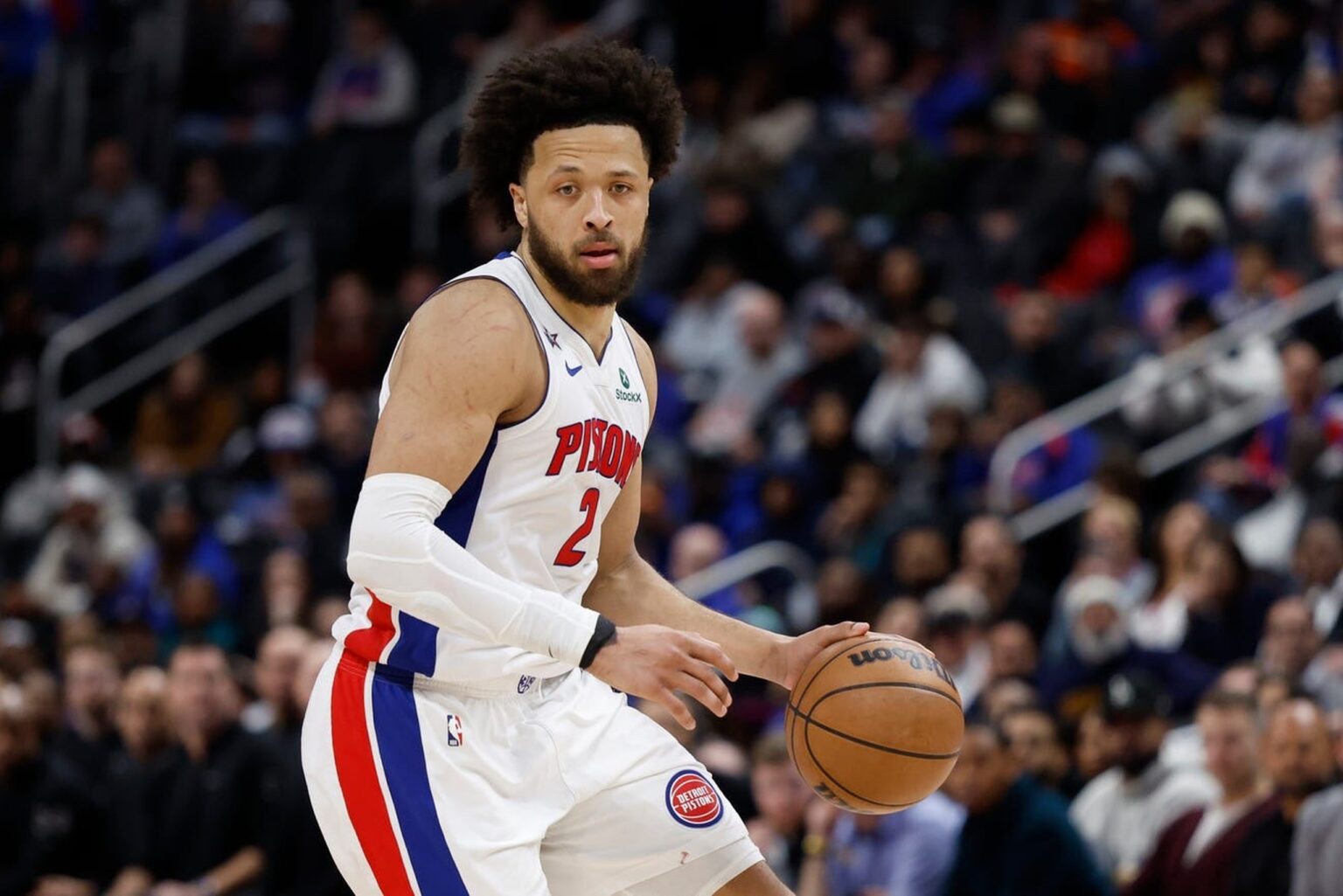
Detroit isn’t just playing well right now; they’re overwhelming teams. In a 124-116 win over Oklahoma City, the Pistons didn’t rely on luck, hot shooting variance, or late-game chaos. They controlled the paint, controlled the glass, and leaned on their All-Star duo to deliver another statement victory.
While the Thunder knocked down 18 threes and shot 95.2% from the free-throw line, it didn’t matter. Detroit shot a blistering 53.9% from the field, won the rebounding battle 52-37, and poured in a staggering 70 points in the paint. That’s not finesse basketball, that’s force.
And at the center of it all? Cade Cunningham and Jalen Duren.
1. Cade Cunningham Looked Every Bit The Superstar
Cade Cunningham completely controlled the tempo of this game. He finished with 29 points, 13 assists, 5 rebounds, 3 steals, and 3 blocks in 38 minutes, stuffing the stat sheet in every possible way.
He shot an ultra-efficient 11-16 from the field and 3-5 from deep, while also going 4-for-4 at the line. Even more impressive? He created offense consistently despite committing 8 turnovers. The aggressiveness never wavered.
When Oklahoma City made small pushes, Cunningham responded with smart reads, timely buckets, or drive-and-kick setups. His +17 plus/minus reflected how much the game tilted in Detroit’s favor when he was on the floor.
2. Jalen Duren Owned The Interior
Jalen Duren was unstoppable inside. He finished with 29 points on 12-17 shooting and 15 rebounds, including 5 offensive boards.
The Thunder had no answer for him around the rim. Whether it was pick-and-roll finishes, putbacks, or deep post seals, Duren punished Oklahoma City repeatedly. His physicality set the tone for Detroit’s 70 paint points.
Beyond scoring, his presence limited OKC’s second-chance opportunities. The Pistons grabbed 16 offensive rebounds, and Duren was at the heart of that effort. That interior dominance is what separated the teams.
3. Detroit’s Physical Edge Was The Difference
The box score tells the story clearly: 52-37 in total rebounds, 16-12 in offensive boards, and 12 blocks to just 3. That’s a team imposing its will defensively.
Ausar Thompson contributed across the board with 11 points, 7 assists, 4 rebounds, 3 steals, and 2 blocks, bringing energy and defensive disruption. Paul Reed added 4 blocks off the bench in just 17 minutes.
Oklahoma City shot 40.6% overall and managed just 32 points in the paint. Despite hitting 18 threes, they couldn’t match Detroit’s physical presence inside.
4. Thunder’s Shooting Wasn’t Enough
The Thunder also had some big games, with Jaylin Williams scoring 30 points, 11 rebounds, and 5 of 10 shooting from three. Cason Wallace also scored 23 points on 9 of 17 shooting.
The Oklahoma City Thunder shot 18 of 49 from three (36.7%) and 20 of 21 from the free throw line (95.2%), which are both above average and in some cases exceptional. Most of the time, when your perimeter shooting is that good, it gives you a comfortable lead.
The only time three-point shooting can get you out of a hole is when the opposing team shoots above 53% from the field and scores 40 points in the paint.
5. Balanced Contributions Around The Stars
While Cunningham and Duren carried the headline, Detroit’s depth played its part. Duncan Robinson scored 16 points with 3-9 from three and 5-5 at the line. Ronald Holland II added 8 points and 5 rebounds, while Caris LeVert chipped in 9 points on 3-6 shooting.
Detroit also moved the ball effectively, tallying 29 assists compared to Oklahoma City’s 28. The offense wasn’t stagnant; it flowed through Cunningham but involved multiple weapons.
Even though Detroit committed 17 turnovers, they offset that by scoring 27 points off OKC turnovers, compared to just 16 the other way. That opportunistic edge made a quiet but important difference.