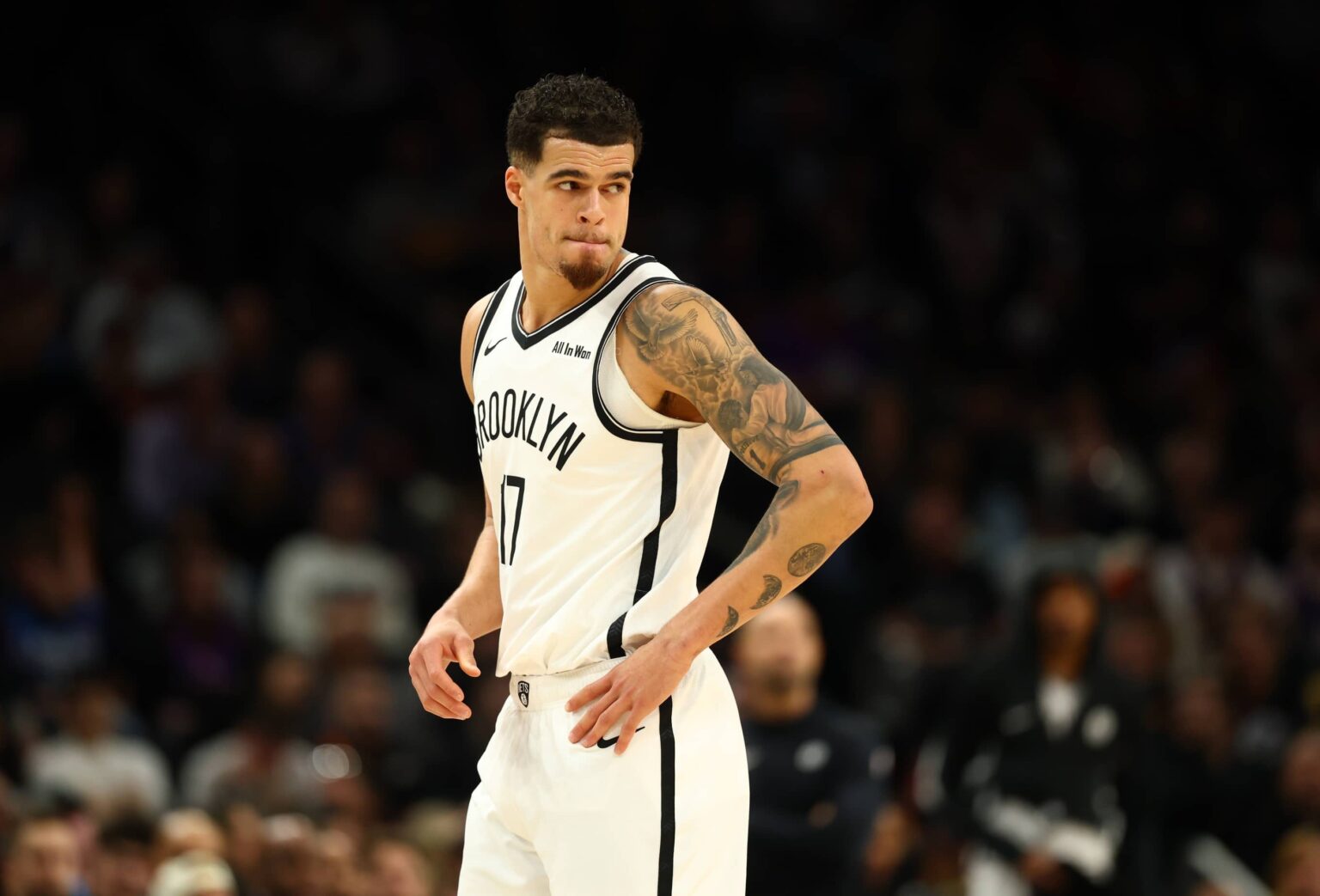
The Denver Nuggets have fallen to 5th in the Western Conference after a disappointing defeat to the Minnesota Timberwolves on Sunday afternoon. While the West is still wide open in terms of seeds 3-6, there is some concern about how Cam Johnson has performed in comparison to last year’s sharpshooter, Michael Porter Jr.
Because starting forward Aaron Gordon has only played 23 games, there has been too much responsibility on Nikola Jokic and Jamal Murray as a result. The Nuggets, on paper, have one of the best teams in the league, but the focus has been on Cam Johnson more than anyone else.
Johnson was brought in to replace Porter’s shooting but add extra defensive ability on the wing and also athleticism on the break. So far, Johnson hasn’t performed up to par, and everyone knows that.
The decision to move Porter Jr was certainly basketball-related, but also had to do with team structure. Regardless, a move of this magnitude has to be analyzed a handful of months later.
That begs the question: did the Nuggets make the right move by moving Porter Jr, often the scapegoat of the team, for Johnson? Let’s dive into what the details say.
Statistical Comparison
Michael Porter Jr: 24.5 PPG, 7.0 RPG, 3.1 APG, 1.0 SPG, 0.2 BPG, 47.3% FG, 37.5% 3-PT FG, 85.6% FT, 32.6 MPG
Cam Johnson: 11.2 PPG, 3.8 RPG, 2.3 APG, 0.6 SPG, 0.4 BPG, 44.5% FG, 40.6% 3-PT FG, 84.8% FT, 30.8 MPG
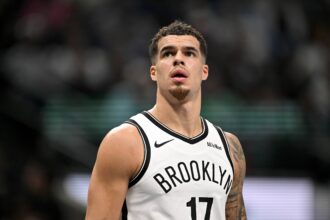
Now with the Brooklyn Nets, Michael Porter Jr. is putting up 24.5 points, 7.0 rebounds, and 3.1 assists per game while shooting an efficient 47.3% from the field. He has clearly stepped into a featured scoring role, operating with the freedom to hunt shots and carry stretches offensively. His production reflects a player who is being maximized as a primary or secondary option rather than a complementary piece.
Meanwhile, the Denver Nuggets are getting a very different stat line from Cam Johnson. At 11.2 points, 3.8 rebounds, and 2.3 assists per game, Johnson’s role is far more subdued. His 40.6% three-point shooting is strong and technically better than Porter Jr.’s percentage this season, but the volume and shot difficulty aren’t comparable. Johnson is benefiting from clean looks created by Nikola Jokic, whereas Porter Jr. is often creating or taking tougher attempts in Brooklyn.
The rebounding gap is also significant. Porter Jr.’s 7.0 boards per game highlight his size advantage and ability to impact possessions beyond scoring. Johnson’s 3.8 rebounds represent a drop-off on the wing, especially for a Denver team that plays at a slower pace and values finishing defensive sequences. Even though Johnson averages slightly more blocks (0.4), the overall statistical edge leans clearly toward Porter Jr.
Simply put, the Nuggets moved on from the more productive player. Porter Jr.’s numbers in Brooklyn show he is still capable of near All-Star-level scoring. Johnson has not matched that output in Denver, making the statistical comparison one-sided months after the trade.
Playing Style Fit
When Porter Jr. was in Denver, his role was straightforward: space the floor, attack closeouts, and punish defenses for overloading on Jokic and Jamal Murray. Now in Brooklyn, he has expanded that responsibility into a primary scoring role. His shot-making versatility, off movement, off one or two dribbles, and in transition, remains elite.
In Denver, Johnson was expected to replicate Porter’s shooting gravity while adding more defensive reliability. The theory made sense. Johnson is considered more disciplined defensively, more switchable laterally, and less prone to breakdowns.
However, the fit hasn’t been seamless. Porter Jr.’s years of chemistry with Jokic created an instinctive two-man dynamic. Johnson is still adapting to that rhythm. He often plays within the system rather than bending it, which can make the offense feel more predictable in crunch time, which is why the Nuggets have ranked 27th in clutch performance heading into Monday night’s game.
There’s also an aggression element missing. Porter Jr. never hesitated to take big shots, even if they were contested. Johnson tends to defer, which puts even more pressure on Jokic and Murray late in games. While Johnson may provide structural balance, Porter Jr.’s fearless scoring punch is something Denver undeniably no longer has.
Nuggets Regular-Season Performance
2025-26 Nuggets: 38-24, 120.3 PPG (1st), 121.4 Off Rtg (1st), 97.9 Pace (22nd)
2024-25 Nuggets: 50-32, 120.8 PPG (3rd), 119.9 Off Rtg (4th), 99.8 Pace (8th)
The 2025-26 Nuggets currently sit at 38-24, leading the league in scoring at 120.3 points per game and ranking first in offensive rating (121.4). On the surface, that suggests losing Porter Jr. has not damaged Denver’s offensive identity. Jokic remains the engine, and the system continues to produce elite efficiency.
Compared to last season’s 50-32 record and fourth-ranked offense (119.9 offensive rating), the slight improvement in efficiency indicates that Denver’s scheme remains dominant regardless of personnel changes, including the trade and the hiring of David Adelman as full-time coach. However, their pace has slowed from 99.8 (8th) to 97.9 (22nd), reflecting a more deliberate, half-court-oriented approach.
The difference shows up more situationally than statistically. Without Porter Jr.’s explosive scoring stretches, Denver relies more heavily on sustained execution rather than sudden offensive bursts. Johnson’s presence has helped defensively in certain matchups, but he has not replaced the dynamic scoring Porter once provided.
Ultimately, the Nuggets remain contenders in a wide-open Western Conference. But while the numbers show stability, Porter Jr.’s breakout season in Brooklyn makes the trade impossible to ignore. Denver chose balance and depth with Johnson, and now the long-term verdict will hinge on whether structural improvement outweighs the loss of a proven 24-point-per-game scorer.
The Nuggets Traded The Better Player, But Opened Up Space For A Better Bench
At the time, we felt the Nuggets were giving up the better player, but Johnson wasn’t that far off. One can argue that he is a more capable defender, a solid shooter, and a more athletic rim-runner. His ceiling isn’t as high as Porter Jr’s, but it was a sacrifice needed at the time.
The Nuggets are under the second apron, and that allowed them to bring Bruce Brown, Tim Hardaway Jr, and Jonas Valanciunas to shore up a historically thin bench. Brown was critical in Denver’s title success in 2023, and a reunion was almost a forgone conclusion.
The Nuggets made the move not only for basketball-related issues but for the sake of building the bench.
Nuggets Made The Right Move, Even With Johnson’s Struggles
Overall, the Denver Nuggets made the right move. At the time, Johnson was similar to Porter Jr in terms of skill set, and it opened up the cap space for the team to bring in heavy bench reinforcements such as Bruce Brown, Tim Hardaway Jr, and Jonas Valanciunas.
Yes, had Johnson performed up to par, it would have been a fantastic A+ result a handful of months later. But the Nuggets needed an improved bench to survive in a brutal Western Conference, and they did that, even if Johnson is nowhere near the player they wanted him to be.
Whatever decline Johnson has brought in comparison to Porter Jr, the bench additions have helped. One can argue that the trade opened up the games of Peyton Watson (14.9 PPG, 4.9 RPG, 1.2 BPG) and Spencer Jones (34 starts this season), who might not have gotten the chances to play had Johnson not struggled.
Hindsight is 20-20, but the Nuggets bet on Johnson replicating Porter Jr’s production, and while it hasn’t worked out, we think the move improved their bench, and therefore, it was the right move.