Being left-handed does not automatically make someone better, but it does change what defenses are used to seeing. Most matchups, closeouts, and help rotations are built around stopping right-handed drivers. A top lefty can take advantage of that with different driving angles, different passing lanes, and different finishing spots at the rim.
This list is not about style points. It is a ranking of the best left-handed players in the NBA right now based on overall value. The main factors are production, efficiency, role difficulty, and two-way impact when it applies.
For lead guards, the standard is simple: can they create good shots late in the clock and make the right reads when teams load up? For wings and bigs, it is about scoring versatility, passing, rim protection, or defensive versatility, and whether their game holds up when opponents game-plan for them.
The goal is to rank the players who actually drive winning at a high level, not just the most talented highlights.
Here are the 10 best left-handed players in today’s NBA.
10. Brandin Podziemski
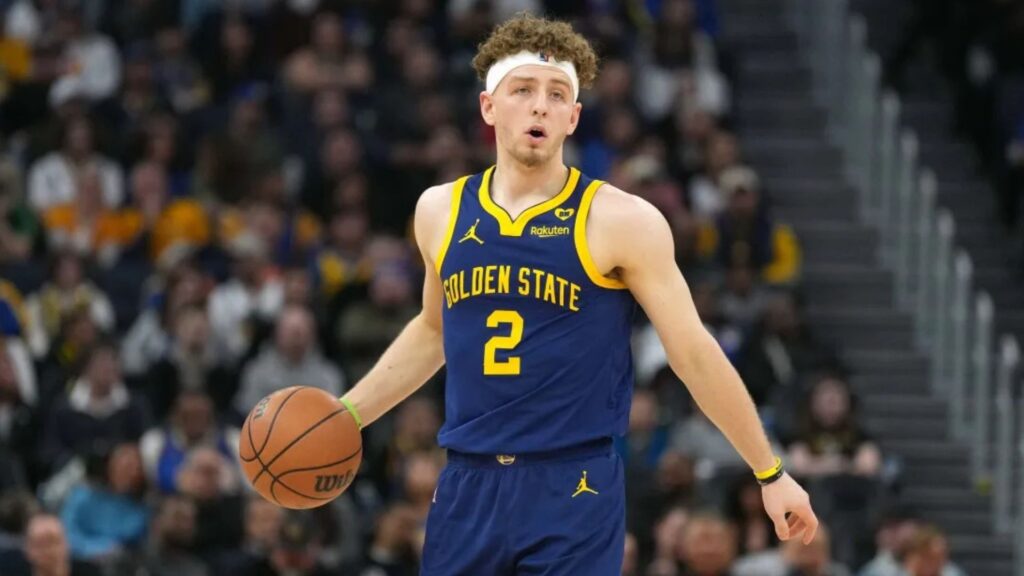
2025-26 Stats: 12.4 PPG, 5.1 RPG, 3.7 APG, 1.1 SPG, 0.2 BPG, 44.7% FG, 36.2% 3P%
Brandin Podziemski is slowly playing his way into a real place inside the Warriors’ long-term core, and the timing matters. Stephen Curry has been out since January 30 with right knee patellofemoral pain syndrome, and the team has had to survive without its entire offensive system running through Curry’s gravity.
The Warriors entered this week 31-30, eighth in the West, with no margin for error in the play-in race. That is why Podziemski’s latest game stood out. In the 114-101 loss to the Clippers on March 2, he played 37 minutes and finished with 22 points on 9-for-18 shooting and 3-for-6 from three, plus seven rebounds and three assists.
It was his highest scoring night since January 19, when he dropped a season-high 24 against the Heat.
Podziemski’s season has not turned into the “lead guard next to Curry” leap some expected, and the box score often undersells why Steve Kerr keeps trusting him. The assist number is modest at 3.7, but his role is to keep possessions clean: make the next pass, keep the ball moving, and avoid dead dribbles that waste clock. Defensively, he competes, takes charges, and plays with the kind of decision-making that keeps him on the floor even when the shot is not falling.
In a Curry-less stretch, that matters. The Warriors have needed reliable minutes, not experiments. Podziemski has looked like a stable piece in that reality, and the 22-point night against the Clippers is a clear example of him handling more responsibility without losing the structure of the team’s offense.
9. Domantas Sabonis
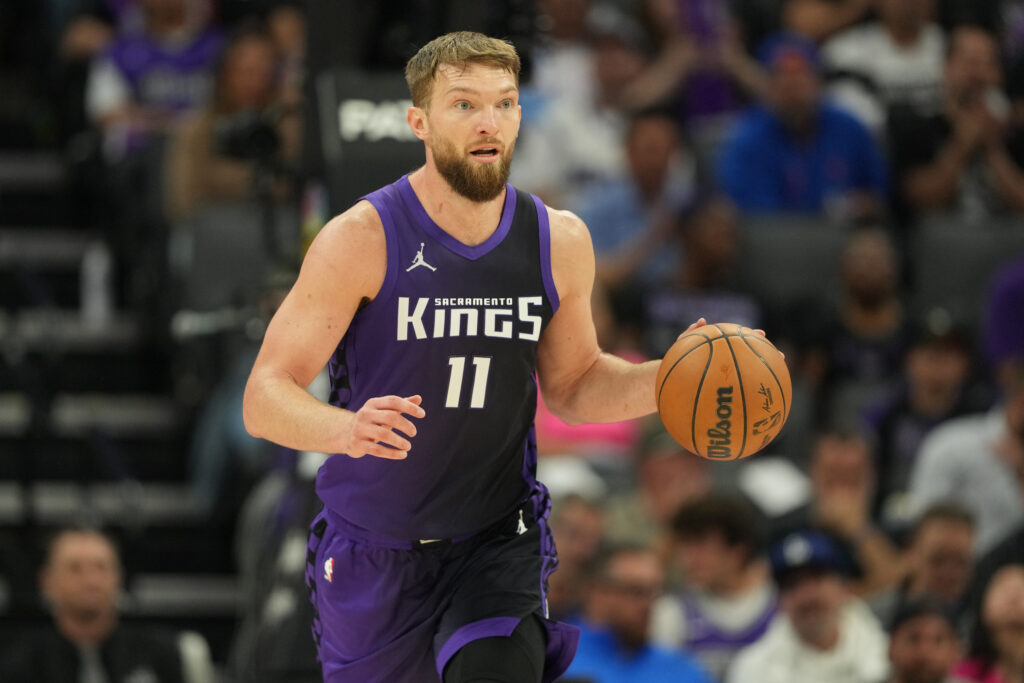
2025-26 Stats: 15.8 PPG, 11.4 RPG, 5.2 APG, 0.9 SPG, 0.5 BPG, 55.0% FG, 33.3% 3P%
Domantas Sabonis spent most of this season trying to play through a problem that never really went away. He first hurt his left knee in mid-November, missed 27 games, came back in mid-January, then played eight more before shutting it down and choosing surgery to repair a torn meniscus. The Kings announced he will miss the rest of the season.
That injury basically wrecked the Kings’ year. They are 14-48, last in the West, and the season has shifted into full draft mode. With Sabonis out and Zach LaVine also needing season-ending surgery, there was no real path to stabilize the roster or build any rhythm.
The focus now is the lottery and the top of the 2026 draft, where Darryn Peterson and AJ Dybantsa are viewed as headline names for teams chasing a franchise reset.
Even in a broken season, Sabonis still mattered whenever he was on the floor. He played only 19 games, but he still averaged 15.8 points and a team-leading 11.4 rebounds, which is basically his baseline impact: end possessions with rebounds, keep the offense organized with quick decisions, and punish smaller lineups inside. That is why he stays in this left-handed ranking. The skill set is real, and it translates when he is healthy.
The trade noise was real, too. Ahead of the deadline, Sabonis was linked to the Raptors, but it never got across the line. Now the story is simpler: rehab the knee, and wait to see what the Kings do with a top pick and a roster that is clearly moving toward a new timeline.
8. Miles Bridges
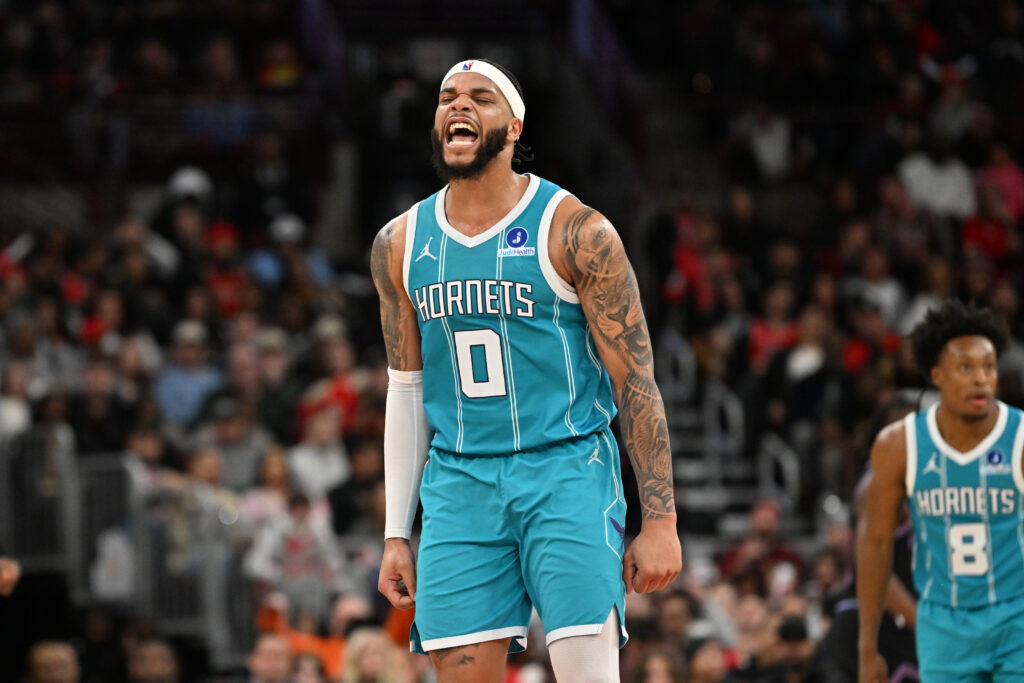
2025-26 Stats: 17.7 PPG, 6.0 RPG, 3.5 APG, 0.6 SPG, 0.5 BPG, 44.7% FG, 33.1% 3P%
Miles Bridges has been one of the clearest reasons the Hornets are playing meaningful basketball in March instead of circling the lottery. The Hornets are 31-31, back to .500, and sitting ninth in the East after a brand new five-game winning streak that pushed them into the middle of the play-in picture.
Bridges’ season line is not superstar-level, but it is steady production in a role that asks him to do a little bit of everything. He is giving the Hornets 17.7 points a night with 6.0 rebounds and 3.5 assists, and the volume is real: 31.9 minutes per game and 14.2 shot attempts.
For the Hornets, his scoring is huge because the offense is not built around one scorer. LaMelo Ball sets the table, Brandon Miller draws the toughest wing matchup most nights, Kon Knueppel brings the sharpshooting, and Bridges is the forward who can score with an isolation matchup every time.
The simplest way to describe his impact is that he keeps possessions alive. He has 6.0 rebounds per game and a clean assist number for a forward at 3.5, which shows up when the Hornets go small and need another ball-handler to prevent the offense from stalling. His best nights are usually the same script: efficient finishing early, then direct scoring when defenses load up late.
A good snapshot was the win over the Hawks on February 8, when Bridges posted 26 points in a 126-119 win. The game was tight, and Bridges still produced an efficient scoring night without needing a heavy diet of isolations. That is why he ranks this high among left-handed players. He is not being carried by a niche skill. He is producing nightly scoring and secondary creation on a team that has turned the season into a real race.
7. RJ Barrett
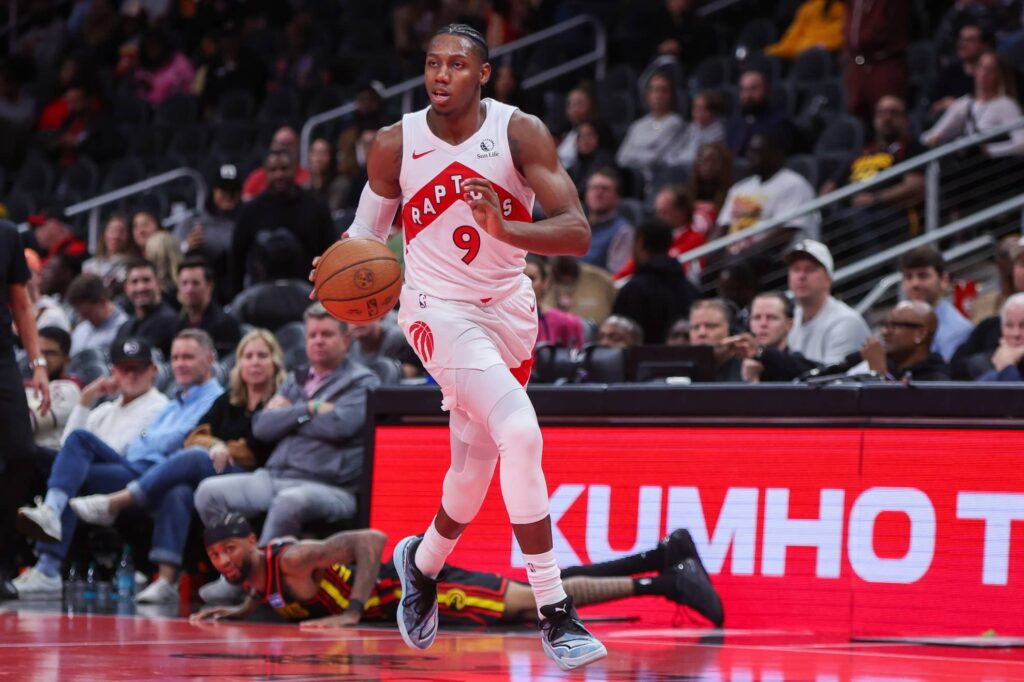
2025-26 Stats: 18.1 PPG, 5.4 RPG, 3.5 APG, 0.8 SPG, 0.3 BPG, 47.5% FG, 34.1% 3P%
RJ Barrett has settled into a clear, stable role for the Raptors, and team results reflect it. The Raptors are thriving at 35-26, fifth in the East, and playing like a team that expects to win most nights, even when the offense is not perfect.
Barrett’s numbers are clean and consistent: 18.1 points, 5.4 rebounds, 3.5 assists on 47.5% from the field. The three-point line is not carrying him, but it is good enough to keep defenses honest at 34.1% on 4.9 attempts per game. That blend is why he fits on a Raptors team that has multiple creators. He can play off Brandon Ingram and Immanuel Quickley, but he can also be the attacker when the possession breaks down, and the defense has already shifted.
Against the Knicks last night, Barrett scored 20 in a 111-95 loss, one of the only Raptors who consistently generated downhill pressure once the game tightened up in the fourth quarter. Three days earlier, in a win over the Wizards, he scored 21 in a game where the offense exploded after halftime.
Those are not random “hot” games. They are examples of how his scoring usually comes: attacking gaps, getting to the line when the defense is late, and finishing possessions when the Raptors need a second option next to the main creator.
Barrett is not the Raptors’ headline name, but he has been a reliable two-way wing scorer on a top-five East team, and that is a real standard.
6. Julius Randle
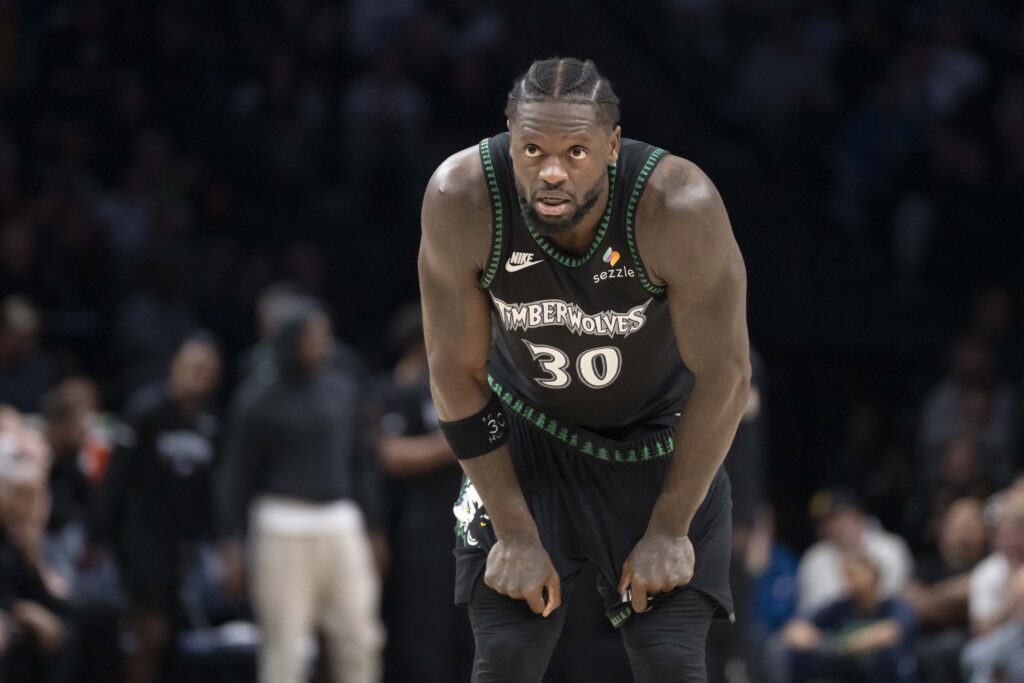
2025-26 Stats: 21.5 PPG, 6.9 RPG, 5.4 APG, 1.1 SPG, 0.3 BPG, 48.4% FG, 31.8% 3P%
Julius Randle’s season has been about fit and volume winning together. The Timberwolves are 39-23, fourth in the West, and they are getting the version of Randle that makes a good team harder to guard: steady scoring, real playmaking, and enough physicality to tilt matchups when games slow down.
Randle is averaging 21.5 points and 5.4 assists while shooting 48.4% from the field. The assists number is the key. The Timberwolves do not need him to be a pure finisher. They need him to punish single coverage and make the pass that keeps Anthony Edwards attacking a rotating defense instead of a set one.
That is where Randle has been valuable: catch at the elbow or on the left block, force the defense to show a second body, then hit the cutter or the shooter before the help can recover.
The recent performance against the Grizzlies last night was a clean example of what he is giving them. With Edwards exploding for 41 points, Randle had 23 points and 11 rebounds in a 117-110 win, a game they controlled with a big third-quarter run and then closed at the line.
Randle’s season has also been durable volume. He has played 61 games and 33.4 minutes per night, which helps explain why the team has been able to bank wins and stay near the top of the West without needing perfect health every week.
At No. 6, the case is simple: he is producing as a high-level second option on a top-four West team, and the production is tied to role difficulty, not easy usage.
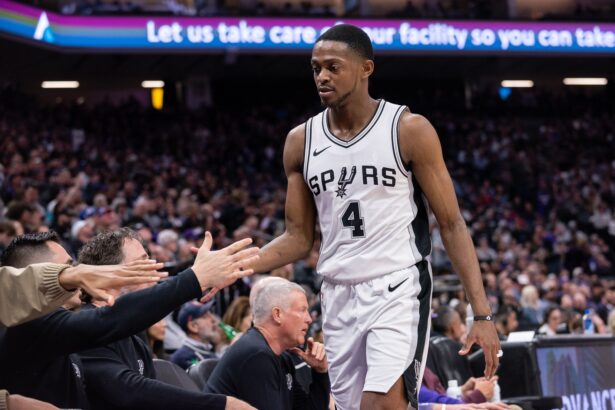
5. De’Aaron Fox
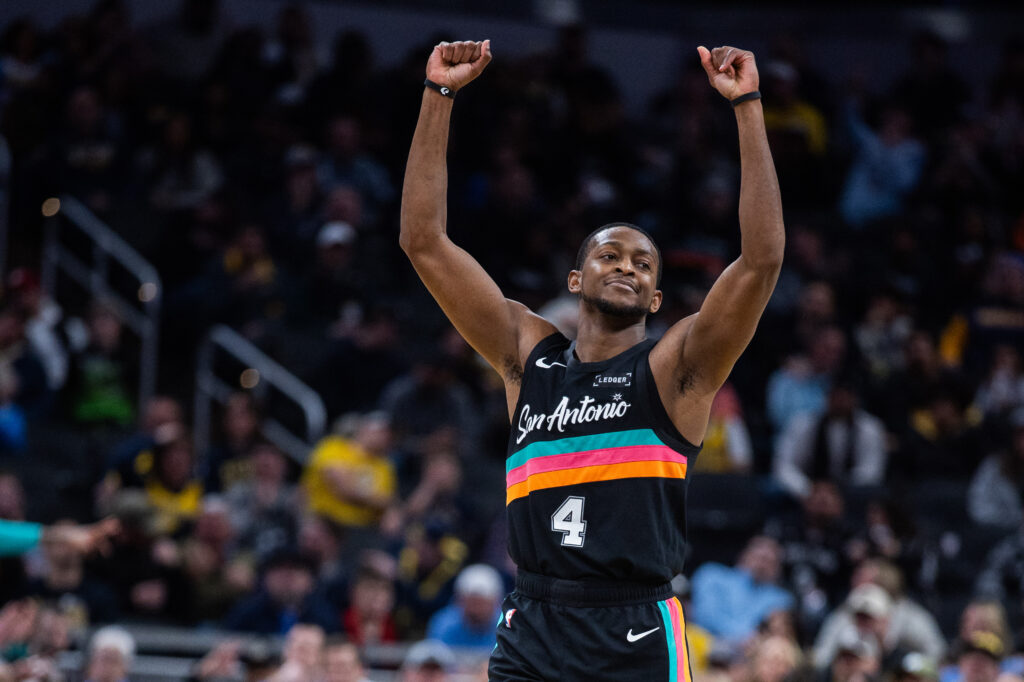
2025-26 Stats: 18.8 PPG, 3.7 RPG, 6.2 APG, 1.2 SPG, 0.3 BPG, 48.1% FG, 34.8% 3P%
De’Aaron Fox has not needed a huge scoring average to stay on this list, because his season has been about fit inside a winning structure. The Spurs are 43-17 and second in the West, and the offense is not built around Fox playing hero ball.
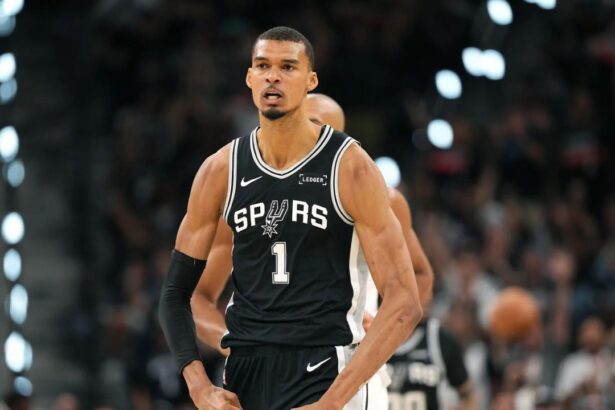
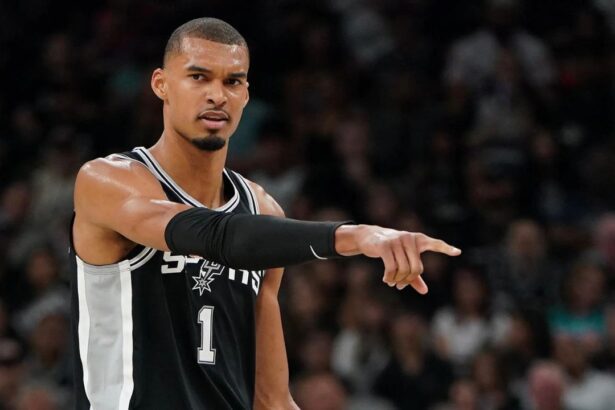
With Victor Wembanyama looking like the clear DPOY candidate and a top MVP frontrunner, Fox’s job has been clear all season. He is the guard who can start possessions, keep the ball moving, and still create a real shot when the Wembanyama option is covered.
The numbers match that role. He is at 6.2 assists per game with 2.4 turnovers, and he is scoring efficiently at 48.1% from the field while taking 5.5 threes a game. In a team that boasts extra scorers like Devin Vassell, Stephon Castle, and rookie guard Dylan Harper off the bench, Fox has done a great job bringing his experience and All-Star material to a young contender.
A simple example of how the Spurs use him is what happened against the Kings last week to extend their 11-0 streak in February. In a 139-122 win, Fox played 27 minutes and put up 18 points on 7-for-11 shooting with five assists. That line is exactly what the Spurs want from him: quick scoring when the lane is open, no wasted dribbles, and enough playmaking to keep the offense flowing around the primary options.
Fox is still a star late-clock creator. When the Spurs need a clean look, he can get downhill without help being set, or he can pull up if the big is too deep. But most of his value this season has been that he does not force it. On a team with a top-tier record, that restraint is part of the reason the offense stays organized.
4. Zion Williamson
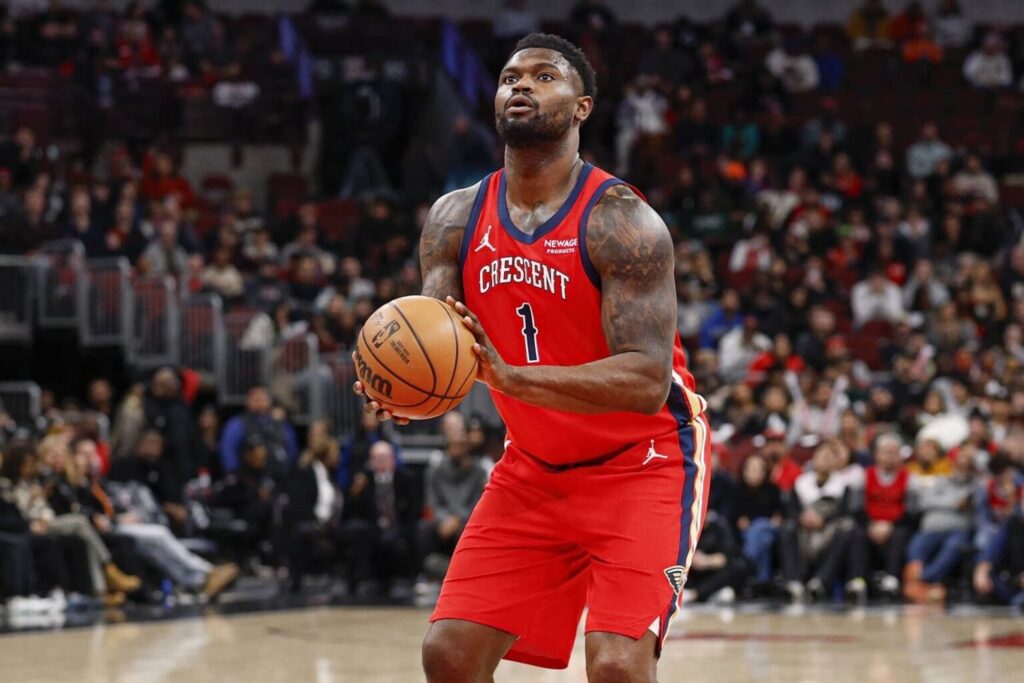
2025-26 Stats: 21.5 PPG, 5.8 RPG, 3.4 APG, 1.1 SPG, 0.6 BPG, 58.4% FG, 25.0% 3P%
Zion Williamson makes this list even in a season that has gone sideways for the Pelicans, because his baseline impact is still one of the hardest coverages in the league. The Pelicans are 19-44 and 13th in the West, and the season has been a blunt disaster with them now owning the 2026 first-round draft pick.
Williamson’s numbers show the same thing they always show. He is producing 21.5 points on elite efficiency, 58.4% from the field, and he is doing it without needing jump-shot volume. When he is on the floor, the offense can simplify. Get him the ball at the top, force a gap, and the defense has to choose between giving up a straight-line drive or collapsing and opening spot-up looks.
Last night, Williamson returned from injury against the Lakers. He had 24 in a 110-101 loss, and the Pelicans still could not close after leading into the fourth quarter. That is the story: the individual production is there once healthy, but the team results have not followed, and he’s barely played in 46 games this year.
Williamson stays this high because the traits are still rare. He is a top-tier paint scorer who forces double help, and he turns half-court possessions into rotation decisions. Even in a down year for the Pelicans, that is more valuable than most left-handed options across the league.
3. Deni Avdija
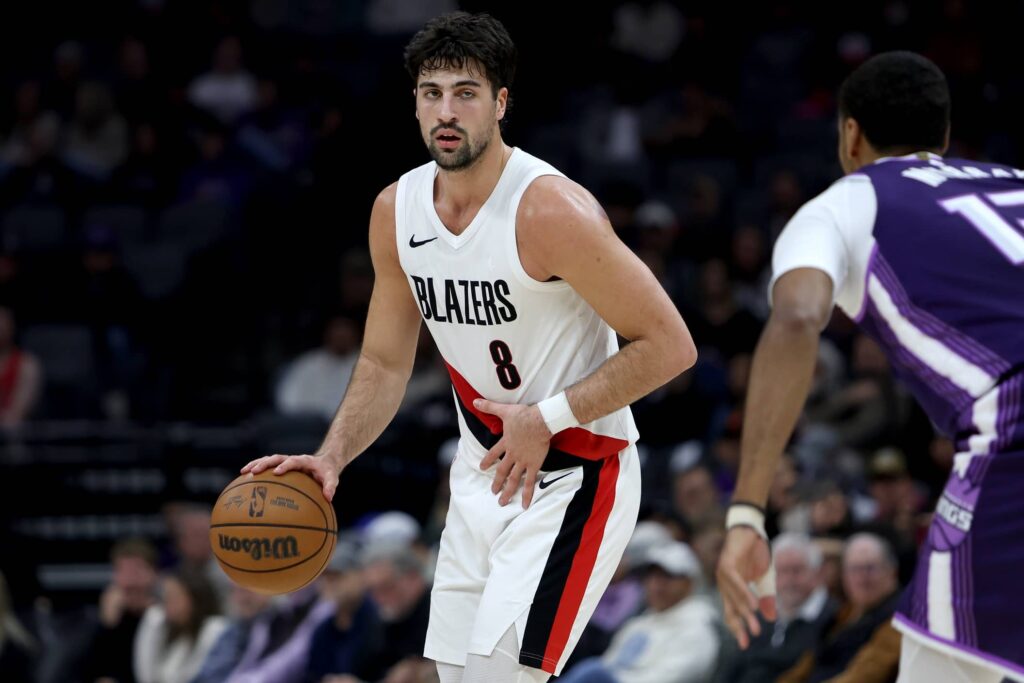
2025-26 Stats: 24.4 PPG, 7.0 RPG, 6.6 APG, 0.8 SPG, 0.6 BPG, 46.3% FG, 34.1% 3P%
Deni Avdija has had a real breakout season, making the All-Star team, and the volume is not empty. He is putting up 24.4 points, 7.0 rebounds, and 6.6 assists while playing 33.5 minutes a night, basically functioning as a lead initiator from the forward spot.
The Trail Blazers are 29-33 and 10th in the West, right in the play-in mix, and Avdija has been the clearest reason they have stayed in that range.
The jump shows up in how often he is creating the whole possession. He is taking 16.1 shots per game and 6.2 threes, and he is still holding 46.3% from the field with a strong 80.0% at the line. He’s been asked to do the work on both ends, and it’s not only scoring, but playmaking, organizing, and producing at an elite All-NBA level.
The downside for his season is that he missed the last four games after he reaggravated his back injury early in the first quarter against the Phoenix Suns last week. The Blazers have gone 1-3 in the small sample since his injury, proving how big of an impact he has for this squad.
Avdija is third because the season is not just “nice numbers.” It is a top-option responsibility, night after night, on a team fighting for a postseason spot, with multiple games where the offense ran through him, and the result still held.
2. James Harden
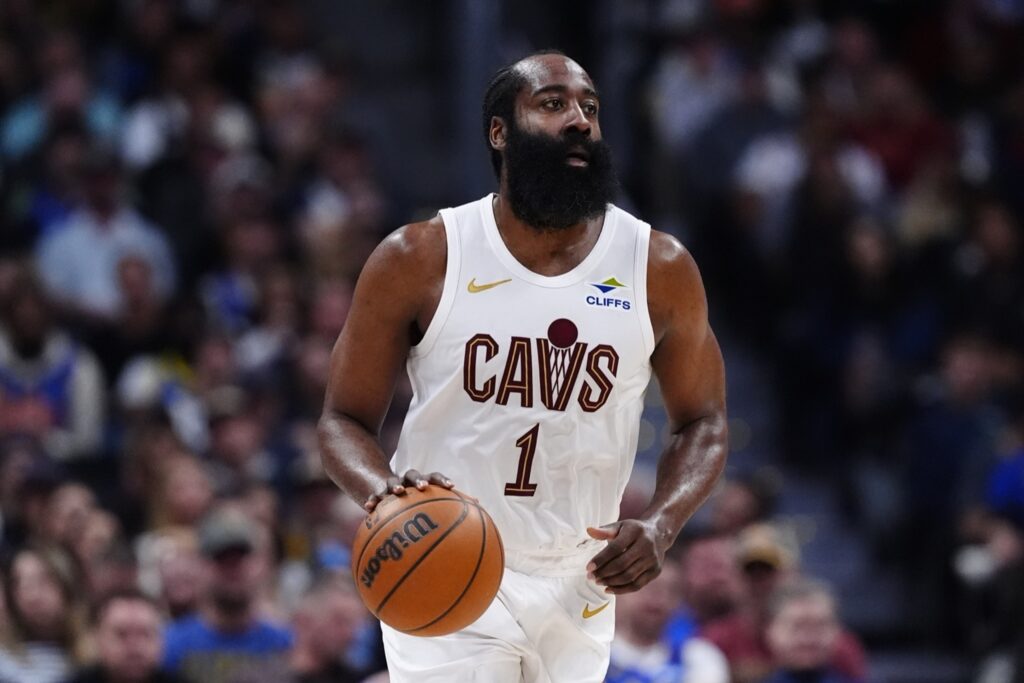
2025-26 Stats: 24.5 PPG, 4.9 RPG, 8.1 APG, 1.2 SPG, 0.4 BPG, 42.8% FG, 36.4% 3P%
James Harden is still an elite left-handed lead guard, even with the season split across two very different situations. The production has stayed the same: 24.5 points and 8.1 assists per game, with 36.4% from three on high volume and the same ability to control pace. The difference is where it’s happening. The Cavaliers are 39-24 and fourth in the East, and Harden has been asked to organize a team with real playoff expectations.
The deadline move that brought him to the Cavaliers also reshaped his role. The Cavs sent Darius Garland to the Clippers, and Harden immediately became the main table-setter next to the Evan Mobley-Jarrett Allen frontcourt. The assist number is the cleanest proof. Harden is still creating at a top-tier level, and the shot profile is still modern: pull-up threes, stepbacks late in the clock, and the pocket pass when the big shows high.
The Cavaliers played without Donovan Mitchell again two nights ago versus the Pistons, and Harden still put up 18 points and seven assists in a 113-109 win that needed half-court execution late. It was not a monster scoring game, but it showed the value the Cavaliers are buying: the offense does not collapse when the game gets slow, and the team can get a clean shot without improvising.
Harden is No. 2 because the numbers are still elite, and the role is still the hardest one in basketball. He has been a primary scorer and primary playmaker all season, and he has done it on a team that is trying to win in May.
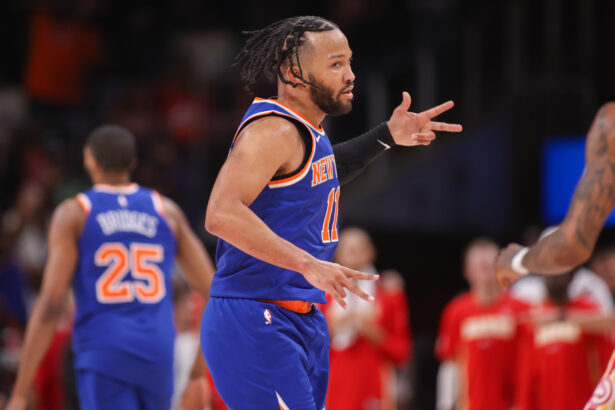
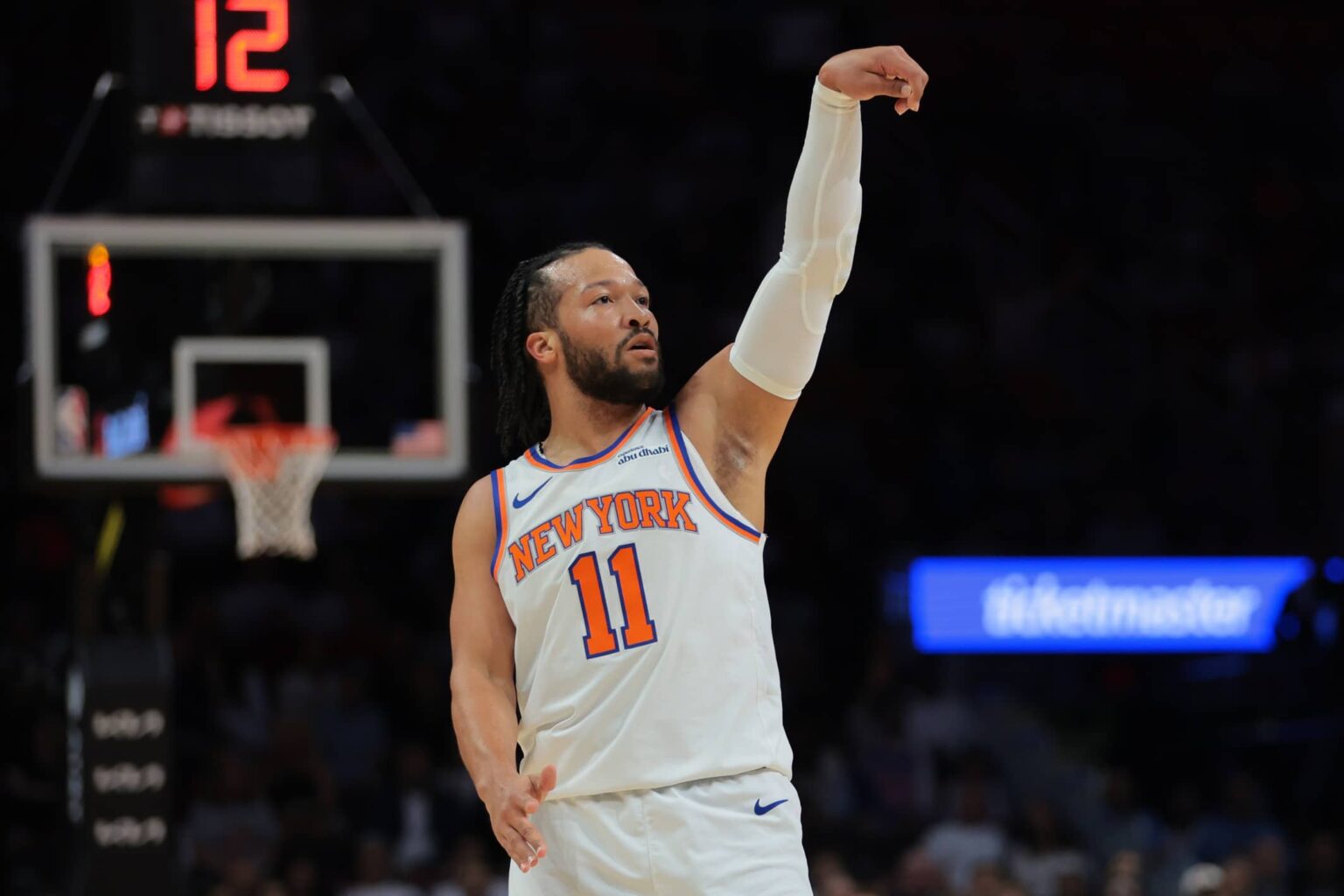
1. Jalen Brunson
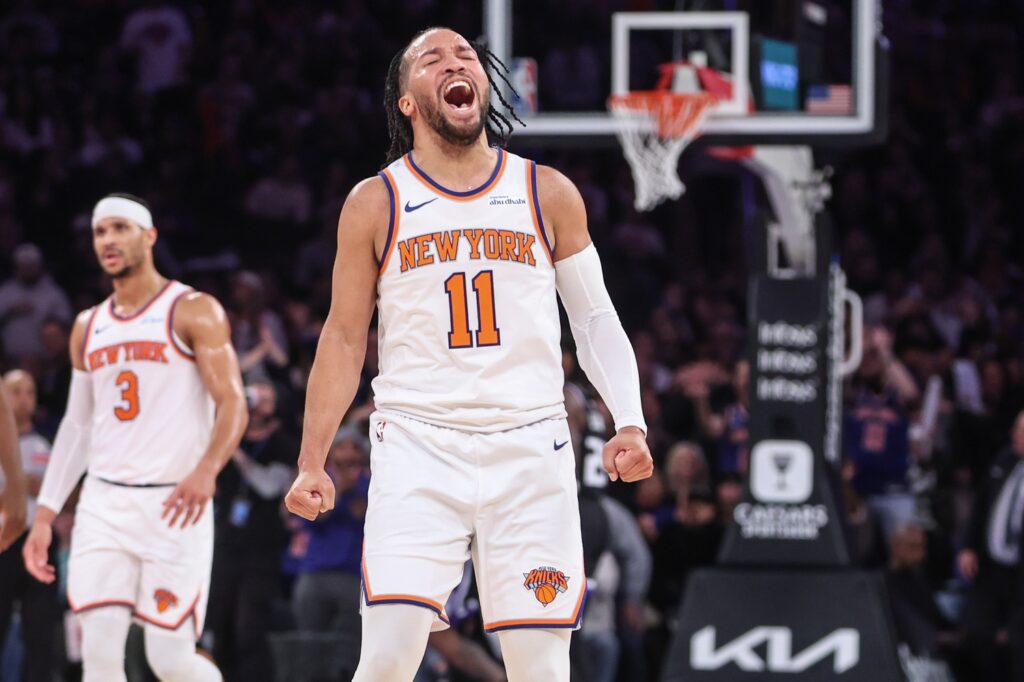
2025-26 Stats: 26.7 PPG, 3.4 RPG, 6.2 APG, 0.7 SPG, 0.1 BPG, 47.0% FG, 37.8% 3P%
Jalen Brunson is No. 1 because he’s been a true first-option guard carrying a top Knicks team for over three seasons now. The Knicks are 40-22 and third in the East right now, and Brunson has been the constant that keeps the offense working every night.
His production is not empty volume. Brunson is scoring 26.7 points per game on 47.0% from the field, with 37.8% from three on 7.6 attempts a night. That efficiency is great when he is taking over 20 shots per game and still staying in control. He is also at 6.2 assists with 2.2 turnovers, which is the kind of guard management a team needs when games tighten late.
After making the trip to the Eastern Conference Finals last season, Brunson has once again shown his leadership traits and what makes him such a dominant, heliocentric offensive piece. The Knicks keep their contender status mainly as a result of his efficient, productive game as the orchestra maestro.
Against the Raptors last night, Brunson finished with 26 points and 10 assists in a 111-95 win, and the Knicks closed the game with a 16-2 run, fresh off snapping the Spurs’ 11-0 streak over the weekend. That is what his season has been: steady scoring, steady creation, and control late.
Brunson is No. 1 because he has been the best combination of production and team results among left-handed players this season. He has played like the engine of a top-three East team, and the numbers match the role.