Every NBA season ends the same way in one sense. A few teams do more than expected. A few do exactly what people thought they would do. And a few fall well below the standard they set for themselves.
This season was no different. Some teams changed the conversation in a good way and became more competitive than expected. Others stayed in the middle, which is not a bad thing if that was always their level. Then there were teams that had big names, big goals, or playoff hopes, and still could not put the season together.
The Suns, now 42-35 and sitting seventh in the West, stayed in the playoff race and built a more competitive season than many expected after a turbulent stretch. On the other side, the Bucks became one of the clearest disappointments in the league. They are 30-46 and already eliminated from postseason contention in the East.
That is what makes this kind of review interesting. It is not only about records. It is about context, pressure, talent, and what each team was supposed to be before the season started. Here, we will look at the NBA teams that exceeded expectations, the ones that matched them, and the ones that clearly disappointed.
Exceeded Expectations
Spurs (59-18, 2nd in West)
Pistons (56-21, 1st in East)
Celtics (51-25, 2nd in East)
Lakers (50-27, 3rd in West)
Hawks (44-33, 5th in East)
Raptors (42-34, 7th in East)
Suns (42-35, 7th in West)
Hornets (41-36, 8th in East)
Heat (40-37, 10th in East)
Blazers (40-38, 8th in West)
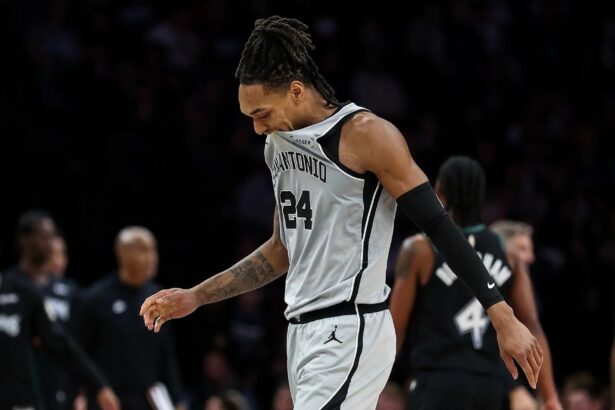
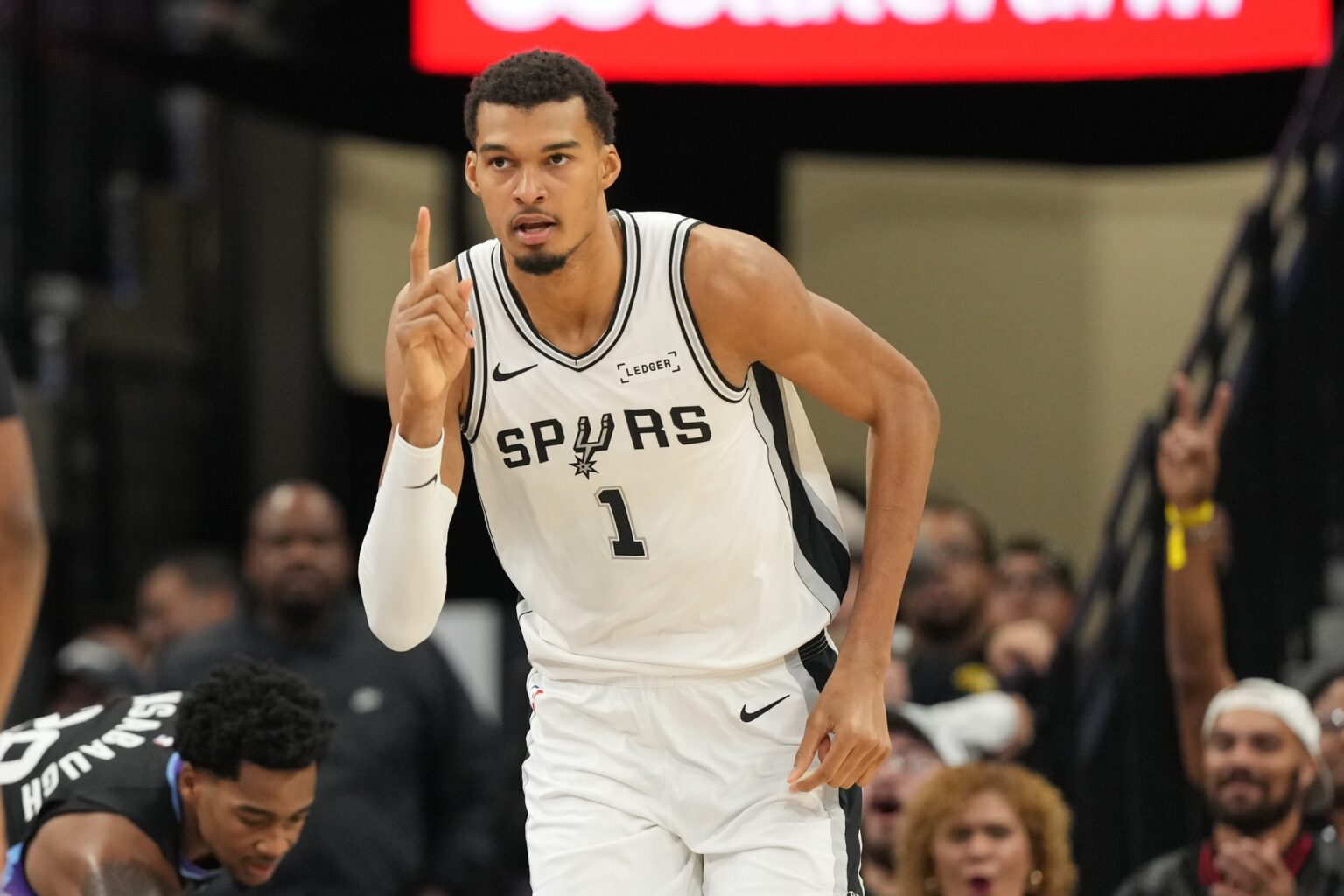
The Spurs are the clearest high-end surprise on the board. A big jump was reasonable. Fifty-nine wins, and the No. 2 seed, were not. Victor Wembanyama has turned that team into a real power, putting up 24.7 points, 11.5 rebounds, and 3.1 blocks per game, and he just posted back-to-back 41-point games before sitting out against the Clippers with an ankle issue. The bigger thing is that the Spurs did not slow down without him. They beat the Clippers by 19 anyway and pushed their winning streak to 11. That tells you this is no longer just a one-star project. Wembanyama is the headline, but the team around him has grown into something serious much faster than expected.
The Pistons might be the best pure turnaround story in the league. They are 56-21, they are first in the East, and they are 7-2 without Cade Cunningham since the collapsed lung injury. That part is huge because it shows that this is not only Cade carrying everything. Cunningham still set the tone all year with 24.5 points, 9.9 assists, and 5.6 rebounds per game, but the supporting pieces made the season real. Jalen Duren is at 19.5 points and 10.7 rebounds while shooting 64.5% from the field, and he just had 22 and 14 against the Timberwolves. When a team can lose its star and keep winning at this rate, that is no accident. The Pistons did not just get better. They became one of the few teams in the league that look deep, physical, and stable every night.
The Celtics are a different kind of surprise, because people already expected them to be good. But there is still a real overachievement here. They had to play without Jayson Tatum, who was coming back from a torn Achilles tendon, almost the entire season, while holding the No. 2 seed in the East. Jaylen Brown took on the bigger scoring role and delivered 28.8 points, 7.0 rebounds, and 5.3 assists per game. Then this week, Brown hung 43 on the Heat while Tatum had 25, 18, and 11 in the same game. So yes, the Celtics were supposed to be strong. But looking at this completely after the Tatum injury and this sharp late in the season is still above what many would have projected.
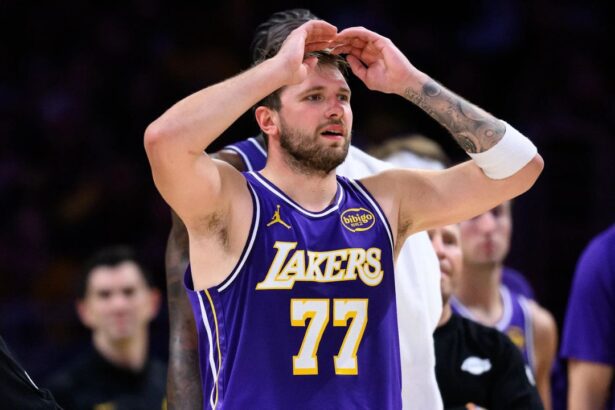
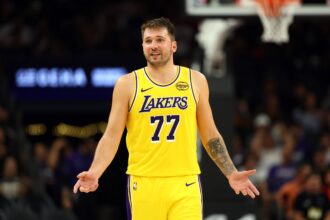
The Lakers exceeded expectations because this did not look like a clean season on paper. It looked volatile. Instead, they got to 50-27 and the No. 3 seed in the West, with Luka Doncic turning March into a full takeover. He averaged 37.5 points, 8.0 rebounds, 7.4 assists, and 2.3 steals in the month, scored 600 total points, and drove the Lakers to a 15-2 March. On the full season, he is still at 33.5 points per game. Austin Reaves also made a real jump into a much larger role, putting up 23.3 points, 4.7 rebounds, and 5.5 assists. That is why this season feels bigger than just star power. The Lakers did not survive on name value. They built one of the strongest late-season runs in the league before the recent Luka hamstring scare.
The Hawks deserve more than a quick mention because this season changed shape completely. They started 16-19. Then the Trae Young era ended when he was traded in January, and instead of collapsing, the Hawks got better. Since Jan. 1, they have gone 24-13, and since Feb. 22, they are 16-2. Right now, they have won 18 of their last 21. Jalen Johnson turned into the engine, averaging 22.9 points, 10.2 rebounds, and 8.1 assists, while Nickeil Alexander-Walker has given them a career-high 20.4 points per game and just dropped 32 on the Magic after earlier scoring a career-high 41 in another win over them. That is why this team belongs here. This is not just a nice record. It is a team that lost its biggest name and somehow found a better version of itself.
The Raptors are not in the same tier as the Spurs or Pistons, but relative to preseason expectations, this is still a strong year. They are 42-34 and still in the top-5, and Scottie Barnes has been the main reason. He is at 18.3 points, 7.6 rebounds, and 5.9 assists for the season, and Brandon Ingram’s appearance became massive, earning him an All-Star bid after posting 41.4 points per game this year. The Raptors were supposed to feel stuck in the middle. Instead, they stayed alive and gave themselves real relevance behind a well-coached group that plays defense and trusts each other on offense.
The Suns are a tougher case because this has not been a smooth season at all, but I still think they fit the “exceeded expectations” tier. They are 42-35 and seventh in the West, which means they stayed in the mix when there were plenty of chances for the season to drift into a full disappointment after trading Kevin Durant and buying out Bradley Beal. Devin Booker has still given them 25.7 points and 6.0 assists per game, and the offense can still explode. This is not a dominant team by any stretch. But the expectation was that the whole thing would break apart under the noise, and they actually thrived. The Suns stayed competitive enough to matter into April.
The Hornets have one of the most fun cases in this group because there is actual juice behind it. They are 41-36, they have won seven of their last nine, and they went 29-13 over a 42-game stretch. Earlier in January, they also had a nine-game winning streak, and every win in that run came by double digits. Kon Knueppel is a big reason this got real. He is at 18.8 points, 5.4 rebounds, and 3.4 assists as a rookie. The NBA’s Rookie Ladder had him at No. 1 for much of March, and he became the youngest player in league history to reach 250 threes in a season. He just had 26, 11, and 8 against the Knicks, and then 20 more against the Suns. That is a real Rookie of the Year case, not fake buzz. Add LaMelo Ball, Brandon Miller, and Miles Bridges, and suddenly the Hornets stopped feeling like a side story and started looking dangerous.
The Heat are probably the lightest team in this tier if we are being strict, but there is still something to the argument. The roster looked shaky, the ceiling looked low, and they still got over .500 and stayed alive. Bam Adebayo’s season is the main reason. He is at 20.3 points, 10.0 rebounds, and 3.0 assists, and he also had the craziest single moment of the year when he dropped 83 against the Wizards, the second-highest single-game total in NBA history. Tyler Herro has added 21.4 points per game, Norman Powell exploded with an All-Star appearance with 23.4 points before the break, and the Heat had a five-game winning streak in March that kept them from sinking. This is not some major success story. But for a team many expected to flatten out badly, the Heat still found enough offense and enough identity to stay in the race.
The Blazers close the list, and they are here because meaningful April basketball was not the expectation. They are 40-38, eighth in the West, and they have won five of their last six. The expectation for this team was to tank and develop their young pieces. Instead, the Blazers made Deni Avdija an All-Star at 23.9 points, 7.0 rebounds, and 6.7 assists this season, while fighting for serious postseason hopes. The Blazers have been way better than advertised, and if they manage to earn a playoff berth, they’d be skyrocketing over the early-season predictions.
Matched Expectations
Thunder (61-16, 1st in West)
Knicks (49-28, 3rd in East)
Cavaliers (48-29, 4th in East)
Timberwolves (46-30, 6th in West)
76ers (42-34, 6th in East)
Bulls (29-47, 12th in East)
Pelicans (25-52, 12th in West)
Jazz (21-56, 14th in West)
Nets (18-58, 14th in East)
Wizards (17-59, 15th in East)
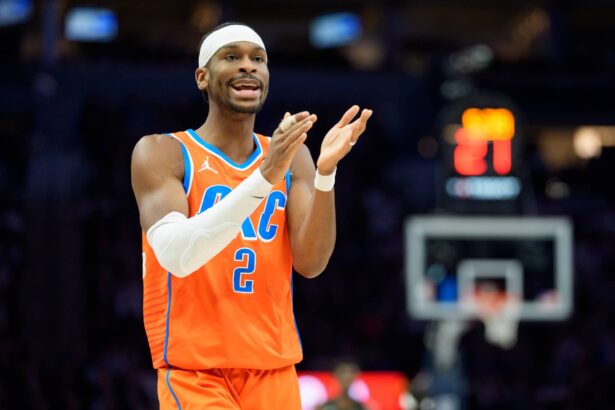
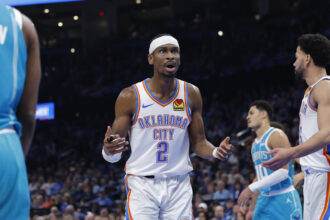
The Thunder are the best team in this tier, but I still would not call them an overachiever. They were supposed to look like this. When a team already enters the season with real title pressure, an MVP-level guard, and one of the deepest rotations in the league, finishing near the top is the assignment, not a surprise. That is what happened. Shai Gilgeous-Alexander is at 31.6 points and 6.5 assists per game, Chet Holmgren is giving them 16.9 points, 8.8 rebounds, and 1.8 blocks, and even with Jalen Williams missing time, they kept rolling. The recent stretch says it clearly: four straight wins, 16 in their last 17, and a 139-96 demolition of the Lakers. That is elite, but for the Thunder, elite was already the expectation.
The Knicks fit here almost perfectly. They are 49-28, which is a strong regular season, but it is also close to what a lot of people expected from a roster built around Jalen Brunson, Karl-Anthony Towns, OG Anunoby, Mikal Bridges, and Josh Hart. Brunson is at 26.1 points and 6.7 assists per game, and Towns has given them 20.1 points and 11.9 rebounds. There was a seven-game winning streak in late March, so the season never felt flat, but it also never fully crossed into the “this team shocked the league” category, even after winning the NBA Cup. The Knicks have mostly looked like what they were supposed to be: a good team, a real playoff team, and a group that still has to prove a little more against the very top level.
The Cavaliers land in the same zone. A 48-29 record is strong, but not shocking when the core has this much talent. Donovan Mitchell is at 27.7 points and 5.7 assists, Evan Mobley is at 18.1 points, 9.0 rebounds, and 1.8 blocks, and the James Harden injection is still giving them 20.2 points and 8.0 assists each night. They have had some good late signs after starting the season in the play-in positions, and decided to move Darius Garland to secure a top seed in the East after a six-game winning streak late in February, with Harden clicking instantly. They looked like a disappointment early on, but the last few months proved they’ve bounced back to where they belong.
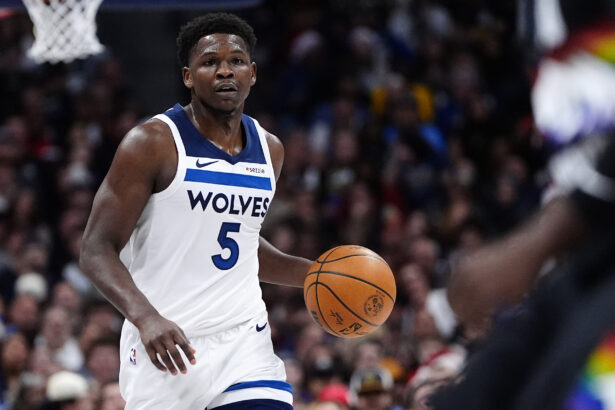
The Timberwolves are another clean example. They are 46-30, which is solid, but not extreme in either direction. Anthony Edwards has carried the offense with 29.3 points per game, Rudy Gobert is at 11.4 rebounds and 1.7 blocks, and Julius Randle leads them in assists at 5.1 per game while scoring 21.1 a night. That is enough talent for a playoff team, and that is exactly where they are. The recent problem is health. Edwards has dropped out of awards eligibility because he is stuck at 59 games, and the Timberwolves just lost to the Pistons without him. Even so, the overall season still reads as expected. They have looked good, never fully dominant, and usually one step below the real top of the West.
The 76ers probably have the strangest case in this group because the season could be read in two ways. On one hand, the injuries were brutal. Joel Embiid has played only 36 games, even though he is still at 26.9 points and 7.4 rebounds. On the other hand, the roster still has too much shot creation to completely fall apart. Tyrese Maxey is at 28.8 points and 6.8 assists, and Paul George just dropped a season-high 39 in a 153-131 win over the Wizards. So when you land at 42-34 and sixth in the East, that feels close to the middle ground the season kept pulling them toward. Not a success, not a collapse. Just a talented team that kept losing rhythm and still stayed in the playoff mix.
The Bulls are almost the definition of matched expectations if the expectation was “bad record, some fun young stuff, no real playoff threat.” They are 29-47 and 12th in the East, which is right in that range. Josh Giddey has had a quietly strong year with 17.2 points, 8.4 rebounds, and 9.2 assists, and he has piled up triple-doubles all season. Matas Buzelis has given them more juice, too, including a 41-point game against the Warriors and a recent 29-point, 10-rebound night against the Grizzlies. That is why the Bulls are not boring even if they are losing. The record is poor, the defense slips too often, and the ceiling was always limited. But the younger pieces did enough to keep the season from feeling empty, and nobody is truly surprised by their season record anymore.
The Pelicans are easier to explain if you treat the season as a bad start, a small recovery, and then another drop. They opened 2-10, and looked worse because they did not control their own first-round pick after the Derik Queen trade, so losing was not even helping them in the normal way. By Jan. 7, they had the second-worst record in the league. Then, to their credit, they showed some life. They won seven of 10 by March 12, pushed their home winning streak to seven by March 22, and for a moment looked like a team finally finding some rhythm behind Zion Williamson, Trey Murphy III, and Dejounte Murray. But it did not last. They lost four straight, then five straight, then six straight, and dropped to 25-52. So that is the clean read: terrible start, a real midseason bounce, and then another fade late.
The Jazz never looked built to win much this year, and they did not. That is why 21-56 feels like a match instead of a major disappointment. This season was much more about giving volume to young players than chasing real results. Keyonte George leads them with 23.6 points per game, Isaiah Collier is at 7.2 assists, and Kyle Filipowski leads the team with 7.1 rebounds. There have been nights when that young group has shown something, like Filipowski’s 20-point, 10-rebound game against the Cavaliers, but the team result stayed where most people thought it would stay. The Jazz were going to be loose, inconsistent, and mostly developmental. That is exactly what this became.
The Nets are in a similar place, just with even less winning. They are 18-58, and that feels harsh only if someone expected this roster to compete. Michael Porter Jr. has been their main scorer at 24.2 points and 7.1 rebounds per game, Nic Claxton is at 7.0 rebounds and 1.1 blocks, and Nolan Traore leads the team in assists at 3.8. There were a few isolated wins that looked decent, including one over the Nuggets earlier in the season, but the larger picture never changed. The Nets were going to spend this year in evaluation mode, and they have. The record is ugly, but it is an honest ugly, not a shocking one.
The Wizards close the list because they are exactly where most people thought they would be: at the bottom, with a few young pieces worth tracking. Alex Sarr has had a real developmental year with 16.3 points, 7.4 rebounds, and 2.0 blocks. Bub Carrington leads them in assists at 4.6 per game. Kyshawn George gave them 14.8 points, 5.1 rebounds, and 4.5 assists before the elbow injury ended his season. That is the important part of the Wizards’ year. Not the 17-59 record by itself, but the fact that the season was always about growth more than wins. They have lost 18 of their last 19 and gave up 153 to the 76ers this week, so nobody needs to pretend the basketball has been good. But the result still fits the preseason picture very closely.
This tier is less dramatic than the other two, but it is still useful. The Thunder, Knicks, Cavaliers, and Timberwolves largely became the versions people expected. The 76ers stayed trapped in the middle between talent and injuries. The Bulls, Pelicans, Jazz, Nets, and Wizards all landed in the rough range most people had for them before the season fully formed. That is what matched expectations usually looks like. Not spectacular. Not shocking. Just honest.
Below Expectations
Nuggets (49-28, 4th in West)
Rockets (47-29, 5th in West)
Magic (40-36, 9th in East)
Clippers (39-38, 9th in West)
Warriors (36-41, 10th in West)
Bucks (30-46, 11th in East)
Grizzlies (25-51, 11th in West)
Mavericks (24-52, 13th in West)
Kings (20-57, 14th in West)
Pacers (18-58, 13th in East)
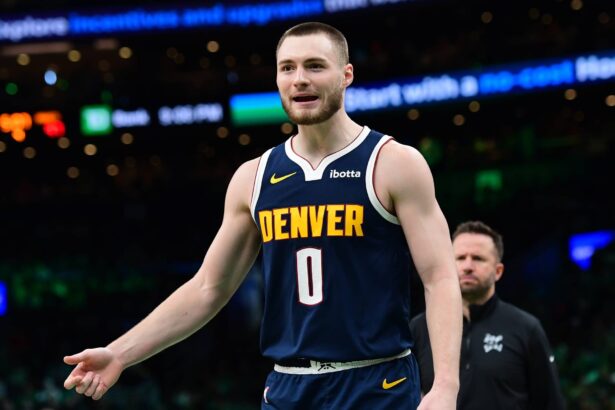
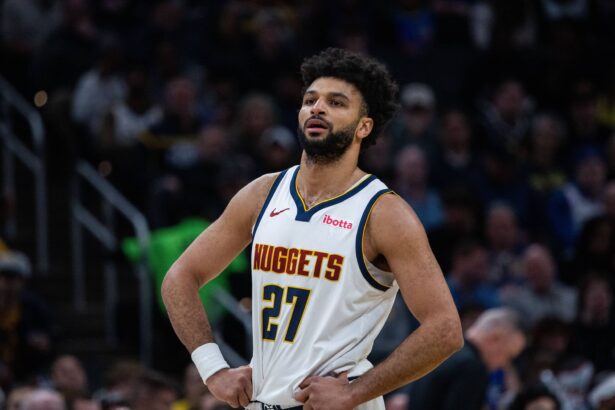
The Nuggets are first on this list because this is the weirdest kind of disappointment: a team that is still very good, still dangerous, still capable of making noise, and still feels a bit short of what it should have been. Nikola Jokic is at 27.8 points, 12.8 rebounds, and 10.8 assists per game, which is basically another absurd season, while Jamal Murray is scoring a career-high 25.4 per game as a first-time All-Star. They have also won seven straight, so this is not some late collapse. But with that level of top-end talent, spending most of the year chasing position instead of controlling the West is a letdown. The Nuggets were supposed to live in the real top tier. Instead, they have spent too much of the season trying to recover from earlier slippage.
The Rockets are a little different. A 47-29 record is good. It is playoff-level. But this roster was built to feel more forceful than fifth place. They finished second in the West last season, added Kevin Durant in the summer, and were supposed to look stronger, cleaner, and more dangerous in the top tier of the conference. Durant has done his part with 25.8 points per game on 51.7% from the field and 40.8% from three. The problem is that the team still feels too loose for how talented it is. The Rockets average 14.5 turnovers per game, and that sloppiness has kept them from taking the step people expected after bringing in a scorer like Durant. So this is not a bad season. It just feels too similar to last year for a team that made a win-now move and was supposed to look clearly better.
The Magic land here because the idea was simple: with Paolo Banchero already established and Desmond Bane added to the backcourt, this team should have pushed clearly above the play-in mess. Instead, the Magic are sitting ninth in the East at 40-36. Banchero is giving them 22.4 points, 8.3 rebounds, and 5.1 assists per game, while Bane has added 20.3 points and 4.2 assists. The talent is there. The problem is that the season has never really settled into a clean climb with multiple injury setbacks to Franz Wagner. The Magic dropped seven of eight before beating the Suns, and even the recent bounce-back wins have felt more like repair work than proof of a real jump. This is not a bad team. It is a team that should have looked more complete than this by now.
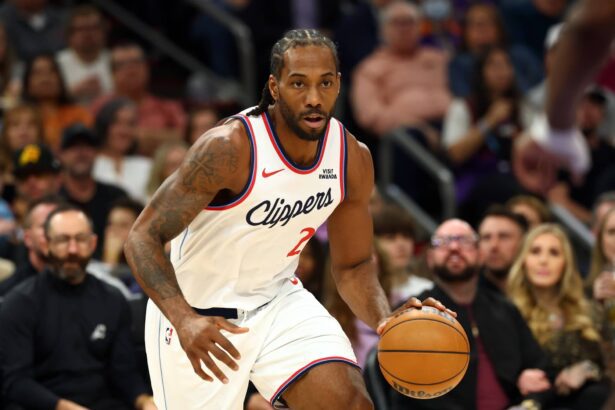
The Clippers fit because of how badly they opened the season. They started 6-21, and that damage never fully went away, even after the roster started playing much better. To their credit, they did respond. By March 11, they had climbed back to .500 for the first time since the second week of the season, and later they pushed a five-game winning streak behind Kawhi Leonard’s huge stretch, including the 45-point game against the Timberwolves. Kawhi has still given them 28.0 points, 6.3 rebounds, and 3.6 assists per game, and Darius Garland has added 20.5 points and 6.5 assists in his Clippers run. So the problem is not that they never found a level. They did. The problem is that the 6-21 start buried too much of the season, and now a team with this much talent is sitting at 39-38 and ninth in the West because the recovery started too late.
The Warriors also fit cleanly in this group, even if the injuries give them a real excuse. Stephen Curry is still at 27.2 points and 4.8 assists per game, but he has not played since Jan. 30 because of patellofemoral pain syndrome and bone bruising in his right knee. The team went 9-16 without him, and before the recent brief lift, they had dropped eight of nine. Jimmy Butler and Moses Moody are out for the season, too, which only made the whole thing heavier. Curry is now targeting a Sunday return, and that could still change the look of the last few games. But the bigger point is already set. The Warriors were supposed to be more stable than this. Instead, they have spent too much of the year hanging around the bottom of the play-in picture.
The Bucks are the loudest disappointment in the whole group. There is no softer way to say it. They are 30-46, they have already been eliminated, and they lost 14 of 17 at one point near the finish. Giannis Antetokounmpo has still been excellent when healthy, putting up 27.5 points, 9.9 rebounds, and 5.5 assists, but he missed 15 games with a right calf strain and has dealt with more management after that. Even with the injuries, though, a roster built around Giannis should not end up here. Not 11th in the East. Not out of the postseason before the play-in even begins. The Bucks did not just underperform. They lost their shape entirely.
The Grizzlies are a different kind of miss because the season was shaky before it fully broke. Trading Desmond Bane in the offseason always meant this team would have less scoring punch, and the idea of a lower-scoring Grizzlies team became even harder to manage once Ja Morant was limited to only 20 games. Morant averaged 19.5 points and 8.1 assists before a sprained UCL in his left elbow ended his season. From there, the year basically dissolved. The Grizzlies have already been eliminated at 25-51, and while there have been small moments, like finally snapping a five-game skid against the Bulls, this season never came close to looking like a serious recovery year. It looked thin, unstable, and too easy to score on.
The Mavericks had real reasons for the fall, but they still belong here. Kyrie Irving missed the entire season while recovering from his torn left ACL, Anthony Davis played only 20 games before being traded, and Dereck Lively ended up shut down for the year, too. That is a brutal setup for any team. Still, the result was ugly even with that context. The Mavericks are 24-52, they have lost seven of their last eight, and they have won only five of their last 29. Cooper Flagg has been the one real bright spot, averaging 20.3 points, 6.6 rebounds, and 4.5 assists as a rookie, while Brandon Williams has added 12.9 points and 3.8 assists. But this season stopped being about winning a long time ago. It turned into survival and development almost immediately.
The Kings were a failure, plain and simple. This was a veteran roster with too much scoring and too many proven names to finish 20-57, but the season never had any shape, never had any defensive base, and never gave the sense that the group knew what it wanted to be. By February, both Domantas Sabonis and Keegan Murray had already missed 33 games. Later, Sabonis, Zach LaVine, and De’Andre Hunter were all ruled out for the season. That explains part of the collapse, but not all of it. The larger truth is that the Kings were just bad for too long, with too much talent, and with no real payoff at the end, because this was not even a proper tank. It was simply a talented team wasting a season.
The Pacers close the list, and in some ways, they are the harshest story of all because the season was damaged before it really started. Tyrese Haliburton was ruled out for the entire year in July after Achilles surgery, and that immediately changed everything. Even so, going from the Finals to 18-58 is still a massive drop. The Pacers had an 11-game home losing streak, carried a 12-game losing streak into mid-March, and suffered 18 losses in 19 games around the end of the month. Without Haliburton, the Pacers lost their engine, their pace, and most of their identity. That explains the fall. It does not make it any less disappointing.
That is the split in this tier. The Nuggets, Rockets, Magic, Clippers, and Warriors are disappointing because the talent says the ceiling should have been higher. The Bucks, Grizzlies, Mavericks, Kings, and Pacers are disappointing because the seasons fell apart in louder, uglier ways. Some of these teams still have excuses. Some really do not. But the result is the same: they finished below the level people expected when the year began.