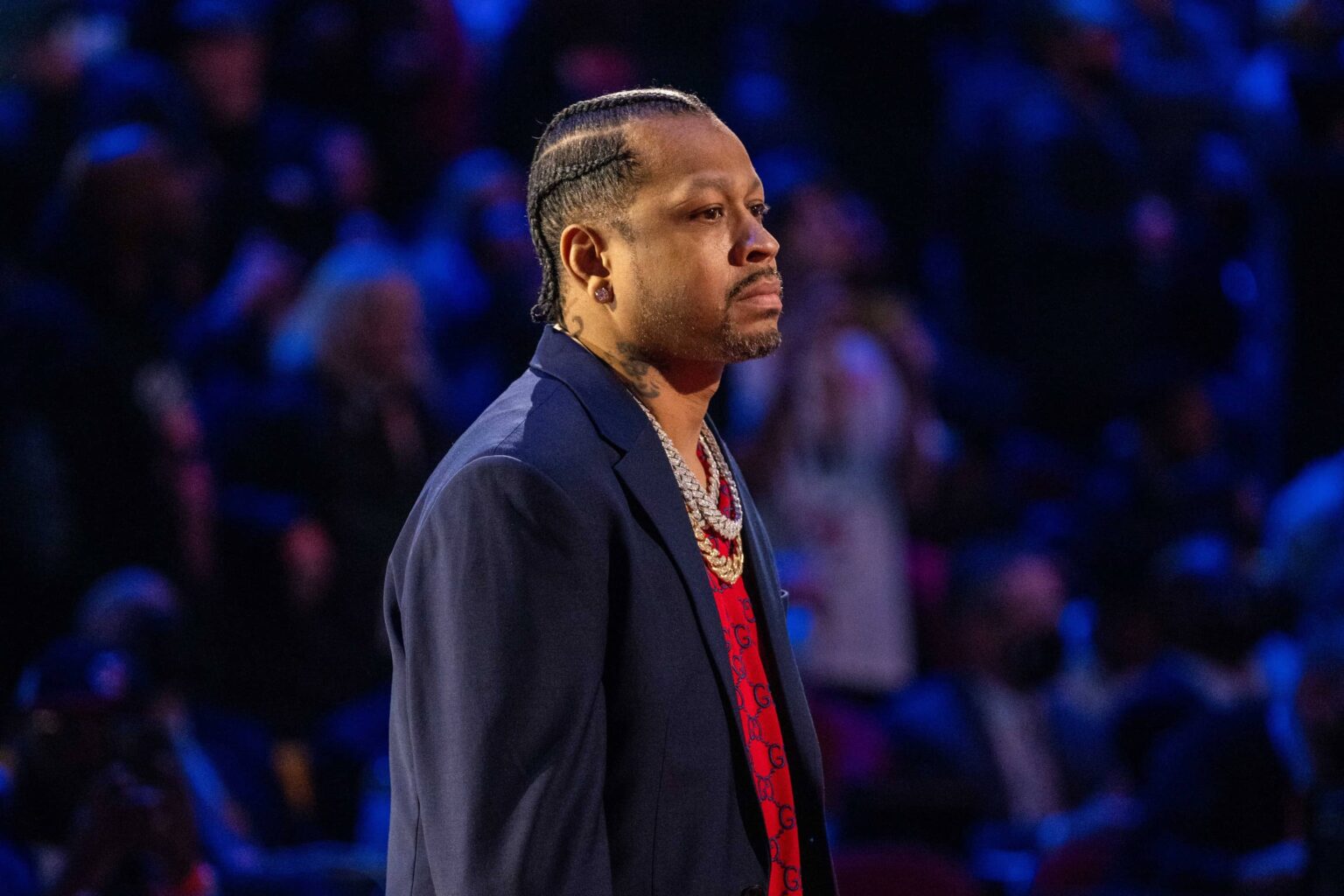
Allen Iverson has never held back, and his latest comments on load management hit straight at the core of today’s NBA debate. The former MVP took to Instagram and called out what he sees as clear hypocrisy between how his era was treated and how modern stars are handled.
“This all hit different for me. LOAD MANAGEMENT?!?! They took me to hell for allegedly not practicing. Now they crying about the players not playing games. I played with every injury you could think of, to the point they had to hide my jersey to keep me from playing – TRUE STORY.
“Now We talking ‘bout the game, not practice. Not practice, we talking ‘bout the game!” 😂😂😂 Don’t cry now, what the babies gon do?”
That statement sums up Iverson’s career. He was built on durability, toughness, and relentless usage. Across 914 games, Iverson averaged 26.7 points, 3.7 rebounds, 6.2 assists, and 2.2 steals while playing a staggering 41.1 minutes per game. His total workload stands out even more in historical context.
– Iverson ranks fourth all-time in minutes per game, behind players from the 1950s and 60s when rotations were shorter, and the game moved differently.
– Iverson sits ninth all-time in points per game, and no player under 6 feet 2 inches appears anywhere near that range.
– He also ranks ninth in steals per game, showing that his defensive pressure matched his offensive load.
– When he retired, he was second all-time in combined regular-season and playoff scoring average, trailing only Michael Jordan.
That level of production came with constant physical punishment. Iverson’s style invited contact. He attacked the paint, absorbed hits, and kept playing. That is where his frustration with modern load management comes from. In his era, missing practice drew criticism. Missing games raised even more questions. Now, rest has become part of long-term planning.
Iverson’s comments also tie back to one of the most iconic moments of his career. His ‘practice’ rant in 2002 came after a playoff loss, when he pushed back against media focus on missed sessions rather than his performance in games. Today, that speech feels even more relevant. The same league that criticized him now openly manages player workloads, sometimes holding stars out of nationally televised games.
Modern teams rely on sports science, injury prevention, and long-term planning. Players sit out to avoid bigger injuries, especially with the pace and spacing of today’s game putting different stress on the body. Yet Iverson’s point is about perception. He believes the standard has shifted too far, especially when fans pay to see stars who do not play.
The numbers, the history, and the mindset all support his argument. Iverson did not pace himself. He carried the load every night. Now he is watching a league where that approach is no longer the norm, and he is not staying quiet about it.