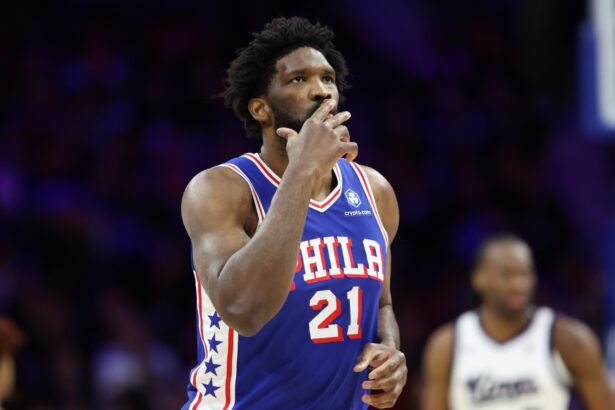
Giannis Antetokounmpo already feels like the headline that will define the next trade cycle. The Bucks shut him down late in the season after his March 15 knee injury, even though Giannis told both the team and the league that he was healthy enough to play.
That standoff got so serious that the NBA opened an investigation, with ESPN reporting that Giannis himself pushed the union and the league to look into the Bucks’ handling of the situation.
That came on top of everything else that has built for months. Shams Charania reported in January that Giannis was ready for a new home and had previously explored a trade to the Knicks if a deal could be reached.
More recently, Giannis openly praised Joe Mazzulla and linked his thinking to winning and culture, which only added more fuel once Sam Amick reported that the Celtics are known to have interest.
At this point, this does not look like normal offseason noise. It looks like a relationship nearing its end. ESPN recently described the Bucks-Giannis situation as fractured, and one source told the network that what could have been a clean resolution might now become a nasty breakup.
So, here are five other NBA superstars who might demand a trade next season.
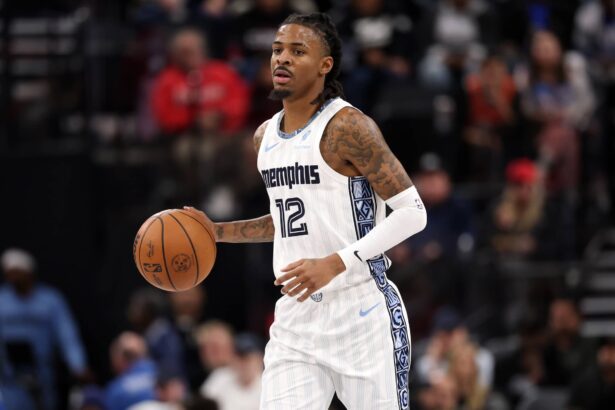
5. Ja Morant
Ja Morant is one of the biggest trade candidates of the offseason. The split has already started to feel less like a rumor and more like a process. Back on January 9, ESPN reported that the Grizzlies were entertaining trade offers for Morant, with multiple teams calling and the franchise prioritizing young players and draft capital in return.
Five days later, Morant pushed back in public. He denied any rift with coach Tuomas Iisalo and said he would “live with it” if the Grizzlies decided to trade him. A few days after that, Morant also said there should be no doubt about his desire to stay with the Grizzlies. That was the public line then. The problem is that the season kept moving in the opposite direction.
The context now is a lot worse than it was in January. Morant played only 20 games this season and finished at 19.5 points and 8.1 assists on 41.0% shooting. He has been out for the season with an elbow injury, and the Grizzlies have completely collapsed.
They are 25-55 and have won only twice in their last 21 games. The Grizzlies unsuccessfully shopped Morant and effectively conceded the season months ago, especially after trading away Jaren Jackson Jr. at the deadline. That is the big part here. This is not just about one star getting frustrated. This is about the Grizzlies clearly moving into a different phase while Morant is still supposed to be the face of the franchise.
There is also the relationship wear and tear. Back in November, Morant was suspended one game for conduct detrimental to the team after public comments criticizing the coaching staff. Even if both sides later tried to cool that down, it still matters. Once a franchise player gets publicly disciplined for clashing with the staff, and then his name starts showing up in real trade reporting two months later, the situation is already unstable. That kind of stuff usually does not disappear. It usually comes back in the offseason, when everyone has more time to decide whether it is still worth forcing together.
Then came the image that made everything louder. After the Grizzlies’ final home game on Monday, a 126-142 loss to the Cavaliers, Morant walked off the floor flashing peace signs in a moment captured on video and circulated widely.
On its own, that does not prove anything. But in this context, it did not read like nothing. It looked like a player who knows the noise is real and may know where this is heading. That is my read of it, and I do not think it is a reach. When a star has already been in trade talks, when the team has cratered, when the roster has been stripped down, and when his last walk off the home floor looks like a goodbye, it becomes very easy to see the next step. Morant may not have demanded a trade yet. But he looks like one of the clearest candidates to do it next.
4. Zach LaVine
Zach LaVine belongs here for a simpler reason than Ja Morant. This is not mainly about a loud public rift. It is about team direction. The Kings are a mess, and next season could be the point where LaVine decides he does not want to spend another year trapped inside it.
ESPN reported in January that Kings general manager Scott Perry was willing to discuss basically anyone on the roster outside Keegan Murray and the recent rookies, and that LaVine’s contract was one of the difficult veteran deals sitting on the books. That is the key starting point. LaVine was not untouchable. He was just hard to move.
The bigger issue is what the Kings actually are. They are not a young team building toward something clear. They are not a disciplined tanking team stacking assets. They are just bad. ESPN described them in January as a roster ill-equipped to play the style the front office wants, sitting 8-29 with the league’s 29th-ranked offense and 28th-ranked defense.
By early April, Bobby Marks wrote that they were on pace for the fourth-fewest wins in franchise history, with 31 different starting lineups and a 7-15 record since the Feb. 5 deadline. They are currently at 21-59 and last in the West. That is not normal losing. That is organizational failure.
That is why LaVine makes sense on this list. He is 30, he has already spent years around trade rumors, and he did not land in a stable situation after leaving the Bulls. He landed in another broken one. He averaged 19.2 points in 39 games before season-ending hand surgery in February, his lowest scoring average in eight years. That matters because it sets up a very clean next step.
LaVine has a $49.0 million player option for next season. If he picks it up, that becomes the last year of his contract. And that is exactly when players usually gain clarity about what they want.
So this is my read: if the Kings open next season looking like the same team, LaVine will be one of the strongest candidates in the league to ask out. Not because of one report. Not because of one dramatic fight. Because there is no serious player who wants to waste the final year of his deal on a team that is not even executing a proper rebuild.
Head coach Doug Christie pushed back on the idea that the Kings were tanking when the losing got ugly back in February. That almost makes it worse. If they were tanking, at least there would be a plan. Right now, it looks more like drift. And players ask for trades when they stop believing the team knows where it is going.
3. Jordan Poole
The Pelicans traded for Jordan Poole last summer, then effectively gave up on him during the season. ESPN reported at the deadline that Poole had been out of James Borrego’s rotation since January 23, with the team already overloaded on-ball after drafting Jeremiah Fears and still carrying Dejounte Murray.
That is the biggest signal here. When a scorer making $31.8 million gets pushed out of the rotation before February, the relationship is already in trouble. And it did not happen just once. Poole was left out of the rotation for the Pelicans’ final nine games before the All-Star break, came back briefly, then was again a coach’s decision DNP on March 2 once the guard rotation got healthier.
That is exactly the kind of season that makes a player start looking for the exit. It is not only about losing minutes. It is about losing status. Poole was not treated like a core piece. He was treated like a problem the team was trying to manage.
The team context makes it worse. The Pelicans are 26-54 and out of the playoff race. They dropped eight straight before finally beating the Jazz, and even that game mostly worked as a reminder of how random this season has become.
Poole scored 34 in that win, including 22 in the third quarter, but one hot night does not erase the bigger picture. His full-season line is still just 13.5 points, 3.1 assists, and 37.3% shooting, all ugly numbers for a player who was brought in to help stabilize a shaky roster. This has been a bad team and a bad fit.
That is why next season feels like the danger point. Poole is still owed $34.0 million in 2026-27 and then becomes an unrestricted free agent in 2027. So if he opens next season on another bad Pelicans team, with the same unstable role and the same sense that the franchise does not really know what it wants to be, a trade demand would make a lot of sense.
This is my read: Poole will not want to spend another year being half in and half out of the plan on a team that has already shown it was comfortable benching him for weeks at a time. Players can accept losing. What they usually do not accept is irrelevance. And that is exactly where Poole has drifted with the Pelicans.
2. Paolo Banchero
Paolo Banchero is a different kind of pick for this list. This is not a case where a trade demand feels close right now. It is more conditional than that. The Magic are 44-36 and up to seventh in the East after four straight wins, and Banchero is still putting up star numbers at 22.3 points, 8.4 rebounds, and 5.1 assists in 70 games. On paper, this should still be a franchise built around him.
But the reason he makes the list is the coach angle. Back in January, ESPN’s Tim MacMahon said on The Hoop Collective that there had been “a lot of talk around the league” that Banchero and Jamahl Mosley “might not be seeing eye to eye.”
Banchero later tried to cool that down, telling Jason Beede of the Orlando Sentinel that he and Mosley had “very fluid communication” and had not had any real fights, while Mosley also downplayed the issue. That did not kill the story. It just showed there was already enough smoke that both sides had to answer it publicly.
Then the friction became more visible in March. After a loss to the Pistons, Banchero openly said the Magic struggle because “teams adjust at halftime” and “we don’t really adjust to their adjustments.” That is a real shot at coaching, even if he did not phrase it that way. Mosley’s response the next day did not exactly smooth it over.
He said the Pistons’ only adjustment was that they “played a little harder” and added that there was no schematic adjustment. That is the kind of public disconnect people notice around the league.
That is why Banchero makes sense here. Not because the split is inevitable, but because the path is easy to see. If Mosley is back next season and the same tension carries over, Banchero would have every reason to start questioning whether the Magic are maximizing him.
This team was supposed to take a real step after adding Desmond Bane to fix an offense that ranked 27th last season while preserving a defense that ranked second. Instead, much of this year has felt unstable, and the coach-star relationship became part of the story.
The key point is this: the Magic would almost certainly choose Banchero over the coach if it came to that. I agree with that. But if they do not solve it fast enough, or if they try to run it back with the same setup, then Banchero is one of the few young stars who could decide he does not want to wait around for the organization to sort itself out. That is what puts him at No. 2.
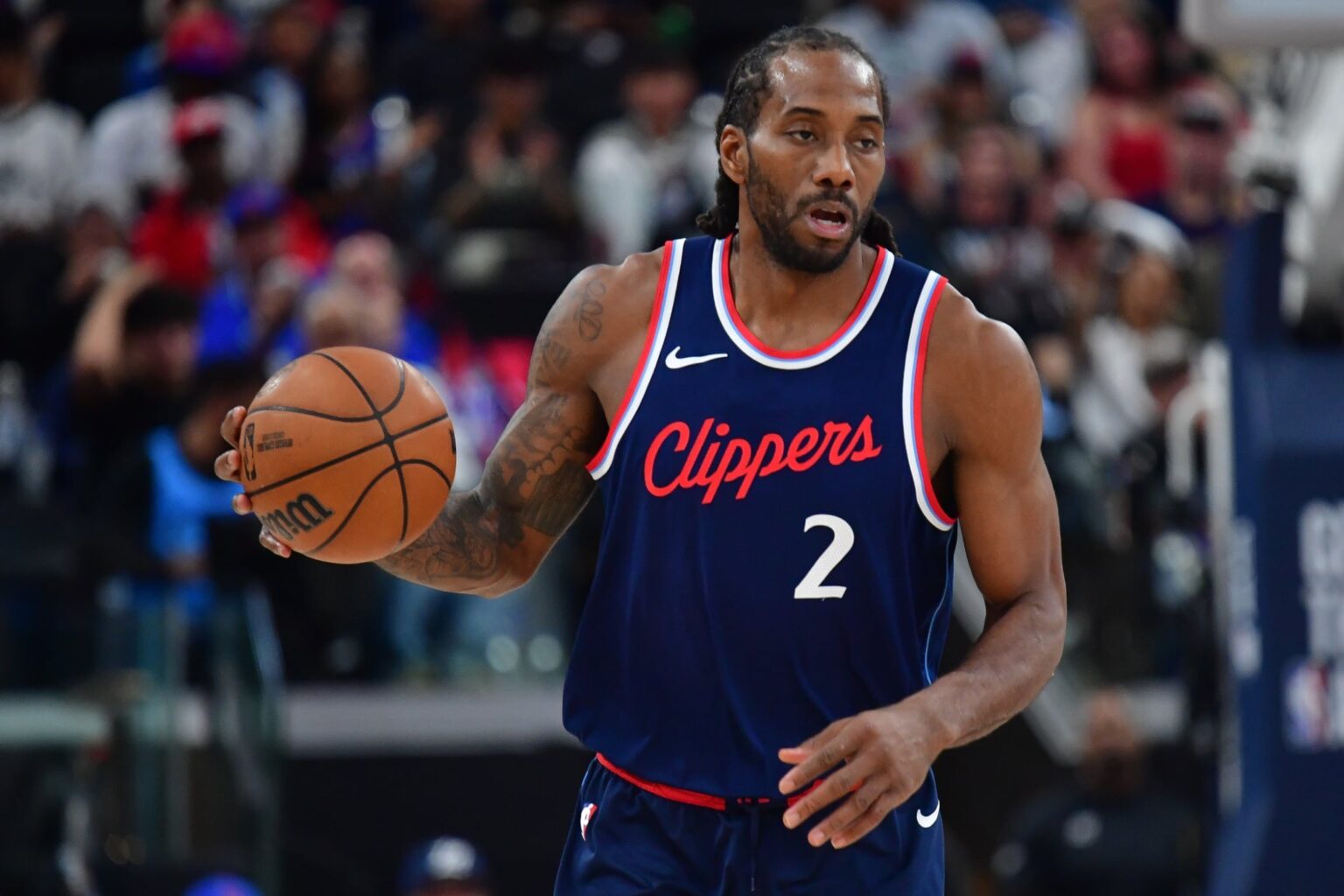
1. Kawhi Leonard
Kawhi Leonard is the absolute most likely pick after Giannis. The Clippers have already told him, with their actions, what they think this team is now. They traded James Harden. They traded Ivica Zubac. Those were not small moves around the edges.
Once both were gone in the same week, the message was obvious: this was no longer a roster built first around maximizing Leonard’s championship window. It was a franchise starting to think about sustainability, assets, and the next phase.
That is why I think Leonard has a real chance to ask out next season. Not because he is loud, and not because he is the kind of star who usually creates public drama. It is almost the opposite. He is usually quiet. So if it gets to the point where he asks for a trade, it will probably be because he’d want to play for a true playoff contender again.
Next season is the last guaranteed year before free agency. That is the moment when players usually decide whether to push for one last real title situation or let the clock run out. For Leonard, that choice could become very simple. If the Clippers are still stuck in the play-in range and still trying to balance “win now” with a younger timeline, there is not much reason for him to spend that final contract year pretending this is still a team with postseason hopes.
From Leonard’s side, this is not just about losing familiar teammates. It is about seeing the team strip away the exact kind of size and structure he needs at this stage of his career. He is still great, but he is 34, and asking him to carry more physical load on both ends after taking away the roster’s most stable center is not a serious long-term plan.
Then there is the Aspiration cloud. I would not make that the main reason Leonard might want out, but it adds to the instability. ESPN reported last week that the NBA investigation into the alleged cap-circumvention arrangement is still ongoing and that even now, interviews are continuing. That means this franchise is still operating with uncertainty around a case tied directly to Leonard, Steve Ballmer, and the team’s 2021 business dealings.
Even if nothing major comes from it, it is still noise around a team that already pivoted away from its old core. And if something does come from it, including possible draft-pick consequences that ESPN has discussed, then the roster-building path gets even harder.
So this is my opinion: if the Clippers open next season as a middling team again, Leonard should absolutely consider demanding a trade. The organization has already started reshaping the roster around a future that does not cleanly match his timeline. Harden is gone. Zubac is gone. The team is trying to stay competitive while quietly resetting.
That usually ends one way for an aging superstar in the final year before free agency. It ends with him deciding he would rather choose his next contender before the Clippers choose the rest of their future for him.