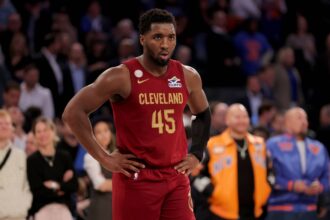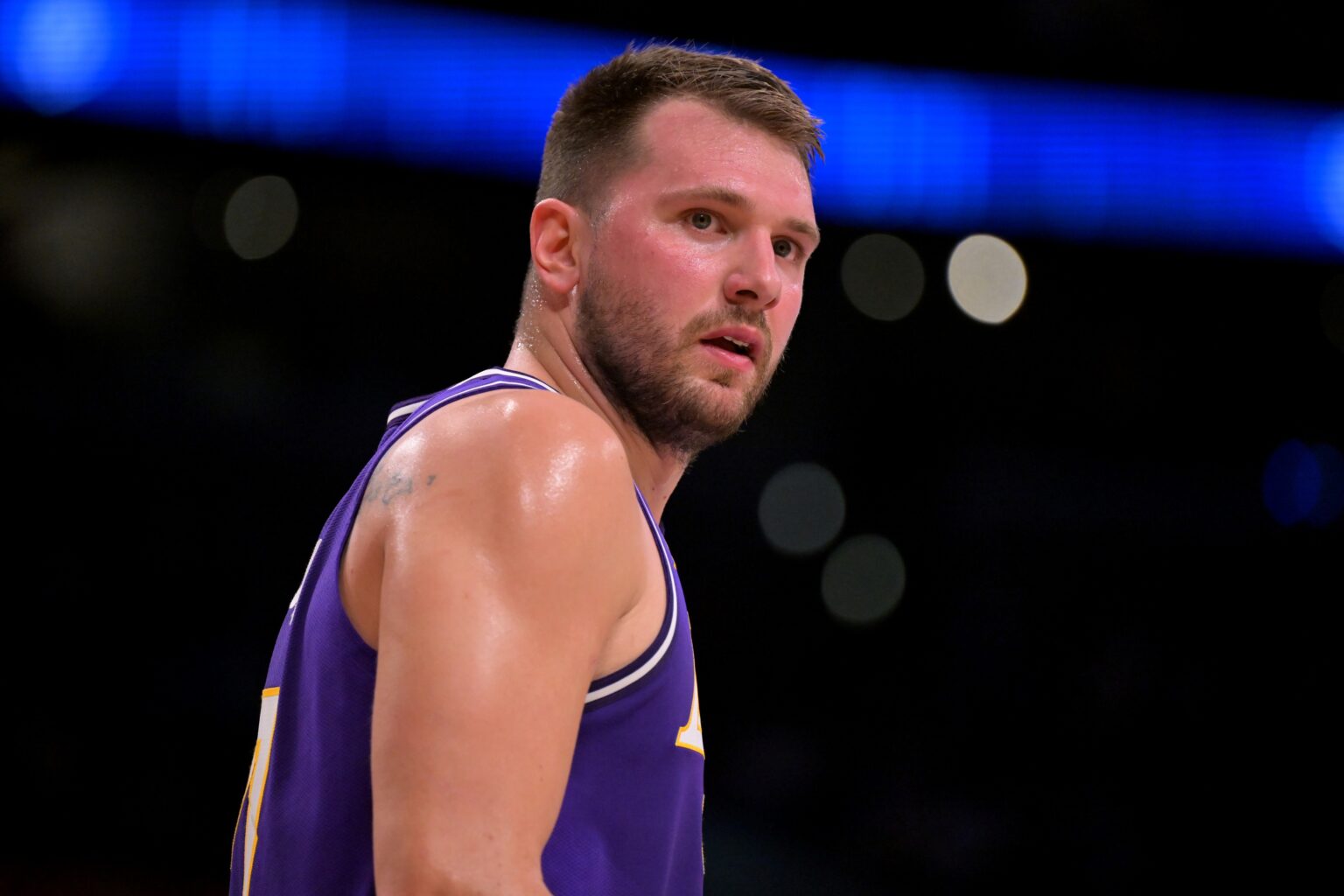
The second round has started, and the conference finals picture is already taking shape. The Knicks opened their series against the 76ers with a 137-98 win, while the Timberwolves took Game 1 against the Spurs, 104-102. On the other side of the schedule, the Pistons beat the Cavaliers, 111-101, and the Thunder beat the Lakers, 108-90. That leaves all four series at 1-0, with the 76ers-Knicks and Timberwolves-Spurs matchups continuing tonight.
This is the stage where the playoffs stop being about survival and start being about validation. First-round wins can come from matchups, injuries, or short-term shooting swings. The conference semifinals expose roster construction. Teams need a real half-court option, enough defensive answers, and enough depth to survive adjustments. That is why reaching the conference finals still carries weight. It usually means a team has built more than a good regular season.
Some franchises have been there often. Others have spent decades trying to get back. Two teams have still never made it. The Pelicans and Hornets remain the only active franchises without a conference finals appearance, which makes their playoff history different from every other team in the league. From the semifinals come the teams that reach the conference finals, so here is the last time every NBA team made that stage, starting with the two still waiting for their first trip.
Oklahoma City Thunder, Minnesota Timberwolves, Indiana Pacers, New York Knicks – 2025
The 2025 conference finals showed two teams reaching the Finals window and two others confirming that their builds had real playoff weight.
The Thunder were the best team in the league and played like it. They went 68-14, finished first in the West, then beat the Timberwolves in five games. Shai Gilgeous-Alexander controlled the series with 31.4 points per game, while Jalen Williams gave the Thunder another high-level creator, and Chet Holmgren supplied rim protection. The Thunder won Game 5 by 30 points, 124-94, and moved to the Finals with the league’s youngest championship-level core. They later beat the Pacers in seven games to win the title.
The Timberwolves still validated their rise. After reaching the conference finals in 2024, they returned in 2025 and made it back-to-back final-four appearances. Anthony Edwards averaged 23.0 points in the series, but the Thunder’s defense forced too many difficult possessions and limited the Timberwolves’ spacing. The result was not close enough, but the two-year run proved the Timberwolves were no longer just a regular-season team.
The Pacers took the East with pace, passing, and late-game execution. They beat the Knicks in six games after Tyrese Haliburton delivered one of the postseason’s best games in Game 4: 32 points, 15 assists, and 12 rebounds with no turnovers. That series pushed the Pacers to their first NBA Finals since 2000.
The Knicks reached their first conference finals since 2000, which alone changed the standard for the franchise. Jalen Brunson gave them elite playoff shot creation, and Karl-Anthony Towns added frontcourt scoring, but the Pacers played faster, moved the ball better, and had more late-series answers. 2025 was still a breakthrough. It was not the endpoint.
Dallas Mavericks, Boston Celtics – 2024
The 2024 conference finals ended with two different statements. The Celtics confirmed their season-long control. The Mavericks proved that Luka Doncic and Kyrie Irving could carry a reworked roster to the Finals.
The Celtics swept the Pacers in the Eastern Conference Finals, 4-0, but the series was tighter than the result. Game 1 went to overtime. Game 3 required a late comeback. Game 4 was decided by three points. The difference was late-game execution, size, and two-way creation. Jaylen Brown averaged 29.8 points, 5.0 rebounds, and 3.0 assists in the series and won Eastern Conference Finals MVP. Jayson Tatum added 30.3 points, 10.3 rebounds, and 6.3 assists.
The Mavericks’ run came through elite shot creation and improved defensive structure. They beat the Timberwolves in five games in the Western Conference Finals after eliminating the Clippers and Thunder. Doncic averaged 32.4 points, 9.6 rebounds, and 8.2 assists against the Timberwolves. Irving added 27.0 points and 4.6 assists. The Mavericks controlled clutch possessions better than the Timberwolves and got enough defense, rebounding, and vertical pressure from Daniel Gafford, Dereck Lively II, P.J. Washington, and Derrick Jones Jr.
Miami Heat, Denver Nuggets, Los Angeles Lakers – 2023
The 2023 conference finals had one champion, one eighth seed that refused to break, and one deadline-built roster that reached its limit.
The Nuggets were the best team left. They swept the Lakers in the Western Conference Finals and reached the NBA Finals for the first time in franchise history. Nikola Jokic controlled the series with 27.8 points, 14.5 rebounds, and 11.8 assists per game. Jamal Murray added 32.5 points per game. The Nuggets had too many offensive answers: Jokic from the post, Murray in two-man actions, Aaron Gordon as a cutter, Michael Porter Jr. as a shooter, and Kentavious Caldwell-Pope as a point-of-attack defender who could punish open looks.
The Lakers’ run still had value. They entered the playoffs as the No. 7 seed after reshaping the roster at the trade deadline, then beat the Grizzlies and Warriors. LeBron James and Anthony Davis gave them a strong defensive base, but the Nuggets exposed their half-court limits. The Lakers played competitive games, but never found a stable answer for Jokic.
The Heat took the other route. They reached the Eastern Conference Finals from the No. 8 seed and beat the Celtics in seven games. They led 3-0, lost three straight, then won Game 7 on the road, 103-84. Jimmy Butler carried the structure, but Caleb Martin’s shot-making changed the series.
The Nuggets turned 2023 into a title. The Heat turned it into a rare eighth-seed Finals run. The Lakers made one last deep push with the James-Davis core.
Golden State Warriors – 2022
The Warriors’ 2022 run was the final championship proof of their dynasty core.
They went 53-29, finished third in the West, and returned to the conference finals after two straight seasons out of the playoffs. The path was direct: Nuggets in five, Grizzlies in six, then Mavericks in five.
The Western Conference Finals were controlled by pace, ball movement, and experience. Stephen Curry won the first Western Conference Finals MVP after averaging 23.8 points, 6.6 rebounds, and 7.4 assists in the series. Klay Thompson gave them spacing and volume shooting. Draymond Green handled defensive communication. Kevon Looney punished the Mavericks on the glass and gave the Warriors extra possessions.
They later beat the Celtics in six games in the NBA Finals. Curry averaged 31.2 points, 6.0 rebounds, and 5.0 assists in the Finals and won Finals MVP. For the Warriors, 2022 was not just another deep run. It was the fourth title of the Curry-Green-Thompson era.
Milwaukee Bucks, Atlanta Hawks, Phoenix Suns, Los Angeles Clippers – 2021
The 2021 conference finals had four different meanings.
The Bucks used it as the final step before a championship. They beat the Hawks in six games, then went on to defeat the Suns in the NBA Finals. Giannis Antetokounmpo injured his knee in Game 4 against the Hawks, but the Bucks survived without him in Games 5 and 6. Khris Middleton scored 32 points in Game 6, and Jrue Holiday added 27 points and nine assists. That run ended with the Bucks’ first title since 1971.
For the Hawks, 2021 was a surprise peak. They finished fifth in the East, beat the Knicks in the first round, then eliminated the 76ers in seven games. Trae Young’s shot creation carried the offense until a right foot injury in Game 3 against the Bucks changed the series. The Hawks still pushed it to six, but they have not returned to that level since.
The Suns had the cleanest rise. Chris Paul gave them control, Devin Booker became a playoff scorer at scale, and Deandre Ayton stabilized the frontcourt. They beat the Clippers in six games to reach the NBA Finals for the first time since 1993. Game 6 was decisive: the Suns won 130-103, with Paul scoring 41 points.
The Clippers reached the conference finals for the first time in franchise history. Kawhi Leonard missed the entire series with a knee injury, but Paul George kept them alive. The result still stopped at six games.
Toronto Raptors, Portland Trail Blazers – 2019
The Raptors’ 2019 run still stands as the strongest short-term gamble of the modern era. They traded for Kawhi Leonard, got one elite season, and turned it into the first championship in franchise history. Before the Finals, the breakthrough came in the Eastern Conference Finals against the Bucks. The Raptors fell behind 2-0, then won four straight games and closed the series in six. Leonard was the center of everything: half-court scoring, late-clock creation, wing defense, and playoff control. The Finals win over the Warriors made the run permanent in league history, but the conference finals comeback was the real turning point.
The Blazers had a different type of 2019. Their run was built on shot-making, guard creation, and late-game nerve. Damian Lillard ended the Thunder series with the long three over Paul George, then the Blazers survived the Nuggets in seven games. That got them to the Western Conference Finals for the first time since 2000. The series against the Warriors was not close in the final result. The Blazers were swept 4-0, and the Warriors advanced to their fifth straight Finals.
Houston Rockets, Cleveland Cavaliers – 2018
The Rockets had one of the best teams in franchise history in 2018. They went 65-17, finished first in the West, and built the clearest threat to the Warriors’ dynasty. James Harden won MVP, Chris Paul gave them a second elite creator, and the Rockets’ switch-heavy defense was designed specifically for that matchup. They did not just reach the Western Conference Finals. They led the Warriors 3-2 and were one win from the Finals. Then Paul injured his hamstring, missed Games 6 and 7, and the series flipped. Game 7 became the defining collapse: the Rockets missed 27 straight threes and lost 101-92.
The Cavaliers’ 2018 trip had a completely different shape. That team was not dominant. It was carried by LeBron James through one of the heaviest individual playoff burdens of his career. The Cavaliers beat the Pacers in seven, swept the Raptors, then beat the Celtics in seven in the Eastern Conference Finals. Game 7 on the road was the final proof of LeBron’s control over the East during that era.
The Cavaliers are closer to ending the drought than the Rockets. They went 52-30, finished fourth in the East, and are already back in the second round. But until they advance again, 2018 remains the last LeBron-era marker.
San Antonio Spurs – 2017
The Spurs are trying to change this line right now. They are already back in the second round, and their series against the Timberwolves opened with a 104-102 loss despite Victor Wembanyama setting an NBA playoff record with 12 blocks. That gives the franchise a real chance to end a drought that goes back to 2017.
That 2017 run was the last great Kawhi Leonard version of the Spurs. They went 61-21, finished second in the West, beat the Grizzlies in six games, then eliminated the Rockets in six games. The Western Conference Finals started with the Spurs leading the Warriors by 23 points in Game 1 before Leonard re-injured his left ankle. He left with 26 points in 24 minutes, and the series changed immediately. The Warriors came back to win Game 1, 113-111, then swept the series.
The current group is different. It is younger, longer, and built around Wembanyama rather than veteran continuity. The Spurs went 62-20 and entered the playoffs as the No. 2 seed in the West, so this is not just a development year anymore. The 2017 mark is still alive, but it no longer feels distant.
Memphis Grizzlies – 2013
Defense carried the Grizzlies to their only conference finals appearance. The 2012-13 team went 56-26, played one of the slowest and most physical styles in the league, and allowed only 89.3 points per game. Marc Gasol won Defensive Player of the Year, Zach Randolph controlled the glass, Mike Conley ran the offense, and Tony Allen gave them a point-of-attack identity.
The Western Conference Finals exposed the limit. The Spurs swept the Grizzlies 4-0. Game 2 went to overtime, but the series never really turned. Randolph averaged only 11.0 points and shot 30.2% from the field. Gasol averaged 14.3 points and 10.0 rebounds, but the Grizzlies could not create enough efficient offense against a better-organized team.
The franchise has not returned since. Ja Morant later gave the Grizzlies a different version of high-end talent, but the next breakthrough never arrived. The current gap is large again. The Grizzlies finished 25-57, 13th in the West, with a minus-5.83 point differential. That is not close to the 2013 profile. It is another reset point for a franchise still waiting for its second trip to the final four.
Chicago Bulls – 2011
The Bulls’ last conference finals run was built around Derrick Rose’s MVP season. They went 62-20, finished with the best record in the league, and reached the Eastern Conference Finals with a defense-first roster under Tom Thibodeau. Rose was the engine. He averaged 25.0 points and 7.7 assists during the regular season, became the youngest MVP in NBA history, and gave the Bulls their first true post-Jordan title window.
The Heat ended it in five games. Rose averaged 23.4 points, 6.6 assists, and 4.0 rebounds in the series, but the efficiency dropped against bigger defenders and heavy late-game pressure. The Bulls won Game 1, then lost four straight. The series became the first major sign that their offense was too dependent on Rose creating something against set playoff defenses.
The current situation is far from 2011. The Bulls finished 31-51, 12th in the East, and missed the playoffs. They started 5-0, then collapsed through injuries, long losing streaks, and poor roster balance. The season ended without even a play-in spot.
Orlando Magic – 2010
The Magic’s most recent final-four team came one year after their NBA Finals run. In 2010, they went 59-23, entered the playoffs with one of the league’s strongest defenses, and returned to the Eastern Conference Finals behind Dwight Howard. The run stopped against the Celtics, who won the series 4-2 after taking the first three games. Howard still produced: 21.8 points, 10.8 rebounds, and 3.0 blocks per game in the series.
That was the last real title-level Magic roster. Howard gave them elite rim protection and interior pressure. Rashard Lewis and Jameer Nelson supplied spacing and guard play. Vince Carter gave them another scorer. The formula was modern for that era: one dominant big, shooting around him, and enough defense to control playoff games.
The current version is not there yet. The Magic finished 45-37, eighth in the East, and entered the playoffs through the play-in route. They had the top-seeded Pistons down 3-1 in the first round, then lost three straight. Game 7 was decisive: the Magic lost 116-94 despite Paolo Banchero scoring 38 points. It was another missed chance to break through, especially after holding a series lead.
Detroit Pistons – 2008
By 2008, the Pistons were at the end of a long East run, not the start of one. That group had reached six straight conference finals from 2003 to 2008, but the final trip ended against the Celtics in six games. The Pistons lost Game 6 at home, 89-81, and the Celtics moved on to the NBA Finals. Chauncey Billups averaged 12.7 points and 5.7 assists in that series, but he shot only 30.8% from the field and 25.9% from three. That was not enough against the Celtics’ defense.
That 2008 loss closed the franchise’s strongest modern era. The Pistons had already won the 2004 championship, returned to the Finals in 2005, and built their identity around defense, half-court control, and veteran continuity. After 2008, the drop was sharp. The franchise did not win another playoff series for 18 years.
This season finally changed that. The Pistons went 60-22, earned the No. 1 seed in the East, and came back from a 3-1 deficit against the Magic to win their first playoff series since 2008. Cade Cunningham had 32 points and 12 assists in Game 7, while Tobias Harris added 30 points and nine rebounds. The Pistons then opened the second round with a 111-101 win over the Cavaliers, forcing 19 turnovers and turning them into 31 points.
Utah Jazz – 2007
The Jazz were the last team to break through before the West became controlled by the Spurs, Lakers, Warriors, and Nuggets across different eras. Their 2007 run came behind Deron Williams and Carlos Boozer, a strong pick-and-roll core that pushed the franchise back to the conference finals for the first time since the John Stockton-Karl Malone era.
That team went 51-31, beat the Rockets in seven games in the first round, then eliminated the Warriors in five games in the conference semifinals. The run stopped against the Spurs in the Western Conference Finals. The Jazz lost the series 4-1, with their only win coming in Game 3. Boozer averaged 21.4 points and 12.2 rebounds in the series, while Williams averaged 25.8 points and 7.8 assists. The offense had real production. The problem was control. The Spurs were more disciplined, deeper, and better at closing possessions.
That was the peak of the Deron Williams-Boozer era. The Jazz won 54 games the next season, but lost in the second round. They later built strong regular-season teams around Donovan Mitchell and Rudy Gobert, including the No. 1 seed in 2021, but never reached the conference finals.
Brooklyn Nets – 2003
The Nets last reached the conference finals in 2003. They swept the Pistons 4-0 in the Eastern Conference Finals and reached the NBA Finals for the second straight season. Jason Kidd led the playoff run as the engine of the team, while Kenyon Martin, Richard Jefferson, and Kerry Kittles gave the Nets speed, defense, and transition pressure.
That 2003 run ended against the Spurs, who beat the Nets 4-2 in the NBA Finals. Tim Duncan controlled the series, and the Nets could not generate enough half-court offense to match the Spurs’ interior dominance. Still, that two-year stretch remains the best period in franchise history. The Nets reached back-to-back Finals in 2002 and 2003 and were the class of the East before the Pistons took over.
The franchise has had star power since then. The Kevin Durant, Kyrie Irving, and James Harden era had title-level talent, but injuries, trades, and roster instability ended it before a conference finals appearance. That group never got past the second round.
Sacramento Kings – 2002
The Kings last reached the conference finals in 2002. That team went 61-21, finished with the best record in the league, and pushed the Lakers to seven games in one of the most famous Western Conference Finals series ever. The Kings lost Game 7 in overtime, 112-106, after shooting 16-of-30 from the free-throw line and 2-of-20 from three.
That was the peak of the Chris Webber, Mike Bibby, Vlade Divac, Peja Stojakovic group. The Kings had elite passing, spacing for that era, and one of the league’s best home-court environments. They were not a surprise team. They were a real title-level roster that ran into the Lakers at the wrong time.
The franchise has not come close since. The 2023 group ended the long playoff drought and gave the Kings a 48-win season, but that run ended in the first round. The next step never came.
Philadelphia 76ers – 2001
The 76ers last reached the conference finals in 2001. That team beat the Bucks in seven games in the Eastern Conference Finals, then lost to the Lakers in five games in the NBA Finals. Allen Iverson led the run, and Dikembe Mutombo gave the 76ers the defensive anchor they needed after the midseason trade.
That season still defines the modern 76ers playoff ceiling. Iverson led the league in scoring at 31.1 points per game during the regular season, then carried the offense through a brutal East run. The 76ers beat the Pacers, Raptors, and Bucks before running into Shaquille O’Neal, Kobe Bryant, and the Lakers. Their only Finals win came in Game 1, when Iverson scored 48 points in overtime.
Since then, the 76ers have repeatedly reached the second round but have not gone further. The process era produced Joel Embiid, top seeds, MVP-level production, and several high-profile rosters, but the conference finals barrier stayed in place.
That drought is now the main standard for the current group. The 76ers are back in the conference semifinals against the Knicks after finishing 45-37 as the No. 7 seed and beating the Celtics in seven games. That gives them another chance to end a 25-year final-four drought, but the last breakthrough remains 2001.
Washington Wizards – 1979
The Wizards have the longest wait on this list. Their last conference finals appearance came in 1979, when the then-Bullets beat the Spurs 4-3 in the Eastern Conference Finals and reached the NBA Finals for the second straight year. They lost that Finals series to the SuperSonics, 4-1, one year after beating the same franchise for the 1978 championship.
That was the end of the franchise’s true contention era. Since then, the Wizards have had good individual seasons, but no deep playoff run. The Gilbert Arenas teams had scoring and regular-season relevance, but never cleared the second round. The John Wall-Bradley Beal core reached the conference semifinals three times, in 2014, 2015, and 2017, but also stopped there.
New Orleans Pelicans, Charlotte Hornets – Never
The Pelicans and Hornets are the only active NBA franchises that have never reached the conference finals. That separates them from every other team on the list. Some franchises are waiting 20, 30, or 40 years to return. These two are still waiting for their first appearance.
The Pelicans have come closest twice. In 2008, the then-Hornets reached the Western Conference semifinals behind Chris Paul and pushed the Spurs to seven games. In 2018, the Pelicans swept the Trail Blazers in the first round behind Anthony Davis, Jrue Holiday, and Rajon Rondo, then lost to the Warriors in five games. That remains their last playoff series win. Since then, the franchise has had star talent, but not enough continuity. Davis left. Zion Williamson has not had enough healthy postseason availability. Brandon Ingram’s tenure had production, but never became a deep playoff run. The Pelicans finished 26-56 this season, 11th in the West, and missed the playoffs again.
The Hornets’ drought is even harsher. They have never reached the conference finals and have not made the playoffs since 2016. Their last playoff series win came in 2002, when Baron Davis led them past the Magic before losing in the second round. Since then, the franchise has mostly lived in the lottery, the play-in range, or the bottom half of the East.