The Wizards have the best lottery slot after a 17-65 season. They have a 14.0% chance at the No. 1 pick and cannot fall lower than No. 5, so their real draft board has to cover the whole top five. The estimated pick is No. 1 before the lottery, but the realistic range is No. 1 to No. 5.
The roster context is different now. The Wizards are not only rebuilding with Alex Sarr, Bilal Coulibaly, Kyshawn George, Tre Johnson, Bub Carrington, and Will Riley. They also added Trae Young and Anthony Davis, even if both were shut down late in the season. Young played only five games for the Wizards and averaged 15.2 points and 6.2 assists. Davis did not debut because of ligament damage in his right hand.
That changes the draft logic. The Wizards do not need a pure point guard with Young. They do not need another interior with Davis and Sarr. They need wings, big scoring guards, and a player with real franchise upside. They ranked 29th in offensive rating, 30th in defensive rating, and 30th in net rating, so this pick cannot just be a good fit. It has to raise the ceiling of the whole roster.
5. Brayden Burries – Guard/Wing, Arizona
Brayden Burries is not the dream outcome for the Wizards, but he is a serious option if they fall to No. 5 and the top names are gone. He fits better than another big man because he gives the roster a physical guard-wing who can score, shoot, defend, and play off Trae Young.
Burries averaged 16.1 points, 4.9 rebounds, 2.4 assists, and 1.5 steals at Arizona while shooting 39.1% from three-point range and 80.5% from the free-throw line. He also scored 626 points, the second-most by a freshman in school history, and had 14 games with at least 20 points.
That profile is useful for the Wizards because it does not require moving Young off the ball or pushing Tre Johnson out of the picture. Burries can be used as a second-side scorer. Young can run the main action, force two defenders toward the ball, and Burries can attack the weak side. That is where his shooting and strength help.
The simple basketball case is this: the Wizards need more players who can punish a defense after the first pass. Young will create advantages. Davis will draw help in the post and as a roller. Sarr can stress defenses as a rim runner and developing shooter. But the next player has to turn those advantages into points. Burries has that type of game.
His advanced numbers also fit the profile of a useful two-way guard. Burries had a .616 true shooting percentage, 23.2 usage rate, 6.0 offensive BPM, 5.7 defensive BPM, and 11.7 total BPM. Those numbers show scoring efficiency, defensive activity, and enough usage to prove he was not just a low-volume shooter.
The issue is upside. Burries looks more like a very strong starter or high-end role player than a franchise player. He is 6-foot-4, not 6-foot-8. He is good on the ball, but he is not a full-time offensive engine. He can defend guards and some wings, but he is not the big wing stopper that every playoff team wants.
That is why he is fifth. The Wizards should not take him over AJ Dybantsa, Cameron Boozer, Darryn Peterson, or maybe Keaton Wagler if they want more size and creation. But if the board falls badly, Burries is not a reach from a roster-building view. He gives the Wizards shooting, toughness, defense, and a low-maintenance offensive role next to Young.
He also makes more sense than adding a center or another power forward. Davis and Sarr already give the Wizards a frontcourt base. The next pick should help their perimeter. Burries would do that.
4. Keaton Wagler – Guard/Wing, Illinois
Keaton Wagler is the more modern version of what the Wizards should want outside the top three. He is 6-foot-6, can handle, can pass, can shoot, and has enough size to play next to Young without creating a small backcourt.
Wagler is currently ranked at No. 7 on many big boards. He averaged 17.9 points, 5.1 rebounds, 4.2 assists, 0.9 steals, and 0.4 blocks. His advanced profile is strong: .596 true shooting percentage, 25.2 usage rate, 8.8 offensive BPM, 3.5 defensive BPM, and 12.3 total BPM.
That is a strong mix for a freshman guard-wing. The points show scoring. The assists show he can make reads. The usage rate shows he carried real offensive responsibility. The true shooting shows the efficiency did not collapse under that responsibility. For the Wizards, that combination is valuable because they do not need another small guard. They need size on the perimeter.
Wagler would fit as a secondary creator next to Young. That is different from drafting a point guard to replace Young. The Wizards would not ask Wagler to control every possession. They would ask him to attack closeouts, run empty-side pick-and-roll, make the next pass, defend bigger guards, and give the second unit some ball-handling.
That role is important because Young cannot be the only player who makes decisions. The Hawks learned that for years. A Young team needs two-way wings and big guards who can keep the offense alive without turning the defense into a target. Wagler has a better frame for that than a smaller guard.
The fit with Tre Johnson is also interesting. Johnson averaged 12.2 points, 2.8 rebounds, and 2.0 assists as a rookie this season. He is more of a scoring guard than a full creator right now. Wagler would give the Wizards another perimeter player who can pass better and defend bigger matchups.
The tactical idea is simple. A Young-Wagler-Johnson-Coulibaly-Davis lineup could have enough shooting and enough size if Wagler defends well. A Young-Wagler-George-Davis-Sarr group could be bigger and more defensive. The Wizards would not have to choose one shape. Wagler gives them lineup flexibility.
The concern is that he may not have top-three upside. He is a very good prospect, but Dybantsa has more star power, Peterson has more scoring gravity, and Boozer has a stronger production profile. Wagler also has to prove that his handle will hold up against NBA pressure. Being a good college creator is not the same as beating NBA defenders late in the clock.
Still, he makes a lot of sense for the Wizards if they land outside the top four. He is not a classic point guard. He is not an interior. He is a big guard with enough scoring, passing, and size to fit around Young and Davis. That is exactly the type of player the Wizards should be targeting.
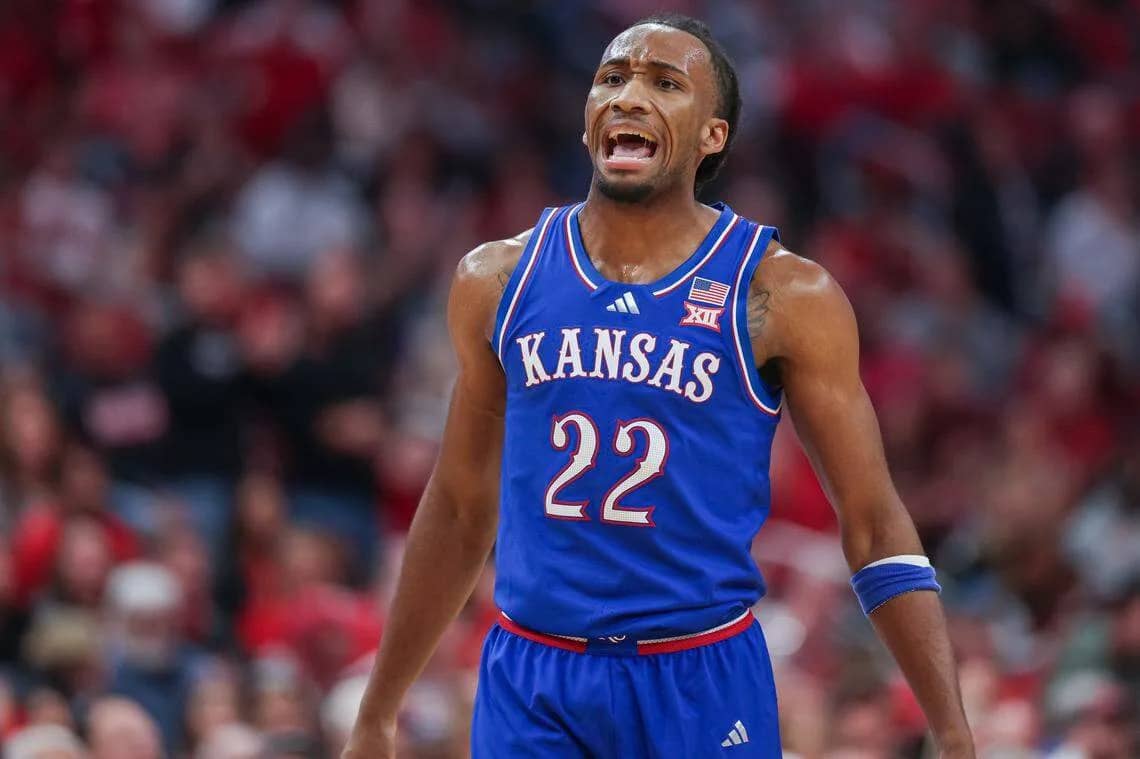
3. Darryn Peterson – Guard, Kansas
Darryn Peterson becomes more complicated because Young is already on the roster. But he should still be high on the Wizards’ board because he is not just a pure point guard. He is a scoring guard with size, shooting, and self-creation. That is different.
Peterson is 6-foot-6 and 205 pounds. He led Kansas in scoring at 20.2 points per game, led the team with 63 made threes, and had 12 games with at least 20 points. Tankathon lists him at No. 2 on its board with 20.2 points, 4.2 rebounds, 1.6 assists, 1.4 steals, a .578 true shooting percentage, 33.5 usage rate, and 14.1 BPM.
The low assist number is the first question. Peterson averaged only 1.6 assists, so he is not a table-setting guard in the classic sense. But that is not what the Wizards need with Young. They need a second scorer who can create his own shot when Young is trapped or off the floor.
Peterson can be that. He has pull-up shooting, strength, change of speed, and enough size to play either guard spot. He can run pick-and-roll, reject screens, attack switches, and make hard shots. That is valuable because the Wizards ranked 29th in offensive rating. They do not need another player who only finishes plays. They need someone who can start them.
Next to Young, Peterson could work as the bigger scoring guard. Young would handle the main playmaking. Peterson would attack the second defender. If teams blitz Young, Peterson can catch and attack four-on-three situations. If teams hide a small guard on Peterson, he can post, drive, or shoot over the top. If Young sits, Peterson can lead the second unit and give the Wizards a real shot-maker.
The fit with Davis is strong, too. Davis needs guards who can pass into the post, run pick-and-roll, and punish defenses for sending help. Peterson can run high ball screens with Davis, but he can also work off Davis’ screens as a shooter. That gives the Wizards more half-court options.
With Sarr, the fit depends on spacing. Sarr averaged 16.3 points, 7.4 rebounds, and 2.7 assists, but he is still developing as an efficient offensive piece. Peterson would help because he can pull the defense higher on the floor and create room for Sarr to roll, cut, and crash.
The defensive question is real. A Young-Peterson backcourt would still put pressure on the wings and bigs. Peterson has better size than most guards, but he has to defend with focus. The Wizards cannot build another lineup where every possession turns into help defense behind Young. That is why Peterson’s body and effort are important.
The upside is why he is third. Peterson may not be the perfect positional fit, but he is one of the few players in this class who can become a real scoring star. The Wizards do not have that yet. Young is already an All-Star guard, but he is 27 and more of a playmaking scorer than a franchise wing. Davis is older and has injury concerns. The Wizards need a young player who can grow into the next main scorer.
Peterson is that type of bet. If the Wizards are picking No. 2 and Dybantsa is gone, they should have a serious conversation between Peterson and Boozer. The choice would come down to philosophy: take the bigger forward with safer production, or take the scoring guard who fits the modern perimeter game better.
For this roster, Peterson is behind Boozer only because the Wizards already have Young. But he is not far behind. His shot creation is exactly what the team lacks.
2. Cameron Boozer – Forward, Duke
Cameron Boozer is not the perfect positional fit. That has to be clear. The Wizards already have Davis and Sarr, so adding another frontcourt player could create a spacing and role problem. But Boozer is not a normal big. He is one of the best players in the class, and if the Wizards are picking third or fourth, talent may be too strong to ignore.
Boozer averaged 22.5 points, 10.2 rebounds, and 4.1 assists while shooting 55.6% from the field. He led the team in scoring, rebounding, and assists. He was also named ACC Tournament MVP after averaging 20.0 points, 10.7 rebounds, and 5.7 assists during Duke’s tournament run.
His advanced numbers are elite. Boozer is considered the No. 1 prospect by ESPN with a .653 true shooting percentage, 29.9 usage rate, 12.7 offensive BPM, 6.0 defensive BPM, and 18.7 total BPM. That is the best statistical profile in the class.
For the Wizards, the case is not about need. It is about value. Boozer gives them a high-level frontcourt scorer who can pass, rebound, and play through contact. He is strong enough to score in the post, skilled enough to operate from the elbow, and smart enough to hit cutters and shooters. That is not easy to find.
The fit with Davis would need work. Davis is best as a big man who can protect the rim, roll, post smaller defenders, and play with another shooter next to him. Boozer is not a pure floor spacer yet. Sarr also needs frontcourt minutes. That means the Wizards would need to manage three major frontcourt pieces if they draft Boozer.
But there is a way to make it work. Davis can play center in some lineups. Sarr can play as a rim protector and vertical spacer. Boozer can be the power forward who handles at the elbow and attacks mismatches. It would not be a simple five-out offense, but it could be physical and hard to guard.
The key is Boozer’s passing. If he were only a scorer, the fit would be harder. But his 4.1 assists per game change the conversation. The Wizards could run offense through him when Young sits. They could use him as a short-roll passer with Peterson-type guards if they draft differently in the future. They could also use him to punish teams that switch smaller wings onto him.
The concern is defensive speed. If the Wizards play Boozer with Davis and Sarr, the lineup could be too big against fast teams. If they play Boozer without Sarr, they may slow Sarr’s development. If they play Boozer without Davis, they may reduce the veteran star’s role. These are real questions.
That is why Boozer is second, not first. He may be the safest prospect in the class, but the Wizards should be hunting for a wing creator first. Dybantsa fits that better. Peterson may also fit the perimeter need better. But Boozer’s production is too strong to push him lower.
The Wizards were terrible. Teams that bad should not draft only for position. They need star-level talent. Boozer has that. Even with Davis and Sarr already in place, he would give the Wizards another player who can become a long-term offensive hub.
If the Wizards fall to No. 3 and Boozer is there, they should take him unless they fully believe Peterson is the better franchise bet. Boozer may force roster questions later, but good teams deal with too much talent. Bad teams usually suffer from not having enough.
1. AJ Dybantsa – Forward, BYU
AJ Dybantsa is the obvious No. 1 option for the Wizards. He is the best mix of talent, fit, and long-term upside. He gives them the thing they do not have: a young wing with real No. 1 option potential.
Dybantsa averaged 25.5 points, 6.8 rebounds, 3.7 assists, and 1.1 steals while starting all 35 games for BYU. He led the nation in scoring, scored 894 points, the third-most by a freshman in Division I history, and became one of two players in Big 12 history with a 30-point triple-double.
That is the profile the Wizards should chase. Not another guard who needs the ball like Young. Not another interior who overlaps with Davis and Sarr. A big wing who can score, attack, defend, pass enough, and become the future face of the team.
The fit with Young is strong. Young creates deep pick-and-roll pressure. Defenses have to bring a second defender, show high, or load the nail. Dybantsa can punish that as the wing release. He can catch on the move, attack a rotating defender, get to the rim, or pull up. That is exactly what the Wizards need.
The fit with Davis is also strong. Davis can screen for Dybantsa, play in the dunker spot, or catch lobs when help steps up. Dybantsa can also post smaller wings and force double teams, which gives Davis easy cuts and offensive rebound chances. That is a real playoff-style action: big wing scorer, elite finishing big, and Young spacing or relocating after the first pass.
With Sarr, the fit is about long-term size. A Dybantsa-Sarr frontcourt gives the Wizards length, transition speed, and defensive range. Sarr can protect the rim. Dybantsa can defend wings and some forwards. Coulibaly and George can add more length. That gives the Wizards a path to cover for Young on defense without asking one player to fix everything.
Dybantsa also helps Tre Johnson. Johnson is a shooter and scorer, but he should not have to become the franchise player. If Dybantsa is the top wing, Johnson can play as a floor spacer and second-side scorer. That is a better role for him at this stage.
The main concern is the jumper. Dybantsa shot 33.1% from three-point range. That is not bad for a high-usage freshman scorer, but it is not elite. He has to become a better pull-up shooter and a more consistent off-ball threat. If the jumper becomes high-level, he has All-NBA upside. If it stays average, he can still be very good, but the ceiling changes.
The second concern is decision-making. He had the ball a lot at BYU, and NBA defenses will send longer wings, earlier help, and more complex coverages. He has to learn when to score and when to move the ball. That is normal for a young scoring wing. The important part is that he already has the frame, handle, touch, and production to build from.
For the Wizards, this is the easiest decision. Dybantsa gives them a player who can grow next to Young now and eventually become the main piece after Davis ages out of his prime. That is the exact timeline the Wizards need. Young can organize the offense. Davis can protect the paint and give the team veteran star power. Dybantsa can become the future.
The Wizards should not use this pick on a pure point guard. They should not use it on another interior unless the talent is impossible to pass on. They should use it on a wing or big scoring guard with star potential.
That is why Dybantsa is No. 1. He is the best answer to the roster, the best answer to the upside question, and the best answer to the franchise direction. If the Wizards win the lottery, this should be simple. They should take Dybantsa and build the next version of the roster around Young, Davis, Sarr, and a true franchise wing.