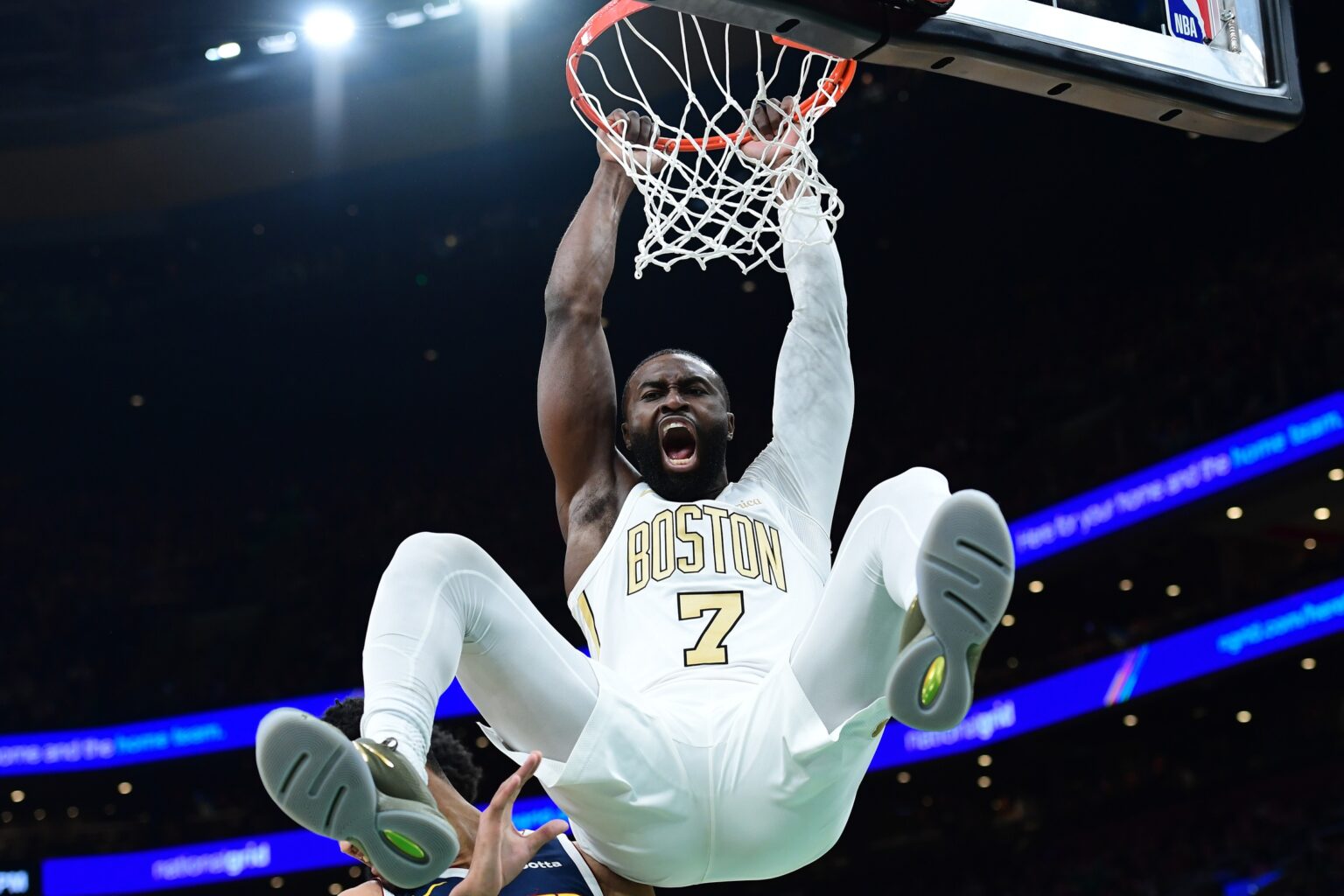
The Celtics’ offseason is now tied to one hard question: is the Jayson Tatum-Jaylen Brown build still the best way forward after another failed playoff run?
Brown is not a distressed asset. He averaged 28.7 points, 6.9 rebounds, and 5.1 assists this season, then put up 25.7 points, 5.7 rebounds, and 3.3 assists in the playoffs. He is still an elite wing scorer, still in his prime, and still under long-term control. That is why any deal would need to bring back real value, not just balance the cap sheet.
The financial part is what makes the discussion more complicated. Brown is owed $57.1 million in 2026-27, and he becomes eligible on July 26 for a two-year extension worth around $142.0 million. That would push his total future salary commitment even higher for a roster that already has Tatum on a supermax deal.
There has also been noise around Brown’s situation. Tracy McGrady said he had heard Brown was frustrated, then later clarified that Brown had not personally told him that. Brad Stevens also said Brown had not expressed frustration to him. That does not make a trade likely, but it keeps the subject alive because rival teams will always watch for pressure around expensive stars.
If the Celtics explore it, these are the six destinations that make the most sense.
6. Miami Heat
Miami Heat Receive: Jaylen Brown, Sam Hauser
Boston Celtics Receive: Tyler Herro, Andrew Wiggins, Jaime Jaquez Jr., Dru Smith, 2031 first-round pick
The Heat finished 43-39, lost in the play-in, and missed the playoffs for the first time since 2019. That is the type of season that usually pushes them toward a star trade. Brown would give them a stronger playoff wing, a real first scoring option, and a player who can defend bigger matchups while still creating his own offense.
The salary matching works if Andrew Wiggins picks up his $30.2 million player option. The Celtics would send out $67.9 million: Brown at $57.1 million and Sam Hauser at $10.8 million. The Heat would send out about $71.7 million: Tyler Herro at $33.0 million, Wiggins at $30.2 million, Jaime Jaquez Jr. at $5.9 million, and Dru Smith at $2.6 million. The Heat would take back less money than they send out, while the Celtics would receive a number still inside a reasonable matching range.
For the Celtics, the basketball return starts with Herro. He is not Brown, but he gives them a high-volume shooter and secondary creator. Herro had 23 points, three rebounds, and six assists in the Heat’s play-in loss, and his 2024-25 All-Star season showed his best version: 23.9 points, 5.2 rebounds, and 5.5 assists on 47.2% from the field and 37.5% from three. His 2025-26 season was interrupted by foot issues, so the Celtics would need to price in some risk.
Wiggins would be the short-term wing replacement. He averaged 15.4 points, 4.8 rebounds, and 2.7 assists on 47.5% from the field this season. He is not the same level of scorer or defender as Brown, but he gives the Celtics size at the position and an easier contract to move later.
Jaquez is the young piece that makes the trade more serious. He averaged 15.4 points, 5.0 rebounds, and 4.7 assists in 75 games while shooting 50.7% from the field. That is real rotation value on a $5.9 million salary. He can handle, cut, play through contact, and fit next to Tatum without needing a large usage role.
The pick is necessary. Brown is clearly the best player in the trade. The Celtics would be taking a step down in star power, but they would get a scoring guard, a starting-level wing, a young forward, and a 2031 first-round pick. For the Heat, this is a direct star swing. For the Celtics, it is the kind of package that only makes sense if they want more roster balance and less money tied to one wing spot.
5. Toronto Raptors
Toronto Raptors Receive: Jaylen Brown
Boston Celtics Receive: Brandon Ingram, Gradey Dick, Ja’Kobe Walter, 2028 first-round pick
The Raptors are the kind of team that can talk itself into Jaylen Brown. They have size, young talent, and enough salary to build a real offer. They also just lost a seven-game first-round series to the Cavaliers after finishing 46-36, so the roster is good, but not finished. Game 7 also showed the problem. Scottie Barnes had 24 points, RJ Barrett had 23, but Brandon Ingram and Immanuel Quickley were both out. The Raptors did not have enough top-end force when the series closed.
Brown would change that. He is a stronger playoff wing than Ingram, a better defender, and a more direct scorer. The Raptors already have enough handlers with Barnes, Barrett, and Quickley. What they need is a wing who can get to 25 points without needing the whole offense shaped around him. Brown averaged 28.7 points, 6.9 rebounds, and 5.1 assists this season, then 25.7 points, 5.7 rebounds, and 3.3 assists in the playoffs. That fits a team trying to move from competitive to dangerous.
The fit with Barnes is the real reason this works. Scottie Barnes is at his best as a big connector: handling in space, attacking mismatches, passing over the defense, and defending multiple positions. Brown would give him a more physical scoring partner than Ingram. Ingram averaged 21.5 points, 5.6 rebounds, and 3.7 assists while shooting 47.7% from the field and 38.2% from three, but Brown gives the Raptors more pressure at the rim and better two-way playoff value.
The salary matching is possible, but the Raptors would likely need to add another small salary depending on their apron position. Brown is owed $57.1 million in 2026-27. Ingram is at $38.1 million, Gradey Dick is at $5.0 million, and Ja’Kobe Walter is at $3.8 million. That puts the outgoing package at about $46.9 million before any extra salary. Under normal matching, that is close, but not fully comfortable for a team taking back $57.1 million. Adding a small contract would make the structure cleaner.
The Celtics would not do this only for Ingram. The 2028 first-round pick has to be in the deal, and Dick or Walter has to become a real part of the value. Dick gives them shooting development. Walter gives them a cheaper young wing. But this trade is mainly about the Raptors betting that Brown is the missing playoff piece next to Barnes.
For the Raptors, that is a serious swing. Brown would give them a stronger top option, better wing defense, and more postseason physicality. If they believe Barnes is ready to lead a deeper run, this is the type of move that would match that timeline.
4. Atlanta Hawks
Atlanta Hawks Receive: Jaylen Brown
Boston Celtics Receive: Zaccharie Risacher, Onyeka Okongwu, Nickeil Alexander-Walker, Corey Kispert, 2029 first-round pick
The Hawks make sense because this is not only a theoretical fit. Sports Illustrated’s Chris Mannix reported that the Hawks and Celtics had a brief conversation about Jaylen Brown last summer. The talks did not advance, partly because the Hawks were wary of Brown’s contract and the Celtics were not looking to sell low. But the connection is already there, and Brown’s Georgia ties will keep the Hawks in the discussion if his name becomes real in trade talks.
The fit is easy to see. The Hawks finished 46-36 and lost to the Knicks in six games. They were competitive, but not close enough to be treated as a finished roster. Brown would give them a true A-list wing scorer with size, strength, playoff reps, and defensive value. That is the exact kind of player they do not currently have.
The important part is that the Hawks should not trade Jalen Johnson for him. That would defeat the purpose. Johnson is the young forward they should keep as the internal star piece. A Brown trade only works if the Hawks can put Brown with Johnson, Dyson Daniels, and the rest of their defensive core. Brown would take the hardest scoring job, let Johnson stay in a more natural forward-creator role, and give the Hawks a stronger late-clock option against playoff defenses.
The salary matching is direct. Brown is owed $57.1 million in 2026-27. The Hawks package sends out about $58.3 million: Okongwu at $16.1 million, Alexander-Walker at $14.4 million, Kispert at $14.0 million, and Risacher at $13.8 million. That gives the Celtics enough salary without forcing the Hawks to touch Johnson or Daniels.
Brown’s role with the Hawks would be different from his role with the Celtics. He would become the clear first wing option, not the second half of a long-running duo. The Hawks could use him in transition, post him against smaller wings, and let him attack closeouts created by Johnson and Daniels. He also gives them a playoff scorer who can get to 25 without needing a perfect offensive setup.
The cost is real. Risacher is the former No. 1 pick and still only 21. Okongwu averaged 15.2 points, 7.6 rebounds, and 3.1 assists this season. Alexander-Walker averaged 20.8 points, 3.4 rebounds, and 3.7 assists and won Most Improved Player. Kispert is useful shooting salary. This is not a cheap offer.
Still, that is the level required for Brown. If the Hawks want to move from interesting to dangerous, this is the type of swing that matches the moment. Brown would give them the top-end wing force they lacked against the Knicks, while still allowing them to keep the young pieces who matter most.
3. Cleveland Cavaliers
Cleveland Cavaliers Receive: Jaylen Brown
Boston Celtics Receive: Evan Mobley, Max Strus, 2032 first-round pick swap
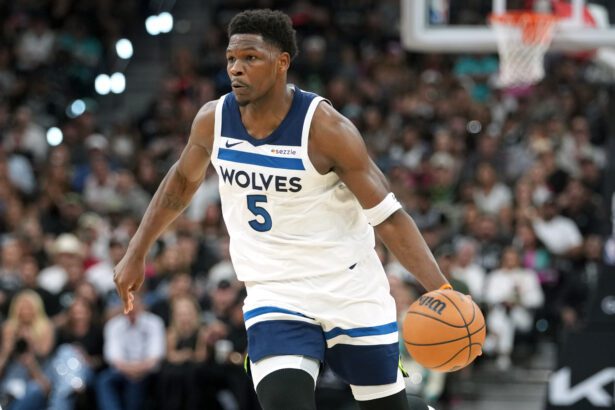
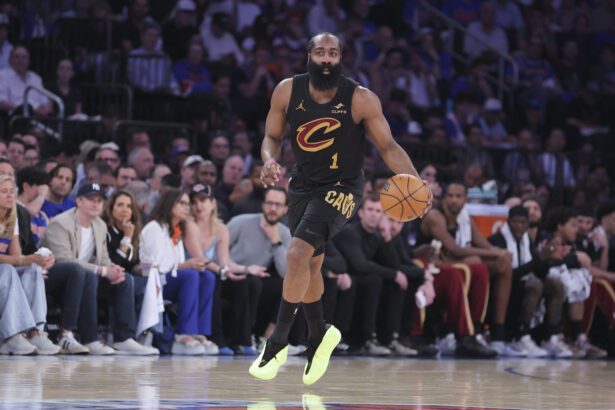
This is the Cavaliers trade that makes the most sense if they decide one core player has to go. Donovan Mitchell should not be the outgoing piece if the goal is still to compete. He remains their best playoff scorer, and Game 3 against the Pistons showed that again: 35 points and 10 rebounds in a 116-109 win that kept the Cavaliers from falling into a 0-3 hole. James Harden also gave them 19 points and seven assists, including seven points in the final 90 seconds. The Cavaliers’ best path is not replacing Mitchell. It is putting a big wing next to him.
Brown would give them that. The Cavaliers have had guard talent and frontcourt size, but they have not had a true power wing who can score through playoff contact and defend top matchups. Brown would fill the gap between Mitchell’s shot creation, Harden’s passing, and Jarrett Allen’s interior role. He would also give them a cleaner late-game structure: Mitchell as the lead guard, Harden as the organizer, and Brown as the wing scorer who can attack switches, post smaller defenders, and run in transition.
The salary matching is simple. Brown makes $57.1 million in 2026-27. Mobley makes $50.1 million, and Strus makes $16.7 million. The Cavaliers would send out around $66.8 million and take back $57.1 million, so they would reduce salary in the trade while giving the Celtics enough money to match Brown.
The reason Mobley becomes the player in the deal is not that he has no value. It is that his value may no longer match his contract and role. He is owed $50.1 million in 2026-27, the same cap hit as Mitchell. For that money, the Cavaliers need a true postseason star. Mobley has produced numbers, but he has not played with the force of an All-NBA caliber player.
That is the issue. Mobley is talented, versatile, and still young, but the Cavaliers are trying to win now. Brown is a more direct fit for that timeline. He gives them shot creation at a premium position, more playoff physicality, and a cleaner offensive hierarchy around Mitchell.
The Harden contract also gives this idea more logic. Harden has a $42.3 million player option for 2026-27, but only $13.3 million is guaranteed if he picks it up, and he becomes a free agent in 2027. That means the Cavaliers can take one expensive Brown season next to Mitchell and Harden, then get more breathing room the following offseason if Harden comes off the books.
For the Celtics, Mobley would be the defensive reset. He is not Brown’s level as a wing scorer, but he gives them a younger frontcourt anchor next to Jayson Tatum. Strus adds shooting and salary balance. For the Cavaliers, this is about choosing the cleaner playoff build: Mitchell, Brown, Harden, and Allen is more balanced than keeping a max frontcourt piece who has not consistently imposed himself when the games get tighter.
2. Houston Rockets
Houston Rockets Receive: Jaylen Brown, Sam Hauser
Boston Celtics Receive: Kevin Durant, Fred VanVleet, 2028 first-round pick
The Rockets are the most interesting Brown team because the Kevin Durant experiment already looks unstable. The idea was clear when they traded for Durant: add a proven playoff scorer to a young core that already had size, defense, and regular-season structure. It did not translate. The Rockets lost in the first round, and Durant also missed five of six playoff games, while Fred VanVleet and Steven Adams missed major time as well.
The off-court layer makes it harder to simply run everything back. ESPN reported that the Rockets’ season ended with injuries, a burner-phone scandal, and a leadership void. Even if the Rockets still value him as a scorer, moving Durant now may be easier than bringing the same drama into another season.
Brown gives the Rockets a cleaner timeline. He is younger than Durant, more durable at this stage, and better positioned to grow with Alperen Sengun, Amen Thompson, Jabari Smith Jr., and Reed Sheppard. He would also give them a true wing scorer who can defend, run in transition, attack through contact, and become the main perimeter option. The Rockets already have enough young talent. What they need is a top wing who can lead the next version without turning the locker room into a second storyline.
The salary match is logical. Brown makes $57.1 million in 2026-27, and Hauser makes $10.8 million, so the Celtics send out about $67.9 million. Durant is at $43.9 million, and VanVleet has a $25.0 million player option. If VanVleet opts in, the Rockets send out about $68.9 million. That is almost a direct salary match.
For the Celtics, this is not a youth trade. It is a short-window title trade. Durant would replace Brown as the second elite scorer next to Jayson Tatum. He is older, but still one of the best shot-makers in the league when healthy. VanVleet would also give the Celtics another real guard next to Tatum, adding pull-up shooting, pick-and-roll organization, and late-clock control.
That matters because replacing Brown with only Durant would be thin. Adding VanVleet changes the structure. The Celtics would get another high-level creator and still keep enough scoring around Tatum to compete immediately. The 2028 first-round pick is needed because Brown is younger, more stable, and probably the better asset right now.
For the Rockets, this is the clean reset. Brown lets them move off the Durant drama without rebuilding. For the Celtics, it is a bet that Durant and VanVleet can give Tatum a better offensive shape for one or two title runs.
1. Milwaukee Bucks
Milwaukee Bucks Receive: Jaylen Brown, 2027 first-round pick, 2031 first-round pick, 2033 first-round pick
Boston Celtics Receive: Giannis Antetokounmpo
This is the only Jaylen Brown trade that clearly changes the Celtics’ ceiling. Every other idea is about reshaping the roster, adding depth, or changing the financial timeline. This one is different. It turns Brown into Giannis Antetokounmpo and gives Jayson Tatum a completely different type of co-star.
The Celtics have already been connected to Antetokounmpo. The Athletic’s Sam Amick reported in April that the Celtics are known to have interest, and Marc Stein later identified them as a team to watch if the Bucks reach the point of seriously exploring the market. That is the kind of reporting that matters here. This is not just a random star-for-star idea. The Celtics are at least part of the league conversation if Antetokounmpo becomes available.
The Bucks’ side depends on Antetokounmpo’s direction. Co-owner Jimmy Haslam said the franchise wants clarity on his future before the draft. That does not mean a trade is coming, but it gives the situation a timeline. The Bucks are not in a position to let the noise stretch across the whole offseason if Antetokounmpo is no longer fully committed to the next build.
The basketball fit for the Celtics is obvious. Antetokounmpo gives them the one pressure point they have never had with this version of the roster: constant rim force. Tatum gives them shooting, half-court shot creation, and late-clock scoring. Antetokounmpo gives them transition pressure, paint touches, fouls, rebounding, and defensive versatility. That combination is harder to guard than another version of the same wing-heavy system.
The salary matching is simple. Brown is owed $57.1 million in 2026-27. Antetokounmpo is owed $58.5 million. The money is close enough that the Celtics do not need to attach another major rotation player just to make the deal function. The value is the real gap. Brown alone is not enough for Antetokounmpo, so the Celtics would have to add several first-round assets.
For the Bucks, Brown is one of the best reset pieces they could get if Antetokounmpo asks out or pushes for a different situation. He is not a rebuilding prospect, but that may be the point. The Bucks do not control their future cleanly enough to benefit from a deep teardown. Brown would keep them relevant, give them a prime-age wing under long-term contract, and let them start a new version without dropping to the bottom.
The picks are what make the offer serious. A package built around Brown and three first-round picks is stronger. The Celtics should try to protect Derrick White, Payton Pritchard, and the rest of the main rotation if possible, because the whole point of the deal is to pair Tatum and Antetokounmpo with enough shooting and guard play to win right away.
This is still the least controllable trade on the list. The Bucks decide the direction. Antetokounmpo’s preference matters. Other teams could offer younger players and more picks. But if the Celtics are serious about changing the Tatum era after another playoff failure, this is the one Brown trade that feels worth the risk. Brown plus picks is expensive. Antetokounmpo is the type of player who justifies that price.