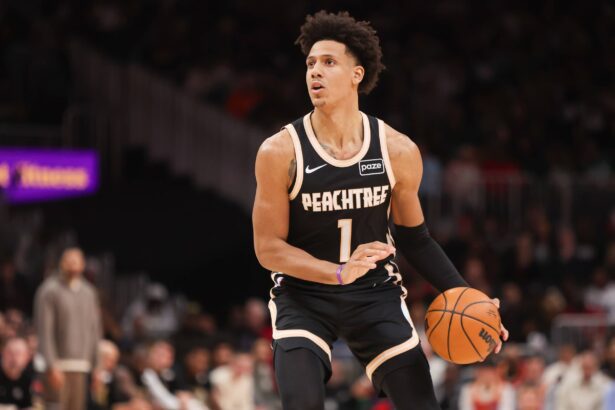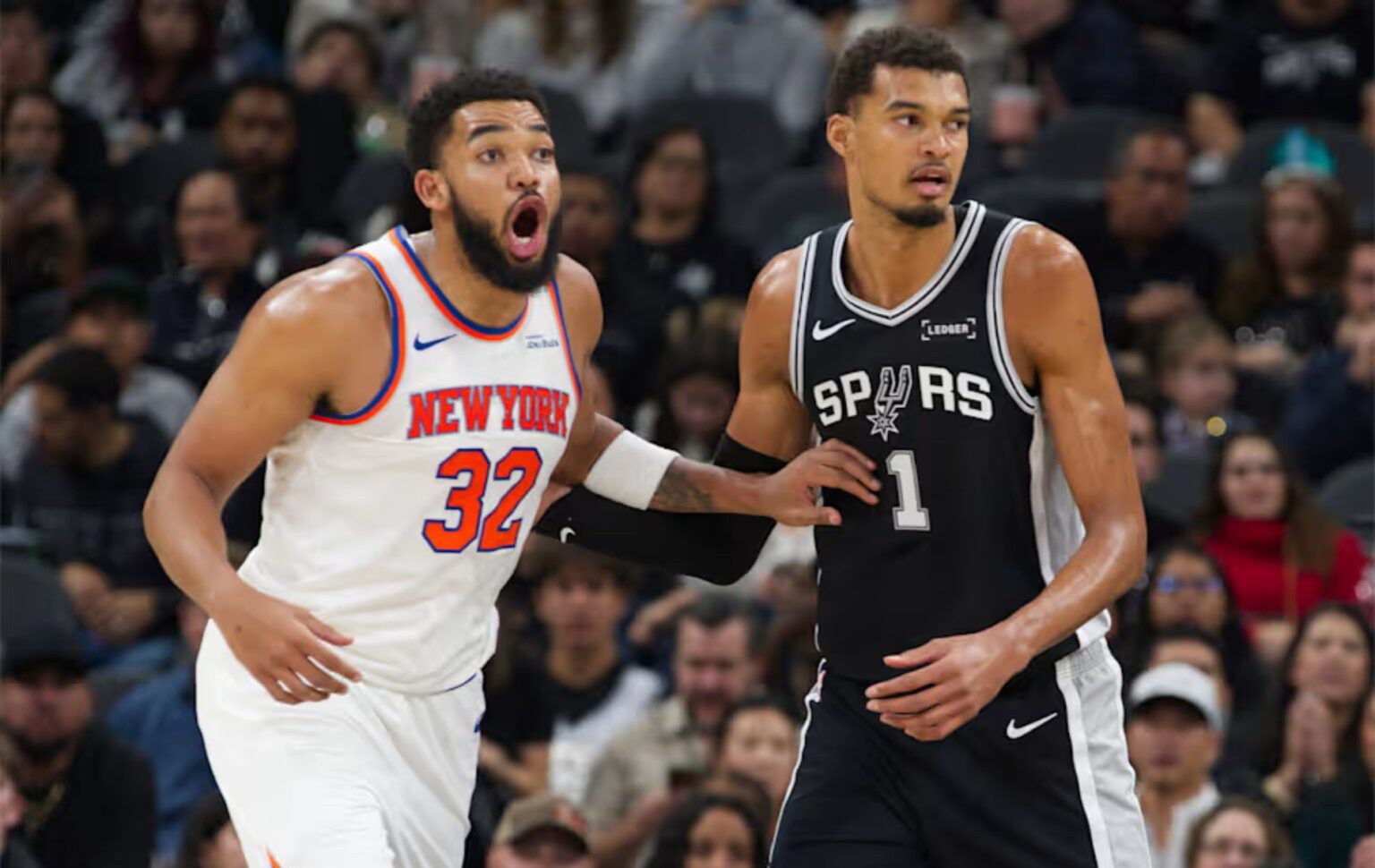
The Knicks took Game 1 of the NBA Finals with a 105-95 win over the Spurs, and the message was simple. They weren’t scared of the stage, they weren’t broken by a 14-point deficit, and they didn’t lose control when the game got tight. Instead, they closed with an 11-0 run and stole home court right away.
Jalen Brunson finished with 30 points and again looked like the best half-court scorer in the series. Karl-Anthony Towns had 18 points and 12 rebounds, while Josh Hart gave the Knicks 15 rebounds, six assists, and four steals. That was the difference. The Knicks had more shot creation, more defense, more rebounding, and more useful pieces late.
Victor Wembanyama still had 26 points and 12 rebounds, but his 6-of-21 shooting and six turnovers showed the Spurs’ main problem. They had the lead, they had the crowd, and they had chances to finish the game. They just didn’t close. Game 1 showed the Knicks are deeper, tougher in late possessions, and maybe better built for this Finals than expected.
1. Jalen Brunson Is The Best Scorer In The NBA Finals
Jalen Brunson didn’t shoot well for most of Game 1, but he still finished as the best late-game scorer on the floor. He had 30 points on 12-of-31 from the field, 2-of-9 from three, and 4-of-4 at the line. That isn’t efficient, but it shows the Knicks trusted him with every hard shot.
The key part was the fourth quarter. Brunson scored 13 points in the final period, while the Spurs scored only 19 as a team. When the game got tight, the Knicks had a simple answer. Give Brunson the ball, space the floor, and let him work in the midrange.
His biggest shot came with 38 seconds left. Brunson hit a spinning jumper while falling down, giving the Knicks the dagger and ending the Spurs’ last real chance. It wasn’t an easy look. It was a tough Finals shot, with pressure, contact, and the defense already set.
That is the difference between Brunson and the Spurs’ late-game offense right now. Victor Wembanyama had 26 points and 12 rebounds, but he shot 6-of-21 from the field and had six turnovers. Brunson also missed a lot, but he made the shot that decided the game.
Game 1 showed the Knicks have the safest closer in this series. Brunson doesn’t need elite size or athleticism. He needs space, balance, and one defender in front of him. The Spurs didn’t stop that late.
Right now, Brunson is the best scorer in the NBA Finals because he can still win the final minutes, even on a rough shooting night.
2. KAT’s Defensive Blueprint For Slowing Down Victor Wembanyama
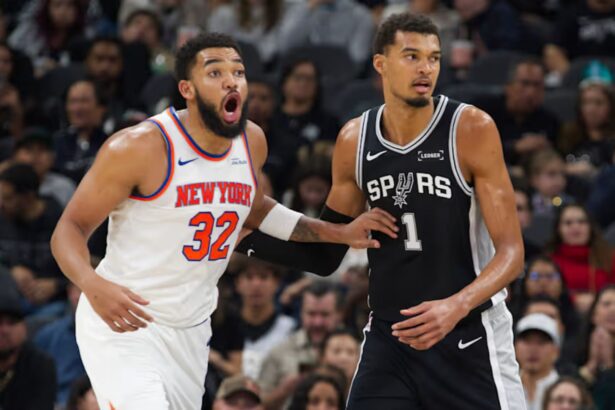
The Knicks didn’t stop Victor Wembanyama fully, but they made him inefficient. That is enough in this series. He still had 26 points, 12 rebounds and three blocks, but he shot 6-of-21 from the field, 2-of-9 from three, and had six turnovers.
Karl-Anthony Towns was the main reason. When Towns guarded him, Wembanyama shot just 2-of-12 and had three turnovers. That is a serious defensive result for a center who usually gets attacked in space. Towns didn’t try to block every shot. He used strength, stayed in front, and pushed Wembanyama into tougher catches and longer jumpers.
The Knicks also defended him with help behind the first matchup. OG Anunoby, Mikal Bridges, and Josh Hart were ready to dig at the ball, close space, and make Wembanyama see bodies. That turned many possessions into slow possessions. The Spurs didn’t get easy rhythm from their best player.
Towns also hurt Wembanyama on the other end. He finished with 18 points, 12 rebounds, and four offensive boards. When Wembanyama left the paint to follow him, the Knicks attacked the glass and won second-chance points 23-14. That was almost the whole 10-point margin.
This is the key lesson. Towns doesn’t need to dominate Wembanyama. He only needs to make him work, keep him away from easy paint touches, and stay useful on offense. In Game 1, he did all three.
If Towns can keep Wembanyama near 30.0% shooting nights and avoid foul trouble, the Knicks have a real defensive answer. Not a perfect answer. A good enough one.
3. The Knicks Have More Reliable Depth Than The Spurs
The Knicks’ depth was a real difference in Game 1. The bench gave them 28 points, while the Spurs got 20 from their second unit. That wasn’t a huge gap, but it was important because the Knicks got those points from several usable players.
Landry Shamet was the best bench piece. He finished with 13 points on 5-of-9 from the field and 3-of-6 from three. His shooting gave the Knicks space when Jalen Brunson and Karl-Anthony Towns needed room to attack. Shamet didn’t look like a player hiding from the Finals.
Jose Alvarado also gave the Knicks good minutes. He had seven points, four rebounds, one assist, and one steal in 10 minutes. That is strong production in a small role. He brought pressure, pace, and a little chaos without forcing the offense.
Miles McBride added six points and four assists in 19 minutes. He shot only 2-of-7, but his minutes were still useful because he protected the ball and gave the Knicks another guard who could defend and organize possessions.
Mitchell Robinson had only two points, but his six rebounds in 13 minutes were important. He gave the Knicks another big body against Victor Wembanyama and helped keep Towns from carrying every physical possession.
The Spurs got 16 points and eight rebounds from Dylan Harper, but they didn’t get enough after that. Keldon Johnson had only three points, and Luke Kornet didn’t score. De’Aaron Fox also struggled with seven points on 3-of-13, so the Spurs needed more from the bench.
That is the point. The Knicks had Shamet, Alvarado, McBride, and Robinson all giving something. The Spurs had Harper, then not much else. In a Finals game decided late, that depth gap was real.
4. Wemby Is A Star, But Fatigue Could Be A Problem
Victor Wembanyama still put up star numbers in Game 1. He finished with 26 points, 12 rebounds, and three blocks in 38 minutes. That is strong production, but the efficiency was poor. He shot 6-of-21 from the field, 2-of-9 from three, and had six turnovers.
That is where fatigue looked like a real factor. Wembanyama had to carry too much. He was the Spurs’ first option on offense, their main rim protector on defense, and their biggest rebounder. That is a heavy job against a Knicks team with Karl-Anthony Towns, Josh Hart, OG Anunoby, and Mikal Bridges making every possession physical.
The shot profile also showed it. Wembanyama took nine threes, and some of them looked like tired shots. The Knicks were happy with that. Long jumpers kept him away from the rim and helped Towns avoid foul trouble.
The schedule didn’t help either. The Spurs had just finished a seven-game series against the Thunder, while the Knicks looked fresher late. That showed in the fourth quarter. The Spurs scored only 19 points, turned it over five times, and lost control of the game.
Wembanyama is still the biggest talent in the series. That didn’t change. But Game 1 showed the Spurs can’t ask him to do everything for 38 minutes and still expect clean offense late.
They need easier touches for him in Game 2. More deep catches, more rolls, fewer high dribbles, and fewer late-clock threes. If Wembanyama has to work this hard again, the Knicks will keep making him look tired in the final minutes.
5. The Knicks Are The More Experienced Team In The Finals
The Spurs have talent. The Knicks have more adult basketball right now. That is the best way to explain the final six minutes.
The Spurs are a 62-win team, so this is not about saying they are too young to be here. They earned the West. They beat serious teams. Wembanyama is already a top-tier player. Castle and Harper don’t look scared. Fox has played high-level playoff basketball. The roster is not soft.
Still, Game 1 showed the difference between talent and late-game Finals execution.
The fourth quarter explained the game. The Knicks won it 29-19 and didn’t commit a single turnover. The Spurs had five turnovers and shot only 28.6% from the field in the period. That is not a small gap. That is the difference between a team closing a Finals game and a team giving it away.
The Spurs had control earlier. They led by 14 in the third quarter and still entered the fourth tied 76-76. That already showed a problem. They had a chance to break the game open, but their offense slowed down and the Knicks kept defending without losing structure.
Late in the game, the Knicks knew what they wanted. They used Jalen Brunson as the main handler, kept Karl-Anthony Towns spaced or involved as a screener, and let OG Anunoby and Landry Shamet stay ready on the perimeter. The possessions were not always beautiful, but they were organized.
The Spurs were different. Their late offense had more panic. Victor Wembanyama saw extra bodies, De’Aaron Fox couldn’t create efficient looks, and the ball stopped moving with purpose. The five fourth-quarter turnovers showed that.
This is why the Knicks looked more prepared for the Finals moment. They didn’t chase the game after falling behind. They waited, defended, and punished the Spurs when the pressure got heavier.
The Spurs had the better regular-season record, but Game 1 was about closing. In that area, the Knicks were clearly better.
The Spurs made some rushed mistakes. They had a 95-94 lead with 2:16 left and didn’t score again. Wembanyama lost the ball on one drive, then bricked several consecutive shots. Fox made poor decisions. The spacing got tight. The ball stopped moving. The Knicks looked like the team that knew how to finish.
The Knicks also have a coach and rotation that trusted the game plan. Mike Brown got good second-half response from his group. The Knicks made defensive adjustments and stayed with their best closing mix. The Spurs had a tougher decision with Harper and Fox, and they did not get that decision right in Game 1.
Experience showed up in small things. Shot selection. Rebounding. Not turning the ball over. Free throws. Defensive positioning. The Knicks won those details late.
That does not mean the Spurs cannot learn fast. They can. But the Finals don’t wait. Game 2 is already pressure because a home team down 0-2 is in a very bad place.
6. Josh Hart Is The Knicks’ True Glue Guy
Josh Hart had the most Josh Hart game possible. He scored only three points and still was one of the most important Knicks players on the floor.
His line was simple and strong: 15 rebounds, six assists, four steals. That is a winning role-player box score. He did all the low-usage work that keeps a team alive during bad offensive stretches. When the Knicks missed, Hart rebounded. When the Spurs got loose, Hart got hands on the ball. When Brunson drew help, Hart moved it.
The Knicks won second-chance points 23-14. That was a nine-point edge in a 10-point win. Hart didn’t get all of those points himself, but his work on the glass helped keep possessions alive when the Knicks missed shots.
The defensive stats were just as important. Four steals is a lot in a Finals game, and one came against Wembanyama. Hart gave the Knicks pressure without gambling too much. He helped turn Spurs possessions into loose plays, bad passes, and rushed decisions.
The Spurs couldn’t match that type of production from a role player. Hart scored only three, but he still had 21 combined rebounds and assists. That is the real number. He gave the Knicks boards, passing, steals, and floor balance without needing shots.
For the Spurs, that is a problem. They already have to deal with Jalen Brunson’s scoring and Karl-Anthony Towns’ size. If Hart is also winning the glass from the wing, the Knicks get too many extra possessions.
Game 1 showed Hart doesn’t need points to hurt the Spurs. His value was in rebounds, steals, assists, and plus-minus. That was enough to swing the game.
7. The Spurs Let The Game Slip Away Late
The Spurs had enough chances to win Game 1, but their late-game offense was too poor. This wasn’t only about one bad shot. It was a long closing problem that started in the third quarter.
The Spurs were up 14 in the third, but they missed eight of their last 12 shots in the final 5:57 of the quarter and also had two turnovers. That let the Knicks come back and tie the game at 76 before the fourth. A Finals team can’t waste that type of lead at home.
The same problem came back late. The Spurs went up 95-94 with 2:16 left after Victor Wembanyama free throws. After that, they didn’t score again. The Knicks closed the game on an 11-0 run. That is the whole loss in one stretch.
The team stats also showed the issue. The Spurs shot 32-of-89 from the field, only 36.0%. They went 11-of-43 from three, only 25.6%. They had 13 turnovers and only 16 assists. That is not enough ball movement or shot quality for a Finals game.
De’Aaron Fox was a big part of the problem. He shot 3-of-13 and didn’t give the Spurs a stable second creator late. Wembanyama also had a loose drive and a bad turnover in the final minutes. The Spurs needed control, but they played rushed.
The Knicks weren’t perfect, but they had a closer and better late possessions. The Spurs had the lead, the crowd, and the chance to steal Game 1. They just didn’t finish.
That is a bad sign. Against the Knicks, one bad late stretch can erase three good quarters.
8. Wemby Fell Apart In The Last Six Minutes
Victor Wembanyama didn’t just miss shots late. His whole clutch process was bad. In the final six minutes, he went 1-of-5 from the field, had a travel, lost the ball on a drive, and missed the last big three the Spurs had before the game was gone.
The shot diet was the first problem. Wembanyama missed a 24-foot three, then later missed a 27-foot three with 32.1 seconds left. Those are not the shots the Spurs needed from a 7-foot-4 first option in a close Finals game. The Knicks wanted him outside. He gave them that.
The turnover with 57 seconds left was worse. The Spurs were down four, so they still had a chance. Wembanyama tried to attack from high on the floor, but the ball went off his foot and Josh Hart took it. That killed a real possession. After that, Jalen Brunson hit the 14-foot jumper, and the Spurs were down six.
The travel also showed the same issue. Wembanyama wasn’t getting simple catches. He was starting too far from the rim, putting the ball on the floor too much, and letting the Knicks crowd him. Karl-Anthony Towns didn’t need to block him there. He only needed to make him uncomfortable and keep him away from deep position.
The Spurs needed Wembanyama to create a good shot or draw a foul. Instead, he gave them long threes, one bad turnover, and rushed decisions. That is why his clutch was poor. It wasn’t only about missing. It was about where the misses came from and how the possessions died.
Wembanyama is still the best talent in the series, but Game 1 showed he isn’t a finished closer yet. The Knicks made him play like a guard late, and that helped them win the game.
9. The Knicks Might Be The Favorites After All
The Knicks weren’t treated like the favorite before Game 1. The Spurs were -225 to win the series, while the Knicks were +155. The Spurs were also 4.5-point favorites at home for Game 1. After 48 minutes, that line looked wrong.
The reason isn’t only that the Knicks won. It is how they won. They took the first game on the road, which means the Spurs already lost home-court advantage. Now the Knicks can win the title by just protecting their own floor and taking Games 3, 4 and 6.
The Wembanyama minutes also weren’t strong enough for the Spurs. They were outscored by three points with Victor Wembanyama on the floor and by seven points when he sat. That says the Knicks didn’t only survive the non-Wemby minutes. They also played the Spurs’ best lineups close enough to win.
The second-chance numbers were another strong sign. The Spurs won the total rebounding battle 54-49 and offensive rebounds 14-10, but the Knicks got more value from their chances. They scored on 9 of 13 second-chance chances, while the Spurs scored on only 5 of 13. That is better execution, not just effort.
This is why the series feels different now. The Spurs have the biggest talent, but the Knicks have the better structure. They can win ugly, punish mistakes, and get production without depending on one perfect scorer.
The Spurs can still adjust, but Game 1 changed the question. It isn’t “Can the Knicks compete?” anymore. It is “Can the Spurs stop them four times?”
10. The Spurs Can’t Have Another Second-Half Blunder
The Spurs didn’t lose Game 1 because of one bad final possession. They lost it because their whole second half was weak. They led 55-48 at halftime, then got outscored 57-40 after the break. That is a huge swing for a home team in Game 1 of the Finals.
The third quarter was the real warning. The Knicks missed nine of their first 10 shots to start the period, but the Spurs didn’t kill the game. They had a chance to take a 20-point lead and make the Knicks play desperate. Instead, they let the game get back to 76-76 before the fourth.
That can’t happen again. The Spurs led for 56% of the game and had the biggest lead at 14. The Knicks led for only 41%, and their biggest lead was 10. Still, the Knicks won by 10. That means the Spurs had control for more time, but the Knicks had better control when the game became serious.
The offensive profile was also poor. The Spurs shot 32-of-89 from the field, 11-of-43 from three, and finished with only 16 assists. That is only one assist for every two made field goals. For a team with Victor Wembanyama, De’Aaron Fox, Stephon Castle and Devin Vassell, that isn’t enough passing or shot quality.
The Spurs also had 13 turnovers. That number isn’t crazy by itself, but the timing was bad. Too many came when the Knicks were already building pressure and the Spurs needed one stable possession.
Game 2 has to be different. The Spurs can’t waste another halftime lead, another strong home crowd, or another long stretch where the Knicks are missing shots. The talent is there, but Game 1 showed that talent without second-half control isn’t enough.