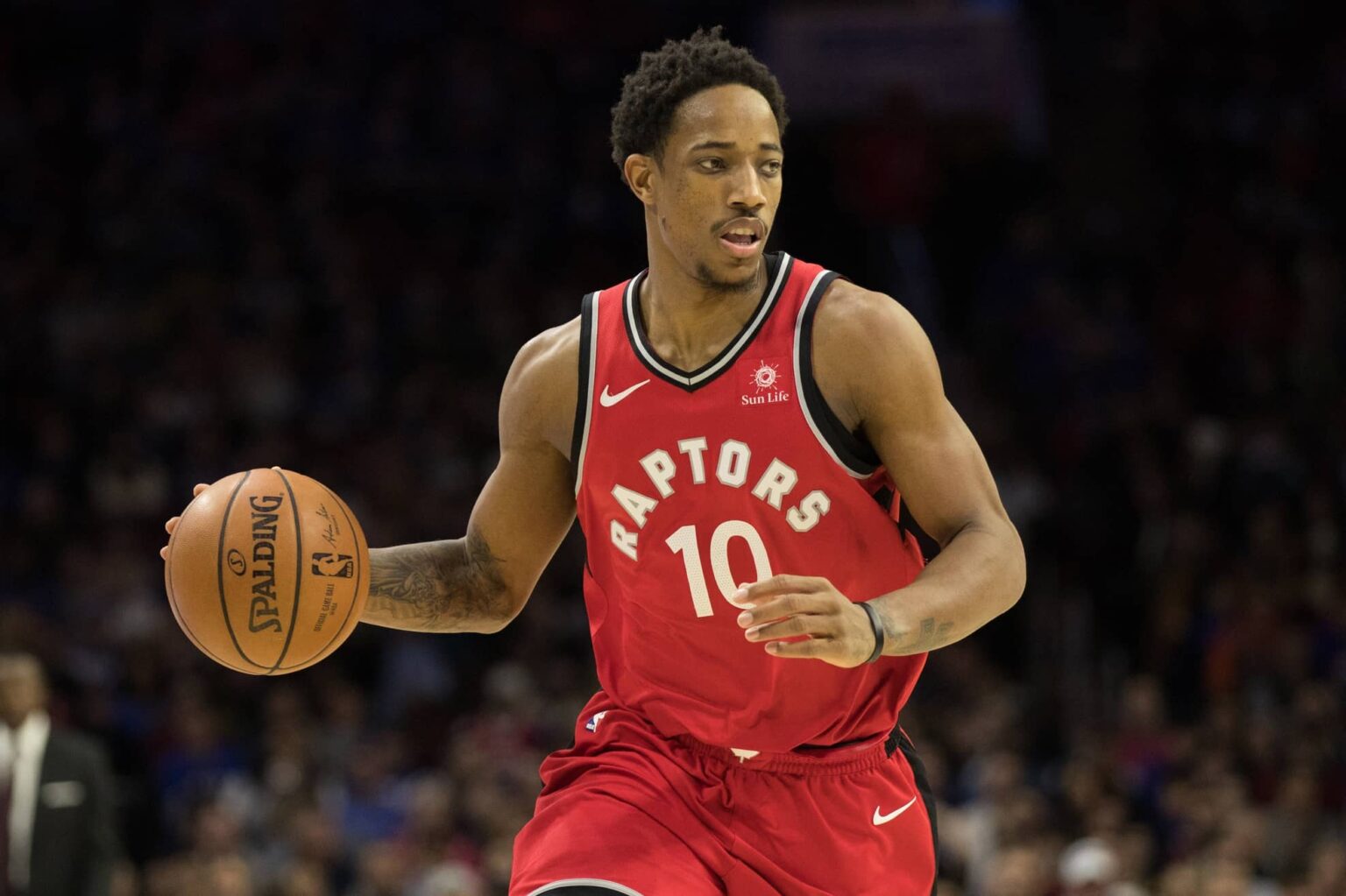
Dillon Brooks has never been shy about saying exactly what he thinks, and his latest comments might be his most polarizing yet. During a live stream appearance with AMP streamer Agent, Dillon Brooks took direct aim at DeMar DeRozan, openly criticizing DeRozan’s legacy with the Toronto Raptors and blaming him for the franchise’s inability to win a championship during his tenure.
Brooks did not mince words.
“I’ll be real for the city, bro. DeRozan was not pulling his weight out there. He couldn’t win.”
“He made the playoffs every year. One time a one seed. One time a five seed. He runs into LeBron and can’t do nothing.”
“You can choke, but you can’t go to the media and say, like, ‘Can’t do nothing without LeBron.’ I was like, what the hell? While you’re playing against him, then you get benched. “
It was a blunt critique of a player who defined an era in Toronto. DeRozan was drafted ninth overall in 2009 and spent nearly a decade as the face of the franchise. Under his leadership, the Raptors became annual playoff regulars, reached the Eastern Conference Finals in 2016, and consistently finished near the top of the East. Yet Brooks dismissed that resume as empty.
Between 2016 and 2018, LeBron James‘ Cavaliers eliminated Toronto three straight times, including two sweeps. The 2018 series was especially damaging, with DeRozan benched late in games as the Raptors were routed despite entering as the No. 1 seed.
That 2018 collapse ultimately led to Toronto’s franchise-altering decision. DeRozan was traded to the San Antonio Spurs for Kawhi Leonard and Danny Green. The result was immediate. In Leonard’s lone season, the Raptors won the 2019 NBA championship, validating the move in the coldest way possible.
For Brooks, that outcome proves his point.
But what Brooks left out matters just as much. DeRozan is the Raptors’ all-time leader in games played (675) and minutes played (22,986). He is the franchise’s leading scorer (13,296), a record that reflects years of durability, loyalty, and elite production. He helped turn Toronto from an afterthought into a respected Eastern Conference power, laying the foundation that later made a title push possible.
Reducing that legacy to playoff shortcomings ignores context. Toronto ran into a historically dominant LeBron-led conference, often without a second superstar to tilt the balance. DeRozan’s flaws in the postseason are real, but so is the body of work that kept the Raptors relevant for nearly a decade.
Brooks thrives on confrontation and simplified narratives. His take is provocative because it contains a sliver of truth wrapped in exaggeration. The Raptors did not win a title until DeRozan was gone. Still, without DeRozan’s years of stability and success, there may never have been a championship window to capitalize on in the first place.