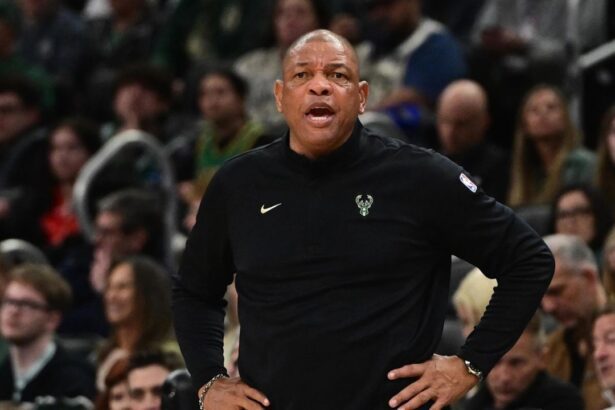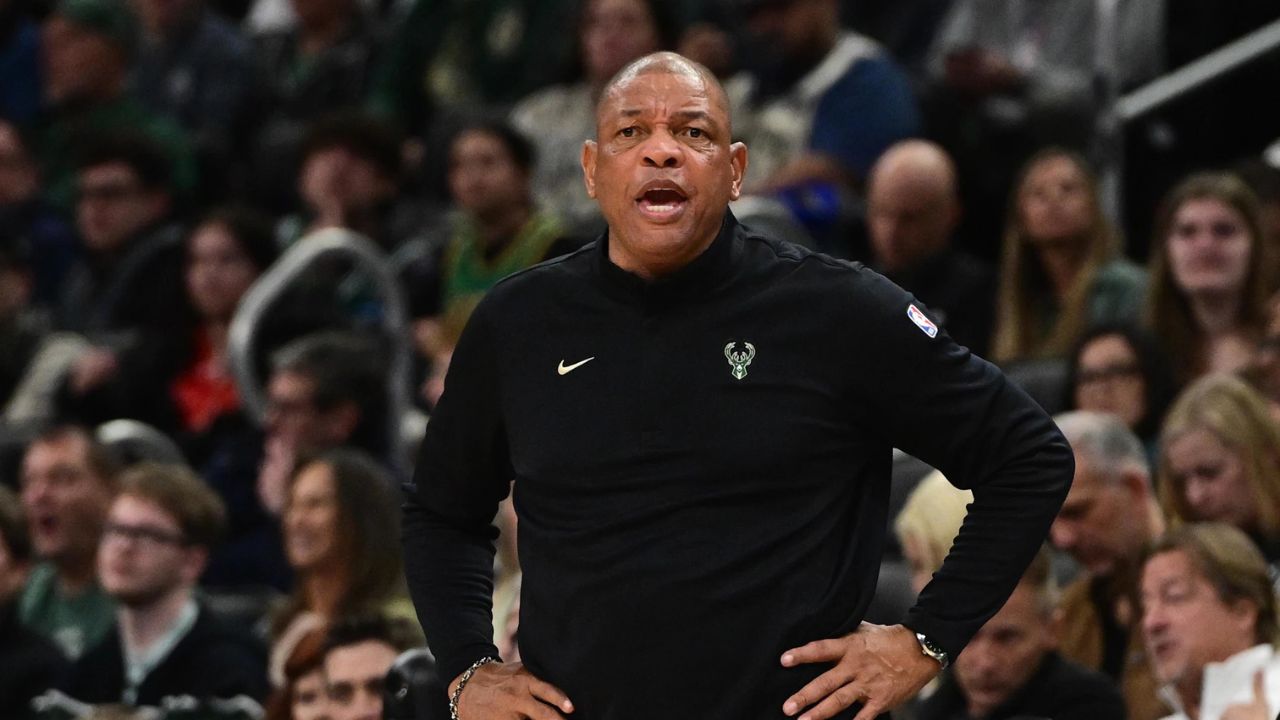
Flopping has become one of the most debated topics in modern basketball, and former Milwaukee Bucks head coach Doc Rivers believes it is no longer something players accidentally do during games. According to Rivers, many NBA players actively work on it.
Speaking on Bill Simmons’ podcast, Rivers addressed the growing conversation around flopping and pointed to comments recently made by San Antonio Spurs guard Stephon Castle when asked about Oklahoma City Thunder superstar Shai Gilgeous-Alexander.
“Well, everyone flops around now. It’s just so funny. I think it was Castle. They asked him, and they were trying to get him to say something about Shai. He looked at the guy and said, ‘Everyone flops.’ That’s just the game now. It’s not taught. Players work on it, but it’s not really taught. Players just work on it. I thought Brunson flopped and took charges every bit as much as Wemby did. But that’s just part of the game.”
Rivers’ comments highlight a growing reality around today’s NBA. While coaches may not explicitly teach players how to exaggerate contact, many around the league believe players have learned how valuable drawing fouls can be in high-pressure situations.
Few players have found themselves at the center of that conversation more than Gilgeous-Alexander.
The two-time MVP has frequently faced criticism from fans and media members who believe he benefits from foul calls. Patrick Bet-David recently blamed LeBron James for helping normalize some of the foul-drawing tactics seen around the league today. Meanwhile, veteran journalist Michael Wilbon even warned that young basketball players could start copying flopping habits if Gilgeous-Alexander continues winning championships.
The criticism has become so widespread that Underdog Fantasy recently created a board game poking fun at flopping allegations involving Gilgeous-Alexander. The Thunder superstar reportedly responded by issuing a cease-and-desist letter.
Not everyone agrees with the criticism, though. Indiana Pacers star Tyrese Haliburton recently defended Gilgeous-Alexander, calling many of the flopping accusations overblown. Ironically, Haliburton has also acknowledged that selling contact has become a major part of modern basketball, previously stating that foul-drawing techniques have become almost fundamental to how players are developed today.
Others have been much harsher. Eddie Johnson accused the Thunder of taking flopping to another level and even joked that Oklahoma City must have hired an acting coach. Boston Celtics star Jaylen Brown has also publicly criticized players for foul baiting in the past, particularly when discussing Joel Embiid.
What makes Rivers’ comments noteworthy is that he did not single out one player. Instead, he suggested that flopping has become universal across the league.
His example from the NBA Finals reflected that viewpoint. Rivers specifically mentioned Jalen Brunson and Victor Wembanyama, arguing both players were using similar tactics to gain advantages during games.
While flopping remains controversial among NBA fans, the practice is hardly unique to basketball. Nearly every major sport deals with some version of it.
The NFL has its fair share of players exaggerating contact in hopes of drawing penalties from officials. Soccer has dealt with the issue for decades, where the act is commonly known as ‘diving.’ Players who are judged to have simulated contact can receive yellow cards for unsporting behavior, and governing bodies have repeatedly tried to crack down on it.
The difference is that basketball places players in constant one-on-one situations where drawing contact can directly lead to free throws and foul trouble. As long as those advantages exist, players will continue looking for ways to sell contact. Whether fans like it or not, Doc Rivers believes flopping has become another skill many players actively work on, much like footwork, shooting, or ball handling.
That does not mean coaches are running flopping drills in practice. But according to Rivers, players understand the value of gaining every possible edge, and many have clearly spent time learning how to do it effectively.