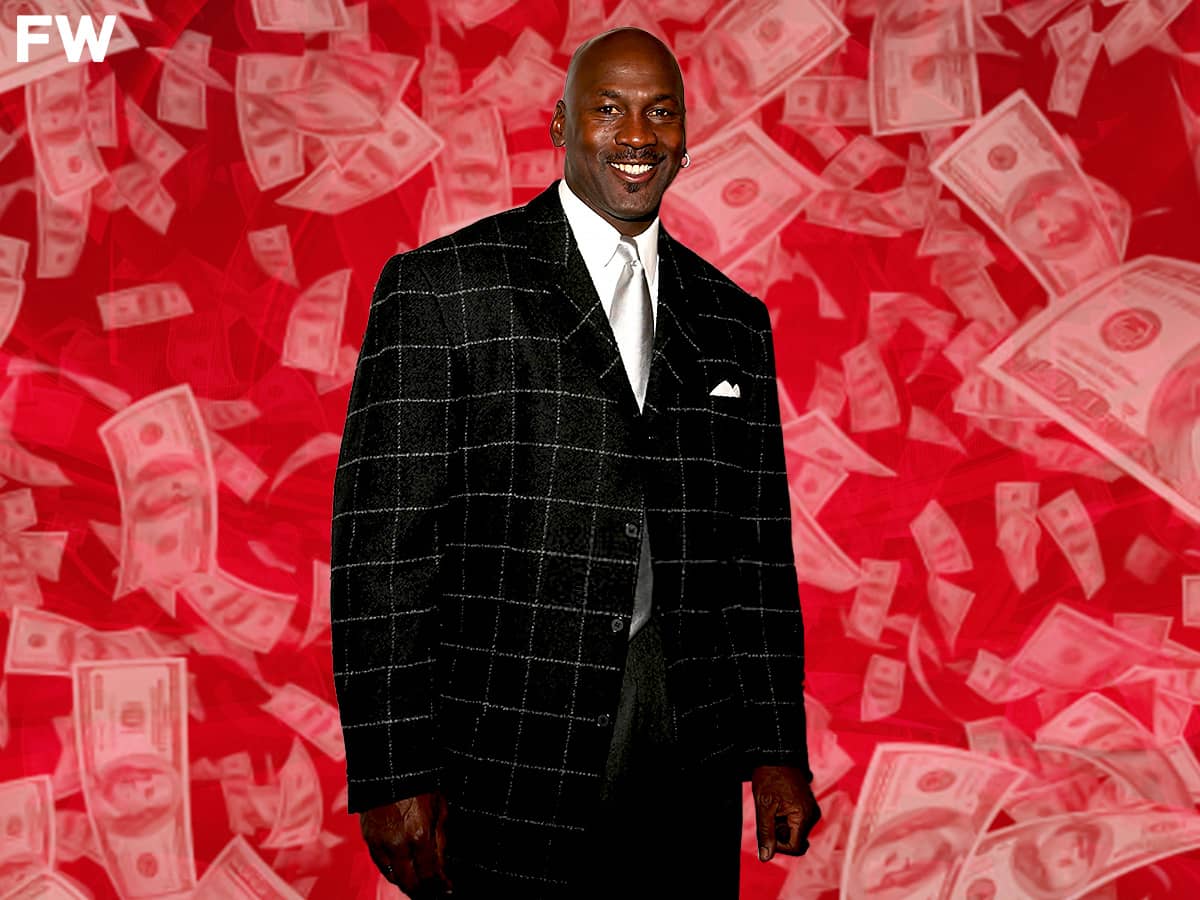
Michael Jordan earned $94 million during his 15 NBA seasons. That alone would qualify as generational wealth. Instead, he turned that foundation into a financial machine now worth an estimated $3.8 billion, according to Forbes, and structured it in a way that generates roughly $34,250 per hour whether he works or not.
The transformation did not happen by accident. It happened through leverage.
The Air Jordan Deal That Changed Nike
When Nike approached Jordan in 1984, the offer reportedly included $2.5 million in guaranteed money over five years, a significant sum for a rookie. What changed everything was not the base salary. It was the royalty clause.
Jordan negotiated a 5% royalty on every pair of Air Jordans sold. That single clause created recurring income tied to global sales rather than fixed payments. Nike initially projected $3 million in sales over four years. Instead, Air Jordan generated $126 million in its first year.
Fast forward to 2025, and Jordan Brand produces roughly $6.6 billion in annual revenue for Nike. His royalty checks are estimated at approximately $260 million to $330 million per year. In other words, he now earns more from sneakers in one year than he made during his entire NBA career.
That is the power of equity. His NBA salary peaked at $33.1 million in 1997 to 1998, still one of the largest single-season contracts in league history. Today, Nike pays him nearly ten times that amount annually.
Turning The Jumpman Logo Into A Global Symbol
Jordan did not allow the Jumpman logo to remain on a basketball product. He turned it into a global status symbol.
Jordan Brand expanded into apparel, lifestyle footwear, collaborations with designers, and partnerships with elite athletes across multiple sports. The brand now signs NFL players, MLB stars, and college programs, extending its influence far beyond the hardwood.
The strategy was disciplined as Jordan did not endorse everything. He built long-term partnerships with brands like Gatorade, Hanes, and McDonald’s, generating an estimated $2.4 billion in pre-tax endorsement earnings over his lifetime. Every deal reinforced his image as elite, competitive, and aspirational.
Instead of chasing volume, he protected scarcity and prestige. That brand discipline allowed his name to compound in value long after retirement.
The Charlotte Hornets Sale
In 2010, Jordan purchased a majority stake in the Charlotte Hornets, then known as the Bobcats, for approximately $275 million.
13 years later, he sold his majority stake in 2023 for $3 billion.
That transaction alone represented a return of more than ten times his original investment. It also made him the first former professional athlete to appear on Forbes’ list of the 400 richest Americans. He retained a minority stake and continues as co-owner of 23XI Racing, a NASCAR team launched in 2020 that has seen revenue climb from roughly $28 million in 2021 to more than $60 million in 2024.
Jordan did not simply maximize his playing career. He built assets that scale independently of his time. The NBA paid him $94 million. Nike and ownership turned that into billions. Today, the machine runs whether he is on a yacht in Europe, on vacation with his family, or on the golf course.
That is how you convert athletic greatness into financial permanence.