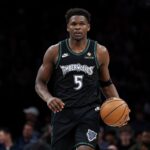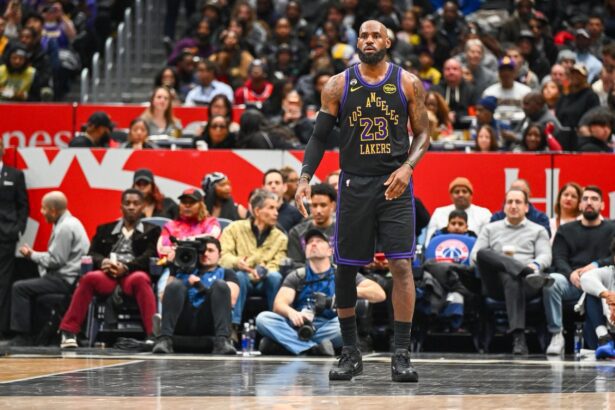
The Nets won only 20 games during the 2025-26 season, but their rebuild remains in a good spot. They own the No. 6 pick in the 2026 NBA Draft, several young players, and four valuable unprotected first-round picks acquired through previous trades.
That collection gives the Nets enough assets to make an aggressive offer for the No. 1 pick.
The Wizards won the draft lottery after finishing with an NBA-worst 17-65 record. AJ Dybantsa is widely expected to become the first selection after leading Division I with 25.5 points per game at BYU. Jake Fischer has still reported that the Wizards are open to discussing a trade down.
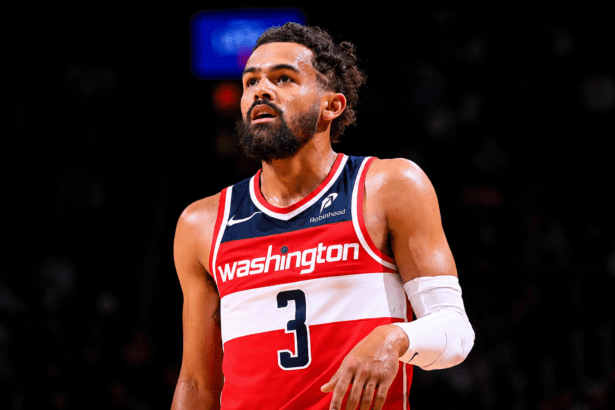
The Wizards won’t move the pick without a major return. Dybantsa has the physical tools and scoring production of a possible franchise player. Still, their current situation is unusual. The roster already includes Trae Young, Anthony Davis, Alex Sarr, Kyshawn George, and Tre Johnson. The Wizards could prefer adding several assets instead of placing their entire future on one prospect.
The Nets should use that uncertainty.
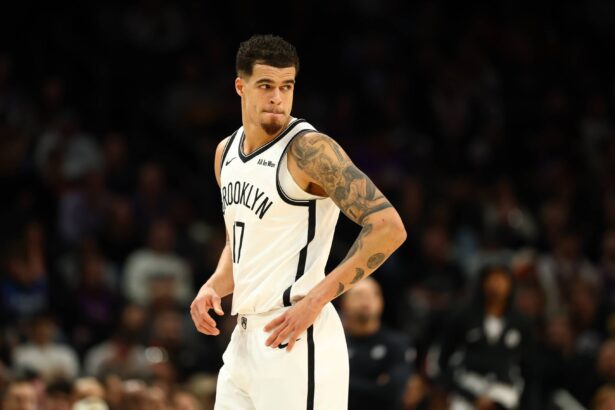
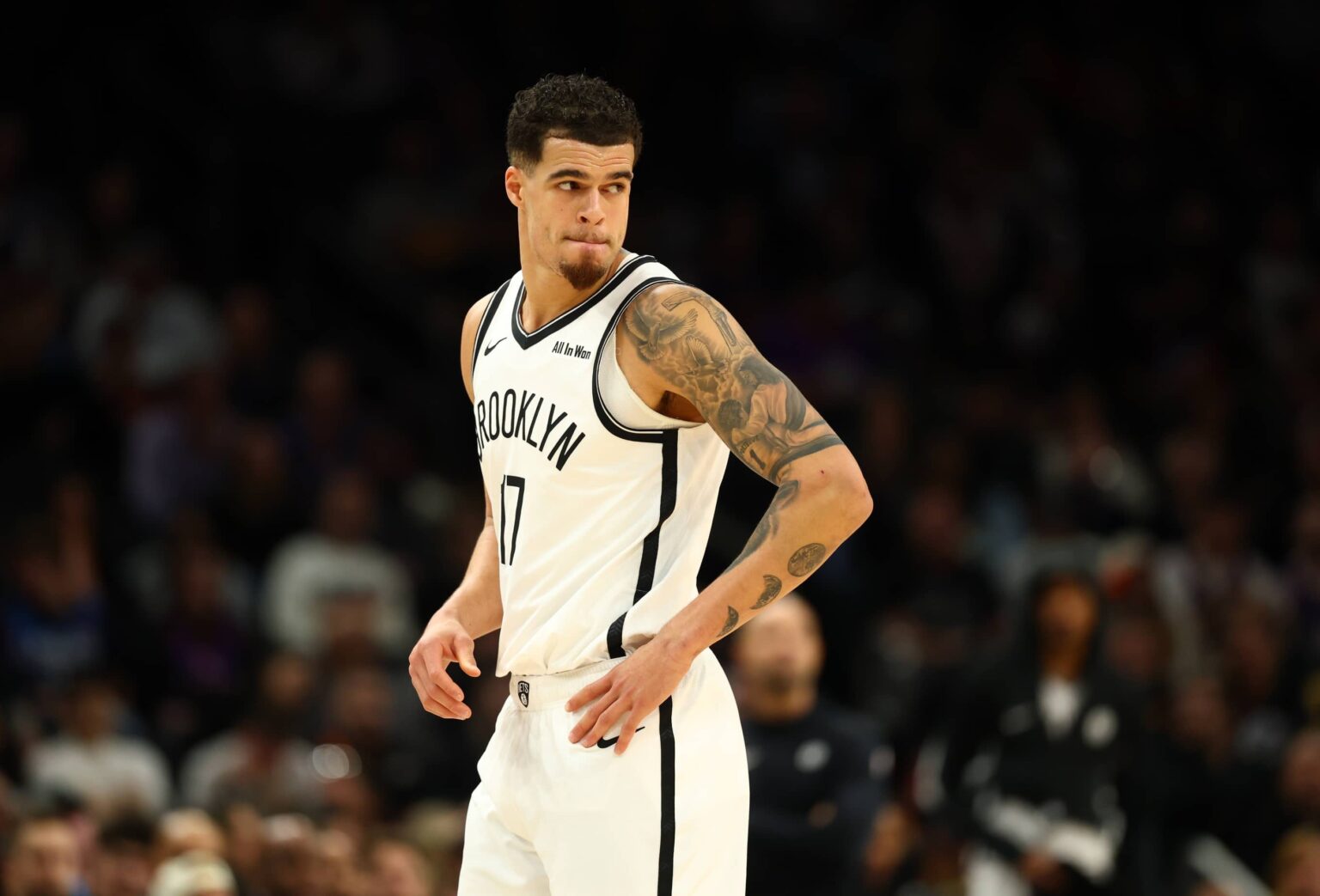
Michael Porter Jr. gave them 24.2 points per game, but he is entering the final year of his contract. Keeping him without extending him creates another short-term season around a player who doesn’t fit the younger timeline. Trading Porter after acquiring Dybantsa could allow the Nets to add a young backcourt scorer and build a more complete core.
Two aggressive moves could give the Nets a starting group featuring Egor Demin, Jalen Green, Dybantsa, Noah Clowney, and Nic Claxton.
The Trade To Acquire The No. 1 Pick
Brooklyn Nets Receive: No. 1 pick 2026 NBA Draft
Washington Wizards Receive: No. 6 pick 2026 NBA Draft, Nolan Traore, 2029 first-round pick (Knicks), 2031 first-round pick (Knicks)
Trading from No. 6 to No. 1 in a strong draft class will require more than one additional first-round pick.
The Nets would send two unprotected Knicks picks and Nolan Traore, who was selected No. 19 in the 2025 draft. That gives the Wizards four separate assets for moving down five positions.
The 2029 and 2031 picks carry significant upside. The Knicks are currently competing for a championship, but projecting their position three and five years from now is difficult. Their roster is expensive, several major players will be older, and unprotected picks always carry lottery potential.
Traore would give the Wizards another young guard who can develop behind Young. The 19-year-old showed some playmaking potential during his rookie season, including a 13-assist performance against the Bulls. He remains inconsistent, but his speed and passing give him value as a long-term project.
The No. 6 pick would also keep the Wizards inside the highest level of the draft. They could select another top prospect, trade the pick for a veteran, or move down again to collect more assets.
For the Nets, the price is large but reasonable.
They have spent several years collecting draft capital. Owning future picks only provides value if the front office eventually uses them to acquire a possible franchise player. Dybantsa represents the type of prospect worth making that investment.
The Nets would still keep the 2027 first-round pick from the Knicks and the 2032 first-round pick from the Nuggets. They also wouldn’t trade Demin, Clowney, Claxton, Drake Powell, Ben Saraf, or Danny Wolf.
That allows them to move up without removing every useful young player from the roster.
Why The Wizards Could Accept
The Wizards don’t need to trade the No. 1 pick. Selecting Dybantsa would be the simplest decision, and passing on his upside could become a major mistake.
Their current roster still creates a logical reason to consider offers. Young owns a $49.0 million player option for 2026-27. Davis will earn $58.5 million. The Wizards also have several recent lottery selections who need minutes and touches. This isn’t a normal rebuilding roster with unlimited time to develop one player at a time.
Trading down would give the Wizards more flexibility. At No. 6, they could target a guard such as Darius Acuff Jr. or Mikel Brown Jr. They could also package the pick with another asset for an established player capable of helping Young and Davis immediately.
The two unprotected Knicks picks would provide trade value for several years. The Wizards could keep them, move them in a star trade, or use them to replace assets lost in the deals for Young and Davis.
Dybantsa may still be too valuable to move. The Nets would need the Wizards to believe that Darryn Peterson, Cameron Boozer, or another prospect offers similar long-term upside. If the Wizards see Dybantsa as the clear best player, this package won’t be enough.
The report that they are open to trading down gives the Nets a reason to make the call.
Why AJ Dybantsa Is Worth The Price
AJ Dybantsa finished his freshman season with 25.5 points, 6.8 rebounds, and 3.7 assists per game. He shot 51.0% from the field and started all 35 games.
His 894 total points were the third-most by a freshman in Division I history. He also produced a 43-point game and became one of only two players in Big 12 history to record a 30-point triple-double.
The scoring production is only part of his value. At approximately 6-foot-10, Dybantsa has the size to score over smaller wings and the athleticism to attack slower forwards. He can create from the perimeter, reach the rim in transition, and finish through contact.
His three-point shooting remains the main offensive concern. Dybantsa shot 33.1% from three at BYU. He also needs to improve his defensive consistency and decision-making before becoming a complete NBA star.
The Nets can give him time to develop. Demin is a 6-foot-8 playmaker who recorded 10.3 points, 3.2 rebounds, and 3.3 assists during his rookie season. He doesn’t need to become the leading scorer if Dybantsa reaches his expected offensive level.
Claxton remains a useful defensive center. He finished the season with 11.7 points, 6.9 rebounds, 3.7 assists, and 1.1 blocks per game. His passing and mobility would support a younger offense without requiring many touches.
Adding Dybantsa would give the Nets the high-upside scorer currently missing from the rebuild.
Trade Michael Porter Jr. For A Young Backcourt Scorer
After acquiring Dybantsa, the Nets should move Michael Porter Jr. for a player closer to the new timeline.
Brooklyn Nets Receive: Jalen Green
Phoenix Suns Receive: Michael Porter Jr.
This proposal is based on roster fit rather than a direct report linking the two teams.
Porter was the Nets’ best player during the 2025-26 season. He posted 24.2 points, 7.1 rebounds, and 3.0 assists while shooting 46.3% from the field and 36.3% from three.
Trading that production may appear unnecessary, but Porter will earn $40.8 million in the final season of his contract. He is also eligible for an extension worth up to approximately four years and $234.0 million.
The Nets shouldn’t make that commitment during an early rebuild. Porter will turn 28 before next season, and paying him more than $50.0 million annually would reduce future flexibility.
Jalen Green is a younger and more logical target. Green produced 17.8 points per game during his first season with the Suns. His efficiency remained inconsistent, as he shot 42.2% from the field and 31.3% from three, but he also scored 35 and 36 points during the play-in tournament. He will be 24 next season and carries a $36.3 million cap hit. He also holds a $36.0 million player option for 2027-28.
The Suns have a clear reason to consider the trade. Green overlaps with Devin Booker as a scoring guard, while the roster lacks size at forward. Porter would give the Suns a 6-foot-10 shooter who can play beside Booker, Dillon Brooks, and their centers.
For the Nets, Green would become the primary backcourt scorer beside Demin. His athleticism and rim pressure would add a different element to a roster built around larger and more methodical players.
Green hasn’t developed into a consistent star, but the Nets wouldn’t need to pay a normal star-trade price. They would exchange an older player on an expiring contract for a younger scorer who still has development value.
How The New Nets Core Would Look
After completing both trades, the Nets could use this starting lineup:
Egor Demin, Jalen Green, AJ Dybantsa, Noah Clowney, and Nic Claxton.
That group would have four starters aged 24 or younger. Claxton would be the oldest player in the lineup at 27. The lineup wouldn’t be ready to compete immediately.
Green and Dybantsa would need to improve as three-point shooters. Demin must become more efficient after shooting 39.9% from the field as a rookie. Claxton and Clowney would need to improve the rebounding of a team that finished near the bottom of the league.
The talent level would still be much higher. The Nets would also keep several young rotation options, including Powell, Saraf, and Wolf. They would retain two major future first-round picks and maintain enough flexibility to make another trade later.
The Nets currently have assets, but they don’t have a clear franchise player. Moving from No. 6 to No. 1 would change that. Dybantsa isn’t guaranteed to become a superstar. Green isn’t guaranteed to improve his efficiency. Demin still needs significant development.
That risk is acceptable for a team that won only 20 games. The Nets shouldn’t continue collecting picks without making a major decision. Trading for the No. 1 selection and building around Dybantsa would give the rebuild a clear direction.
Turning Porter into Green would then create a young core capable of developing together instead of waiting through another season without a defined long-term structure.