The Los Angeles Clippers already made the kind of move that forces you to stop pretending. As reported last night, they traded James Harden to the Cleveland Cavaliers for Darius Garland and a second-round pick. That’s not a “retool around the edges” decision. That’s a franchise acknowledging it’s stuck, then choosing a different road.
Once Harden is out, the uncomfortable question isn’t just about fit. It’s about the timeline. The Clippers are 23-26 and sitting in the West’s play-in range, which is the exact zone where front offices either double down or start selling.
That’s why the Los Angeles Lakers’ “call” matters.
Sam Quinn of CBS Sports planted a framework for a massive deal, and this is the part that frames the entire concept:
“If I’m the Lakers? I 100% make a call. We’ll give you expirings and a swap if you want to go for cap space this summer, but we have to nudge Vanderbilt’s contract in here to match money.”
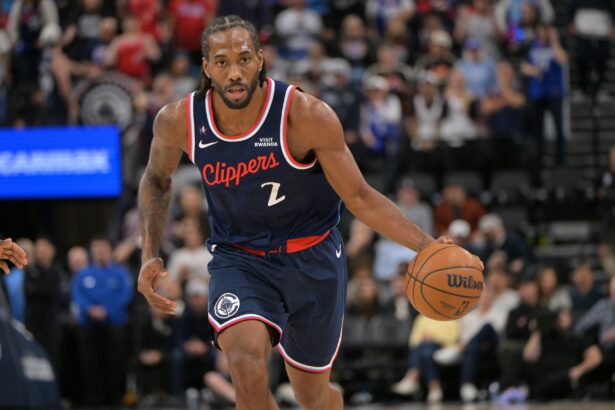
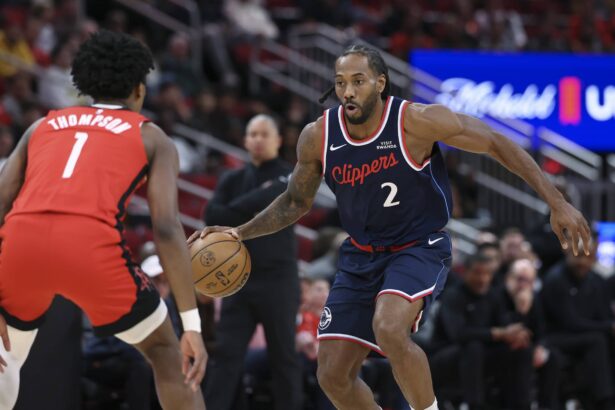
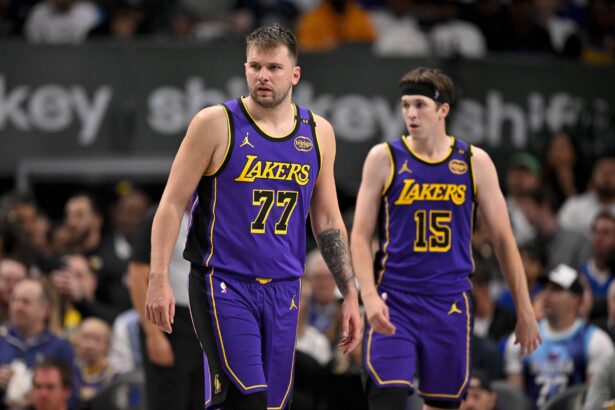
The Lakers are 30-19 and fifth in the West. They’re good enough that a real star swing is justified, and if the Clippers are truly pivoting post-Harden, Kawhi Leonard is the one asset that can turn a soft reset into a real reset.
The Trade
Los Angeles Lakers Receive: Kawhi Leonard
Los Angeles Clippers Receive: Rui Hachimura, Jarred Vanderbilt, Dalton Knecht, Gabe Vincent, Maxi Kleber, 2032 first-round pick (swap)
Brooklyn Nets Receive: Nicolas Batum, 2032 second-round pick (via Lakers), 2032 second-round pick (via Clippers)
Here’s why the money works and why the structure matters.
Leonard is at $50.0 million in 2025-26, and that’s the whole point of the deal: one max slot into five contracts that are easier to reroute. The Lakers are sending out Hachimura ($18.3 million), Vanderbilt ($11.6 million), Vincent ($11.5 million), Kleber ($11.0 million), and Knecht ($4.0 million).
Contract runway is the sales pitch for the Clippers. Hachimura, Vincent, and Kleber are all positioned as expirings for the summer, while Vanderbilt is the “nudge” money Quinn referenced and the only real medium-term commitment they’d be taking back. Knecht is the cheap upside chip on a rookie-scale deal.
The Brooklyn Nets angle is simple: take Batum’s $5.6 million and get paid in seconds.
Why The Lakers Do This
This is not subtle: the Lakers do this because Kawhi Leonard is still playing like a true top-end playoff scorer, and the roster profile screams for someone who can scale into that role without the offense turning into a math problem.
Leonard’s 2025-26 line is 27.6 points, 6.1 rebounds, and 3.6 assists with 49.7% from the field. That’s All-Star production, and it translates in May because it’s built on shot creation in tight spaces. The Lakers have wins, but the difference between “solid” and “dangerous” in the postseason is whether you can generate clean looks when the opponent knows exactly what you want to run.
Leonard changes the geometry.
If defenses load up on the Lakers’ primary creation, Leonard punishes the second defender. If teams switch, Leonard hunts the weak link. If teams play drop, Leonard gets to his pull-up game. And if teams blitz, Leonard is good enough as a decision-maker to keep the ball moving without the possession dying. The Lakers don’t need another role player who looks great in a random Tuesday game. They need a closer who can force the issue when everything gets ugly.
There’s also a structural benefit that matters more than fans admit: this deal consolidates multiple mid-tier contracts into one elite slot. The outgoing pieces are useful, but they’re also the exact kind of “rotation money” that can trap you into being good-but-not-great. Hachimura is a real forward, but he’s not a playoff ceiling raiser. Vincent and Kleber are functional, but they’re not the kind of talent that wins a series. Vanderbilt is valuable defensively, but the availability and offensive limitations turn him into a matchup-specific piece. Knecht is the hard one because cheap shooting is the league’s favorite currency, but stars still decide the top of the bracket.
Team context is why the timing makes sense. The Lakers are already in the playoff mix, and the West is too compressed to waste a season waiting for incremental improvement. Leonard is the kind of swing that turns “we can win a round” into “we can beat anyone if the matchups break right.”
The cap logic also tracks. Leonard’s $50.0 million is massive, but the Lakers are already operating like a team that spends at the top. If you’re going to carry that type of salary, you’d rather it be attached to a player who can actually bend a playoff series.
The risk is the only reason this is even thinkable: health. Leonard’s knee management is not going away, and the Lakers would be betting that the games that matter are the ones he’s available for.
Why This Is Great For The Clippers
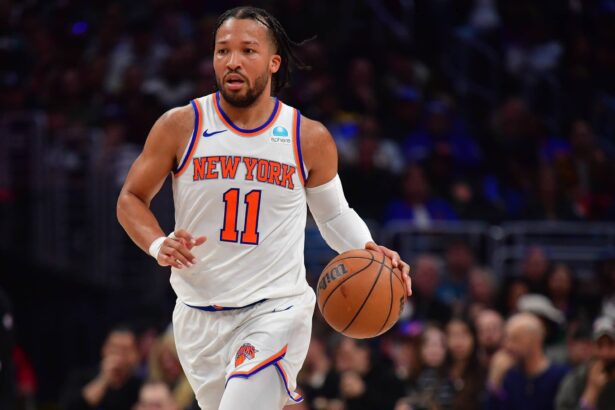
If you trade James Harden, you’ve already accepted the truth: the old pathway didn’t work. The deal is a real pivot, with Darius Garland coming back as the headliner, and that effectively puts Garland at the front of whatever comes next. That’s the lens the Clippers should be using here, especially with the team sitting at 23-26.
The basketball context matters because it explains why flexibility is even on the table. The Clippers are basically stuck in the middle with a max contract tied to a player whose availability is always in question. Once you’ve moved Harden, the smart play is turning one mega-deal into levers you can actually pull.
The Clippers’ biggest win in this deal is the expiring stack.
Rui Hachimura ($18.3 million), Gabe Vincent ($11.5 million), and Maxi Kleber ($11.0 million) are exactly the type of short-term money Sam Quinn was pointing at when he talked about making a call built around expirings and a swap. On-court, those guys are at least real NBA rotation pieces: Hachimura is giving the Lakers 11.9 points and 3.5 rebounds on 50.1% from the field, and he’s also at 41.9% from three, which is the key number if you’re trying to build around a smaller lead guard long-term.
Vincent is at 4.9 points and 1.3 assists in 19.4 minutes, but the usable stat is his 37.6% from three, because it keeps the floor spaced in Garland lineups without needing heavy usage. Kleber’s production is low (1.9 points, 1.7 rebounds), but his value is positional and contractual: a $11.0 million number you can move, and a stretch-big archetype even if his shot has been cold (23.5% from three this season).
Jarred Vanderbilt is the one contract that isn’t purely about the summer, and it’s why Quinn’s “nudge Vanderbilt’s contract” idea is realistic. Vanderbilt is at 4.9 points, 5.0 rebounds, and 1.3 assists on 46.5% shooting. For the Clippers, he’s either a defensive identity bet next to Garland or a mid-sized number you can reroute later. The key is that the $11 million slot is tradable in a way a max contract isn’t.
Then there’s Dalton Knecht, and he’s the sneaky centerpiece from a value perspective.
He’s on a rookie-scale deal, and he’s already giving 4.6 points in 11.9 minutes, hitting 0.8 threes per game. That’s not star output, but it’s exactly the type of cheap shooting upside contenders keep hunting. If Knecht pops for a month, he becomes a real chip. If he doesn’t, the contract still doesn’t hurt you.
The pick element is also the right flavor. A 2032 first-round pick (swap) isn’t the headline, but swaps matter because they keep optionality alive. And if the Clippers are serious about “cleaning the books,” this deal is coherent: they’re taking in multiple contracts that can be flipped quickly, rather than being tied to one massive slot.
One more team-level stat that matters here: the Clippers are around the league middle in three-point volume at roughly 35.7 attempts per game. If Garland is the lead guard, you’re basically committing to a spacing-and-creation ecosystem. Hachimura’s 41.9% from three and Vincent’s 37.6% are the exact kind of supporting numbers that make that ecosystem functional.
The risk is obvious: you’re trading the best player in the deal. If Garland doesn’t become a true engine after the toe injury and the cap flexibility doesn’t convert into real talent, the Clippers will look back and wonder why they cashed out a superstar for a bundle of parts.
Extra Veteran Help For The Nets
The Nets don’t need to pretend this is about winning games. They’re 13-35 and buried in the East. When you’re in that spot, the real currency is developmental infrastructure: habits, professionalism, communication, and a locker room that doesn’t fall apart when the losses stack.
That’s why Nic Batum makes sense.
He’s 37, and even in a low-usage role, he’s still a credible NBA wing who understands spacing and defensive rules. His raw production this season is modest (4.5 points, 2.7 rebounds, 0.8 assists), but the role value is the point. A rebuilding team needs veterans who can play without hijacking possessions and can teach younger guys how to survive NBA possessions. Batum has lived that life for years.
The on-court fit is easy: Batum is a plug-and-play connector who can help stabilize lineups around the Nets’ younger pieces. He doesn’t need plays called for him. He can stand in the corner, make the extra pass, and talk on defense. That matters when you’re trying to build something with young wings and bigs, because the hardest part of development isn’t “talent,” it’s learning how to execute team concepts consistently.
And the price is right. Two second-round picks for a veteran who can help hold the room together is fine business. The risk is that this doesn’t materially move the needle on the court, and that’s okay. The Nets are buying professionalism, not wins.
Who Wins The Trade?
I’m taking the Lakers as the winner because they’re the only team getting the best player in the deal, and Leonard is still producing at an elite level. In the NBA, “who got the best player” is still the simplest shortcut to judging these things, especially when the acquiring team is already in the playoff mix.
The Lakers’ upside jump is immediate. Leonard gives them a half-court scorer who doesn’t need the offense to be perfect, and that’s the exact trait that separates teams in the postseason. In tight games, when possessions get ugly and whistles change, Leonard can still create. If you’re trying to win in the West, you need multiple ways to generate offense, and Leonard gives you a completely different type of pressure than the Lakers have had.
That said, the Clippers can absolutely come out “right” too, depending on what they do next.
If the Harden trade is the first domino, and this Leonard deal is the second, the Clippers would be doing something smart: converting fragile top-end money into optionality, then using that optionality to rebuild the roster around Garland with a cleaner cap sheet. The expiring stack creates flexibility, Knecht is a real development asset, and Vanderbilt is either a defensive piece or a tradeable number. That’s a coherent plan.
The reason I still lean Lakers is that the Clippers’ side is a bet on execution. Flexibility only matters if you turn it into real players. The Lakers’ side is a bet on one thing: Leonard being healthy when the games matter. And if he is, I think the Lakers become the most dangerous version of themselves.
The Nets are fine here, too. They’re paying a small price for a veteran pro, and that’s a rational move for a team with a bottom-tier record trying to protect its developmental environment.