With the deadline approaching, contenders are weighing the same dilemma: upgrade the rotation without paying the “headline” premium that usually comes with proven playoff talent. That’s why the buy-low market matters. It’s where teams can target players whose value has dipped for reasons that don’t always reflect what they can actually provide in a postseason setting.
In most cases, the discount comes from context rather than ability. A role change, a shaky fit, a cold shooting stretch, a minor injury, or a team trending in the wrong direction can all flatten a player’s market. For contenders, that’s an opportunity, not a warning sign, especially when the player in question brings traits that translate in April: defensive versatility, secondary creation, reliable spot-up shooting, rebounding, or simply the kind of steadiness that keeps a second unit from bleeding points.
With that framework in mind, here are 10 potential buy-low targets contenders can pursue right now.
1. Saddiq Bey
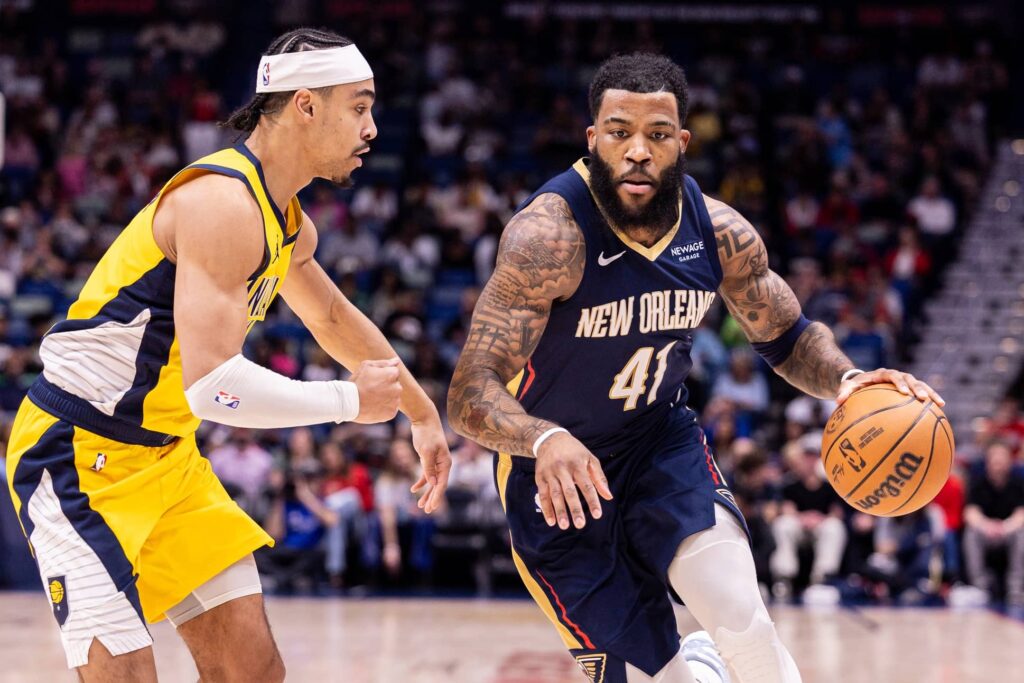
If you’re building a buy-low board for contenders, Saddiq Bey is the type of name that makes too much sense because the value proposition is clean: a 6’8 wing in his prime on a small, movable contract, playing real minutes on a team that’s sliding out of the race.
Start with the contract. Bey is making $6.1 million in 2025-26 and has $6.4 million on the books for 2026-27, part of the three-year, $19 million deal he originally signed. That number matters at the deadline because it’s easy to match without gutting a rotation, and it’s exactly the kind of salary slot contenders love when they’re trying to add a “fifth starter” archetype.
The buy-low angle is partly context. Bey missed the entire 2024-25 season recovering from a torn ACL, so a lot of people filed him away as a reclamation project. The Pelicans acquired him as part of the Jordan Poole trade last offseason, and now they’re sitting at 12-37, which naturally turns the roster into a phone-call buffet for teams looking to upgrade.
On the floor, he’s been better than the “throw-in” label. This season, he’s at 15.9 points, 5.8 rebounds, and 2.4 assists while shooting 44.5% from the field, 33.8% from three, and 82.5% from the line. The three-point number is the leverage point for a buyer, because it’s below his career 35.1% mark, and it’s not hard for a contender to sell itself on positive regression when the shot diet improves next to real creators.
The rumors part is real, too. ClutchPoints’ Brett Siegel noted teams calling about the availability of multiple Pelicans wings, with Bey specifically mentioned as someone other front offices have checked in on. And he’s had enough “see, this plays in big games” flashes to justify it, including a season-high 36-point eruption against the Grizzlies.
If I’m a contender, I’m buying because he solves boring playoff problems: size on the wing, a body you can trust in switchy lineups, and just enough on-ball juice to punish closeouts. The price shouldn’t be insane relative to the player type, and that’s exactly why he belongs near the top of any buy-low list.
2. Jusuf Nurkić
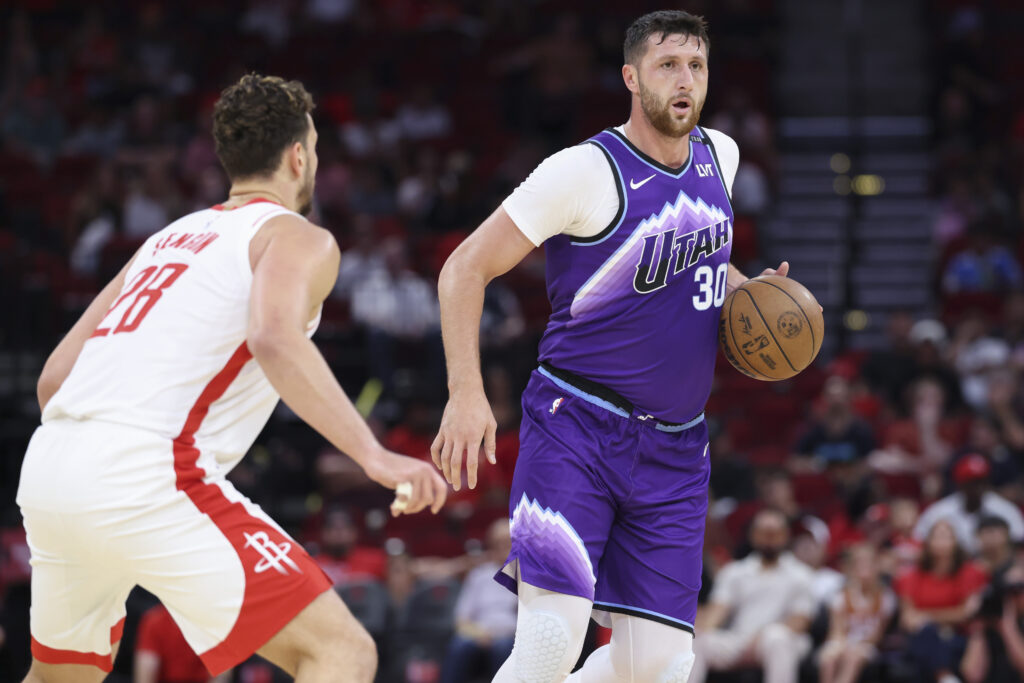
This is the funniest buy-low case on the board because it’s built on a contradiction. Jusuf Nurkić is a big, bruising traditional center on a non-traditional center market, and yet he’s quietly having one of the most useful “contender role” seasons of his career, including a triple-double stretch that straight-up broke Jazz franchise history.
First, the money. Nurkić is on a $19.3 million salary in 2025-26. That number is the entire reason he’s a buy-low instead of an obvious trade chip. It’s not that teams don’t want a rebounder who can pass, it’s that matching nearly $19.4 million at the deadline usually forces a contender to send out a real rotation player, and that’s where deals get sticky.
Now the basketball, because this is where it gets juicy. On the season, Nurkić is averaging 10.4 points, 10.0 rebounds, and 4.3 assists. That assist number is the hook, it’s the “playmaking five” value that playoff teams love when the opponent is trapping your guards. And he’s been trending up: over his last 15 games, he’s at 15.4 points, 11.5 rebounds, and 6.6 assists.
Then came the ridiculous part: the triple-doubles. Nurkić just became the first player in Jazz history to post three straight triple-doubles, including 16 points, 18 rebounds, 10 assists vs the Timberwolves, 14 assists in the next one, and a 17-point, 12-assist, 10-rebound triple-double vs the Heat. That’s not a fluke stat-padding guard, that’s a center bending the game with short-roll reads and elbow facilitation.
The team context is what makes him “available” in the first place. The Jazz are sitting near the bottom of the West at 15-32, which naturally turns veterans into incoming-call magnets. There’s already been deadline buzz around the Jazz, and Nurkić’s expiring deal could end up flipped or in the buyout market.
If you’re a contender, the pitch is simple: you’re not buying him to be flashy, you’re buying him to win 12-minute playoff segments. Rebounds that finish stops, screens that actually hit, and passing that keeps your offense alive when the first option gets blown up. And after those triple-doubles, the “he can’t do anything but post up” label looks outdated.
3. Malik Monk
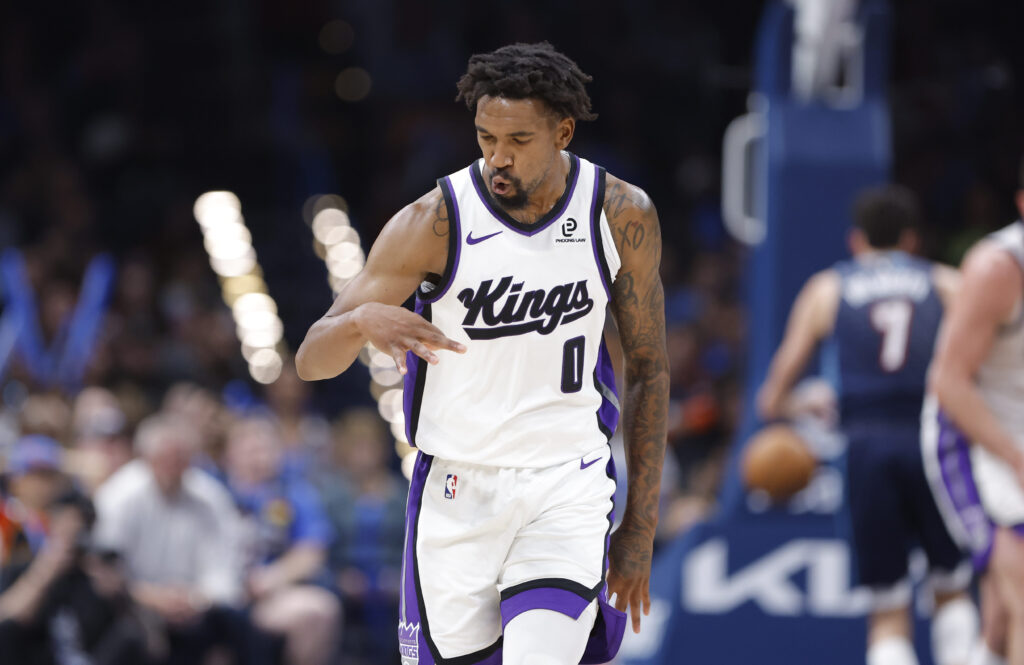
Malik Monk is the kind of buy-low target contenders love because the “why now” is obvious. His production is down, his role has been yo-yoing, and the Kings are sliding hard enough that front offices are going to treat their roster like a shopping aisle.
Start with the contract, because that’s half the story. Monk is making $18.8 million in 2025-26. That’s not bargain-bin money, but it’s also not “impossible to match” for a contender that has one mid-sized contract to move. It’s the exact salary slot teams use to add a real rotation guard without touching their top two or three guys.
Now the on-court case. This season, Monk is at 12.5 points, 2.0 rebounds, 2.5 assists, and he’s shooting 42.7% from three on solid volume. The raw scoring looks modest, which is exactly why he’s on this list, but the utility is there: he’s still a pull-up threat, he still bends defenses, and he still has the “microwave” gene that matters in playoff games when the offense gets sticky and somebody needs to create something out of nothing.
The value dip is mostly context. The Kings are 12-34 and spiraling, which always drags perception down and turns role players into “maybe they should move him” conversations, and Monk’s been one of the few reliable sparks in games where everything else looks unstable.
As for rumors, there’s already smoke. Monk surfaced as a realistic target for contenders that need bench scoring and secondary ball-handling, with the Bucks getting mentioned in Mike Scotto’s January reporting. And even if you don’t want to marry yourself to any single suitor, the macro read is simple: when a team is this far down the standings, almost every veteran guard becomes “available at the right price.”
If I’m a contender, the pitch is clean: Monk doesn’t need to start, he needs to win you two or three playoff shifts a night. Put him next to real structure and real spacing, let him hunt mismatches against second units, and you’re buying something that the box score doesn’t fully capture, which is pressure. The defense has to respect him, and that changes possessions. At the right cost, that’s the exact kind of buy-low that flips a series.
4. Daniel Gafford
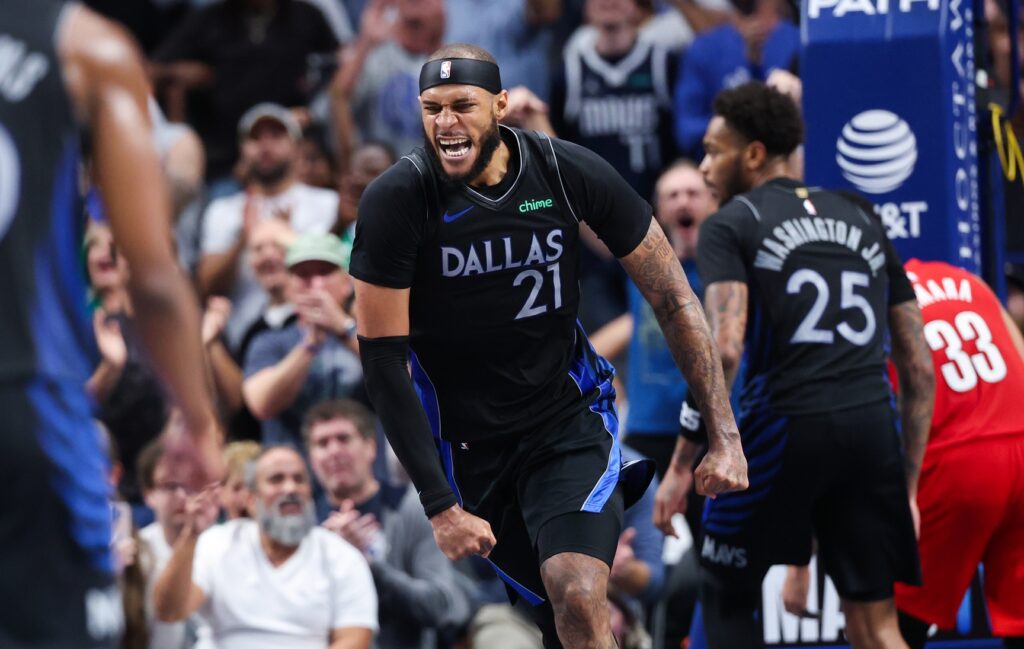
Daniel Gafford is a buy-low contender target for a different reason: his value is being flattened by role, not by ability. He’s still one of the league’s cleanest rim finishers and a real paint deterrent, but his usage and minutes can swing wildly depending on matchup and lineup decisions. That makes him easier to acquire than his “playoff utility” would normally allow.
Contract first. Gafford is making $14.4 million in 2025-26. That’s a very tradable number for contenders, especially compared to the traditional center market where teams often get stuck paying more for less impact. He’s also not just some rental. In June 2025, Gafford signed a three-year extension in the $54 million to $60 million range, which signals the Mavericks viewed him as a real piece at the time.
Now the stats and the “why buy-low.” This season, he’s averaging 7.6 points, 6.3 rebounds, and 1.3 blocks in 20.6 minutes, shooting 62.4% from the field. That looks quiet, but the efficiency is still loud. Last season, he was at 12.3 points, 6.8 rebounds, 1.8 blocks, on a ridiculous 70.2% from the field, which is basically elite finisher territory. So the bet you’re making is that the lower counting stats are more about opportunity than decline.
The rumor piece is legit, too. Marc Stein reporting has been quoted in multiple outlets, saying Gafford has drawn trade interest, with teams like the Celtics, Hawks, and Pacers checking in. That’s exactly the profile of buyer: contenders (or near-contenders) that want rim protection, vertical spacing, and a center who can play 18–24 minutes without needing touches.
And here’s the playoff translation: Gafford doesn’t have to be “your center,” he has to be “a center you trust.” He rebounds, blocks shots, finishes lobs, and doesn’t need the ball. In a postseason where teams hunt weak links, that matters. If the Mavericks are open to listening, a contender should pounce, because this is the type of big man who can swing a series without ever making headlines.
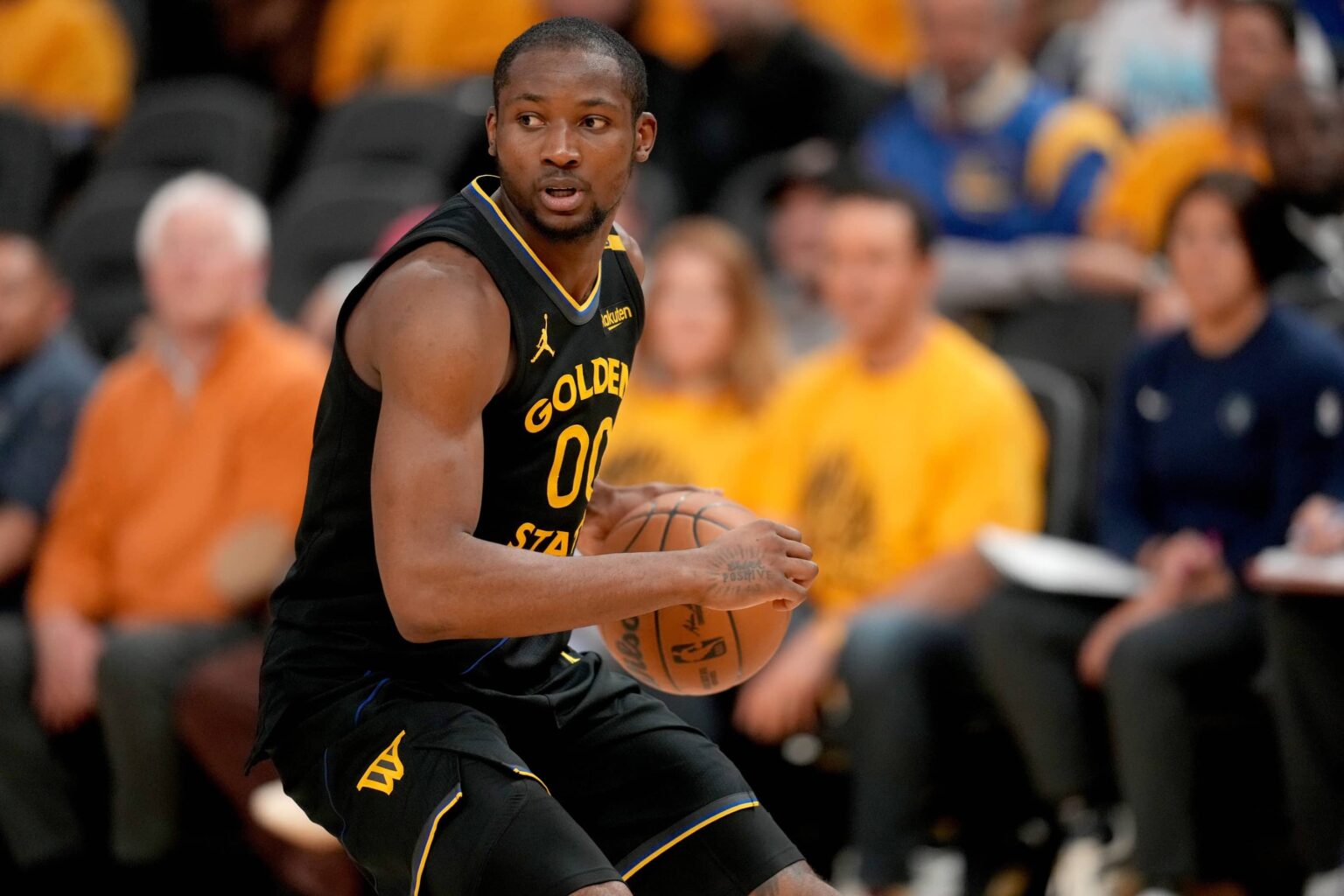
5. Jonathan Kuminga
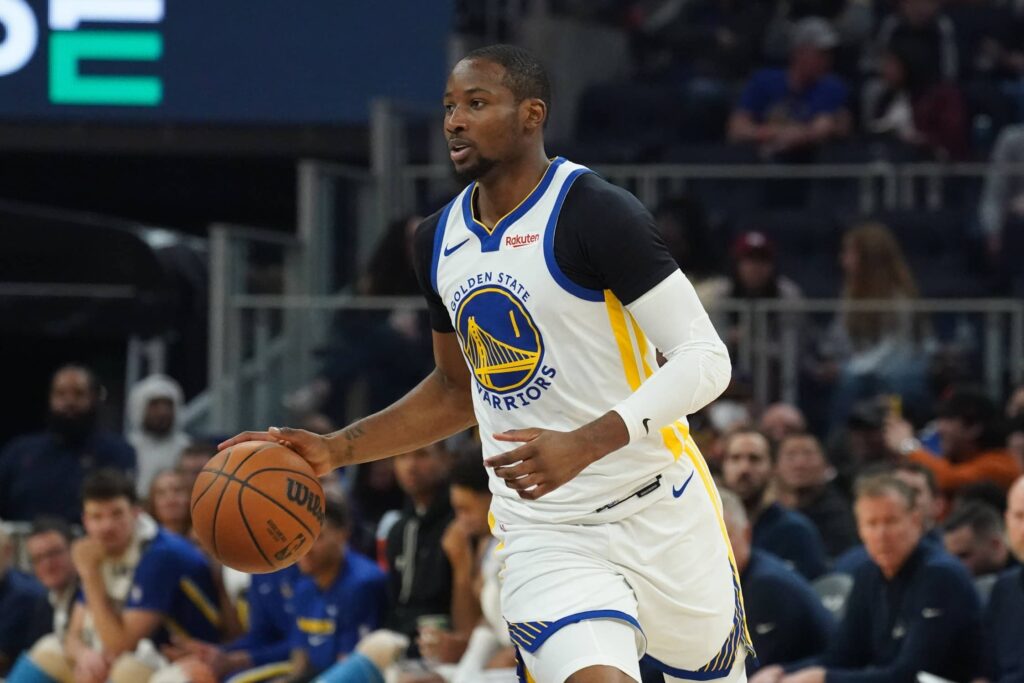
Jonathan Kuminga is a classic buy-low in the messiest way possible: the talent is obvious, the situation is ugly, and the deadline clock is making everyone pick a side.
The contract is the whole leverage point. Kuminga signed a two-year deal worth up to $48.5 million, with a team option in the second year that was built to keep flexibility for the Warriors or any team that trades for him. He’s at $22.5 million for 2025-26, which is big enough to require real matching, but not so big that it kills every contender’s math.
The “why buy-low right now” part is straightforward: he asked out, he got benched for a long stretch, and then he got dinged up again. The SF Chronicle reported his trade request is still active, and that he’d been out of the rotation for 16 straight games before coming back only after Jimmy Butler’s season-ending ACL injury forced the Warriors to find athletic juice somewhere.
Add the recent MRI showing a bone bruise in his left knee, and you’ve got a player whose value is being dragged by availability and optics more than pure ability.
Production-wise, he’s sitting at 12.1 points, 5.9 rebounds, 2.5 assists on 45.4% from the field and 32.1% from three in 20 games. Those numbers don’t scream “future star,” but the minutes do tell the story, 23.8 per night, and that’s why a smart team would pounce. You’re betting on role expansion. You’re betting that a contender can give him a stable job, simplify the reads, and turn him into a downhill weapon who guards multiple spots.
The rumor side is real, too. The SF Chronicle has kept him at the center of deadline chatter, and noted teams like the Kings, Lakers, Mavericks, and Bulls have been connected in various ways.
The Warriors are 26-22, which is exactly the type of record where they can talk themselves into both directions at once, win-now but also not fully sure what the supporting cast should be. That’s why Kuminga is attainable in a way most 23-year-old wings aren’t. If a contender can stomach the noise, this is one of the few buy-low swings that can actually change a playoff series.
6. Jeremy Sochan
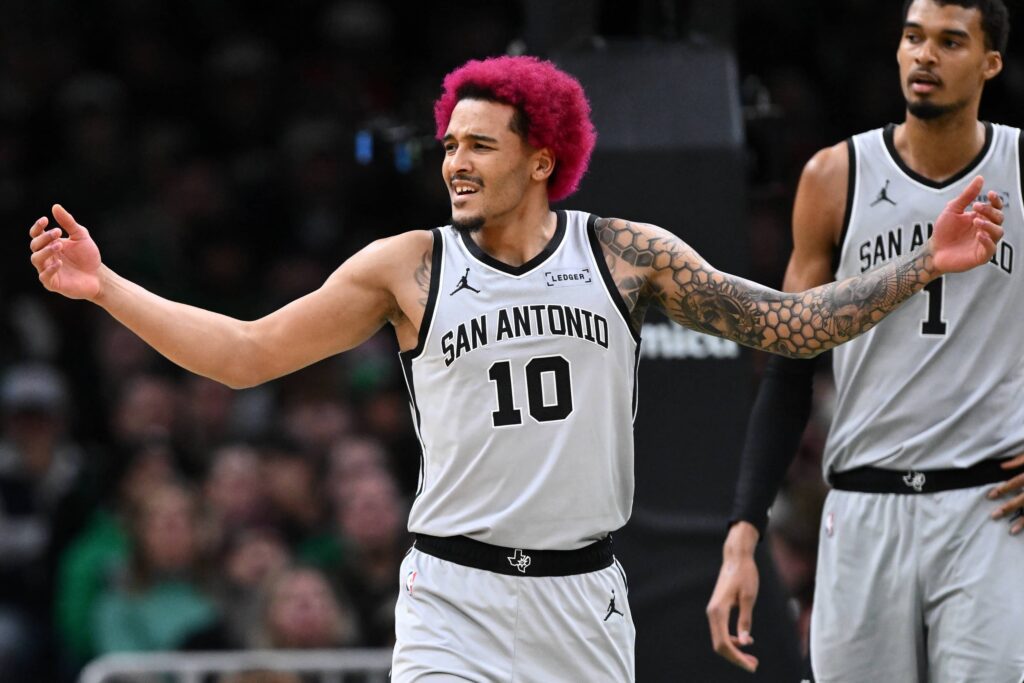
Jeremy Sochan being a buy-low target is wild on its face because the Spurs are good. They’re 31-15 and sitting near the top of the West. But that’s exactly what makes it interesting: when a top team quietly decides a young rotation guy doesn’t fit the current push, the market can open out of nowhere.
And it sounds like it has. Marc Stein reporting, aggregated widely today, says the Spurs have given Sochan permission to seek a trade after he fell out of the rotation. That’s not normal for a 22-year-old former top-10 pick on a contender. It’s basically the Spurs admitting that their current formula, especially after going full win-now around Victor Wembanyama and De’Aaron Fox, doesn’t have a clean Sochan lane every night.
The stats show the value dip. This season, he’s at 4.2 points, 2.7 rebounds, 1.0 assists, shooting 48.0% from the field. Those are “end of bench” numbers, which is exactly why a buyer can start low. But last season, he was a real contributor, 8.7 points and 4.6 rebounds in 25.3 minutes, and he hit 30.8% from three on 1.7 attempts per game. That’s not a shooter, but it’s enough that defenses can’t fully ignore him if you place him correctly.
Contract-wise, he’s easy to work with. He sits at $7.0 million for 2025-26, which is the dream salary for contenders because you can match it with one mid-level type contract and a small add-on.
So what’s the buy-low pitch? He’s a playoff-style forward who can switch, hit, rebound, and do connective stuff without needing touches. He’s the kind of player who looks “meh” on a box score and then suddenly becomes crucial when a series turns into a street fight.
If the Spurs are actually letting him explore options, this is the time to jump. Young wings with size, real defensive versatility, and a cheap number almost never hit the market unless the team is forcing the issue.
7. Jared McCain
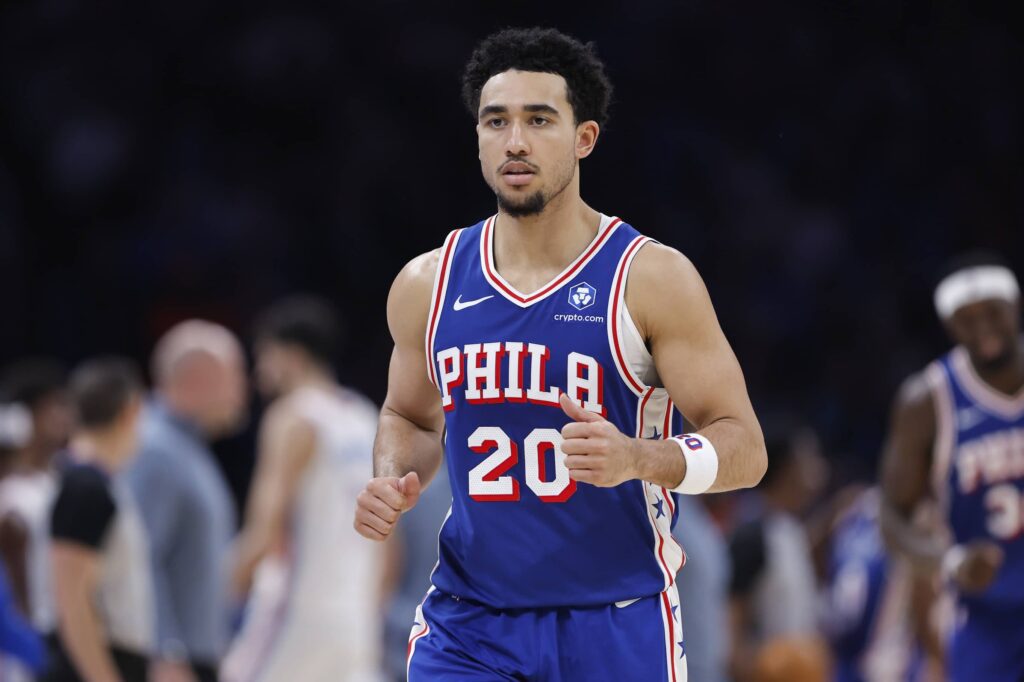
Jared McCain is buy-low for a very specific contender logic: he’s good, he’s cheap, he’s squeezed, and the 76ers are in win-now mode.
The split between last year and this year is the entire story. As a rookie in 2024-25, McCain averaged 15.3 points, 2.4 rebounds, 2.6 assists, and shot 46.0% from the field and 38.3% from three in 23 games. This season, his numbers have dropped to 6.8 points, 2.1 rebounds, and 1.6 assists on 37.5% shooting. That’s a brutal swing, and it’s exactly how “buy-low” windows happen with young guards.
The context matters. The 76ers are 25-21, and games like the 139-122 win over the Bucks show what their rotation is trying to be: heavy star usage with the young guys fighting for scraps. McCain still pops when he gets air. In that Bucks game, he had 17 points and went 5-of-6 from three, a reminder that the shooting and confidence are still in there.
Contract-wise, he’s the definition of a controllable asset at $4.2 million this season. That’s cheap enough that almost any contender can match it, and it’s also why the 76ers can treat him like a trade chip if they decide to chase one more reliable playoff piece.
And there’s smoke. Forbes’ Evan Sidery reported in January that several teams have checked on McCain’s availability ahead of the February 5 deadline, with his role reduced as the rotation shifted.
The buy-low bet is simple: the shot is real, the rookie year wasn’t a mirage, and the “down year” is more about role compression than skill evaporation. If a contender can offer him a defined bench job, 18 minutes with green light spacing, he can be a playoff swing shooter sooner than people want to admit.
If the 76ers start prioritizing winning over developmental minutes, McCain becomes exactly the kind of underpriced talent that smart contenders steal before he rebounds.
8. Collin Sexton
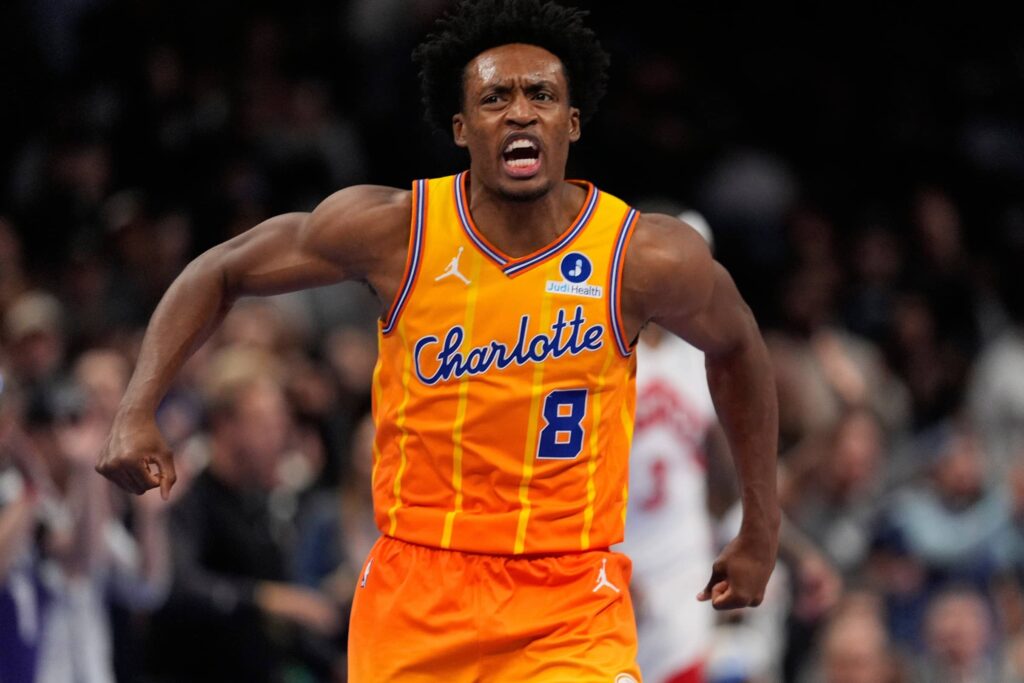
Collin Sexton is a buy-low for contenders in the “good player, awkward market” category. The scoring pop is real, the efficiency is real, but the combination of salary, team timeline, and deadline dynamics can keep his price lower than his actual playoff usefulness.
Start with the basics: Sexton is averaging 14.6 points and 3.9 assists while shooting 49.2% from the field and 38.0% from three. That’s not empty calories, that’s legitimate shot-making, especially for a guard who can create his own looks in a pinch. He’s also doing it in a smaller minutes band than people associate with him, about 22.9 minutes per game, which is exactly why I think the “value” angle is there.
The contract is the friction point. Sexton is at $18.9 million in 2025-26. That’s not outrageous, but it’s big enough that a contender has to match it with a real rotation salary, which naturally cools the bidding unless the fit is perfect.
And the fit can be perfect, depending on the team. There’s already been plenty of deadline chatter tying Sexton to teams hunting bench scoring, with CBS and SI specifically flagging the Clippers as one to watch if they’re trying to add a punchy guard without spending a premium first-round pick. If you’re a contender that routinely hits scoring droughts, Sexton is the type of guard who can flip a five-minute segment by himself.
The other piece is the Hornets’ season context. They’re 19-28, hovering in the murky middle, which is exactly where teams start listening, especially on players who can be moved cleanly. And Sexton’s name keeps getting treated like a plausible chip because his deal is the kind of “big-but-movable” salary slot teams use in February.
If I’m a contender, I’m buying because Sexton’s skill translates to playoff problems: he can attack closeouts, he can pressure the rim, and he can punish second units that get lazy. The market might treat him like a luxury. In a tight series, he’s often the difference between surviving non-starter minutes and getting buried.
9. Jordan Hawkins
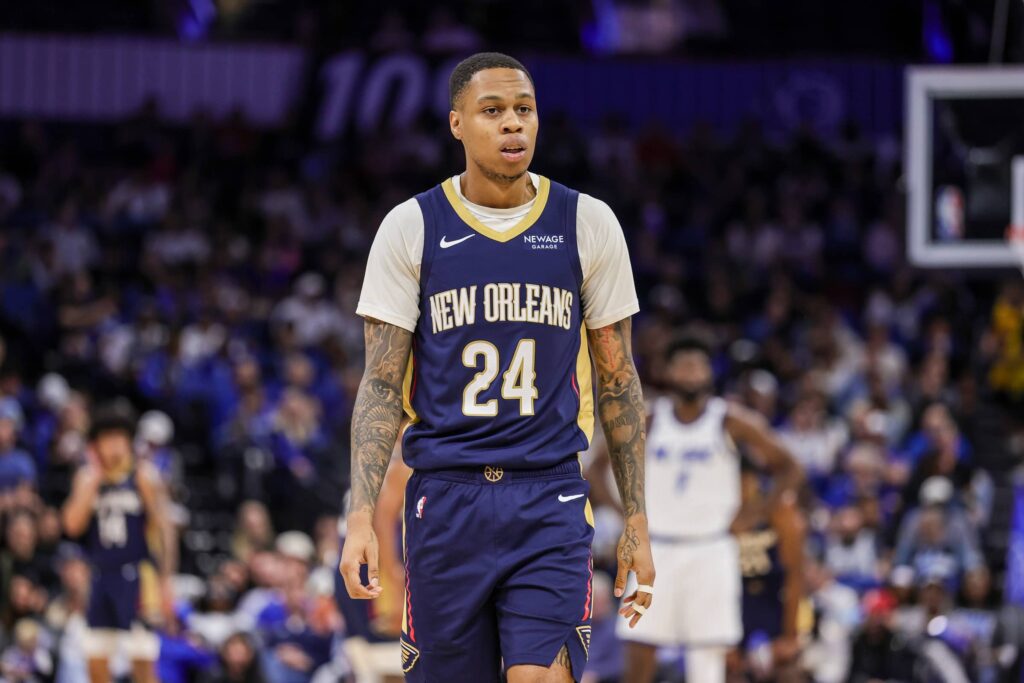
Hawkins is the purest “bet on the shot” buy-low on this list. The public value is down because his sophomore season has been rough statistically, but the archetype is still valuable, and the contract makes him an easy swing.
This season, Hawkins is at 4.3 points, 1.8 rebounds, 0.7 assists, and he’s shooting 32.0% from the field. That’s ugly on its face, and it’s exactly why the buy-low door is open. But the reason teams drafted him in the first place hasn’t changed: movement shooting gravity. As a rookie, he hit 36.6% from three and was one of the better volume rookie shooters in his class.
The contract angle matters a lot here. Hawkins is on a rookie-scale deal, and the Pelicans picked up his 2025-26 option, which puts him at $4.7 million this season. For contenders, that’s the sweet spot. You can get him without ripping up your rotation, and you’re not stuck if it doesn’t click immediately.
Now the team context: the Pelicans are 12-37, and at that point, every front office call starts with, “So… who’s available?” The Pelicans are reportedly listening to offers on young pieces, even if the franchise is cautious about a full teardown. That’s the window.
For contenders, the pitch is straightforward. Hawkins doesn’t need to be a creator. He needs to be a specialist you can hide in the right lineups, then weaponize when opponents overload stars.
If you believe his rookie shooting profile is more predictive than a down year in a messy environment, this is exactly when you try to steal him. The cost should be modest, and the upside is a rotation shooter on a cheap number.
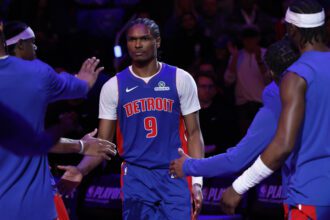
10. Jaden Ivey
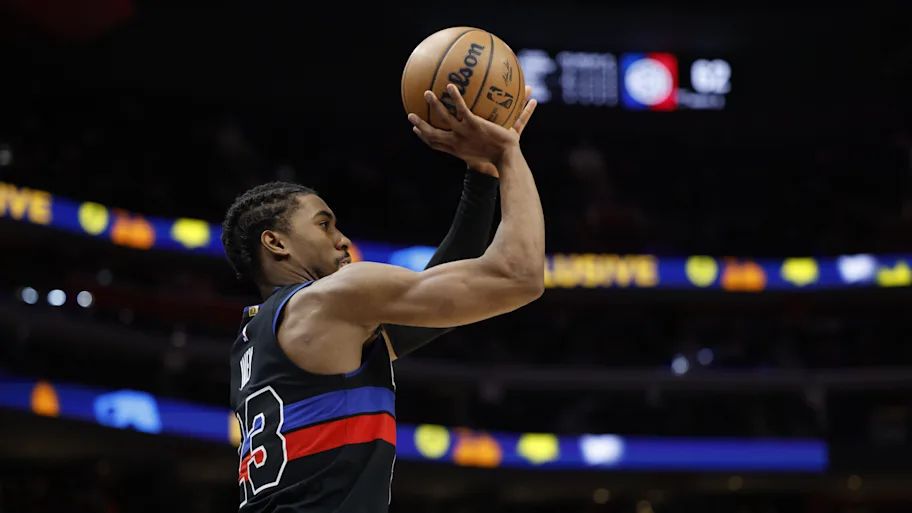
Jaden Ivey is the “talent is higher than the reputation right now” buy-low. He’s not playing like a core piece this season, he’s been in and out of the lineup, and the Pistons are winning so much that they can afford to make a cold-blooded rotation decision.
Contract first: Ivey is at $10.1 million in 2025-26. That’s an extremely tradable number for contenders.
The buy-low hook is the production. This season, he’s averaging 8.4 points, 2.1 rebounds, 1.6 assists in 17.0 minutes, shooting 46.3% from the field and 37.9% from three. Those are bench guard numbers, not “former top-five pick” numbers, and that gap is where the value play lives.
A huge part of that is the year he’s had physically. He underwent an arthroscopic knee procedure before the season and was expected to miss the start of the year, with the team planning a reevaluation timeline. So even now, you’re looking at a player whose rhythm and role have been disrupted, which naturally compresses perception.
Then there’s the team context. The Pistons are 34-11, first in the East, and they’re in the rare position where they can prioritize what wins in May over what looks fair on a prospect timeline. That’s why his name has shown up in deadline chatter, with Jake Fischer’s reporting framing Ivey as a player who could generate interest if the Pistons decide to chase a “major” addition or simply tighten the playoff rotation.
If I’m a contender, I’m calling because the tools are still loud: downhill speed, shot-creation flashes, and enough shooting this season to keep defenses honest. In the right ecosystem, with a defined job and fewer “figure it out” possessions, Ivey can look like a totally different player by April. And because his current box-score profile screams “struggling bench guy,” you might actually be able to get him without paying like you’re buying a future star.