The 2026 NBA Draft is starting to take a clear shape at the top. Most boards now treat it as a two-name race for No. 1, with Darryn Peterson and AJ Dybantsa separating from the rest of the class as the season moves toward March and the pre-draft cycle gets louder.
That is where the Kings enter the picture. Right now, they are last in the West at 12–44, which gives them potentially the best lottery position on the board: a 14.0% chance to win the No. 1 pick and a 52.1% chance to jump into the top four.
If the Kings stay in that slot, the draft conversation becomes simple and brutal. Do they take the top guard or the top wing? It is the oldest question in the draft, but it hits harder when the top of the class is this clean.
Here is a full first-round mock built off the current draft order, lottery odds, and the latest mainstream boards.
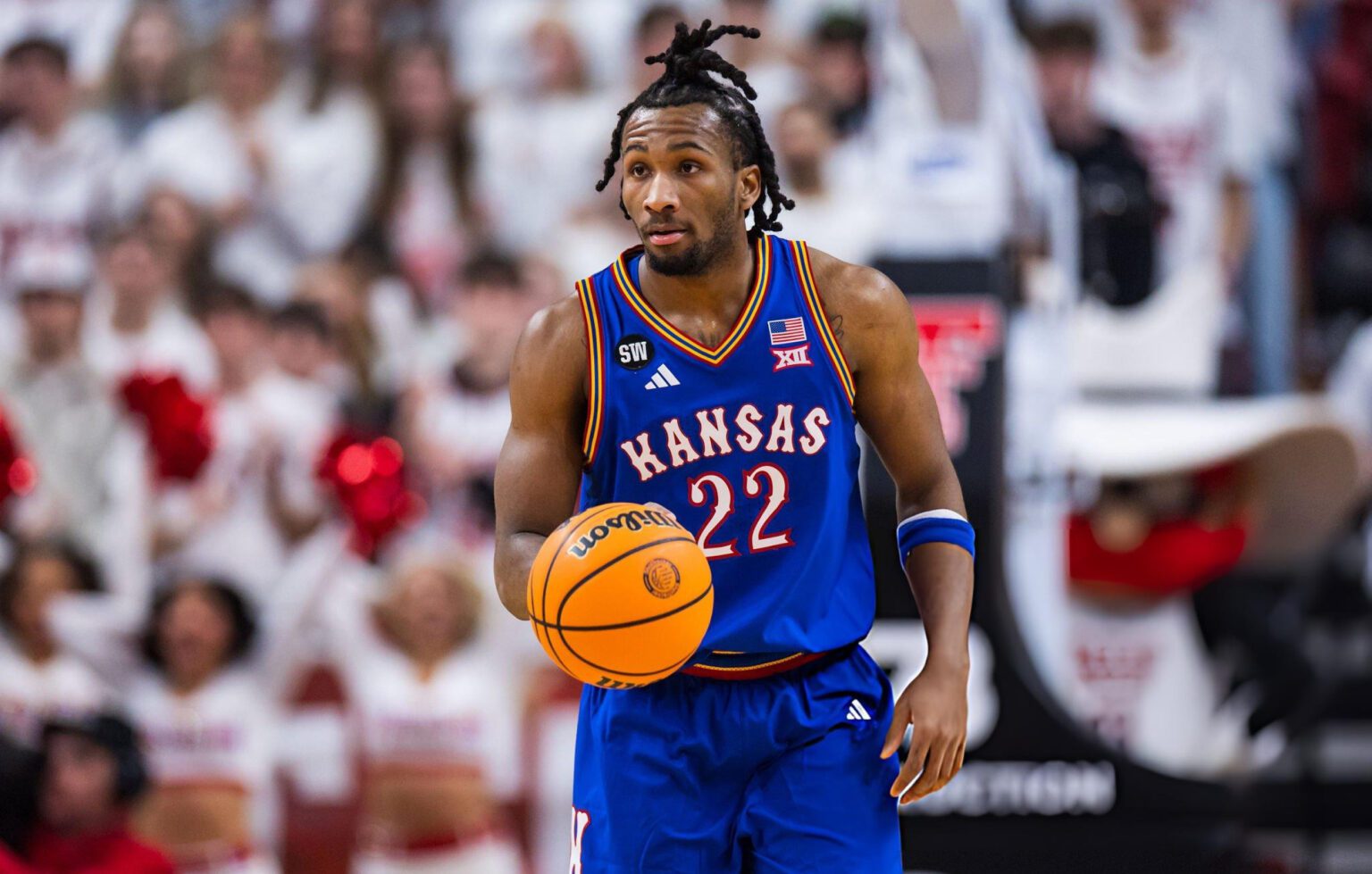
1. Sacramento Kings – Darryn Peterson, SG, Kansas
2025-26 Stats: 20.5 PPG, 4.2 RPG, 1.7 APG, 1.3 SPG, 0.5 BPG, 48.9% FG (13 Games)
The Kings are 12–44 and 15th in the West, which is why they are sitting on the pole position for the lottery right now. With that record, they also have the top set of lottery odds: 14.0% to land the No. 1 pick and 52.1% to jump into the top four. That context is not a “best fit” selection. This is a reset pick. It is the franchise choosing the player it wants to build its offense around for the next decade.
Darryn Peterson fits the cleanest top-pick mold in this class: a big guard who can score off the dribble and punish teams from deep. Even with a stop-start season, the numbers are still loud: 20.5 points on 48.9% shooting, plus real defensive activity (1.3 steals). The part NBA teams care about most is how his scoring translates. He does not need a perfect setup to get a good shot. He can create separation, get into pull-ups, and convert tough looks without the possession dying. That is the exact skill that changes what a bad team looks like, because it gives you a late-clock plan every night.
The scouting report is not “pure point guard,” and that is fine. The Kings do not need a pass-first organizer. They need a guard who can create advantages and force rotations. Peterson’s value is gravity: when he is on the floor, defenses have to treat him like a primary scorer, which opens the game for everybody else. The steal rate also hints at a defensive baseline. A young guard who competes and makes plays can survive while the roster gets rebuilt.
Now the risk. Peterson has played only 13 games, and the missed time has fueled the idea that he could stop playing to focus on the draft. That rumor has been everywhere because his season has been interrupted by health issues and absences that keep restarting the evaluation cycle.
Kansas has pushed back publicly on the framing around his absences, but from an NBA front office perspective, the conversation is still the same: medicals and long-term durability become part of the No. 1 pick decision.
If the Kings are drafting first, I still think Peterson is the swing worth taking. This class is being framed by many evaluators as Peterson versus AJ Dybantsa at the top, and the Kings’ cleanest path forward is landing the player who can run an NBA offense as the featured scorer.
2. Washington Wizards – AJ Dybantsa, SF, BYU
2025-26 Stats: 24.5 PPG, 6.3 RPG, 3.7 APG, 1.1 SPG, 0.4 BPG, 54.9% FG, 37.2% 3PT% (24 Games)
The Wizards are 14–39 and 15th in the East, which puts them right behind the Kings in the current draft order. They also have the same headline lottery odds in the No. 2 slot: 14.0% to jump to No. 1 and 52.1% to land in the top four. So if they stay here, they are drafting for the ceiling, not the polish. They need a future centerpiece, not a specialist.
AJ Dybantsa is the simplest “build around this” wing in the class. The production is already first-pick level: 24.5 points per game on 54.9% from the field, plus 3.7 assists, which matters because it shows he is not just finishing plays. And unlike a lot of college scorers, his profile is built on physical advantages that usually translate. He is 6’9”, he plays through contact, and he gets to the line. That combination is why NBA decision-makers keep him as Peterson’s direct competitor for No. 1.
The scouting pitch starts with his body and force. Dybantsa does not need the game to be pretty to be effective. He can score when spacing is messy, he can punish smaller defenders, and he can still generate offense when the possession breaks down. That matters for a rebuilding team because bad teams live in broken possessions. If your best prospect can still get you a clean look late, your offense stops being fragile.
The next layer is the playmaking. The 3.7 assists is not a small detail. It is a sign he can draw help and make reads, which is what separates “high-scoring wing” from “true offensive hub.” That’s the pathway to being a No. 1 option in the NBA.
The concerns are clean, too. The jumper is good enough to respect, but the long-term question is consistency and shot selection. ESPN’s evaluation has pointed to the jump shooting still developing and his overall game still maturing, even while the physical profile gives him a higher baseline than most prospects. Defensively, the tools are there, but the Wizards would be drafting him to become a two-way tone-setter, not just a scorer. That means engagement and discipline have to become habits.
If the Wizards are picking second and Peterson is gone, Dybantsa is not a consolation prize. He is the other prospect at the top who can credibly become a franchise wing, and that archetype is the safest superstar bet in the modern league next to Trae Young and Anthony Davis.
3. Atlanta Hawks (via Pelicans) – Cameron Boozer, PF, Duke
2025-26 Stats: 23.0 PPG, 10.0 RPG, 4.0 APG, 1.8 SPG, 0.5 BPG, 57.8% FG, 38.3% 3PT% (24 Games)
The Pelicans are sitting in the No. 3 slot at 15–41, but this pick is going to the Hawks on the draft order from the Derick Queen trade. That matters because it changes how aggressive they can be. A team that is low in the standings cannot draft a “finisher.” It has to draft someone who can become a pillar, even if the roster takes two more years to make sense.
Cameron Boozer is the cleanest “safe star” in the class after Peterson and Dybantsa. The stat line is not subtle: 23.0 points, 10.0 rebounds, 4.0 assists, and 38.3% from three as a freshman big. That blend is why he stays glued near the top of every mainstream board. He is producing like a centerpiece, not like a prospect trying to survive.
The scouting case starts with decisions. Boozer plays like an NBA forward already. He makes quick reads, he keeps the ball moving, and he does not need to force wild shots to get to his numbers. The assists matter here. A 4.0 APG big at this age usually means he sees the floor and can punish help when defenses load up.
Offensively, he gives you optionality. He can score inside, he can hit catch-and-shoot threes, and he is strong enough to finish through contact. That versatility is valuable for the Hawks because the roster will almost certainly change again. Boozer is not tied to one specific lineup type. You can build a spread attack with him as a scoring hub, or pair him with a rim runner and let Boozer be the spacer and passer.
Defensively, he is not a pure rim eraser, but he is disruptive. The 1.8 steals per game is a real indicator for a frontcourt player. It points to instincts, positioning, and hands, which are usually more stable than blocks when projecting a big to the NBA. At No. 3, a team should want a player with both a high floor and a real All-NBA pathway. Boozer fits that better than anyone left on the board.
4. Indiana Pacers – Caleb Wilson, SF/PF, North Carolina
2025-26 Stats: 19.8 PPG, 9.4 RPG, 2.7 APG, 1.5 SPG, 1.4 BPG, 57.8% FG, 25.9% 3PT% (24 Games)
The Pacers are 15–40 and currently slotted fourth. In that range, the question usually becomes: take the cleanest athlete with two-way upside, or take the polished shot-maker with a narrower ceiling. Caleb Wilson is the first option, and the production supports it.
Wilson’s season has been loud in the “does everything” way. He is at 19.8 points and 9.4 rebounds, with 1.5 steals and 1.4 blocks on 57.8% from the field. For a wing-forward, that defensive production matters. It suggests he is not just a scorer. He is affecting possessions with activity, timing, and physical tools.
Wilson plays above the rim, runs the floor, and punishes soft coverage. His free-throw volume (7.5 attempts per game) is a major signal, because it shows he is not living on jumpers. That tends to translate: NBA defenses can take away easy midrange looks, but they cannot take away strength and rim pressure as easily.
The flaw is also obvious. The three-point shot is not there yet (25.9% on low volume), which is why he is not in the No. 1 discussion. For the Pacers, that is the bet: develop the jumper to unlock a true two-way forward. If it hits, he becomes the kind of player every contender wants, the big wing who can score, defend, and play in multiple lineup styles.
There is also a short-term wrinkle: Wilson recently suffered a fracture in his left hand and is out without a firm timeline. That does not change the long-term evaluation much, but it does shift how teams handle the final stretch of the season and pre-draft workouts. If the medicals check out, the appeal is simple. At No. 4, a two-way forward who already produces like this is worth the swing.
5. Brooklyn Nets – Kingston Flemings, PG, Houston
2025-26 Stats: 16.6 PPG, 3.5 RPG, 5.4 APG, 1.8 SPG, 0.4 BPG, 50.7% FG, 36.5% 3PT% (24 Games)
The Nets are 15–38 and currently fifth, which is the zone where teams often decide they need an organizer more than they need another scoring wing. Kingston Flemings fits that. He is not just a freshman putting up numbers. His profile reads like a modern lead guard who can run structure and still score efficiently.
Start with the efficiency. Flemings is at 50.7% from the field and 36.5% from three, while also creating for others at 5.4 assists per game. Those are strong marks for a guard who actually has the ball, not a spot-up specialist hiding on the wing. His steal rate (1.8) also matters because it points to defensive involvement, not passive offense-only production.
The scouting case is pace control. Flemings plays with composure, changes speeds, and gets the ball to the right spots without wasting possessions. The turnover number is the quiet separator: 1.8 turnovers per game with 5.4 assists is clean work for a freshman guard. NBA teams care about that because it suggests he can scale into greater difficulty without the whole offense collapsing.
For the Nets specifically, this is a reset pick that still helps immediately. A young guard who can dribble, pass, and shoot gives you lineup flexibility right away next to their perimeter pieces. You can pair him with another ball-handler, or let him run the show and build the roster outward. And because he scores efficiently, he is not the kind of guard who needs 25 shots to look good.
He is not the same “No. 1 option” bet as Peterson. But at No. 5, Flemings looks like the type of lead guard who becomes a long-term starter, the kind teams stop looking for once they finally have one.
6. Utah Jazz – Keaton Wagler, SG, Illinois
2025-26 Stats: 18.5 PPG, 4.9 RPG, 4.3 APG, 46.4% FG, 43.7% 3PT (25 Games)
The Jazz are 18-38, 13th in the West, sitting in the part of the standings where the draft becomes the cleanest path to talent, and this is the type of pick that would make sense if the Jazz want perimeter creation without waiting three years for it to show up.
Keaton Wagler is already producing like a primary option. He is scoring 18.5 a night, he is creating (4.3 assists), and the shooting is real on paper: 43.7% from three on high volume.
What makes Wagler feel like a Jazz fit is the mix of skills instead of a single trait. He is 6’6” and can play as a big guard who runs offense in stretches, not just a spot-up wing. The assist number is the tell. The Jazz needs guys who can break a possession open without needing everything scripted. Wagler’s profile says he can generate decent looks when the first action dies, and he can do it while still punishing teams for going under screens.
The swing question is not “can he score.” It is what his scoring looks like against NBA length when the pull-up threes are harder, and he has to get downhill more. But for a team that needs ball-handling talent, a freshman guard with this blend of production and efficiency is a very logical target.
7. Dallas Mavericks – Mikel Brown Jr., PG, Louisville
2025-26 Stats: 17.3 PPG, 3.3 RPG, 5.1 APG, 39.3% FG, 31.7% 3PT (16 Games)
The Mavericks are 19-35, 12th in the West. Being this low changes the draft conversation. If you are picking seventh, you are not shopping for a “nice role player.” You are trying to find a real lead guard upside swing, especially when your season has been messy without a true connector for Cooper Flagg.
Mikel Brown is a classic bet on creation. He is already at 5.1 assists per game as a freshman, and the shot diet is aggressive, especially from three. The efficiency is the obvious red flag right now (39.3% from the field, 31.7% from three), but the volume and confidence matter in projection.
For this spot in the draft, the idea is simple: a young guard who can eventually run pick-and-roll, bend the defense, and create advantages without needing perfect spacing. If the Mavericks are retooling, you can sell yourself on Brown as the type who grows into a bigger role once the reads slow down and the shot selection tightens.
The risk is also simple: if the jumper stays streaky and the rim finishing does not translate, you end up with a small-margin player who needs the ball but does not score efficiently. Still, in this range, it is a reasonable gamble because the playmaking production is already there, and you can’t teach that part.
8. Memphis Grizzlies – Nate Ament, SF, Tennessee
2025-26 Stats: 17.5 PPG, 6.3 RPG, 2.6 APG, 42.8% FG, 32.7% 3PT (24 Games)
This Grizzlies team is in an awkward lane at 20-33, sitting 11th in the West. That record is bad enough to justify thinking longer-term, but not so bad that you can ignore fit. That is why Nate Ament is an interesting pick here. He reads like a wing-forward who can scale up or down depending on what the roster needs.
Ament’s baseline production is solid for a freshman: 17.5 points, 6.3 rebounds, and some connective passing at 2.6 assists. The shooting is not a selling point yet (32.7% from three), but it also isn’t a disaster, and the volume suggests he is not scared of NBA spacing responsibilities.
For the Grizzlies, the appeal is that he can become a two-way size piece on the wing, which is still the hardest archetype to find without paying top dollar in trades or free agency. If you believe his shot improves even modestly, the rest of the package becomes easier to plug into lineups, because he already rebounds and has enough feel to keep the ball moving.
The downside is that the current efficiency is not strong, and he has to prove he can score against NBA athletes without living on tough midrange attempts. But at No. 8, Memphis can justify the bet on frame, production, and a pathway to being a real wing starter if the jumper comes along.
9. Milwaukee Bucks – Labaron Philon, PG, Alabama
2025-26 Stats: 21.4 PPG, 3.6 RPG, 4.8 APG, 1.3 SPG, 0.3 BPG, 50.4% FG (22 Games)
The Bucks sit at 23–30, 12th in the East, which is the annoying middle ground: not good enough to feel secure, not bad enough to justify a full teardown. That is why the No. 9 slot screams for a creation swing, the type of pick that can actually change the nightly offense instead of just adding another rotation piece for Giannis Antetokounmpo.
Labaron Philon fits that logic. He plays like a guard who can create advantageous possessions, not just finish them. The efficiency is the separator, because 50.4% from the field with this kind of scoring load is not normal for a college guard, and the 4.8 assists hint at real table-setting instead of tunnel-vision volume.
The question is how the scoring translates when NBA length takes away space and those pull-ups get contested earlier. But at No. 9, you are buying the archetype: a guard who can get downhill, force help, and keep the possession alive when the first action dies. For a team sitting 12th, that upside is worth more than a “safe” role player.
10. Chicago Bulls – Braylon Mullins, SG, UConn
2025-26 Stats: 11.9 PPG, 3.4 RPG, 1.4 APG, 1.2 SPG, 0.6 BPG, 46.8% FG, 38.0% 3PT (18 Games)
The Bulls are 24–31, 11th in the East, living in that gray zone where you can’t only draft for “eventual upside” anymore. If you’re picking 10th, the cleanest add is a skill that translates instantly, and Braylon Mullins’ calling card is spacing with real volume.
He’s taking 6.0 threes per game and hitting 38.0%, and that combo matters more than the raw scoring. It means he’s not a hesitant shooter who needs perfect looks. He’s a movement threat who can bend a defense off screens and handoffs, and that’s the easiest way to raise an offense’s floor without changing the whole roster.
The swing is strength and self-creation. If he holds up defensively and grows into more than a spot-up profile, you’re talking about a plug-and-play starter type. If not, you still drafted a shooter that teams have to guard the second he crosses half court.
11. San Antonio Spurs (via Hawks) – Hannes Steinbach, PF, Washington
2025-26 Stats: 17.6 PPG, 11.4 RPG, 1.5 APG, 1.0 SPG, 1.0 BPG, 54.0% FG, 35.9% 3PT (22 Games)
The Spurs are 38–16, 2nd in the West, which changes how this pick plays, as this pick comes from the Hawks, originally a part of the Dejounte Murray trade. This isn’t desperation. This is a good team using a mid-lottery slot to add another long-term piece who can survive in playoff basketball.
Steinbach fits because he’s a big man who produces like one, and still gives you spacing utility. The rebounding is real (11.4 a game), the finishing is efficient (54.0% FG), and the three-point number (35.9% on 1.8 attempts) is enough to make defenses think. That’s the difference between “college post scorer” and an NBA frontcourt option who doesn’t clog everything.
The question is the defensive ceiling. He blocks shots, but the real test is mobility in space and how he holds up in switching environments. If he’s passable there, the Spurs basically just found a modern playoff big without paying for one after waiving Jeremy Sochan recently.
12. Charlotte Hornets – Jayden Quaintance, PF, Kentucky
2025-26 Stats: 5.0 PPG, 5.0 RPG, 0.5 APG, 0.5 SPG, 0.8 BPG, 57.1% FG (4 Games)
The Hornets are 26–29, 9th in the East, so this is the range where you can still justify a real upside swing instead of drafting a safe bench piece. Quaintance is exactly that: the profile is about tools and defense more than clean production right now.
The numbers are tiny because the sample size is tiny, and that’s the entire story. The context around him has been shaped by rehab and the uncertainty of how quickly he gets back to full speed after ACL surgery, which is why his draft stock keeps sliding and rising depending on the latest health read.
Making this pick is betting on the rim-protection pathway and the idea that once his legs are right, the defensive impact becomes a nightly anchor. It’s riskier than the guys around him, but the payoff is also bigger.
13. Oklahoma City Thunder (via Clippers) – Yaxel Lendeborg, PF, Michigan
2025-26 Stats: 14.3 PPG, 7.7 RPG, 3.2 APG, 1.3 SPG, 1.4 BPG, 50.4% FG, 28.7% 3PT (24 Games)
The Thunder are 42–14 and 1st in the West, which is exactly why this kind of pick makes sense. They’re also getting the pick from the Clippers, who are in Play-In range. They’re hunting for a playoff-proof connector who can survive in high-leverage minutes without needing plays called for him.
Yaxel Lendeborg fits that lane: a big man who rebounds, passes, and makes defensive plays. The assist number (3.2) is the sneaky part, because it hints at an offensive glue piece that can keep possessions alive and punish rotations. And with 1.4 blocks plus 1.3 steals, he’s impacting the game on the back line instead of just being “a body.”
The swing skill is the jumper. 28.7% from three is not a selling point, so this is a bet on the touch and the free-throw baseline (84.2% FT) translating into a workable NBA shot over time. If that comes around, he looks like the exact type of frontcourt piece contenders steal in the mid-first: scalable, physical, and smart.
14. Portland Trail Blazers – Koa Peat, PF, Arizona
2025-26 Stats: 14.3 PPG, 5.6 RPG, 2.6 APG, 0.8 SPG, 0.7 BPG, 54.2% FG, 33.3% 3PT (24 Games)
The Trail Blazers are 27–29 and 9th in the West, living in that uncomfortable middle where you can’t pretend everything is fine, but you also can’t tank without consequences. That makes a forward like Peat a clean swing: not a finished product, but a real rotation build-block with upside.
Koa Peat’s case is simple: he’s efficient (54.2% from the field) and he already shows some feel (2.6 assists) instead of playing like a pure finisher. The three-ball is light volume, but 33.3% is at least a “not broken” marker, and that matters for a modern four.
The worry is the free throws (61.0% FT) and the lack of defensive playmaking pop. If you’re betting on him long-term, you’re betting that the scoring efficiency holds as the role gets harder and the shot stabilizes. For this slot, I’d take it. The Trail Blazers need size that can play in different lineup types, and Peat projects as a plug-and-play forward if the shooting stays real.
15. Miami Heat – Darius Acuff, PG, Arkansas
2025-26 Stats: 20.8 PPG, 2.9 RPG, 6.3 APG, 0.8 SPG, 0.4 BPG, 49.6% FG, 41.1% 3PT (24 Games)
The Heat are 29–27 and 8th in the East, which puts them in that yearly stress test: good enough to compete, not good enough to coast. A rookie guard who can actually organize offense while scoring efficiently is the kind of mid-first hit that changes their ceiling fast.
Darius Acuff is loud on paper: 20.8 points, 6.3 assists, and 41.1% from three while taking real guard shots. That’s not “college open looks” production. That’s a profile that usually translates, because it’s built on shot-making plus creation, not just athleticism.
The question is how much rim pressure he creates when the lane shrinks in the NBA, and whether he can defend playoff guards without being hunted. But if he’s really a near-50/40 guard who can pass, the Heat will live with the growing pains. This is the kind of pick that lets them stay competitive now while still building the next lead-guard chapter.
16. Golden State Warriors – Brayden Burries, SG/PG, Arizona
2025-26 Stats: 15.7 PPG, 4.7 RPG, 2.6 APG, 1.6 SPG, 0.3 BPG, 50.8% FG, 38.1% 3PT (24 Games)
The Warriors are 29–26, 8th in the West, which makes this a “stay competitive, add scalable talent” pick, not a desperation swing. Brayden Burries fits because he gives you a two-way guard framework: real shot-making (38.1% from three on volume) plus defensive activity that shows up in steals.
The bet is that his creation and decision-making keep tightening as the reads get faster. If that hits, he’s not just a shooter, he’s a guard who can play next to another handler and still punish teams when the possession breaks.
17. Memphis Grizzlies (via Magic) – Thomas Haugh, PF, Florida
2025-26 Stats: 17.5 PPG, 6.3 RPG, 2.1 APG, 1.0 SPG, 0.9 BPG, 46.9% FG, 34.4% 3PT (24 Games)
The Grizzlies are 20–33, 11th in the West, and this pick, being from Desmond Bane’s move to the Magic, matters mostly because it’s still a chance to add real frontcourt value without paying for it. Thomas Haugh’s profile is clean for this range: scoring plus spacing (34.4% from three) and enough defensive events to project real minutes.
At 17, you’re buying “playoff forward” utility. If the shot holds and he can defend in space well enough to avoid being hunted, he’s a rotation piece that actually sticks.
18. Oklahoma City Thunder (via 76ers) – Tounde Yessoufou, SG/SF, Baylor
2025-26 Stats: 18.5 PPG, 5.8 RPG, 1.7 APG, 2.0 SPG, 0.6 BPG, 48.7% FG, 32.8% 3PT (24 Games)
The Thunder are 42–14, 1st in the West, so this is luxury drafting, and the pick coming from the 76ers just underlines how much ammo they’ve stacked. Yessoufou fits OKC’s type: pressure defense (2.0 steals), real scoring load, and enough shooting to keep defenses honest even if he isn’t a pure sniper yet.
The swing is polished. If the handle and decision-making sharpen, he becomes more than an energy wing. But even if he’s mostly a finisher early, that defensive floor makes him playable in the exact kind of games OKC is building for.
19. Charlotte Hornets (via Suns) – Patrick Ngongba II, C, Duke
2025-26 Stats: 10.7 PPG, 6.2 RPG, 2.0 APG, 0.7 SPG, 1.3 BPG, 61.4% FG, 28.0% 3PT (23 Games)
The Hornets are 26–29, 9th in the East, and that’s exactly the range where a real defensive anchor swing makes sense. This pick being via the Suns just adds to the idea that they can take a longer view without punting the present.
Ngongba is a clean “center of the future” profile: efficient finishing (61.4% FG), legit rim impact (1.3 blocks), and the little passing bump (2.0 assists) that usually separates a playable big from a pure dunk-only guy. The three-ball isn’t there yet, but at 19 you’re betting on defense, touch, and growth, not a finished spacing five.
20. Toronto Raptors – Bennett Stirtz, PG, Iowa
2025-26 Stats: 20.4 PPG, 2.4 RPG, 4.9 APG, 1.5 SPG, 0.2 BPG, 51.4% FG, 40.5% 3PT (24 Games)
The Raptors are 32–23, 5th in the East, so this is less “find a star” and more “add a piece that actually works in playoff offense.” Stirtz fits because the production screams real guard value: high-volume scoring with elite shooting efficiency for a lead handler.
If you’re the Raptors, you’re buying shot-making plus steadiness. 40.5% from three with 4.9 assists is the type of combo that keeps your offense from stalling when the game tightens. The only real question is translation speed, not translation ability: can he get the same looks against NBA athletes, or does he need time to adjust to the length and physicality?
21. Detroit Pistons (via Timberwolves) – Chris Cenac Jr., PF/C, Houston
2025-26 Stats: 9.7 PPG, 7.5 RPG, 0.8 APG, 0.8 SPG, 0.5 BPG, 50.5% FG, 35.6% 3PT (24 Games)
The Pistons are 40–13, 1st in the East, so this is luxury drafting, and the fact that the pick is coming from the Timberwolves in the deadline trade is exactly how contenders stay loaded. In this slot, you take a frontcourt player who can grow without needing touches.
Cenac’s value is that he doesn’t force you into one identity. He rebounds, he’s efficient enough, and the 35.6% from three is the entire swing skill because it turns him from “backup big” into a real modern big option in playoff lineups. If the shot holds, the Pistons basically just drafted lineup flexibility for the next five years.
22. Los Angeles Lakers – Malachi Moreno, C, Kentucky
2025-26 Stats: 8.4 PPG, 6.3 RPG, 1.8 APG, 0.7 SPG, 1.7 BPG, 59.2% FG, 0.0% 3PT (24 Games)
The Lakers are 33–21 and 5th in the West, so this is a “keep the window open” pick, not a slow rebuild swing. If the draft lands them here, Moreno is the cleanest way to add frontcourt defense and rim finishing without changing their identity.
The Kentucky product is a simple archetype: big body, efficient finishing, real rim protection. The 1.7 blocks in limited minutes highlights his timing and verticality, it’s not just being tall. He’s also not a zero passer (1.8 assists), which helps in a league where centers get pressured into short-roll reads.
The swing skill is spacing. He’s basically not shooting threes right now, so the Lakers would be drafting him as a screen-setter, dunker-spot finisher, and paint defender. If that’s all he becomes, it still fits. If the touch grows into a real jumper, it becomes a steal at 22.
23. Atlanta Hawks (via Cavaliers) – Christian Anderson, PG, Texas Tech
2025-26 Stats: 19.1 PPG, 3.3 RPG, 7.7 APG, 1.5 SPG, 0.2 BPG, 48.5% FG, 43.8% 3PT (23 Games)
The Hawks are 26–30 and 10th in the East, which makes this pick feel like a “raise the floor” play more than a pure upside lotto dart. Anderson gives them a real table-setter profile with spacing built in after moving Trae Young.
The passing is the headline. 7.7 assists with real scoring gravity means he’s creating advantages, not just swinging the ball. And the shooting number is the separator at this range: 43.8% from three on volume is the kind of marker teams chase for playoff lineups.
The concern is the translation of shot creation against NBA size, because college pull-ups that fall at this rate don’t always stay this clean. But if the shot is even “good,” the playmaking makes him a plug-and-play guard who can stabilize bench minutes early and scale into more later.
24. Philadelphia 76ers (via Rockets) – Karim Lopez, SF, New Zealand (NBL)
2025-26 Stats: 10.0 PPG, 5.8 RPG, 1.3 APG, 0.9 SPG, 0.9 BPG, 47.8% FG, 44.4% 3PT (9 Games)
The 76ers are 30–24 and 6th in the East, so this slot is about adding one more scalable wing piece for playoff basketball. Lopez fits because he’s already playing a pro-style role, and the shooting pop jumps off the page.
Small sample size warning is obvious at nine games, but 44.4% from three is still a signal worth betting on when it comes with real size. The extra value is that he rebounds and makes plays defensively, which is how young wings earn minutes on good teams.
This is the type of pick that looks boring on draft night and then matters in May. If the shot holds and the frame fills out, you get a two-way wing who can survive defensively and punish help. If the shot cools off, he still has enough activity to stay in a rotation conversation.
25. Denver Nuggets – Cameron Carr, SG, Baylor
2025-26 Stats: 19.8 PPG, 5.9 RPG, 2.8 APG, 0.8 SPG, 1.4 BPG, 52.5% FG, 41.4% 3PT (24 Games)
The Nuggets are 35–20 and 3rd in the West, so this is a contender’s pick: find a skill that translates fast and doesn’t get played off the floor. Carr checks the cleanest box for them: shooting with size, plus enough secondary creation to keep the ball alive.
The efficiency is the sell. 52.5% from the field and 41.4% from three is not “streaky shooter” stuff, it’s “defenses actually have to hug you” stuff. The defensive numbers are sneaky too: 1.4 blocks from a guard spot hints at real athletic pop and rotation timing.
If you’re drafting late in the first, you’re basically drafting for a playoff role. Carr’s pathway is simple: space the floor, attack closeouts, and compete defensively. On a team that already has structure, that kind of wing can matter immediately.
26. New York Knicks – Joshua Jefferson, PF/SF, Iowa State
2025-26 Stats: 17.0 PPG, 7.7 RPG, 5.3 APG, 1.5 SPG, 0.9 BPG, 49.1% FG, 40.6% 3PT (24 Games)
The Knicks are 35-20 and 3rd in the East, which puts this pick in the “good team shopping for an extra two-way playoff piece” bucket.
Jefferson is a really clean fit for that. He’s a real forward size who passes (5.3 assists), makes plays defensively (1.5 steals), and the shot is landing (40.6% from three on 2.9 attempts). That’s not a star profile, but it’s the exact role glue contenders actually need: a connector who can keep the ball moving, punish help, and survive defensively without being targeted.
If I’m nitpicking, it’s the upside ceiling. He’s older, and you’re drafting the finished product more than the breakout. But at 26, that’s a feature, not a bug.
27. Boston Celtics – Aday Mara, C, Michigan
2025-26 Stats: 11.4 PPG, 6.9 RPG, 2.4 APG, 0.4 SPG, 2.8 BPG, 65.7% FG, 33.3% 3PT (24 Games)
The Celtics are 35-19 and 2nd in the East, so this is the classic “draft a specialist that solves one playoff problem” spot.
Mara screams rim protection. 2.8 blocks per game in 22.8 minutes is loud, and the 65.7% field-goal mark tells you he’s finishing plays, not forcing offense. The appeal is simple: size, vertical deterrence, and a role that scales into postseason minutes when matchups demand it.
The swing is the foul/physicality translation. Playoff bigs get dragged into space and tested. If Mara holds up there, the Celtics just found a long-term weapon.
28. Cleveland Cavaliers (via Spurs) – Tyler Tanner, PG, Vanderbilt
2025-26 Stats: 18.9 PPG, 3.5 RPG, 5.3 APG, 2.5 SPG, 0.5 BPG, 48.1% FG, 38.2% 3PT (24 Games)
The Cavaliers are 34-21 and 4th in the East. Getting a pick in this range is exactly how you keep replenishing the pipeline while you’re trying to win.
Tanner is the type of guard contenders love to stash and develop because the two hardest things are already showing: he can shoot (38.2% from three on 4.6 attempts) and he can take the ball without turning your offense into chaos (5.3 assists, 2.0 turnovers). The 2.5 steals is the cherry on top. That’s activity, hands, and a real defensive pulse.
If the Cavs want a clean “future rotation guard” bet after moving Darius Garland, this is it.
29. Dallas Mavericks (via Thunder) – Morez Johnson Jr., PF, Michigan
2025-26 Stats: 13.5 PPG, 7.3 RPG, 1.2 APG, 0.8 SPG, 1.2 BPG, 66.8% FG, 35.7% 3PT (24 Games)
The Mavericks getting another draft pick “via the Thunder” matters for their future. It’s another asset in a season that’s clearly gone sideways.
Johnson is an easy pitch: frontcourt production, real finishing (66.8% FG), and just enough shooting threat to keep defenses honest (35.7% from three, even on low volume). That combo is how you stay playable next to stars because you don’t clog the floor, and you still rebound and defend.
I don’t see a primary-creation ceiling here. But I do see a guy who can win playoff minutes if the spacing stays real.
30. Timberwolves (via Pistons) – Dailyn Swain, SG/SF, Texas
2025-26 Stats: 17.3 PPG, 7.3 RPG, 3.5 APG, 1.9 SPG, 0.3 BPG, 57.4% FG, 31.2% 3PT (24 Games)
The Timberwolves are 34-22 and 6th in the West, and adding another pick from a top contender is valuable. It gives a winning team a first-round swing anyway.
Swain’s profile is pretty straightforward: big wing scoring efficiency (57.4% FG), rebounds like a forward (7.3), and makes defensive plays (1.9 steals). The shot is the divider. 31.2% from three isn’t scaring anyone yet, so the question is whether he becomes a real spacer or more of a slasher/connector.
If Minnesota buys the shooting development, this is a nasty value at 30 because the physical production is already there.