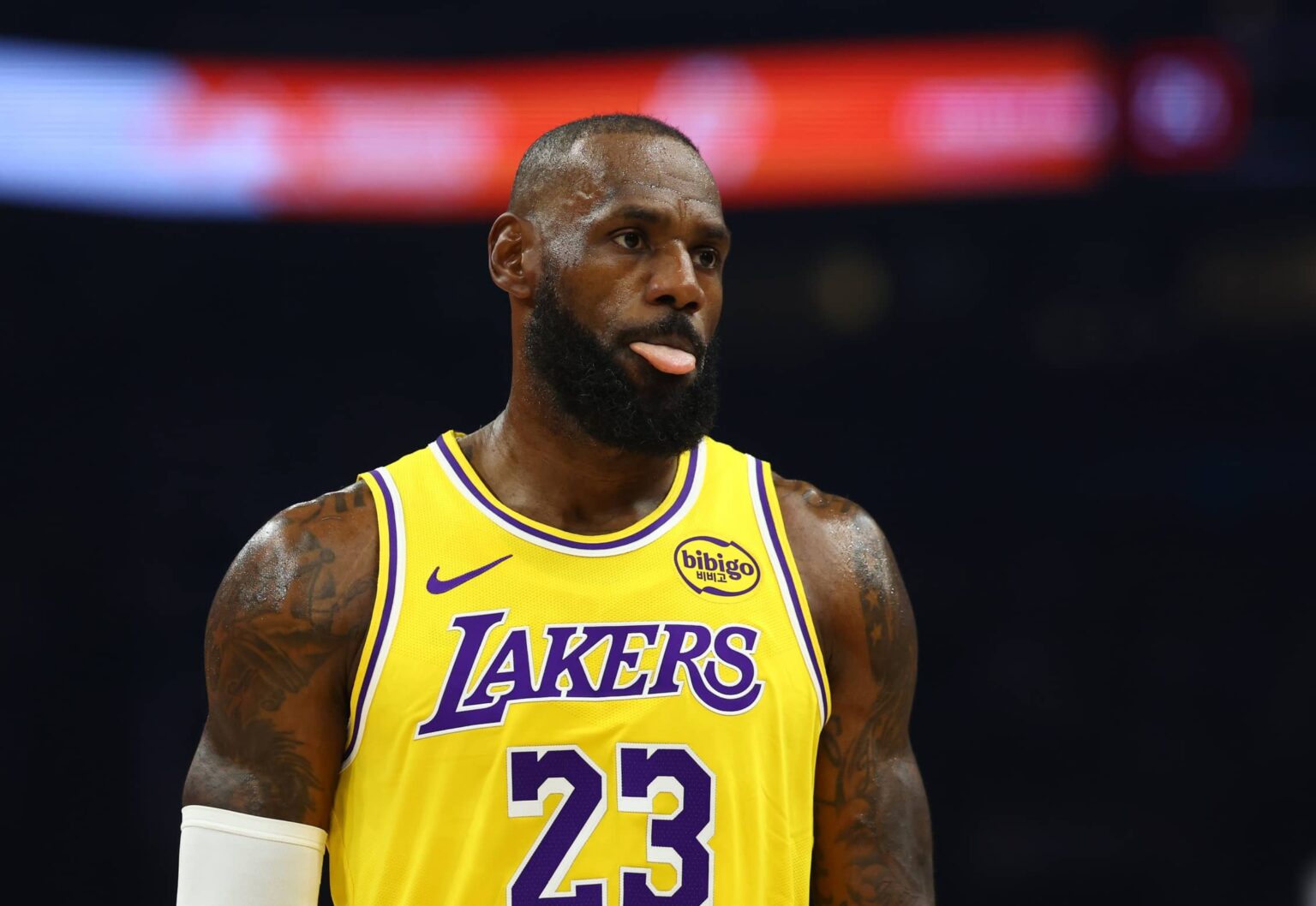
LeBron James does not need another experiment. If he leaves the Lakers, it cannot be for sentiment alone, and it cannot be for a weak roster with a bunch of cap space. It has to be a team that can either create a max salary slot or build a legal sign-and-trade structure while giving him a real basketball reason to listen.
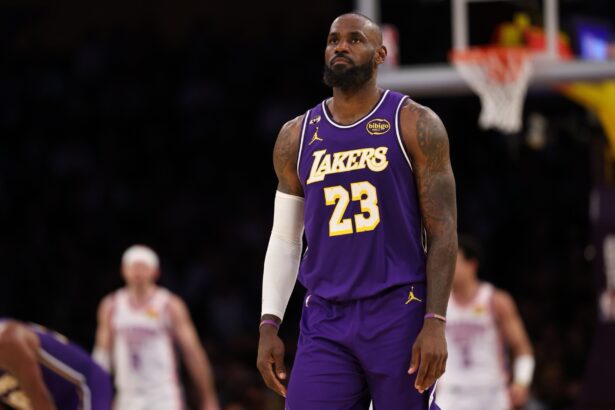
That is what makes this summer complicated. James is 41, but he is not finished. He averaged 20.9 points, 6.1 rebounds, and 7.2 assists in the 2025-26 regular season, then entered the offseason after the Thunder eliminated the Lakers in the second round. James has not made a final decision on whether he will return, retire, stay with the Lakers, or pursue a sign-and-trade, as recent reports that he felt taken for granted surfaced in the past few hours.
The money is the hard part. The 2026-27 salary cap is projected at $166.0 million, with the first apron at $210.3 million and the second apron at $223.1 million. A true maximum salary for James would require roughly $58.0 million in first-year room, or a matching structure close to that number if it comes through a sign-and-trade.
Here are four teams that could create a realistic path to lure LeBron James away from the Lakers with a max deal this summer.
4. Charlotte Hornets
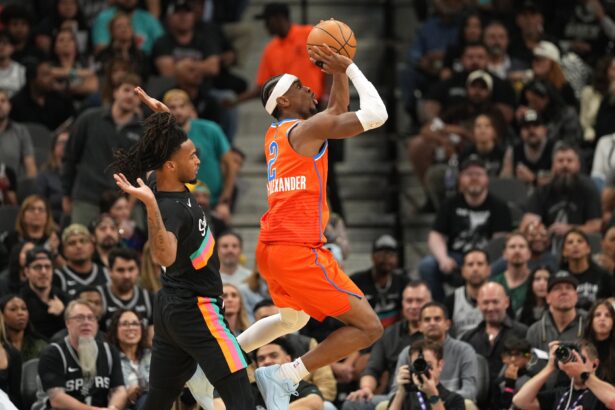
The Hornets are the strangest name on this list, but they are not a joke anymore. That is the starting point. They finished 44-38, made the Play-In mix in the East, and have enough young talent to make a one-year James pursuit more logical than it would have sounded two seasons ago.
The pitch would not be history. It would not be glamorous. It would be control, young legs, and a chance to turn a small-market roster into a national story overnight.
LaMelo Ball averaged 20.1 points, 4.8 rebounds, and 7.1 assists while shooting 40.7% from the field. Brandon Miller averaged 20.2 points, 4.9 rebounds, and 3.3 assists while shooting 43.5% from the field and 38.3% from three. Rookie sensation Kon Knueppel added 18.5 points, 5.3 rebounds, and 3.4 assists. That gives the Hornets three real offensive pieces before adding James. It is not a title core yet, but it is not empty either.
The financial path is the issue. The Hornets are not sitting with an empty max slot. LaMelo Ball will earn $40.8 million, Miles Bridges $22.8 million, Brandon Miller $15.1 million, and Josh Green is also among their major 2026-27 salaries. Their 2026-27 structure gives them apron flexibility, but not a simple $58.0 million cap-space path without moving real money.
To offer James a max through cap room, the Hornets would need to act aggressively. The best route would be declining or moving non-essential money, renouncing free-agent holds, and trading Bridges plus one or two mid-sized contracts. A Bridges salary dump alone would not be enough. The Hornets would likely need to move another eight-figure salary, with Josh Green, Grant Williams, Coby White, or other veteran money becoming part of the math depending on final guarantees and holds.
That is painful, but not impossible. The reason it works conceptually is simple: the Hornets can protect Ball and Miller. Those are the two players James would actually care about. If the Hornets can keep Ball as the playmaker, Miller as the big wing scorer, and enough shooting around them, James would not have to carry a broken roster.
The Lakers’ angle also matters. A sign-and-trade would be more realistic than pure cap room if James wants his full number and the Lakers want assets back instead of losing him. The Hornets could build a package around Bridges, Green, or other salary, then attach draft compensation if needed. That would allow James to get paid while the Lakers receive usable players instead of a clean walk-away.
Basketball-wise, the fit is better than the reputation. James with Ball would be dangerous in transition. Ball is still loose with shot selection and defensive focus, but he can pass ahead, hit pull-up threes, and create pace without needing James to initiate every possession. Miller gives James the type of tall shooting wing he has always elevated. The Hornets could play faster, use James as a half-court organizer, and let Miller grow against shifted defenses.
The concern is obvious. The Hornets are still not proven in a playoff environment. They would be asking James to trust a young roster, a weaker postseason record, and a market that has never handled this level of pressure. That is why they are fourth.
But they belong here because they can create a path. It would require salary dumping and probably one hard roster sacrifice. It would also require James to value control and freshness over certainty. That is unlikely, but it is not impossible.
3. Chicago Bulls
The Bulls are the most likely cap-space team on this list. That does not make them the best basketball fit, but it makes them the easiest team to explain.
The Bulls are projected to have $63.5 million in 2026 cap space, the most of any team in the league. That number is large enough to put a full max offer in front of James without needing the Lakers to cooperate. That is the selling point. The Bulls do not need a complicated three-team sign-and-trade. They do not need to move three starters in one week. They can get to James by staying disciplined with their books, renouncing free-agent holds, and choosing not to overpay secondary pieces before making the call.
Their current cap sheet still includes important holds and decisions. The Bulls have $95.4 million in active 2026-27 salary and $127.7 million in cap holds on the 2026-27 table. The projected max-space version depends on renouncing those holds and avoiding new long-term commitments that eat the room. The Bulls’ path is basically this: keep the young core, clear the holds, and make James the centerpiece of a short-term acceleration plan. They do not need to trade Josh Giddey. They do not need to trade Matas Buzelis. They need to avoid carrying unnecessary cap holds for players who are not part of the James pitch.
Josh Giddey signed a four-year, $100.0 million extension and averaged 17.0 points, 8.3 rebounds, and 9.1 assists this season. Matas Buzelis averaged 16.3 points, 5.8 rebounds, and 2.1 assists while shooting 46.3% from the field. Anfernee Simons averaged 14.3 points, 2.5 rebounds, and 2.4 assists while shooting 44.0% from the field. That is not a championship trio, but it gives the Bulls enough offensive function to avoid selling James on a complete rebuild.
The Bulls finished 31-51, so this would not be a pure winning move. That is the problem. A James signing would lift the floor, but it would not instantly create a top-three East team unless the Bulls also added shooting, rim protection, and another reliable veteran. Still, there is a basketball case. James next to Giddey would be unusual but interesting. Both are big passers. Both see the weak side early. Giddey would have to shoot well enough to survive off the ball, but his rebounding and open-floor passing would take regular-season pressure off James. Buzelis gives the Bulls a young forward who can run, cut, and finish. Simons, if retained or replaced by a similar shooter, gives them a needed spacing guard.
The Bulls could also give James something the Lakers may not want to offer: a full max with no emotional negotiation. That matters. The Lakers have Luka Doncic, Austin Reaves’ contract situation, and a roster to rebuild around a younger timeline. James may not want to take a discount just to help a franchise transition away from him.
The Bulls could make the opposite pitch. They could tell James he gets the money, the ball, the stage, and the power to turn a dormant franchise into a relevant team again. It would be a massive short-term business play for the Bulls, and it would give them a clean identity for at least one season.
The weakness is title equity. The Bulls do not have Bam Adebayo. They do not have Donovan Mitchell. They do not have a proven playoff defense. If James is chasing only a fifth ring, the Bulls are probably not the answer.
But if the question is which teams can lure him with a max deal, the Bulls have to be high. They can actually do it. They have the cap projection. They have young players. They have a major franchise platform. The roster is imperfect, but the financial path is real.
2. Cleveland Cavaliers
The Cavaliers are the most emotional option and one of the hardest financial options. Both things can be true.
James finishing his career with the Cavaliers would be the cleanest story in the league. He started there, won the 2016 championship there, and still has obvious ties to the franchise and region. If he leaves the Lakers for a final act, no destination would be easier to explain.
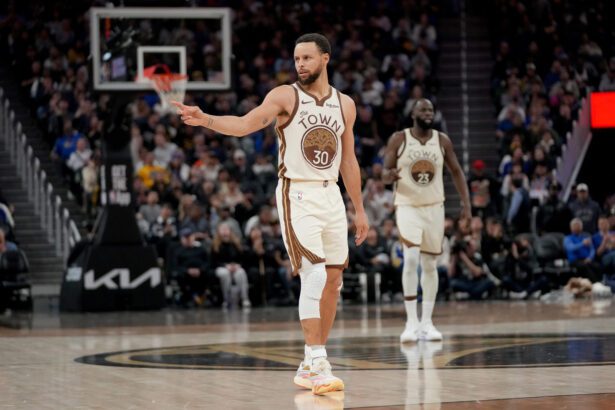
The basketball case is stronger than the cap case. The Cavaliers finished 52-30 and were the fourth seed in the East. Donovan Mitchell averaged 27.9 points, 4.5 rebounds, and 5.7 assists while shooting 48.3% from the field. Evan Mobley averaged 18.2 points, 9.0 rebounds, and 3.6 assists while shooting 54.6% from the field. James Harden averaged 23.6 points, 4.8 rebounds, and 8.0 assists after landing with the Cavaliers during the season. That is why this is interesting. James would not be joining a bad team. He would be joining a team that already has a top offensive guard, a Defensive Player of the Year-level frontcourt piece, and enough regular-season structure to keep him from carrying the operation every night.
The cap sheet is the problem. Donovan Mitchell and Evan Mobley sit at $50.1 million each for 2026-27, James Harden at $42.3 million, Jarrett Allen at $28.0 million, Max Strus at $16.7 million, and Dennis Schroder at $14.8 million. That is not a cap-space team. That is a second-apron problem if nothing changes. So the Cavaliers cannot be framed as a clean max-cap-space team. They are not that. If they get James on a max, it almost certainly has to be through a sign-and-trade or a major salary-clearing plan.
Harden is the swing piece. He has a $42.3 million player option for 2026-27, and his future changes the whole framework. If Harden opts in, he becomes the clearest outgoing salary-matching tool in a sign-and-trade. If Harden opts out or leaves, the Cavaliers lose that matching salary but gain flexibility below the aprons. The better sign-and-trade structure would be built around Harden’s salary if he opts in, with additional money attached if needed. The Cavaliers could route Harden to the Lakers or a third team, send another contract such as Strus or Schroder, and bring James in at a max number.
That would still be difficult because receiving a player via sign-and-trade hard-caps the team at the first apron. That means the Cavaliers would have to cut deeply. They could not just add James to Mitchell, Mobley, Harden, Allen, Strus, and Schroder. The math does not allow it. To make a James max structure work, Harden would likely have to be gone, and at least one or two of Allen, Strus, Schroder, Sam Merrill, or Dean Wade would have to be moved.
The aggressive version is simple: Mitchell, Mobley, James, and Allen as the top four, with the rest of the roster rebuilt cheaply. That is expensive, but it can be structured below the first apron if the Cavaliers move enough surrounding salary. It is not easy. It is not clean. But it gives James a real frontcourt, elite guard scoring, and a defensive base that the Lakers cannot match without major changes.
The more realistic version is harsher. The Cavaliers may have to choose between keeping Allen and maximizing depth. Allen’s $28.0 million salary is large enough to matter. He is also good enough to make the James fit more convincing. Trading him would create more financial room, but it would remove the lob threat, rim protection, and regular-season size that make the Cavaliers attractive.
That is the dilemma. The Cavaliers can make room for James, but only by accepting a real cost. This is not a free upgrade. It is a franchise-altering pivot. Still, it might be worth it. James would not need to dominate the ball every possession because Mitchell can score late in the clock. Mobley can cover defensive mistakes, switch, protect the rim, and finish as a release valve. James could function as a half-court connector, transition driver, and playoff matchup hunter.
The Cavaliers are second because they give James the best emotional ending and one of the best basketball cores. They are not first because the cap path is ugly. It requires Harden’s contract, apron management, and possibly losing multiple rotation players.
But if James tells the Lakers he wants the Cavaliers, the structure can be built. It would just be expensive for everyone involved.
1. Miami Heat
The Heat are the best combination of story, seriousness, and basketball logic. They do not have the easiest path. But if James leaves the Lakers, the Heat are the team that makes the most sense.
The first reason is trust. James knows the organization. He knows the standard. He knows Erik Spoelstra. He knows what it looks like when the Heat build the entire program around winning habits, defensive detail, and playoff preparation. That matters more at 41 than a young roster with theoretical upside.
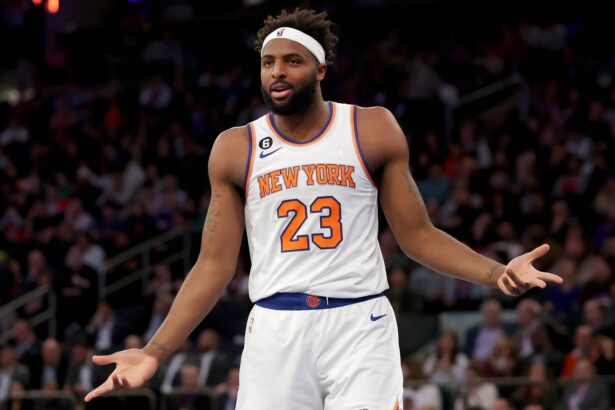
The second reason is roster fit. Bam Adebayo averaged 20.1 points, 10.0 rebounds, and 3.2 assists while shooting 44.2% from the field. Tyler Herro averaged 20.5 points, 4.8 rebounds, and 4.1 assists while shooting 48.0% from the field. The Heat finished 43-39, which is not elite, but they remained competitive enough to sell James on one last push if they can reshape the roster around him.
The Heat’s cap sheet is tight. Bam Adebayo leads at $49.5 million for 2026-27, Tyler Herro at $33.0 million, Andrew Wiggins with a $30.2 million player option, Nikola Jovic at $16.2 million, Davion Mitchell at $12.4 million, Kel’el Ware at $4.6 million, Jaime Jaquez Jr. at $5.9 million, and other smaller salaries. That is not a team with natural max cap room. So the Heat need a mechanism. The best one is a sign-and-trade.
Andrew Wiggins is the key. If Wiggins opts into his $30.2 million player option, the Heat suddenly have a major matching contract. Wiggins, plus Jovic and Mitchell, get close to the salary needed for a James max structure. Wiggins plus one larger salary or multiple smaller contracts can also be routed through a third team if the Lakers prefer flexibility instead of direct roster pieces.
If Wiggins opts out, the Heat path becomes harder. Then Herro becomes the obvious salary lever. The Heat would not want to move Herro for a 41-year-old James unless they believe James, Adebayo, and Spoelstra give them an immediate title window. But that is the kind of aggressive decision the Heat have made before. They rarely sit in the middle comfortably.
The better version for the Heat is keeping Herro. Adebayo, Herro, and James is the actual basketball pitch. Adebayo gives James the defensive big he needs. Herro gives him movement shooting and shot creation. James gives the Heat the half-court brain they still lack when games slow down.
That trio makes sense. Adebayo can play as a screener, short-roll passer, and defensive anchor. Herro can run second-side action, shoot off movement, and attack bent defenses. James can control tempo without needing to score 28 every night. The Heat would still need shooting at the four and point-of-attack defense, but the core idea is coherent.
The Lakers would also have a reason to listen. If James wants out, the Lakers would rather turn his departure into a long-awaited target than lose him for nothing. A Wiggins-based package would not be perfect, but it would give them a wing that shoots and plays defense. A Herro-based package would be much more attractive, especially if the Lakers want another guard scorer next to Luka Doncic and Austin Reaves.
The first-apron hard cap is the obstacle. Like the Cavaliers, the Heat would be hard-capped at the first apron if they receive James via sign-and-trade. That means they cannot take James, keep every salary, and patch the roster later. They would have to calculate the full roster before completing the move. Still, this is where the Heat have an advantage. Their mid-tier contracts create matching paths. Wiggins, Jovic, Mitchell, Jaquez, Ware, and other smaller salaries give them optionality. The Heat do not have to create $58.0 million in clean cap space. They can build a trade construction that sends out enough salary and keeps the roster below the hard cap.
The basketball argument is also stronger than the Bulls and Hornets. The Heat are not selling James on development. They are selling him on a known coach, a known culture, a strong defensive center, a 20-point guard, and a conference where one elite veteran can still change a playoff series.
There is also a personal angle that should not be ignored. James’ best basketball machine came with the Heat. That version of his career had structure, shooting, conditioning, and accountability. Returning there would not just be nostalgia. It would be a practical bet that the Heat can still put him in the clearest possible role.
The Heat are first because they check the most boxes. They can build a max path through a sign-and-trade. They have contracts to match. They have a coach James trusts. They have Adebayo. They have Herro. They have enough pressure as a franchise to treat the move like a title chase, not a farewell tour.
It would not be easy. It would require Wiggins’ option decision, Lakers cooperation, and a strict apron plan. But among these four teams, the Heat have the best mix of realism and ambition.
If James is leaving the Lakers for one last serious run, the Heat should be the first call.