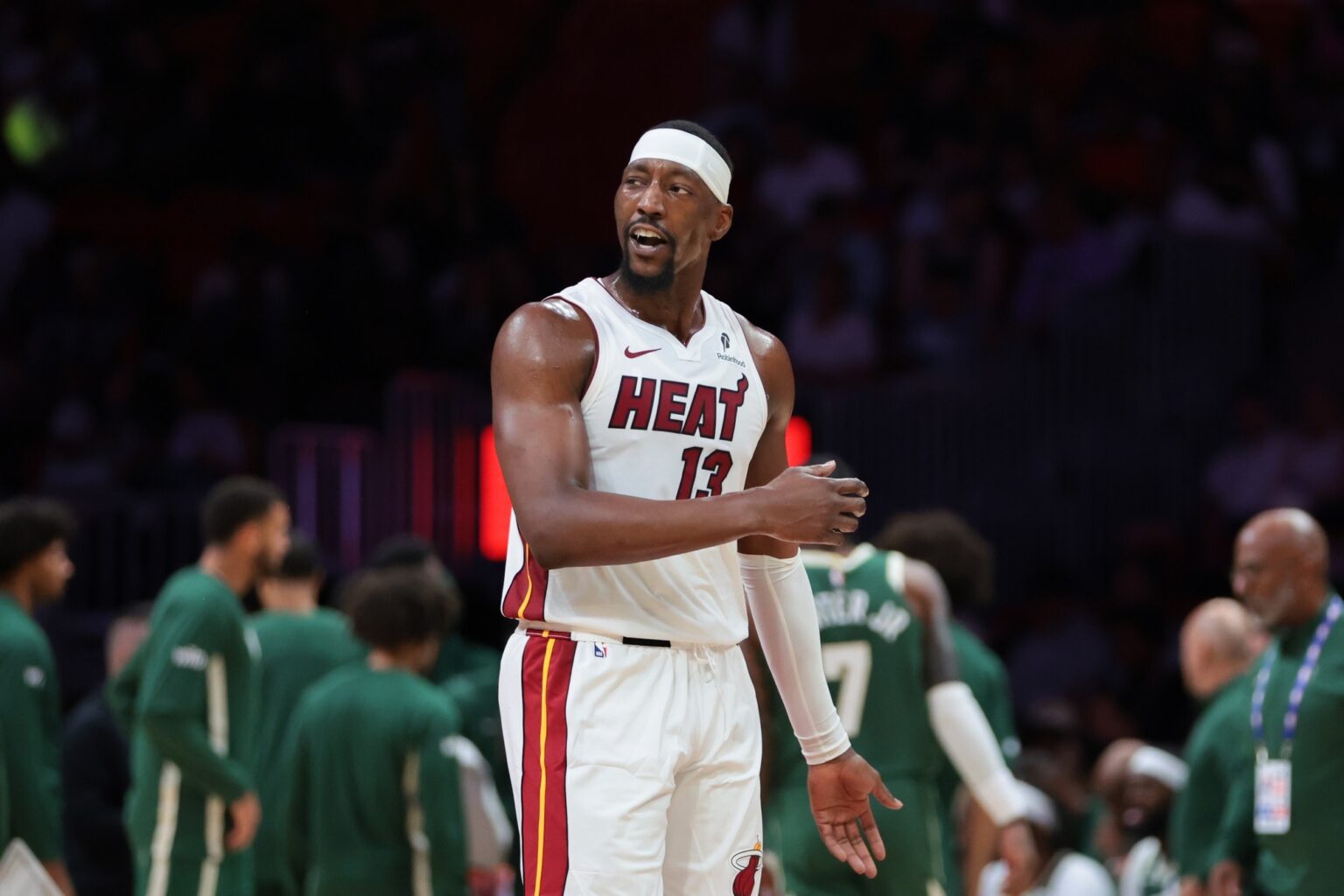
The Miami Heat enter deadline season at 25-22, sitting seventh in the East, which is basically the definition of their annual problem: good enough to scare somebody, not clean enough to feel “finished.”
But the trade chatter around the Heat has gotten louder than the usual “they’re always lurking” noise. Chris Haynes has said the Heat “do have interest” in Ja Morant, and Jake Fischer (The Stein Line) has reported the Heat have had internal discussions about Morant dating back to early December.
At the same time, Marc Stein has indicated the Lakers are showing much interest in Andrew Wiggins if the Heat ever made him available, which matters because it hints at how the Heat could pivot as the deadline approaches.
So with the deadline closing in and the Morant chatter hovering in the background, we’re going to predict the most realistic moves the Heat actually make before February 5.
The Heat Actually Land Ja Morant After All The Rumors
The Ja Morant noise did not cool off this weekend, even with the elbow news. Marc Stein’s latest Stein Line reporting has kept the door open on the Grizzlies still being receptive to inquiries, with follow-up coverage echoing that the Grizzlies haven’t slammed anything shut, even if the asking price is the real sticking point.
The complicating factor is obvious: Morant is now expected to miss at least three weeks with a sprained UCL in his left elbow, which pushes his return timeline past the February 5 deadline, and the Grizzlies are 18-25. But in a deadline market that’s been described as “modest,” a front office that wants to reset can still execute a deal now and let the medical timeline sort itself out later.
That’s where the Heat’s best “realistic” path starts, and it basically revolves around one thing: Terry Rozier’s money. HoopsHype’s Michael Scotto wrote that if the Heat ultimately acquire Morant, Rozier’s expiring $26.6 million would “almost assuredly” be part of the package, and he added the key rumor detail that “within league circles” there have been rumblings that Morant has wanted to land with the Heat.
Even outside the pure cap math, the Heat have an incentive to turn the Rozier situation into something productive, since Rozier has been away from the team while the NBA and federal legal process plays out.
Rozier pleaded not guilty to federal charges tied to sports betting, and the league placed him on unpaid leave. So if the league permits him to be traded, the pitch to the Grizzlies is straightforward: you’re taking a giant expiring number that clears the books, plus a real first.
Heat Receive: Ja Morant
Grizzlies Receive: Terry Rozier, Simone Fontecchio, 2029 first-round pick, 2032 second-round pick
From the Grizzlies’ perspective, the basketball value in this framework is mostly in the picks and the flexibility. Fontecchio is a real, playable wing, and that matters because he’s not just “salary filler.” He’s at 8.5 points, 3.1 rebounds, and 1.5 assists this season, and he’s had multiple recent bench scoring pop games that show he can survive in a rotation when the floor-spacing is needed.
His contract is also clean at $8.3 million in 2025-26. The real prize, though, is the 2029 first-rounder. If the Grizzlies are genuinely weighing a retool, that’s the type of package they are reportedly looking for in trade talks for their lead guard.
Now flip it to the Heat’s side, and you can see why this becomes tempting enough to actually do. Morant’s contract is the commitment that makes this a “big-boy” swing: he’s on a five-year, $197.2 million deal through 2027-28, and sits at $39.4 million this season.
That is not a casual add. But the upside is still obvious when he’s healthy. This season, he’s at 19.5 points, 3.3 rebounds, and 8.1 assists, with a 41.0% field goal mark, 23.5% from three, and 89.7% at the line. Even in a “down” efficiency year, he’s still creating advantages as a pressure point guard, and the Heat’s half-court offense has always benefited from someone who can bend the paint without needing a screen to do it.
The funniest part of the Morant-to-Heat saga is that the public messaging and the rumor messaging don’t match. Morant has said he wants to stay with the Grizzlies, expressing his commitment to the Grizzlies after returning from injury in London.
But Rachel Nichols has fed the opposite storyline, as Nichols told Sports Illustrated’s Chris Mannix that Morant wants to play for the Heat. Put those together, and you get the classic deadline dynamic: the player keeps it diplomatic, the league circles keep it spicy, and the front offices quietly try to figure out what’s real.
On the court, the fit is loud, and that’s why the Heat keep popping up in this conversation. Morant with Bam Adebayo is the simple sell: pick-and-roll pressure, downhill attacks, and a lob/short-roll partner who can actually punish rotations.
Tyler Herro becomes even more dangerous as a movement shooter and secondary creator because defenses have to load up earlier to stop Morant’s first step. And if Morant comes back healthy after the deadline, the Heat suddenly have a different gear in transition, which is the one thing their “grind you down” identity has historically lacked when the postseason turns into a shot-making contest.
The risk is just as clear: you’re betting real assets and real money on a player with recent injuries, plus the elbow timeline adds immediate uncertainty. But if you’re predicting a true deadline swing for the Heat, this is the one that matches the reporting, the cap mechanics, and the Heat’s habit of turning chaos into one more playoff run.
Andrew Wiggins Stays Even With The Lakers Making Calls
The Lakers’ interest in Andrew Wiggins has basically been treated as a “be ready if the Heat pivot” situation, not a full-blown public bidding war. Marc Stein reported that the Lakers would have interest if the Heat decide in the coming weeks or months to prioritize financial flexibility and reduce payroll, which is the key detail here: this is less about the Lakers forcing a deal and more about whether the Heat ever decide Wiggins is the cleanest big contract to move without gutting the roster.
On the court, it’s easy to see why the Lakers keep circling back. Wiggins is still the type of wing teams hunt at the deadline because he can actually stay on the floor in playoff basketball. This season, he’s at 15.7 points, 5.0 rebounds, and 2.9 assists per game while shooting 47.0% from the field, and he’s been a steady two-way piece in the Heat’s rotation even as the roster has shifted around him. That’s the Lakers’ appeal in a sentence: a wing who can guard up, hit open shots, and not collapse under postseason pressure.
Contract-wise, Wiggins is not a “cheap add,” and that’s why the Heat haven’t treated this like a giveaway. He’s making $28.2 million this season and is on the books for $30.1 million next season. So when this rumor pops up, it’s always tethered to the same mechanics: the Lakers would need to stack real salary plus a sweetener, and the Heat would only do it if the return helps now or meaningfully clears future money. That’s also why a lot of the chatter frames it as “calls” and “monitoring,” not an imminent finish line.
The simplest read is that Wiggins stays because the Heat don’t need to sell him, and the Lakers don’t have the kind of clean, irresistible package that makes a team move a starting-caliber wing without blinking. Stein’s reporting sets the table for the Lakers’ interest, but the leverage point still sits with the Heat deciding whether they want to turn Wiggins into flexibility or keep him as a reliable playoff wing.
Holding Out For The Offseason
The Heat’s real swing window might be less about forcing a midseason blockbuster and more about positioning. The first domino in that plan is Norman Powell’s contract, because he’s been so productive that his next deal becomes a franchise-shaping decision.
Powell arrived in the offseason three-team trade that sent John Collins to the Clippers and brought Powell to the Heat. He’s been exactly what the Heat hoped for, a high-octane scorer who actually fits their structure, putting up 23.3 points, 3.6 rebounds, and 2.7 assists per game on 48.1% shooting and 40.0% from three.
The urgency is the timeline. Powell makes $20.5 million in 2025-26 and is set to become a free agent in 2026, with extension talks not in place right now. So the Heat can’t really treat him like a “we’ll see later” guy, because the longer they wait, the closer they get to either paying market price or risking him walking. If the Heat lock Powell in at a number they can live with, they keep a premium scoring piece while still having a clearer picture of their long-term cap sheet.
That’s where the bigger game starts: the Heat have been tied to 2027 planning for a while now. ESPN’s Tim Bontemps and Brian Windhorst have been cited in reporting that the Heat are keeping their future flexibility in mind for the projected 2027 free-agent class, with Giannis Antetokounmpo consistently mentioned among the potential headliners. In other words, it’s not just “dreaming,” it’s a real organizational posture that influences how aggressive they get with long-term money.
Now, the Giannis part needs to be framed carefully because the public stance is the opposite of a trade demand. Giannis told The Athletic that he would never demand a trade. But the speculation lane is still there because dialogue between Giannis and the Bucks on his future has “recently intensified” ahead of his next extension decision window, per ESPN.
And in the content ecosystem, NBC Sports explicitly pushed the idea that turning down a max extension this offseason would function as a “silent trade request,” which is not an official fact, but it’s the kind of narrative that shapes how fans and even some team observers talk about leverage.
From the Heat’s angle, the concept is simple: if a real Giannis window opens before 2027, you fire the cannons. A theoretical package built around Powell, Tyler Herro, Kel’el Ware, and Nikola Jovic is the type of “players plus upside” framework teams float when they’re trying to balance win-now talent with young value. It’s also why the Heat would rather keep optionality than blow their asset pool early, because if Giannis becomes realistically gettable, it’s not about winning a rumor cycle, it’s about having enough to actually finish the deal.
And if the Heat ever did land Giannis in that kind of offseason environment, the appeal is obvious: a true top-tier frontcourt superstar paired with Bam Adebayo, plus elite scoring creation from the guard spot, is a terrifying playoff foundation. The Heat can talk deadline moves all day, but their biggest advantage is that they can plausibly stay competitive now while still keeping their long-term sheet and asset base aimed at one massive summer strike.
How The Heat Could Look Like In 2026
If the Heat actually pulls off the kind of staggered, multi-step plan, the 2026 version of the roster looks like a nightmare to game-plan for because it blends downhill pressure, shot-making, and elite defensive size in the same lineup.
In the backcourt, the headline would be Ja Morant and Norman Powell. Morant gives you the one thing the Heat have rarely had in their modern era, a guard who can consistently bend the paint without needing everything to be perfectly set, while Powell is the plug-and-play scorer who punishes single coverage and keeps defenses honest when the game slows down.
The sixth-man lever is where it gets fun. Davion Mitchell is the exact type of bench guard who changes a playoff series in small, annoying ways, full-court pressure, ball denial, and the ability to turn a 12-point lead into a four-minute scoring drought just by being a pest. He’s also the kind of player who makes it easier to stagger Morant’s minutes without the offense collapsing, because the Heat could survive certain bench stretches with defense-first lineups and win those minutes on chaos.
On the wing, Andrew Wiggins staying put becomes the glue. Wiggins as your primary wing defender lets you be flexible with matchups, and it gives you a real two-way body that can survive against the top East scorers without constant help.
Then you hit the frontcourt, where the theoretical “ultimate ceiling” comes from: Giannis Antetokounmpo next to Bam Adebayo. That pairing would be violent defensively, switching, recovering, erasing the rim, and swallowing the glass, while also creating a transition engine that turns every stop into a runway.
The rotation behind that group is what keeps it from being pure fantasy. Jaime Jaquez Jr. is still there as a playoff-caliber connector, someone who can play both wing spots, cut, defend, and keep possessions alive.
Kasparas Jakucionis would be the developmental piece with real upside, a young guard who can eventually take on more creation load, while Pelle Larsson is the kind of role player coaches love, low mistakes, willing defender, ready shooter, and comfortable playing in structured actions.
If that’s the 2026 picture, the Heat aren’t just “deep.” They’re layered. They can play small with speed, they can play big with terror-level defense, and they’d have enough ball-handling and scoring to survive the inevitable ugly playoff stretches. That’s the difference between being a tough out and being a real title threat.