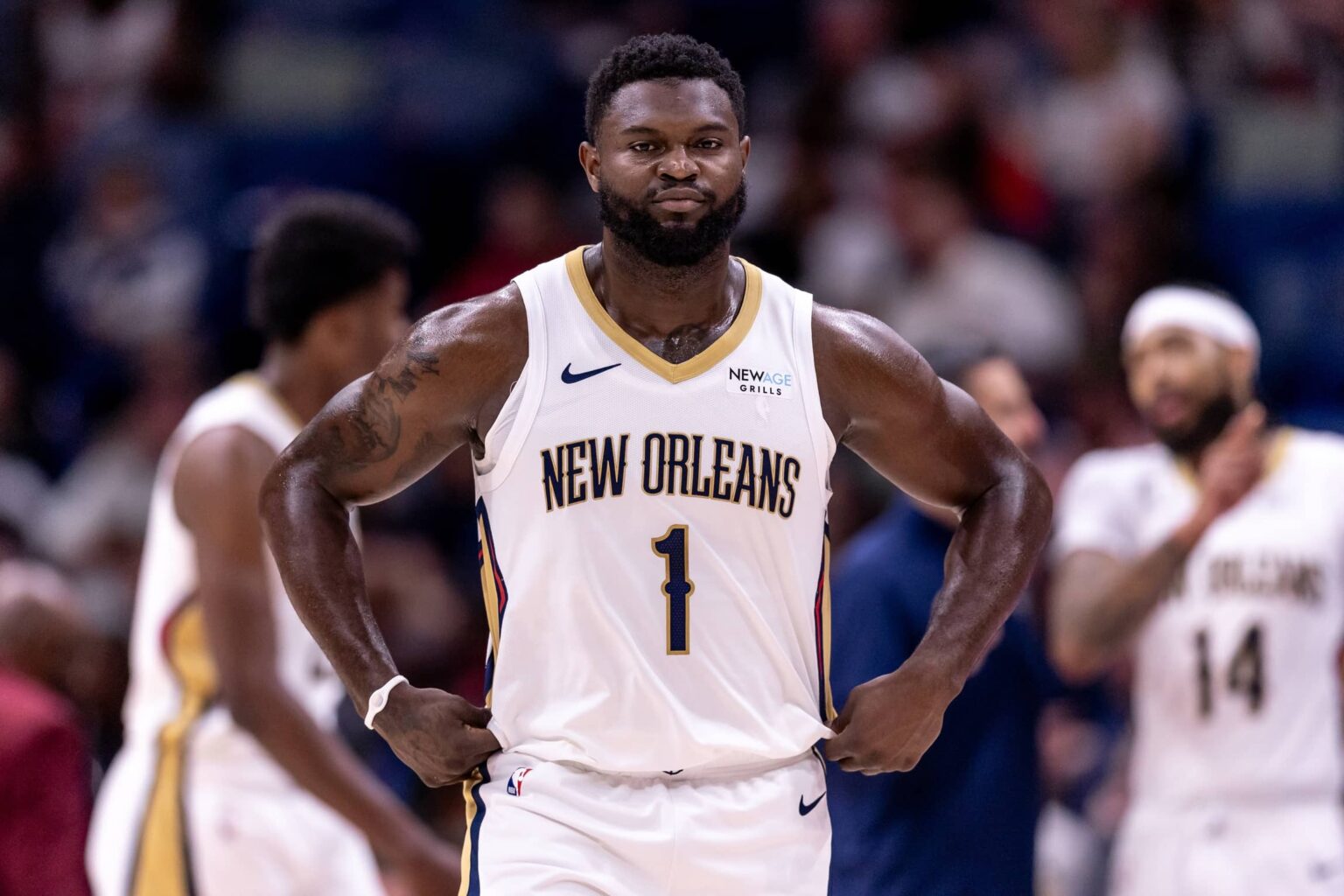
Zion Williamson is out again, and this time it feels like the breaking point. On December 2, the Pelicans announced a grade-2 right hip adductor strain that will sideline him at least three weeks, his second multi-week absence this season. The first came early: a grade-1 left hamstring strain on November 4, which kept him out 7-10 days after he played just five of the first six games. In those 10 total appearances, Zion looked dominant: 22.1 points, 5.6 rebounds, 4.0 assists, and 1.6 steals on 51% shooting in 30.9 minutes, but that’s all we’ve seen.
The Pelicans are 3-19, the league’s worst record, with Dejounte Murray (Achilles, out until after New Year’s) and Herbert Jones (calf, out until at least Dec 4) also banged up, and Trey Murphy III (elbow, day-to-day) questionable. Offense ranks 26th, defense 28th, and attendance is down.
At 25, Zion’s a top-10 talent when healthy, but his career availability sits at a dismal 45.5% (224 of 492 games). With his $39.4 million salary jumping to $42.1 million next year, and no guaranteed max extension yet, New Orleans can’t keep betting on “if.” Trading him now, while his value holds, nets picks and youth to reset around rookies like Derik Queen and Jeremiah Fears. Anything else is just kicking the can down a road to nowhere.
1. Constant Injury Issues And Voids In The Lineup
Zion Williamson’s body has become his own worst enemy, turning what should be a perennial All-NBA career into a heartbreaking series of “what ifs.” The latest blow will keep him out at least three weeks, with re-evaluation not until late December.
This comes hot on the heels of his return from a grade-1 left hamstring strain. Zion flashed his supernova talent with 22.1 points, 5.6 rebounds, 4.0 assists, and 1.6 steals early, but then, predictably, it stopped. He sat out the second game of a back-to-back against the Lakers on November 30 as a precaution, only for imaging to confirm the adductor tear the next day.
This isn’t a one-off; it’s the pattern that’s defined Zion’s six NBA seasons. Since being drafted No. 1 in 2019, he’s missed 55% of possible games (224 of 493), with lower-body injuries striking like clockwork. His rookie year ended with a knee meniscus tear after 24 games. The 2020-21 season brought another knee issue, limiting him to 61 outings.
Then came the infamous 2021-22 foot fracture that wiped out his entire sophomore campaign. Hamstrings have been a recurring nightmare: a 10-month absence in January 2023 until the start of 2023-24, followed by another in April 2024 to the start of 2024-25, and yet another long absence from November 8, 2024, to January 7, 2025. A lower back strain knocked him out in March until Opening Night 2025-26, and now this adductor joins the list. At 25, Zion’s explosive style, pummeling the rim with 280-pound force, has wrecked his frame, turning every highlight reel into a ticking time bomb.
The voids he leaves are impossible to fill. When Zion’s gravity draws doubles, it opens threes for Trey Murphy III and creates chaos for defenses; without him, New Orleans’ offense craters to 28th in efficiency, relying on inefficient isos from Saddiq Bey or Jordan Hawkins. Defensively, his jumping and blocking deter drives, but his absence balloons paint points allowed by 12 per 100 possessions. The Pelicans are down to nine active players, with Dejounte Murray (Achilles, out until 2026), Herb Jones (calf, out until Dec. 4), and others like Yves Missi (foot) and Karlo Matkovic (calf) compounding the mess.
Zion’s $39.4 million salary anchors a cap sheet that can’t afford these black holes. Trading him salvages picks and youth before his value evaporates further; clinging on dooms another lost year. The injuries aren’t bad breaks; they’re the blueprint of a star whose prime is slipping away.
2. Lack Of On-Court Improvement
Even when Zion Williamson suits up, the Pelicans haven’t shown the consistent elevation needed to justify building around him long-term. In his 10 games this season, New Orleans posted a -8.6 net rating with him on the floor that craters to -13.9 without him, per ESPN. The team went 1-9 in those outings, averaging 114.5 points per 100 possessions but leaking 122.6 on defense, exposing how Zion’s gravity draws help without a supporting cast to capitalize fully.
This isn’t new; Zion’s impact has stagnated over his career. His stats are elite (24.6 PPG, 58.5% FG for his career), but they’ve barely budged since his rookie explosion (22.5 points on 60% shooting). Advanced metrics tell the story: his player efficiency rating (PER) dipped to 21.5 this year from 27.3 in 2024-25, still solid, but not the numbers that scream franchise savior.
When healthy in 2023-24 (70 games, career high), the Pelicans won 49 but bowed out in the first round, with Zion’s injury against the Lakers leaving him out of the postseason. The lack of growth shows in the lineup voids he creates. Zion’s heliocentric style clogs the paint for wings like Trey Murphy III (20.4 points but 2.1 turnovers) and forces inefficient isos from Saddiq Bey (13.7 points on 44% shooting). Without a true stretch big or secondary creator (exacerbated by Dejounte Murray’s Achilles absence), the offense stalls at 28th efficiency overall, with Zion’s minutes dragging bench units to bottom-five net ratings.
At $39.4 million this year (rising to $42.1 million next), Zion’s contract demands superstar results, but the on-court stagnation from no All-Star co-stars has the Pelicans treading water. Trading him unlocks picks to build a balanced roster around Murphy and Derik Queen, rather than chasing a mirage. Without improvement in efficiency and team synergy, Zion’s flashes aren’t enough to salvage the vision.
3. Still Coveted By Some Contenders
Zion Williamson’s trade market isn’t exactly buzzing, as league insiders like Brian Windhorst and Tim Bontemps have called his value “not super high,” citing the injury risks and non-guaranteed contract that scares off all but the boldest suitors. But even with the red flags, a handful of contenders see the upside in betting on Zion’s supernova talent when he’s on the floor.
At 25, his efficiency in bursts could be the high-variance swing that tips a title chase, especially with his salary offering an out if it flops. The Pelicans might not get a king’s ransom, but these teams could dangle enough to make it worth considering.
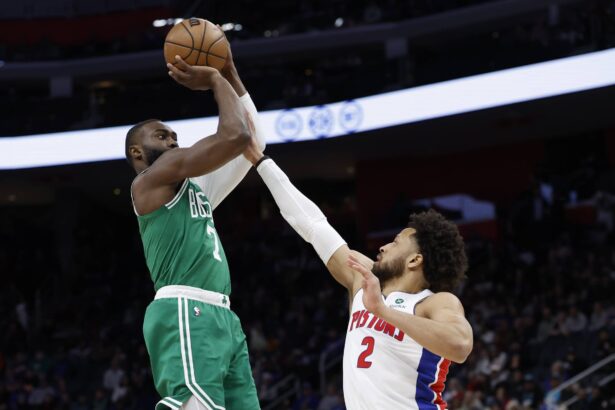
The Detroit Pistons, surging at 17-4 and atop the East, top the list as a dark-horse fit. With Cade Cunningham’s playmaking (28.2 points, 9.3 assists) unlocking the offense and Jalen Duren dominating the paint, Zion could slide in as a mismatch nightmare on the wing, focusing on finishing lobs and drawing doubles without the full creation burden.
Detroit’s recent draft hauls (Ausar Thompson, Ron Holland) give them assets like a protected 2027 first and young wings to sweeten the pot, turning a rebuild into an immediate threat. It’s a fresh start in a low-pressure market, where load management could keep his body intact.
Miami Heat fans dream of this one. Pat Riley’s culture of discipline, weight checks, and defensive buy-in might finally wrangle Zion’s conditioning issues, pairing his interior dominance with Bam Adebayo’s switchability for a terrifying frontcourt. The Heat, 3rd in the East with Tyler Herro back healthy (24.8 points per game), lack a pure inside scorer; Zion fills that void, potentially echoing Miami’s success with high-upside gambles like Norman Powell’s. They’d offer vets like Andrew Wiggins and a future first, betting Spoelstra’s system maximizes his 1.6 steals and rim attacks. It’s risky, but the Heat thrive on “what if” stars.
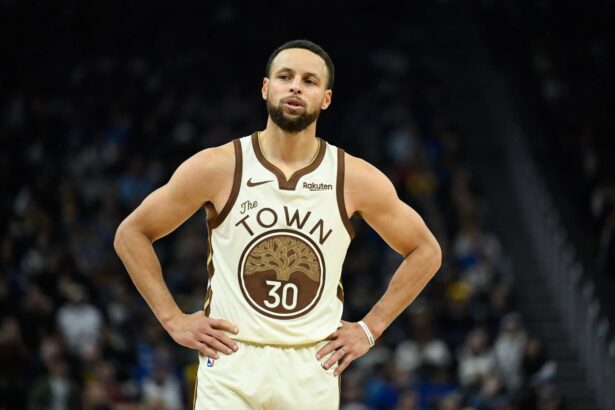
The Golden State Warriors might round out the suitors, eyeing Zion as Draymond Green’s perfect running mate in their motion offense. At 11-11, with Stephen Curry’s gravity (still 27.9 points on 39.1% from three) pulling defenders, Zion could feast in transition and as a roller, adding the physicality they’ve missed since the KD days. His non-guaranteed deal aligns with their apron crunch, and they’d package Jonathan Kuminga, maybe Moses Moody, plus picks for the gamble. The Warriors’ load management expertise could extend his prime, turning a contender into a juggernaut if he logs 60 games. These spots prove Zion’s value endures: flawed, but a chip-shot away from legacy-defining impact. For New Orleans, it’s a reminder that his value might be low, but it’s not zero.
4. The Pelicans Need A New Era To Contend Again
Zion Williamson never became the player the league expected. Six seasons in, his three-point attempt rate is still under 2 per game (career 31.7% on 0.5 attempts), his free-throw percentage sits at 69.1%, and his defense remains a glaring weakness: opponents shot 65% at the rim when he was the primary defender last season, and his defensive numbers never made headlines. The basketball IQ questions linger too, as he still hunts contact instead of kicking out, racks up charges, and struggles to process help rotations quickly. At 25, the explosive dunker is still there, but the all-around superstar never materialized.
The roster construction around him has been a nightmare. New Orleans has spent years chasing “spacing” and “defense” to complement Zion, only for him to miss half the games and leave a mismatched group on the floor. The current Pelicans are a perfect example: Trey Murphy III and Jordan Hawkins shoot 40%+ from three, but there’s no connective tissue when Zion sits. Dejounte Murray (Achilles, gone until 2026) was supposed to be the co-star, Herb Jones the stopper, Yves Missi the rim-runner. Yet without Zion, the offense is 28th in efficiency, and the pieces don’t fit together. It’s the same story Dallas is living right now post-Luka trade: a collection of talented players who make sense on paper with the superstar, but look lost without him.
Holding onto Zion means more of the same: another season praying for 50 games, another offseason of “if he just gets in shape,” another roster built around a ghost. The Pelicans are 3-19, attendance is tanking, and the fanbase has checked out. The only path forward is a clean break: trade Zion while he’s still 25 and can headline a package for multiple firsts, young wings, and a real point guard. Start the new era around Trey Murphy, Derik Queen, Jeremiah Fears, and whatever haul comes back. Dallas is learning the hard way that you can’t half-rebuild around an unavailable star. New Orleans doesn’t have to make the same mistake. It’s time to stop chasing the Zion dream and finally build something that can actually stay on the court.