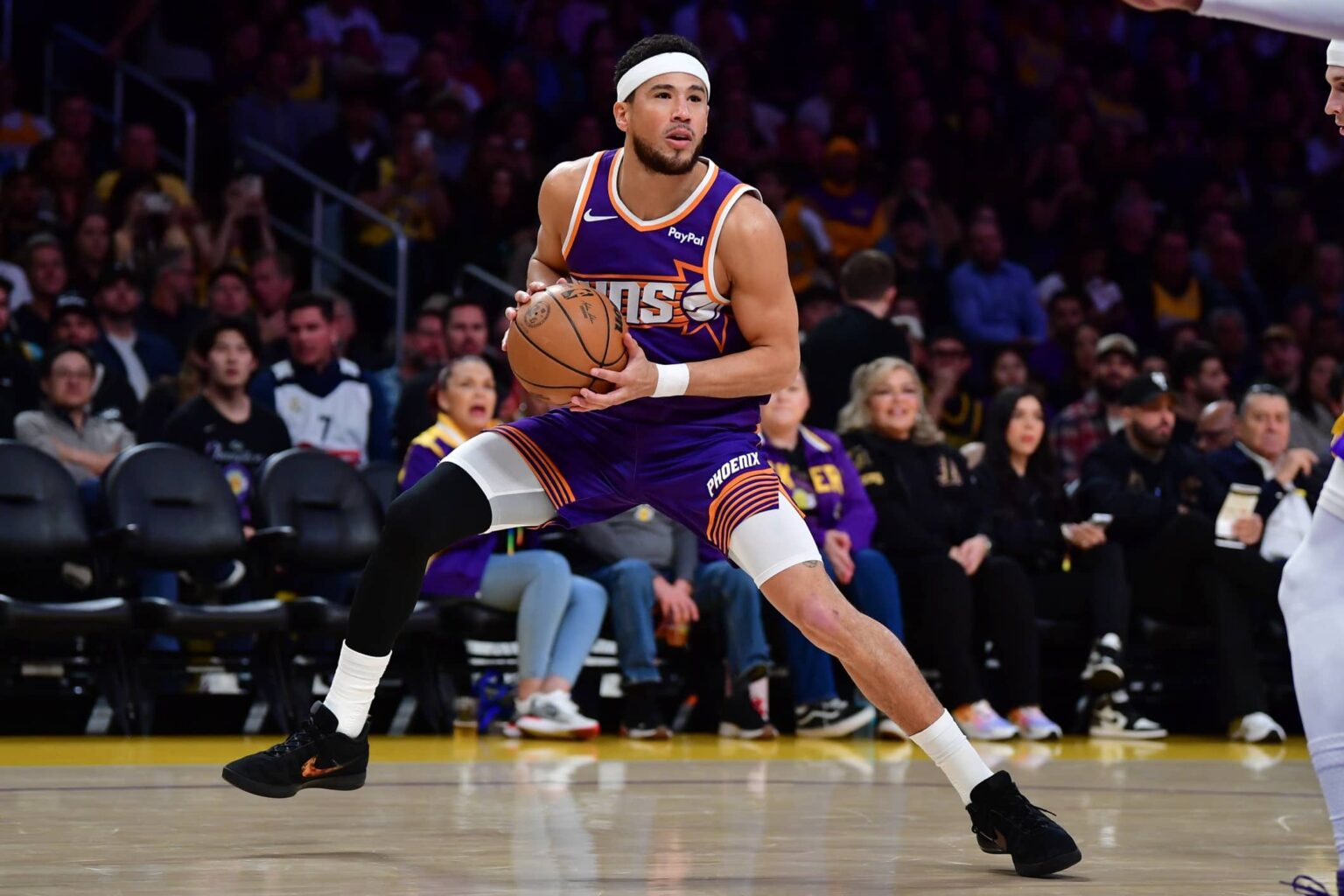
This is officially the Devin Booker era again. The Suns already ripped off the Band-Aid when they moved Kevin Durant to the Rockets in the 2025 offseason, then negotiated the Bradley Beal buyout that ended the “Big Three” experiment for good.
And honestly, it’s not like they’re dead in the water. The Suns are 30-19 and sitting in the West playoff mix, but the margin is thin and the play-in is lurking if they hit a cold stretch.
Booker has done his part: 25.4 points, 4.0 rebounds, 6.2 assists on 45.6% from the field and 31.3% from three in 2025-26. The problem is the Suns can’t live on “Booker carry jobs” for four months and expect it to hold up in April.
The good news is the defense is legit, top-six by defensive rating. The bad news is roster balance and reliable creation around Booker still feel fragile, especially late in games, and their long-term pick situation limits how reckless they can get.
So this list is about realistic upgrades: plug-in starters, two-way connectors, and one or two “panic button” swings that actually make sense.
1. Ja Morant Changes Everything For The Suns
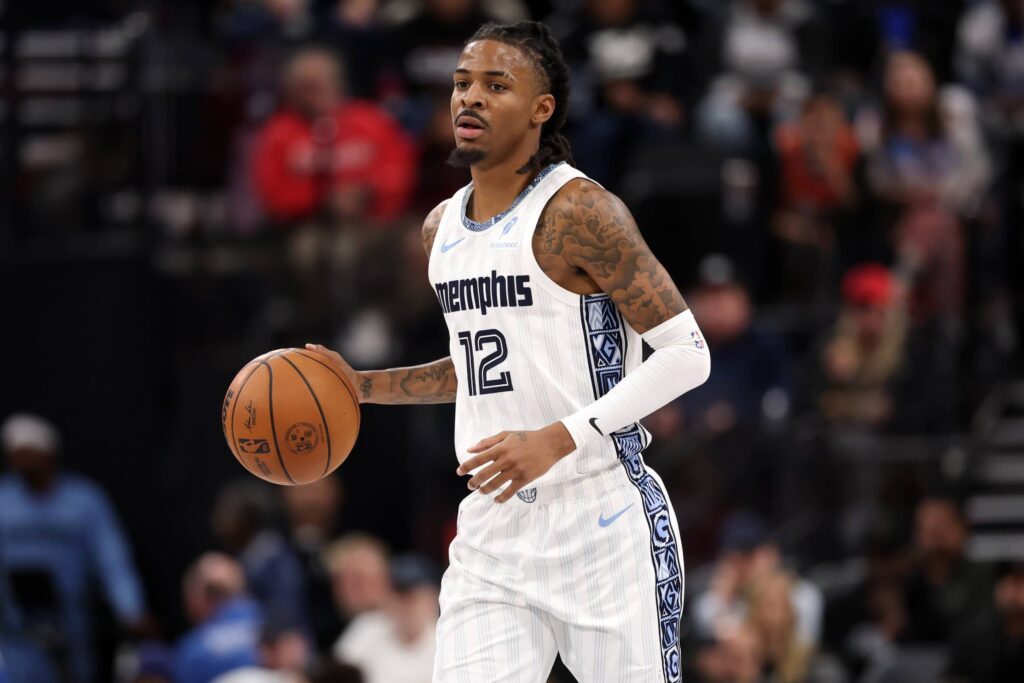
Phoenix Suns Receive: Ja Morant, 2027 first-round pick
Memphis Grizzlies Receive: Jalen Green, Nick Richards, 2027 first-round pick (via Jazz, Cavaliers, or Timberwolves), 2032 first-round pick
This is the “shockwave” scenario, but it’s also the one that actually fixes the Suns in one move. They’re 30-19 and sitting in the mix, yet you can feel how fragile the whole thing is when Devin Booker isn’t out there.
Booker’s been doing his job: 25.4 points, 4.0 rebounds, 6.2 assists, but he’s also dealing with a right ankle sprain that’s expected to keep him out at least a week. That matters because the Suns’ identity is defense first, and they’re good at it, sixth in defensive rating. The issue is what happens when the offense gets sticky late, when teams load up on Booker and dare everyone else to create.
Ja Morant is the shortcut through that problem. Even in a weird season for him, he’s still at 19.5 points and 8.1 assists. He’s a downhill engine, the kind of guard who turns a normal possession into a paint touch, a rotation, and a broken defense. Yes, the jumper has been ugly at 23.5% from three, but the Suns don’t need him to be a sniper. They need him to collapse the floor so Booker can breathe and pick spots instead of trying to be the entire offense for 40 minutes.
Financially, this is the real part. Morant is at $39.4 million in 2025-26. Jalen Green and Nick Richards combine to basically get you there, and the picks are what make the Grizzlies even consider it. If the Grizzlies are 18-29 and drifting, this is the kind of “reset without punting” package that front offices talk themselves into: a young scoring swing, a usable big, and real draft ammo.
From the Suns’ side, I’m doing it if it’s even remotely on the table. This is how you stop flirting with the play-in and start looking like a team nobody wants to see in a first-round series. It’s expensive, it’s risky, and the personality factor is real, but the upside is obvious: two elite creators, constant rim pressure, and a nightly advantage in late-game shot quality. That’s how you drag a season into the playoffs, even when things get chaotic.
2. RJ Barrett Option Gives Them A Real Second Scorer
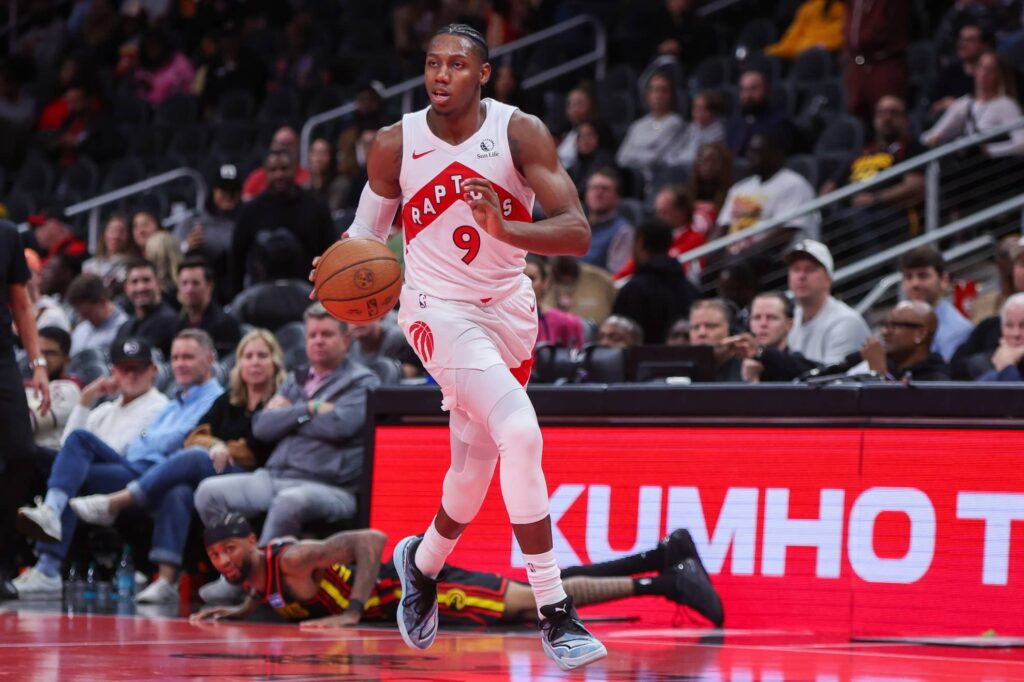
Phoenix Suns Receive: RJ Barrett, 2026 first-round pick
Toronto Raptors Receive: Dillon Brooks, Khaman Maluach
This one has actual smoke behind it, not just fan-fiction. ESPN reporters Tim Bontemps and Brian Windhorst were cited saying the Raptors have been gauging the trade value of multiple players, including RJ Barrett. That matters, because it signals they’re at least willing to talk frameworks in order to upgrade the roster.
For the Suns, the logic is simple. They’re winning games, but the offense can still get sticky when defenses sell out on Devin Booker. The Suns are scoring 114.2 points per game and allowing 111.3, with a 46.2% FG mark and 36.4% from three, but they also cough it up 15.4 times per game. They’ve been elite defensively too, sitting sixth in defensive rating at 111.8, so this isn’t about “blow it up.” It’s about adding one more creator so Booker doesn’t have to play superhero every tight fourth.
Barrett gives them that. He’s at 18.7 points, 5.1 rebounds, 3.6 assists on 48.3% from the field and 33.3% from three this season. He’s not a perfect shooter, and the 70.0% at the line is annoying, but he’s big, physical, and he gets downhill. On this roster, that’s exactly the profile that forces rotations and creates easier shots for everyone else.
The money is clean, too. Barrett is making $27.7 million in 2025-26 (with $29.6 million in 2026-27), while Dillon Brooks at $21.1 million, plus Maluach at $6.0 million, gets you basically right there. The Suns also get a 2026 first-round pick back, which is huge because it gives them an actual chip to keep upgrading around Booker instead of being locked into “minimums only” territory.
For the Raptors, this is about re-shaping the roster without pretending Barrett is some untouchable pillar. The Raptors have been awesome defensively, but they could use a two-way wing scorer who is playing like the best in the league. Brooks instantly juices their perimeter defense and edge, and he’s quietly having a big scoring season at 21.1 points on 35.4% from three. Maluach is a long-term swing, only 1.2 points and 0.9 rebounds in 4.4 minutes per game, but he’s also a cheap, controllable rim-protection project. And with Jakob Poeltl still out indefinitely with a back issue, adding another big body to the pipeline isn’t nothing.
The Suns should do this fast. It’s the rare trade that upgrades Booker’s life immediately, keeps the defense respectable, and sneaks a first-round pick into the deal as a bonus. That’s how you climb the standings without gambling the whole future on one desperate move.
3. Michael Porter Jr. Upgrades Their Shot-Making
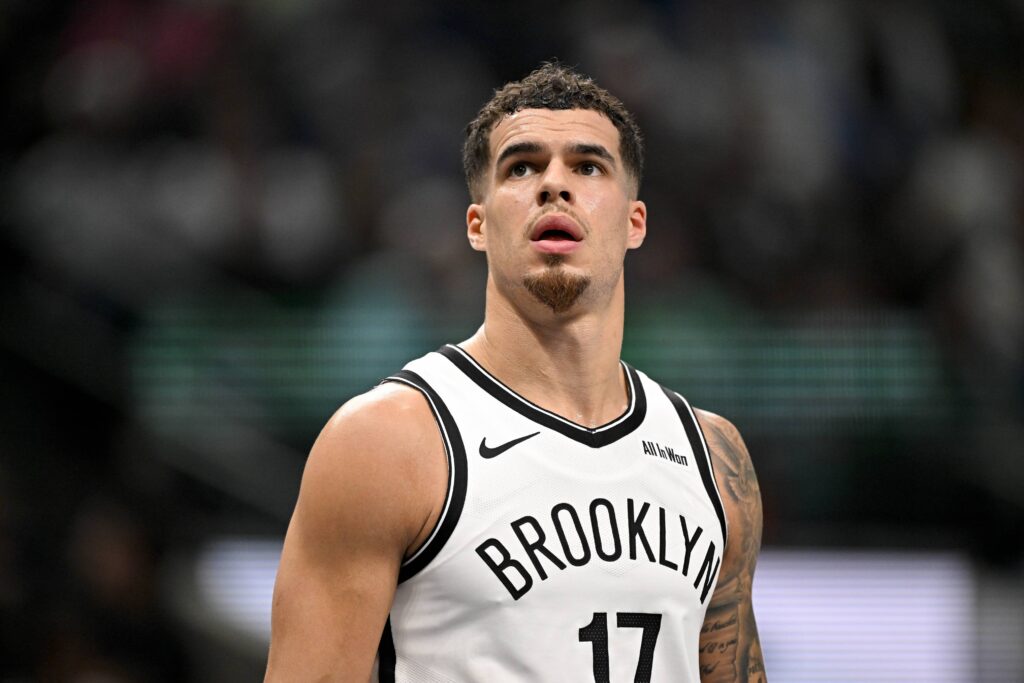
Phoenix Suns Receive: Michael Porter Jr.
Brooklyn Nets Receive: Jalen Green, Khaman Maluach, 2027 first-round pick (via Jazz, Cavaliers, or Timberwolves)
This is the cleanest “make life easier for Devin Booker” idea of the bunch, because it targets the one thing the Suns still don’t consistently have: a jumbo wing who can punish help defense without needing the ball every possession.
And Michael Porter Jr. has been ridiculous this season. He’s at 25.6 points, 7.3 rebounds, 3.2 assists on 48.2% from the field and 39.8% from three. That’s not “nice third option” production, that’s “your scouting report changes” production. He’s also the exact type of movement shooter who makes teams pay for loading up on Booker, because you can’t casually stunt off him, not when he’s basically living near 40% from deep on real volume.
Here’s the important reporting caveat: ESPN pushed back on the idea that the Nets have already made Porter available. So this scenario only becomes real if the Suns come in with an offer that screams “fine, take the young guys and the pick,” and the Nets decide the timeline matters more than keeping their best player. The Nets are 13-34, they’re not postseason-bound, and the whole vibe around them has been draft position and asset accumulation.
Contract-wise, the math is clean and the commitment is real. Porter is at $38.3 million this season. Green is at $33.3 million, Maluach is at $6.0 million, and that’s basically the deal right there. The pick is the “make it hurt” piece, and the top-5 protection keeps it from turning into a franchise-ruining mistake if things go sideways.
From the Suns’ side, I like this more than people will admit. They’re shooting 46.2% from the field and 36.4% from three, but they also turn it over 15.4 times per game, which is where late-game possessions get ugly. Porter isn’t a dribble-god, but he’s a shot quality machine. You run him off pin-downs, you park him in the corner, you force defenses to pick their poison. That’s how you stop games from becoming “Booker versus five jerseys.”
For the Nets, it’s the classic reset logic. You cash out a star-level season for a younger scorer on a big deal, a real long-term center prospect on a rookie-scale contract, and another first that keeps the rebuild stocked. If the Suns can actually get Porter for this package, I’d do it, because it’s the rare move that upgrades shooting, size, and playoff shot-making without turning the roster into a weird fit science experiment.
4. Lauri Markkanen Gives Booker A 7-Foot Cheat Code
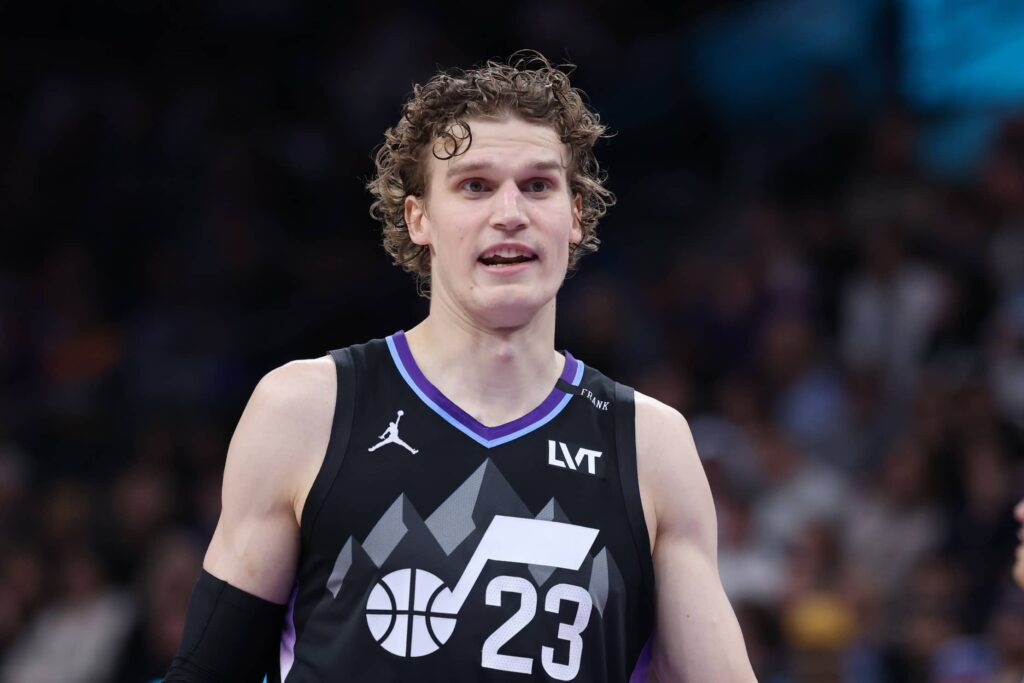
Phoenix Suns Receive: Lauri Markkanen
Utah Jazz Receive: Jalen Green, Royce O’Neale, Nick Richards, 2027 first-round pick (via Jazz, Cavaliers, or Timberwolves), 2029 first-round pick (swap via Rockets)
This is the one that would make every Suns possession feel easier, because Lauri Markkanen is basically the perfect “Booker helper” at his peak. The catch is the reporting around the Jazz has been consistent: they don’t expect a deadline blockbuster, and they’ve basically been holding firm on Markkanen unless someone shows up with an offer that makes them feel stupid for saying no.
That’s why this framework is aggressive, and why it actually has a chance of being taken seriously. Markkanen is having a monster season: 27.4 points, 7.0 rebounds, 2.2 assists on 47.9% from the field, 36.4% from three, 88.6% at the line. He’s not just a floor-spacer, he’s a walking matchup problem. A 7-footer who can sprint into handoffs, pop, slip into open space, and punish any lazy help.
For the Suns, the fit is nasty. Markkanen is how you clean up the “late-game ugliness” without asking Booker to go full superhero every fourth quarter. You can run Booker-Markkanen pick-and-pop until teams panic, then punish the rotations with simple reads. It’s not complicated, it’s just unfair.
Now the Jazz angle. They’re 15-34, and their defense has been a disaster, 127.4 points allowed per game with opponents shooting 49.3% from the field and 37.9% from three. If you’re stuck in that kind of season, cashing out a star for picks and younger swings starts to look less like “quitting” and more like “finally picking a direction.”
Contract-wise, Markkanen is expensive and locked in, $46.3 million in 2025-26 on a four-year extension. That’s exactly why the price has to be real. Green is the money piece at $33.3 million. O’Neale is $10.1 million, and Richards is $5.0 million, so the math works clean.
The value for the Jazz is the bundle. Green is the upside swing, even if his 2025-26 role has been messy, he was a 21.0-point scorer last season and still young enough to bet on. O’Neale is a legit plug-and-play wing contract. Richards is a workable big on an easy number. Then you add two first-round picks, with the 2029 one being the spicy part because of the swap rights hanging over it.
My take: if the Suns can get Markkanen without adding a third first, they should sprint to the phone. This is the kind of move that gives Booker a clean offensive identity, 5-out spacing, and a second “oh no” scoring threat that travels in the playoffs.
The Jazz probably try to squeeze harder because they’ve been telling everyone they won’t blink. But this package is at least in the neighborhood of what it would take to make them finally blink.
5. Trey Murphy III Is The Two-Way Star The Suns Need
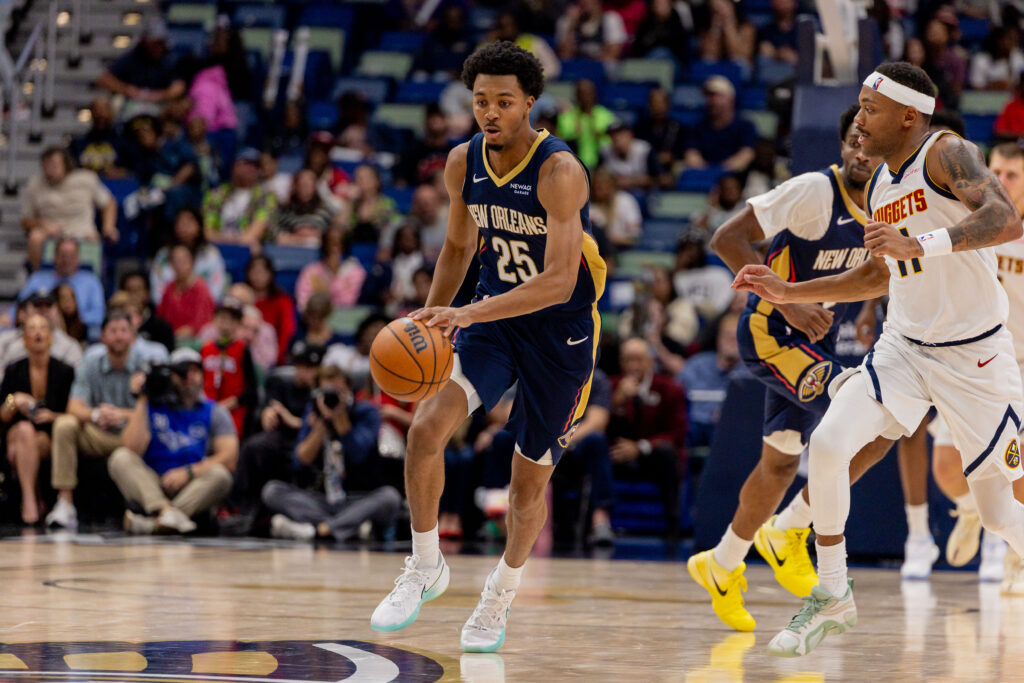
Phoenix Suns Receive: Trey Murphy III, Kevon Looney
New Orleans Pelicans Receive: Jalen Green, 2026 first-round pick (Wizards swap), 2027 first-round pick (via Jazz, Cavaliers, or Timberwolves), 2029 second-round pick
This is the “pay the price for the perfect wing” play, and it starts with one reality: the Pelicans are 13-38 and sitting 14th in the West. That’s why Trey Murphy keeps popping up in deadline noise, even if the most connected reporting from The Athletic still says it’s unlikely they actually move him.
But “unlikely” isn’t “impossible,” it just means the ask is disgusting. One recent read on the market from Marc Stein is that the Pelicans want multiple first-round picks if they ever open the door on Murphy (or Herb Jones), which tracks with how valuable he is when he’s rolling.
Murphy is basically a cheat code next to Devin Booker: 21.5 points, 5.9 rebounds, 3.6 assists on 47.0% from the field, and he’s doing it as a 6’8” wing who can space, sprint into actions, and punish late closeouts.
The shooting profile is exactly what the Suns need to stop possessions from turning into “Booker vs. five defenders,” and Murphy’s extension means you’re not renting him. He’s on $25 million in 2025-26 as part of a four-year, $112 million rookie extension.
The Pelicans get their “hurt you” return. Jalen Green’s salary gets over Murphy’s $25.0 million, so the Pelicans add Kevon Looney ($8.0 million) for salary matching. The real cost is in the draft capital: two future first-rounders and a second. This is expensive, but it’s clean. If you’re serious about getting Booker a playoff-ready roster, Murphy is the exact wing that makes every lineup make sense.
6. Tyler Herro Puts Another Elite Creator Next To Booker
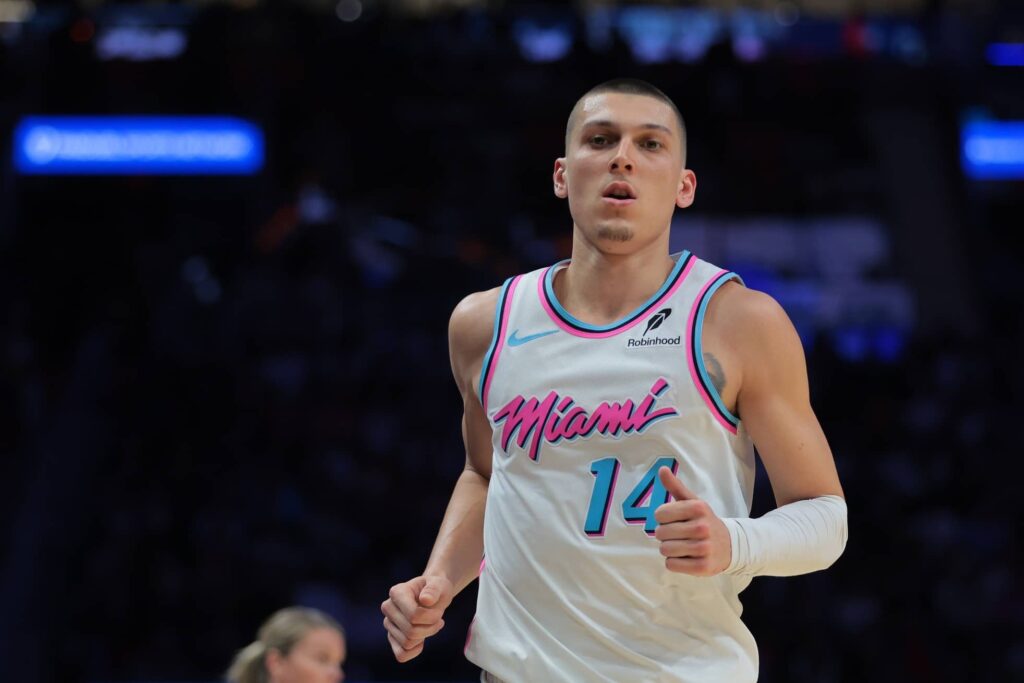
Phoenix Suns Receive: Tyler Herro
Miami Heat Receive: Jalen Green, Ryan Dunn, 2026 first-round pick (Wizards swap), 2027 first-round pick (via Jazz, Cavaliers, or Timberwolves)
This one is pure offense-first logic: if you can put another legit shot-maker next to Booker, the Suns stop living possession-to-possession in late-game mud. Tyler Herro is at 21.9 points, 4.7 rebounds, 2.7 assists on 49.7% from the field this season.
And the availability piece has been the whole story, he just recently got cleared to return after a right big toe contusion. That timing matters because the Heat’s deadline posture has been framed as something that could hinge on Herro’s health and how he looks once he’s back.
Contract-wise, it’s not some mystery box. Herro is $31 million in 2025-26. If the Heat ever want to re-route that money into more size and defense, this is the kind of construction that actually does it.
Green is the immediate scoring replacement, and Dunn is the sneaky two-way wing the Heat always gets. Green is giving the Suns 11.6 points and 2.2 rebounds after only 5 games this season, at $33.1 million in 2025-26. He’s struggling, but in a similar role as Herro in Miami, Green could thrive again next season. Add two firsts, and that’s the type of “okay, we can talk” package that changes a front office’s tone fast.
I like Herro, but I only do this if you’re sure you can cover the defensive tradeoff with scheme and personnel. The upside is obvious, Booker finally gets a second guy who can manufacture buckets without a perfect play call. The downside is also obvious, you’re paying premium assets for a player you have to protect at times. If the Suns want fireworks, this is fireworks.