
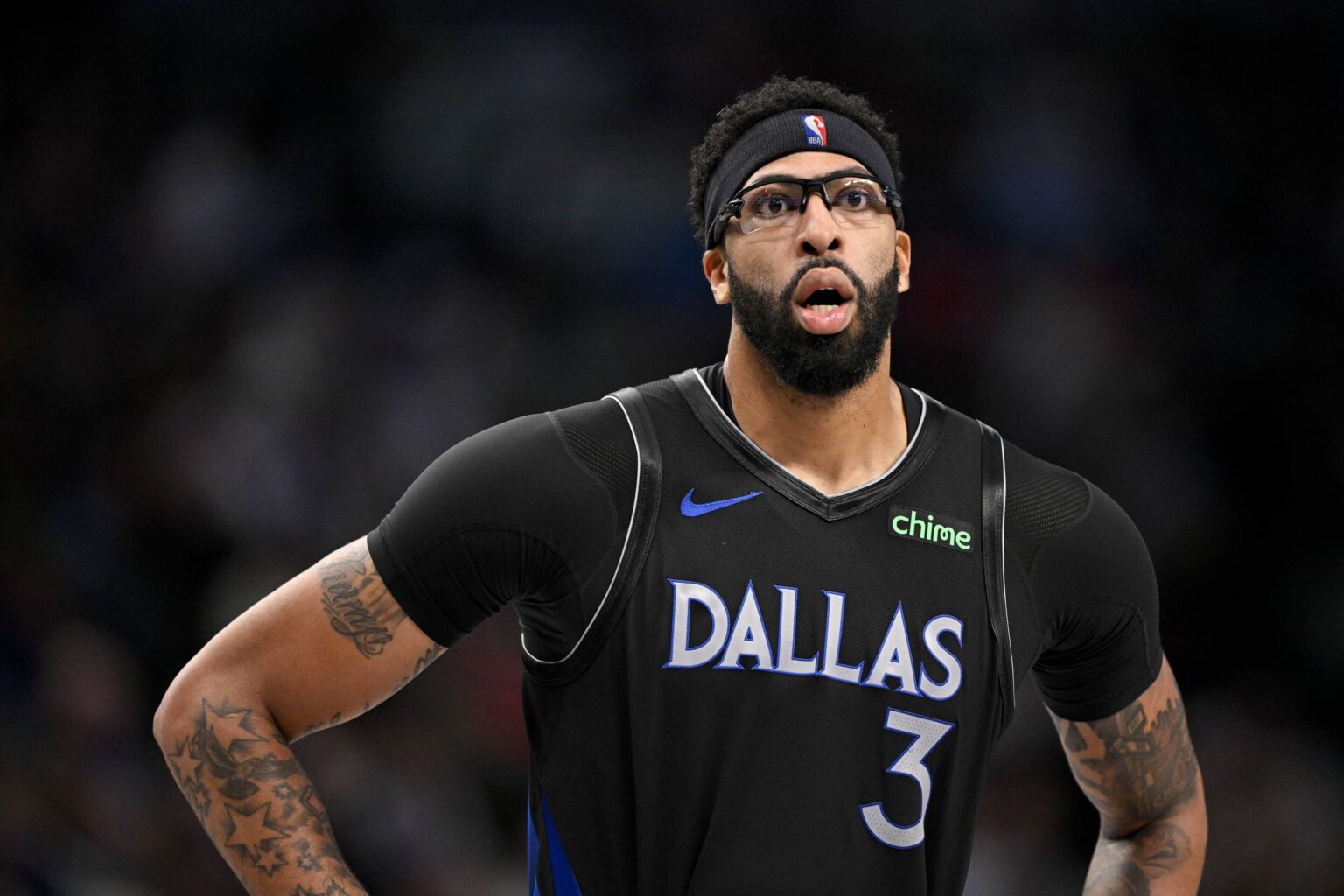
The Mavericks are sitting at 17-26, and the vibe is exactly what the record says: messy, short-handed, and stuck between “try to compete” and “be honest about where this is going.” They just lit up the Jazz in a 138-120 win, but even that game came with the same underlying reality. This roster is constantly changing night to night because the injury report is basically its own novella.
The biggest cloud is Anthony Davis. He’s played only 20 games, he’s averaging 20.4 points, 11.1 rebounds, and 1.7 blocks, and now the hand injury has turned into a weird tug-of-war between reports, second opinions, and Davis himself calling the surgery talk “lies.” The wild part is that even with all that, the Mavericks have still been linked to trade conversations involving Davis ahead of the February 5 deadline.
And then there’s the bigger picture: Cooper Flagg is the center of gravity now. He’s started almost every game, he’s been a legit bright spot, and the Mavericks can’t afford to do anything that compromises his development, especially after the ankle sprain scare. So with the deadline coming, here’s how I think the Mavericks actually play it.
The Mavs Won’t Find A Trade For Anthony Davis
This is the uncomfortable prediction, but it’s the one that matches the reporting and the market logic. The Mavericks want a clean exit if they move Davis, and the league doesn’t want to pay a premium for a 32-year-old big making $54.1 million while dealing with a hand injury that may keep him out past the deadline.
ESPN’s reporting has basically framed it like this: Davis remains a trade candidate, but the injury has chilled the conversations, and multiple executives expect him to stay put unless the Mavericks are basically salary-dumping him.
That lines up with what you’d assume anyway. Even if a team loves the idea of “Davis as the missing piece,” they still have to build a legal package under the current CBA rules, swallow the injury uncertainty, and feel good about the huge money.
There’s also the leverage problem. Tim MacMahon’s reporting said Davis’ camp would like a move by February 5, but the Mavericks don’t feel pressured to rush a deal just to get out of the contract. And honestly, why would they? If the offers are gross, they are better off waiting until the offseason when more teams can maneuver, more contracts are movable, and you’re not negotiating with a guy in a splint.
The Hawks and Raptors keep getting mentioned as “linked” teams, but even that reporting has come with a big dose of cold water, basically saying nobody is close right now. That’s the key phrase: linked is not the same as engaged. And when a player’s health is uncertain, “linked” becomes a content cycle more than a real market.
My take: the Mavericks would love to turn Davis into picks and expirings, reset around Flagg, and regain flexibility. But unless someone panics and pays real value, Davis is probably still on the roster on February 6. The league is too cautious, the money is too heavy, and the injury timing is too brutal.
Daniel Gafford Gets Shipped For Draft Compensation
If the Mavericks make a real “deadline trade,” this is the type of move it’s going to be. Not glamorous, not franchise-altering, but practical. Daniel Gafford has been one of the most obvious trade chips for months, and he keeps showing up in deadline chatter because he’s a plug-and-play center for teams trying to win.
He’s on $14.4 million this season, and he already agreed to an extension last summer, so teams know they’re not trading for a rental. The only thing that’s slowed the chatter lately is the ankle, because he literally sprained it in the same game Cooper Flagg tweaked his.
The Warriors feel like the obvious “win-now” call. They’ve been hunting upgrades around their veteran core, and they’re already in active trade mode with the deadline closing in. Gafford fits because he’s a vertical rim-runner who can clean up possessions, finish lobs, and give them real rim protection without needing plays called for him. He’s the kind of center who turns messy possessions into points, which matters when the offense gets stagnant in playoff minutes.
A realistic Warriors framework:
Warriors Receive: Daniel Gafford
Mavericks Receive: Moses Moody, Quinten Post, 2030 second-round pick
Moody’s cap hit is $11.5 million, Post sits around $2.0 million, and that gets you into the right salary neighborhood while giving the Mavericks an actual wing asset to develop or flip later. The pick is the “thank you” for taking on Gafford’s long-term money. If the Warriors refuse to put Moody in it, the alternate matching route is Buddy Hield ($9.2 million) plus Al Horford ($5.6 million) and a second, which is cleaner for salary but less exciting for a Mavericks team that should be stacking young pieces.
The Pacers are the other suitor I’d watch, because they’re spiraling (10-33) and they need easy stability anywhere they can find it. They’ve been bleeding points at times, and getting a legit rim finisher and shot blocker gives them at least one identity tool while they sort the rest out.
The simplest Pacers framework:
Pacers Receive: Daniel Gafford
Mavericks Receive: Obi Toppin, 2026 second-round pick
Toppin’s $14.0 million basically matches on its own, and the Mavericks get an athletic forward who can run, finish, and play next to Flagg without clogging the floor.
My bet: if Gafford proves he’s fine after the ankle scare, the Mavericks will find someone willing to pay “draft compensation plus matching salary,” and it’s way more likely to be a team like the Warriors or Pacers than some mystery contender.
The Mavs Don’t Land A Young Star To Pair With Cooper Flagg
This is the dream scenario fans want, some young co-star next to Flagg so the rebuild doesn’t feel like a rebuild. But the Mavericks are boxed in by reality.
First, Flagg is already doing his job. He is putting up 18.8 points, 6.3 rebounds, 4.2 assists, and 1.3 steals, which is ridiculous responsibility for a 19-year-old. Second, the Mavericks’ flexibility is not what people think it is.
ESPN’s trade-deadline guide specifically noted they can’t even use an $11 million trade exception because it would push them over the second apron. That’s a huge limiter when you’re trying to shop for talent.
Now layer in the rumor world. Jonathan Kuminga is the name that makes the most sense as a “young star swing,” and the Mavericks have been mentioned as an interested team in that universe. But “interest” doesn’t mean “deal.” The Warriors are trying to upgrade too, and Kuminga is an asset they’ll use to get something they actually want, not to donate upside to the Mavericks.
Also, if the Mavericks can’t even move Davis cleanly right now, it’s hard to see them magically pulling off a “get a young star” heist without paying a price that makes the whole thing self-defeating. That’s how these deadline fantasies usually die. You want the shiny young player, but you have to send out the stuff you actually need, picks, defenders, or the few good contracts that make your roster functional.
My take: the Mavericks sniff around. They make calls. They get attached to one exciting idea for 48 hours. Then they land back on Earth. Flagg is the plan, and the real “young star partner” chase probably gets pushed to the offseason or even the summer of 2027 when the books look cleaner.
D’Angelo Russell Leaves, Klay Thompson Stays
This is the kind of “two birds” deadline the Mavericks can realistically pull off. Not because it’s easy, but because it fits the reporting: both D’Angelo Russell and Klay Thompson have been mentioned as trade candidates, and both reportedly have limited markets.
Russell is on a two-year, $13 million deal, and his 2025-26 salary is only $5.685 million. That number is low enough that he’s movable without a three-team circus, and that’s exactly why I think he’s the guard who gets dealt.
The Nets make the most sense as a landing spot because they’re sitting at 12-28, and they’ve spent the past year keeping flexibility so they can absorb contracts for assets. Russell also has history there, which always helps when you’re selling a deadline reunion to a fanbase that’s watching losses pile up.
A realistic Nets framework:
Nets Receive: D’Angelo Russell, 2030 second-round pick
Mavericks Receive: Haywood Highsmith
Highsmith is at $5.6 million, so the money basically lines up cleanly, and the Mavericks get a defense-first wing who fits a Flagg-centric future a lot better than another ball-dominant guard. From the Nets side, taking Russell is only worth it if there’s a sweetener attached, because he doesn’t change their timeline. But that’s the whole point for the Mavericks, you’re paying a small price to clean up the rotation and stop forcing an awkward fit.
Now the Klay part. I still think Klay stays. It’s not because he’s untouchable, it’s because his market is probably colder than people want to admit, and the Mavericks actually need what he provides next to Flagg: spacing gravity, quick-trigger shooting, and a veteran who can stabilize lineups when the kids look overwhelmed. Plus, the Mavs just watched him keep climbing the all-time three-point list, and those moments matter for a locker room that’s been living in chaos.
So yeah, my call is the Mavericks use the deadline to simplify. Move Russell to the Nets in a “player plus second” type of deal, keep Klay as the spacing anchor, and let Flagg’s development drive everything else.
Final Thoughts
This deadline is going to be frustrating for Mavericks fans because it’s probably going to look smaller than the rumors suggest. That’s not cowardice, that’s math. The Mavericks are dealing with injury chaos, weird cap constraints, and the giant Davis question sitting on the whole plan.
If I had to summarize the Mavericks’ smartest version of this deadline, it’s this: protect Flagg’s development, create future flexibility, and stop burning assets just to pretend the season is something it’s not.
You don’t trade a bunch of picks to chase the 10-seed. You don’t salary-dump Davis for nothing unless the contract is actively poisoning the rebuild. And you definitely don’t rush into a “young star” trade that strips away the very resources you’d use to build around Flagg properly.
My prediction is the Mavericks make one practical move, likely centered around Gafford, they try to clean up the Russell situation, and they ride out the Davis mess until a more logical market opens. Then, in the offseason, when the league has more flexibility and fewer unknowns, they take the real swing.








Why would the Mavs salary dump afford for spare parts and a second round pick? He’s 27, he’s good and he’s in an affordable contract. Bring a first round pick to the table or stay home.
I would salary dump AD so long as I got enough in expiring contracts to get safely under the second apron.
I would not trade veterans like Gafford, Washington and Marshall because this can’t be a fire sale. Msvs do not control their 1st round pick from 2027-2030. So trading good players on affordable contracts for less than their value is really dumb. DDT