The Cleveland Cavaliers host the Detroit Pistons at Rocket Arena on Tuesday, March 3, at 7:00 PM ET, and it comes as one of the cleaner measuring-stick games on the slate, given where both teams sit in the East.
The Cavaliers are 38-24 and fourth, while the Pistons are 45-14 and first, so the stakes are high even before you get to the matchup.
The split is just as telling: the Cavaliers are 20-11 at home, and the Pistons have traveled as a top seed does at 21-7 on the road. The Cavaliers come in off a 106-102 win over the Nets on Sunday, while the Pistons’ last outing was a 106-92 win over the Magic that night.
They have already played three times this season, and the Pistons lead the series 2-1, including the 122-119 overtime win on Friday.
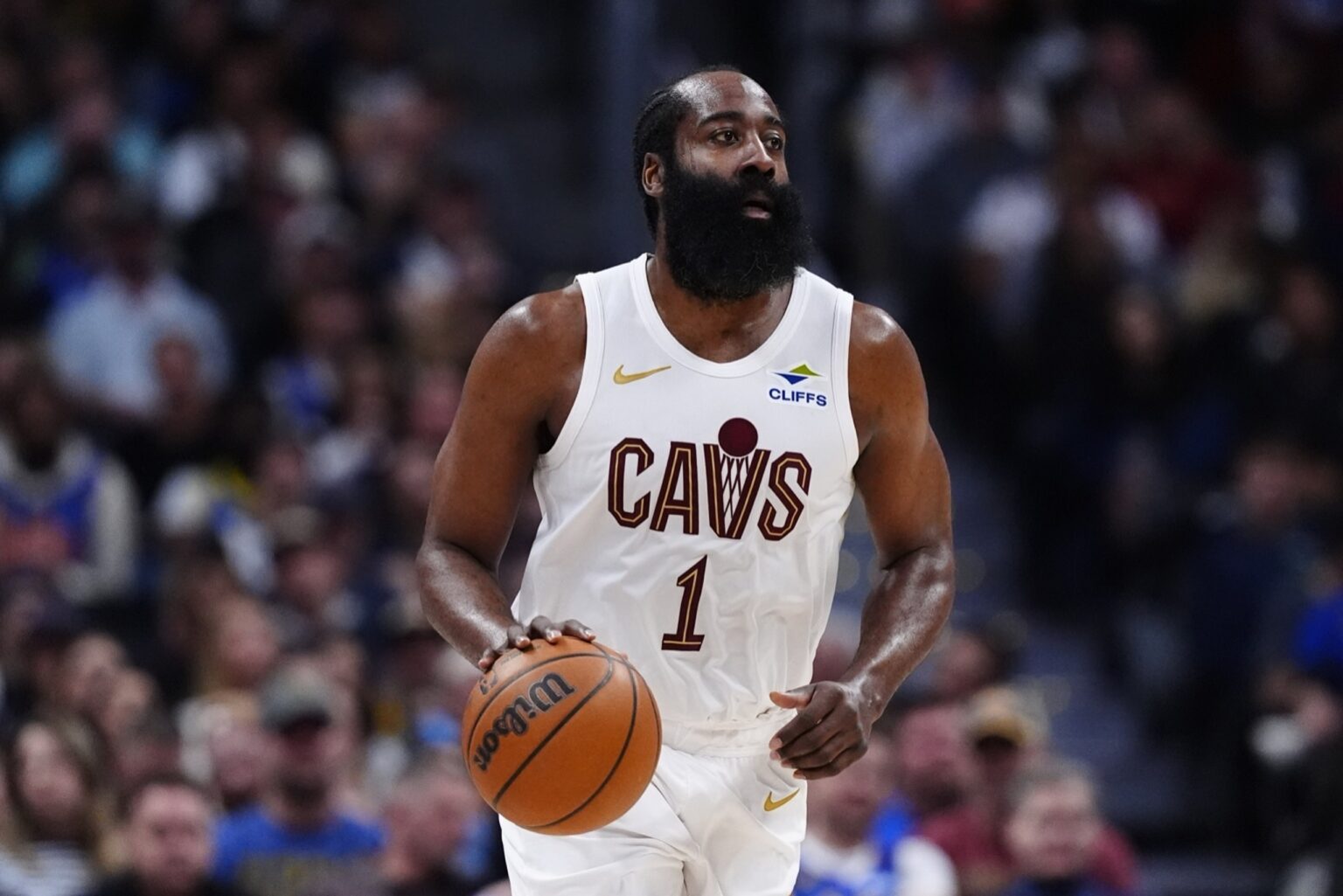
Donovan Mitchell is out, but the Cavaliers still lean on James Harden, who brings 24.5 points, 4.9 rebounds, and 8.1 assists, and Evan Mobley, putting up 16.9 points, 9.6 rebounds, and 3.4 assists.
Cade Cunningham drives everything for the Pistons with 25.5 points, 5.8 rebounds, and 9.8 assists, and Jalen Duren adds 18.5 points and 10.7 rebounds.
The hook is simple: it is a rematch with the top seed, but without Mitchell, the Cavaliers need a cleaner, more physical game to keep the Pistons from owning the paint again.
Injury Report
Cavaliers
Donovan Mitchell: Out (right groin strain)
Max Strus: Out (left foot surgery – Jones fracture)
Darius Brown: Out (G League – Two-Way)
Riley Minix: Out (G League – Two-Way)
Dean Wade: Questionable (right ankle sprain)
Pistons
Isaac Jones: Out (G League – Two-Way)
Wendell Moore Jr.: Out (G League – Two-Way)
Bobi Klintman: Questionable (G League – On Assignment)
Chaz Lanier: Questionable (G League – On Assignment)
Tolu Smith: Questionable (G League – Two-Way)
Why The Cavaliers Have The Advantage
The Cavaliers’ offense is built to win possession-by-possession without needing a perfect shooting night. They score 119.2 points per game (3rd) and average 28.4 assists (8th), so the baseline is high even when lineups change.
Three-point volume is a real part of that identity. The Cavaliers take 40.2 threes per game (6th), which matters against a Pistons team that wins the paint battle so often that opponents can get pulled into cramped half-court possessions.
They also have a defensive “shape” that fits this matchup. The Cavaliers allow 45.9 points in the paint per game (6th), and that directly meets the Pistons’ biggest strength, which is living at the rim and generating constant interior pressure.
The matchup logic is that if the Cavaliers can hold the line inside without over-helping, they can keep the Pistons from turning the game into a free-throws-and-dunks script. That is the clearest way to protect their own offensive advantage, because it keeps the game in a half-court rhythm where their passing and spacing show up.
Ball security is also a factor when the rotation is stretched. The Cavaliers commit 14.4 turnovers per game (12th), which is good enough to avoid donating the extra possessions that fuel Pistons runs.
Why The Pistons Have The Advantage
The Pistons’ profile starts with two-way dominance on the scoreboard. They allow just 109.4 points per game (4th) and carry a +7.9 average scoring margin (3rd), which is usually what separates a top seed from everyone else over a long season.
They can score too, and it’s not a fragile style. The Pistons put up 117.3 points per game (10th), and the core of it is paint volume: 57.7 points in the paint per game (1st). Against a Cavaliers team that’s missing its leading scorer, that pressure becomes even more valuable because it creates a stable offense without relying on jump-shot variance.
The rebounding edge is real, and it shows up in the season-long numbers. The Pistons grab 56.6 rebounds per game (2nd), and extra possessions are the cleanest way to win a road game when the opponent still has a top-three scoring offense on paper.
They also defend in a way that travels. The Pistons allow 13.3 fastbreak points per game (5th) and just 42.7 paint points allowed (3rd), so they tend to remove the easiest points first. If they can keep the Cavaliers from living in transition and force them to finish over bodies, the Cavaliers’ efficiency advantage gets harder to reach without Mitchell’s self-created scoring.
The last piece is simple context: the Pistons have already won two of the three meetings, including the overtime comeback on Friday. In a rematch setting, they’ve already shown they can survive the Cavaliers’ best stretches and still win the possession game late.
X-Factors
Sam Merrill is the Cavaliers’ spacing swing because his minutes can stretch the floor enough to keep the Pistons from sitting in the paint. Merrill is giving the Cavaliers 13.2 points, 2.3 rebounds, and 2.2 assists. If he’s knocking down early threes, the Cavaliers can keep their assist-heavy offense intact; if he’s cold, the Pistons can load the lane and turn those possessions into tougher twos.
Dean Wade is the subtle lineup piece that stabilizes a physical matchup like this. Wade is at 5.8 points, 4.2 rebounds, and 1.6 assists. If he plays through the ankle and holds up defensively, the Cavaliers can keep size on the floor without sacrificing spacing; if he’s limited or out, the Cavaliers’ forward rotation gets thinner, and the Pistons’ paint pressure gets easier to sustain.
Jarrett Allen becomes a bigger lever when the Cavaliers are short-handed. Allen averages 15.4 points, 8.6 rebounds, and 1.9 assists while finishing at 63.7% from the field. If he controls the defensive glass and turns rim chances into efficient points, the Cavaliers can keep pace without needing a huge guard-scoring night.
Duncan Robinson is the Pistons’ shooter who can decide whether the Cavaliers are allowed to pack the paint. Robinson posts 12.1 points, 2.7 rebounds, and 1.9 assists. If he’s hitting movement threes, it forces tighter closeouts and opens the driving lanes for Cunningham; if he’s off, the Cavaliers can stay compact and make the Pistons win with tougher shots.
Ausar Thompson is the possession-play guy who changes games without taking over offensively. Thompson is producing 10.3 points, 6.0 rebounds, and 2.9 assists. If he produces rebound-and-defense minutes, the Pistons can create the extra possessions that usually decide road games against top offenses.
Tobias Harris is the steady connector who can punish mismatches when the Cavaliers’ rotation is stressed. Harris brings 13.2 points, 5.2 rebounds, and 2.3 assists. If he scores efficiently in the mid-post and keeps the ball moving, the Pistons’ offense stays organized even when the game slows down.
Prediction
I’m taking the Pistons. The two-way baseline is stronger, and the key numbers line up with the moment: 109.4 points allowed per game (4th) and a +7.9 scoring margin (3rd) against a Cavaliers team missing Donovan Mitchell and James Harden playing on a fractured thumb. If the Pistons control the paint the way they usually do, they should be able to win the battle again.
Prediction: Pistons 116, Cavaliers 110