Isolation scoring is the NBA’s cleanest stress test for a scorer. No screen to create separation. No set play to generate an advantage. It is the star, the matchup, the clock, and whether the player can consistently manufacture a good shot without turning the ball over. That is why the best isolation players tend to age well, translate in the playoffs, and quietly prop up an offense on the nights when everything else gets blown up.
For this tier list, the backbone is NBA.com’s isolation efficiency, paired with volume context and the context it produces: team results, shooting profile, turnover control, and how opponents are choosing to guard these guys. Efficiency alone is not enough if it comes in tiny volume, and volume alone is not enough if it bleeds possessions.
The top tier is reserved for players who can live in isolation without stalling an offense, and who force defenses to send help even when everyone in the building knows what is coming.
Isolation scoring is sensitive to role. Some stars are asked to carry bailout possessions late in the clock against a loaded defense, while others pick their spots within a structured offense and see more favorable matchups. Spacing also changes the math. A scorer operating with four shooters can attack single coverage differently than one playing next to non-shooting lineups that invite extra bodies at the nail.
The playoffs add another layer: scouting tightens, switching becomes more aggressive, and the best isolation players are the ones who can still create quality without relying on a whistle or a single pet move. This is not a list of the most talented shot-makers in a vacuum. It is a ranking of who is driving efficient, repeatable one-on-one offense right now, and how sustainable that advantage looks when the defense has answers.
Here we rank the best isolation scorers into tiers.
Tier 1
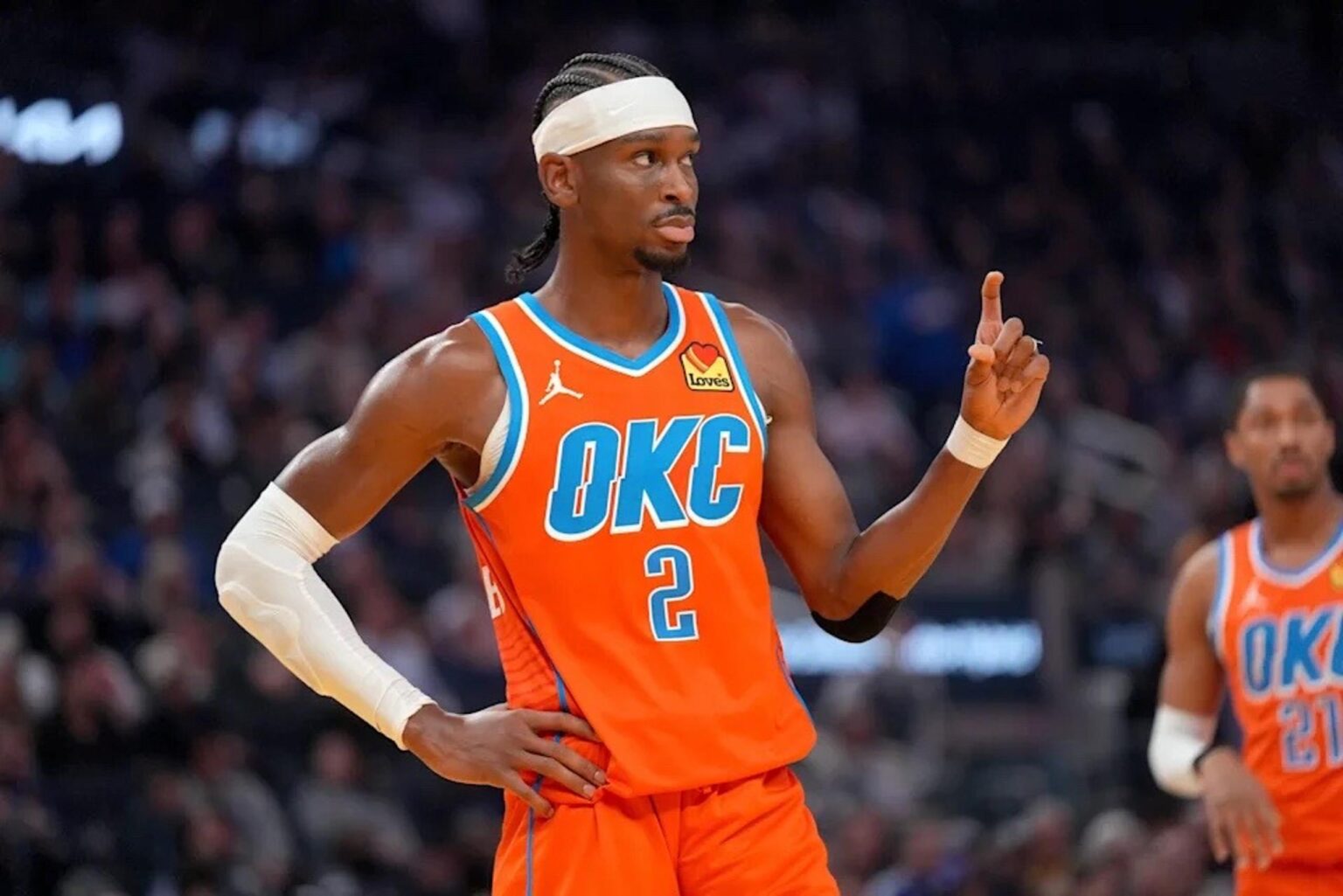
Shai Gilgeous-Alexander
Shai Gilgeous-Alexander profiles as the clear Tier 1 isolation scorer of the 2025-26 season because his isolation possessions function as a primary offensive engine, not a late-clock contingency. He is generating 1.14 points per possession in isolation, an elite efficiency level given his volume and the degree of defensive attention he draws.
The broader production supports the same conclusion. Gilgeous-Alexander is averaging 31.8 points, 4.4 rebounds, and 6.4 assists, while shooting 55.4% from the field, 39.0% from three, and 89.2% from the line. His turnover rate remains controlled at 2.1 per game, an important separator in isolation-heavy usage where empty possessions frequently become transition opportunities for the opponent.
Team context further elevates the case. The Thunder are 44-14 and first in the West, and their late-game offense has been able to lean into Gilgeous-Alexander’s self-created scoring without devolving into stagnant, single-action possessions.
His isolation scoring scales because it is built on repeatable advantages: a disciplined handle that preserves balance through contact, a midrange pull-up that punishes retreating coverage, and persistent rim pressure that forces fouls and creates secondary rotations. Against larger defenders, he consistently wins with footwork and shot selection. Against smaller matchups, he leverages strength and pace to reach the paint and operate from his preferred angles.
The only meaningful drawback at the moment is availability. Gilgeous-Alexander is currently sidelined with an abdominal strain. That does not alter his placement in this tier, but it does affect short-term evaluation and the extent to which the Thunder must redistribute creation when he is unavailable.
Tier 2
Luka Doncic, Anthony Edwards, James Harden
Luka Doncic sits in Tier 2 because his isolation game remains one of the league’s most dependable late-clock structures, but it is also the type of diet elite defenses are most willing to load up against with early help and pre-rotations. The Lakers still live with that trade-off because the alternatives are usually worse.
Doncic is averaging 32.8 points, 7.7 rebounds, and 8.5 assists on 47.1% from the field, 35.5% from three, and 77.6% at the line. The Lakers are 34-22, fifth in the West, and their half-court possessions consistently narrow into Doncic isolations late in games.
On the isolation front, the clearest public efficiency baseline available is his long-run production: 1.18 points per possession in isolation for the season, which is elite when paired with his volume and the quality of defenders he draws.
The mechanism is repeatable. He does not need separation. He creates leverage with pace changes, shoulder-to-hip drives, and a step-back three that forces defenders to play higher than they would like, which in turn opens the lane and the whistle. When teams switch size onto him, he turns the possession into a strength-and-angle problem. When they switch smaller guards, he walks them into the paint and decides whether the finish, the foul, or the pass is the best outcome.
The reason he does not sit in Tier 1 is that top defenses can reduce the quality of his shots by showing a second defender earlier and shrinking the floor without fully committing to a trap. He still produces, but the possession quality is more variable than the very top tier.
Anthony Edwards is Tier 2 because the physical advantages and shot-making are Tier 1 caliber, but the efficiency can swing depending on shot selection and how quickly he gets into his drive game. The foundation is strong: Edwards is averaging 29.5 points, 5.3 rebounds, and 3.6 assists on 49.5% from the field and 40.0% from three. The Timberwolves are 35-23, sixth in the West.
The isolation scoring profile is where he separates from most guards. Edwards is at 1.36 points per possession in isolation this season, and he has generated 1,416 isolation points across 1,044.7 isolation possessions. That is both elite efficiency and star-level volume. When he is locked in, the possessions are simple and hard to guard: a decisive first step to force contact at the rim, plus a pull-up package that punishes defenders who retreat. The improved three-point accuracy matters here because it reduces the margin for defenders trying to sit on the drive.
What keeps him out of Tier 1 is the variability in possession quality. When Edwards drifts into early-clock pull-up threes against set defenses, the possession becomes easier to live with. When he commits to the paint first and uses the jumper as a counter, the isolation becomes a primary weapon that can carry a half-court offense.
James Harden is Tier 2 because the isolation craft remains high-end, but the physical margin is thinner than his peak years, which gives defenses more workable coverages. The production is still substantial: Harden is averaging 24.6 points and 8.2 assists, and the Cavaliers are 36-22, fourth in the East.
In isolation, Harden is at 1.11 points per possession this season, producing 1,230 isolation points on 1,104.5 isolation possessions. That combination of efficiency and volume is still star-level, especially because isolation possessions often come when the defense is set and expecting the action.
His edge is control. He manipulates the defender’s feet with hesitations, keeps the ball on a string, and uses the constant threat of the step-back three to open the drive and the foul line. Even when the first step is not creating clean separation, he can still manufacture contact and collapse the shell enough to create secondary advantages.
The Tier 2 placement is about the counters. Bigger wings can sit on the step-back and force more contested twos, and switching can reduce some of the passing windows Harden used to create when he consistently turned the corner. He remains a strong isolation option because the skill is intact, but he is no longer an automatic “single coverage is a mistake” scorer every night.
Tier 3
Stephen Curry, Kevin Durant, Devin Booker, Jaylen Brown, Jalen Brunson
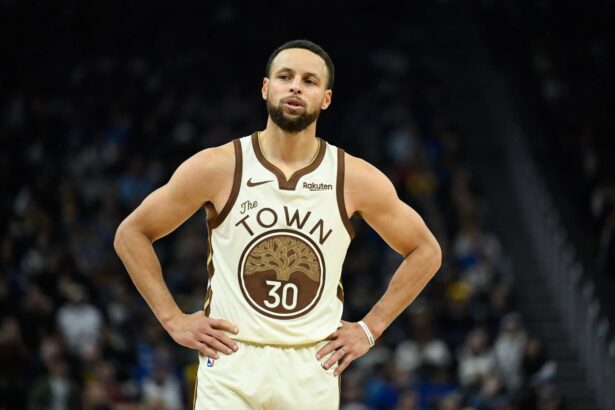
The shot difficulty is the point with Stephen Curry. The Warriors’ isolation possessions are rarely “clean,” and Curry still turns them into efficient offense because the release is fast enough to punish any cushion and the handle is tight enough to create a sliver when the defender is attached.
By the tracking numbers, Curry is producing 1.35 points per possession in isolation, with 1,061 isolation points on 784.3 possessions. That is elite efficiency at meaningful volume, not a small-sample spike.
The season line remains star-level: 27.2 points, 4.8 assists, 46.8% from the field, 39.1% from three, and a 63.6% true shooting mark. The Warriors are 30-27 and eighth in the West, which is the part of the context that matters for isolation usage: the offense often needs Curry to create something late in the clock.
The current drawback is availability. Curry has missed time with a knee injury, and he had already been out multiple games with an expected absence that extended beyond that window, becoming ineligible for the season awards. That matters for a tier list only insofar as it limits the sample, not because it changes what his isolation possessions look like when he is on the floor.
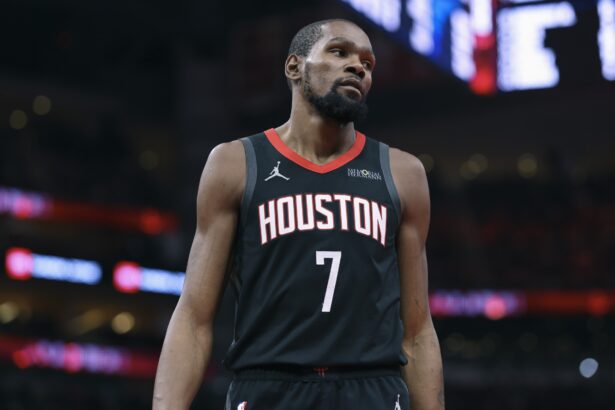
Kevin Durant’s isolation case is built on shot access. The Rockets can flatten the floor, give him a side, and the defense still has to pick a poison: live with a contested jumper from one of the best shot-makers ever, or send help and concede rotations.
This season’s tracking reflects that. Durant is at 1.35 points per possession in isolation, with 1,374 isolation points on 1,017.6 possessions. That is high efficiency at heavy volume, and it fits what the Rockets have asked him to do as an innings-eater when possessions bog down.
The production is still top-end: 25.9 points, 5.4 rebounds, 4.5 assists, on 50.7% from the field, 40.9% from three, and 88.1% at the line. The Rockets are 35-21 and third in the West, and the offense benefits from the simplicity of Durant’s late-clock options: he does not need a screen to generate a good look, and he does not need a mismatch to get to his release point.
Tier 3 instead of Tier 2 is mainly about pressure points. Durant is still elite, but he is operating in a narrower athletic window than his peak, which gives physical defenders more chances to steer him into tougher zones and keep him slightly farther from the rim.
The Suns have leaned into Devin Booker as a creator who can score in isolation without turning every possession into a pure contest shot. His value in this tier is that he can win with balance: pull-up scoring when the defender sits back, and downhill pressure when the defender crowds.
The isolation efficiency is strong. Booker has 1,088 isolation points on 931.6 isolation possessions, which works out to 1.17 points per possession in isolation for the season. That is not Tier 1 volume, but it is the kind of efficiency that keeps an offense afloat when the first option is taken away.
His overall production sits where you would expect: 24.7 points, 6.1 assists, 45.4% from the field, 30.8% from three, and 86.1% at the line. The Suns have been hovering in the West play-in mix at 33-25, which matches the “every game matters” environment that drives up late-clock isolation possessions.
The immediate note is health. Booker exited the Spurs game on Thursday with right hip soreness after recently returning from a right ankle sprain absence. For isolation scorers, lower-body availability is not a side detail. It is directly tied to burst, balance, and foul pressure, which is why it is the main swing factor in his short-term profile.
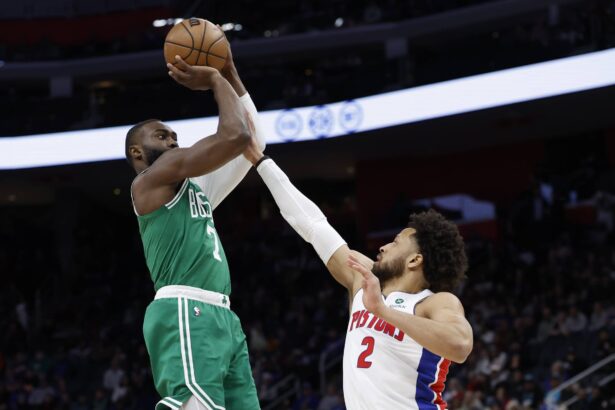
The Celtics do not need Jaylen Brown to be a full-time isolation scorer. The reason he lands in Tier 3 is that when the Celtics do simplify late possessions, Brown’s combination of strength and downhill scoring gives them a clean, repeatable option that does not require a screen.
The tracking output is heavy. Brown has 1,490 isolation points on 1,242.4 isolation possessions, translating to 1.20 points per possession in isolation. That is top-end volume, and the efficiency is comfortably above “good enough” for a player whose isolations often come against set defenses.
His season line supports the workload: 29.2 points, 7.0 rebounds, 4.9 assists, with 48.1% from the field and 34.4% from three. The Celtics are 37-19 and second in the East, and they can choose when to deploy Brown’s isolations rather than being forced into them.
That is also why he is not higher. Brown’s isolation possessions are valuable, but they are not the same “entire offense in a box” solution as the Tier 1 and Tier 2 heliocentric guards. The Celtics’ best version is still movement, spacing, and multiple threats, with Brown’s isolations as a high-leverage counter.
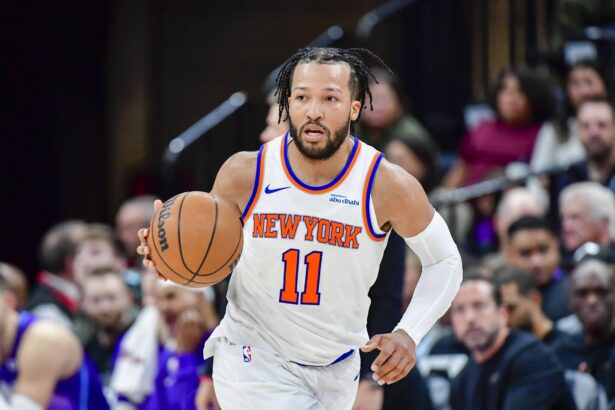
Jalen Brunson’s isolation game is about posture and pacing. He wins without elite vertical pop because he gets defenders leaning, forces contact on his terms, and has the footwork to finish from awkward angles inside the paint.
The isolation numbers are high-end: 1.28 points per possession in isolation, with 1,423 isolation points on 1,111 possessions. That is real volume, and it reflects how often the Knicks end possessions with Brunson solving a matchup late.
The season production remains steady: 26.8 points and 6.2 assists on 47.1% shooting, with 37.1% from three. The Knicks are 37-21 and third in the East, and their shot profile late in games often turns into Brunson operating from the slot with the floor spaced.
Tier 3 instead of Tier 2 is less about ability and more about coverage. Elite defenses will switch more size onto him and stay home on shooters, betting that contested twos are preferable to rotation threes. Brunson can still beat that, but it compresses his margin compared to the bigger, higher-release wings and the top-end three-point gravity of the Tier 2 guards.
Tier 4
DeMar DeRozan, Brandon Ingram, Tyrese Maxey, Jamal Murray, Cade Cunningham, Donovan Mitchell
The Kings have had to play far too many possessions in the mud this season, and DeMar DeRozan’s value is that he can still create a shot that looks like a plan, even when the spacing and tempo collapse. His isolation efficiency has held at 1.30 points per possession, with 1,099 isolation points on 846.1 possessions.
The broader production is lighter than his peak years at 18.6 points, 3.8 assists, and 3.1 rebounds, but the shot profile still fits the role: midrange volume, foul pressure, and low-drama decision-making.
Context matters here because this is not a stable offensive environment. The Kings are 13-46, last in the West, and just snapped a franchise-worst 16-game losing streak. DeRozan sits in Tier 4 because the isolation craft is still reliable, but the scoring punch and the ability to tilt a defense possession after possession are not at the Tier 2–3 level anymore.
Brandon Ingram is Tier 4 because the isolation skill is real, but it shows up more as a high-end counter than a nightly offensive identity. The Raptors can give him the ball late, flatten the floor, and get a workable look without needing a screen, which is exactly why he belongs on this list.
He is at 1.21 points per possession in isolation, with 1,209 isolation points on 995.4 possessions. His season averages are 22.0 points, 5.7 rebounds, and 3.7 assists, with 47.2% from the field and 36.9% from three.
The Raptors are 34-23 and fifth in the East, and they have enough structure around him that his isolations do not need to become a constant diet. The Tier 4 placement is mostly about pressure points: he wins with touch and rhythm more than force, so longer, more physical defenses can make those possessions trend toward tough jumpers instead of paint collapse.
Tyrese Maxey’s isolation game is built on speed and urgency, which creates a different type of problem than the slower, methodical wings in this tier. When he gets a defender leaning, the first step is enough to force rotations, and once the help comes, he can either finish or turn it into free throws. His workload lines up with his overall season: 29.0 points and 6.7 assists on 46.8% from the field, 37.7% from three, and 88.7% at the line. The 76ers are 31-26, sixth in the East, and the offense has needed Maxey to win possessions without a safety net.
The tracking number is strong: 1.27 points per possession in isolation, with 1,597 isolation points on 1,253.2 possessions. He is Tier 4 rather than Tier 3 because the physical counters are clearer: bigger guards can absorb the first bump and keep him out of the paint, which pushes him toward harder pull-ups when the whistle is tight.
Jamal Murray has a case less about raw burst and more about control. He has a rare ability to turn an isolation into a two-option possession: the defender cannot sit on the jumper, but cannot overplay it either because the change-of-pace dribble gets him into the lane.
He is at 1.24 points per possession in isolation, with 1,352 isolation points on 1,089.6 possessions. The overall line has been big: 25.5 points and 7.5 assists, while shooting 48.3% from the field and 42.3% from three.
The Nuggets are 36-22, third in the West, which matters because they can choose when to go to Murray isolations instead of living there. The reason he is Tier 4 is that his isolation value is tied to shotmaking more than rim pressure. When teams stay home on shooters and force the toughest pull-ups, the margin is thinner than the Tier 2–3 guards.
Cade Cunningham is Tier 4 because the isolation package is productive, but it is still more “workmanlike” than overwhelming. He wins with size, patience, and angles, not with instant separation. That matters because it changes how defenses can play him: they can switch size onto him and trust the contest more than they can against the fastest guards.
Cunningham is at 1.08 points per possession in isolation, with 1,267 isolation points on 1,168.4 possessions. His season averages are 25.3 points, 5.8 rebounds, and 9.8 assists. The Pistons are 42-14, first in the East, but the nightly burden on Cunningham is still significant because so much creation runs through him. A recent example of the swing: he had 16 points and 10 assists in a loss to the Spurs, but shot 5-of-26, which is the downside profile when the paint is walled off, and the pull-ups do not fall.
Donovan Mitchell is Tier 4 because his isolation scoring is still a high-level weapon, but the Cavaliers do not need it to be the entire system, the way some Tier 2–3 stars do. He is producing 1.29 points per possession in isolation, with 1,547 isolation points on 1,196.8 possessions. His season line is 28.6 points, 5.9 assists, and 4.5 rebounds on 48.6% from the field and 37.1% from three.
The Cavaliers are 36-22 and fourth in the East, and that record reflects a roster that can manufacture offense in multiple ways, not just Mitchell bailouts. In isolation, the advantage is straightforward: he can get to pull-up threes without much space, and he can beat a flat defender to the rim when the help is late. The Tier 4 placement is simply a tiering choice: he is excellent, but he has a few more games that lean toward contested jumpers than the very top isolation engines.