The Denver Nuggets are still near the top of the Western Conference standings, but if you listen closely, there is real unease coming from inside the locker room.
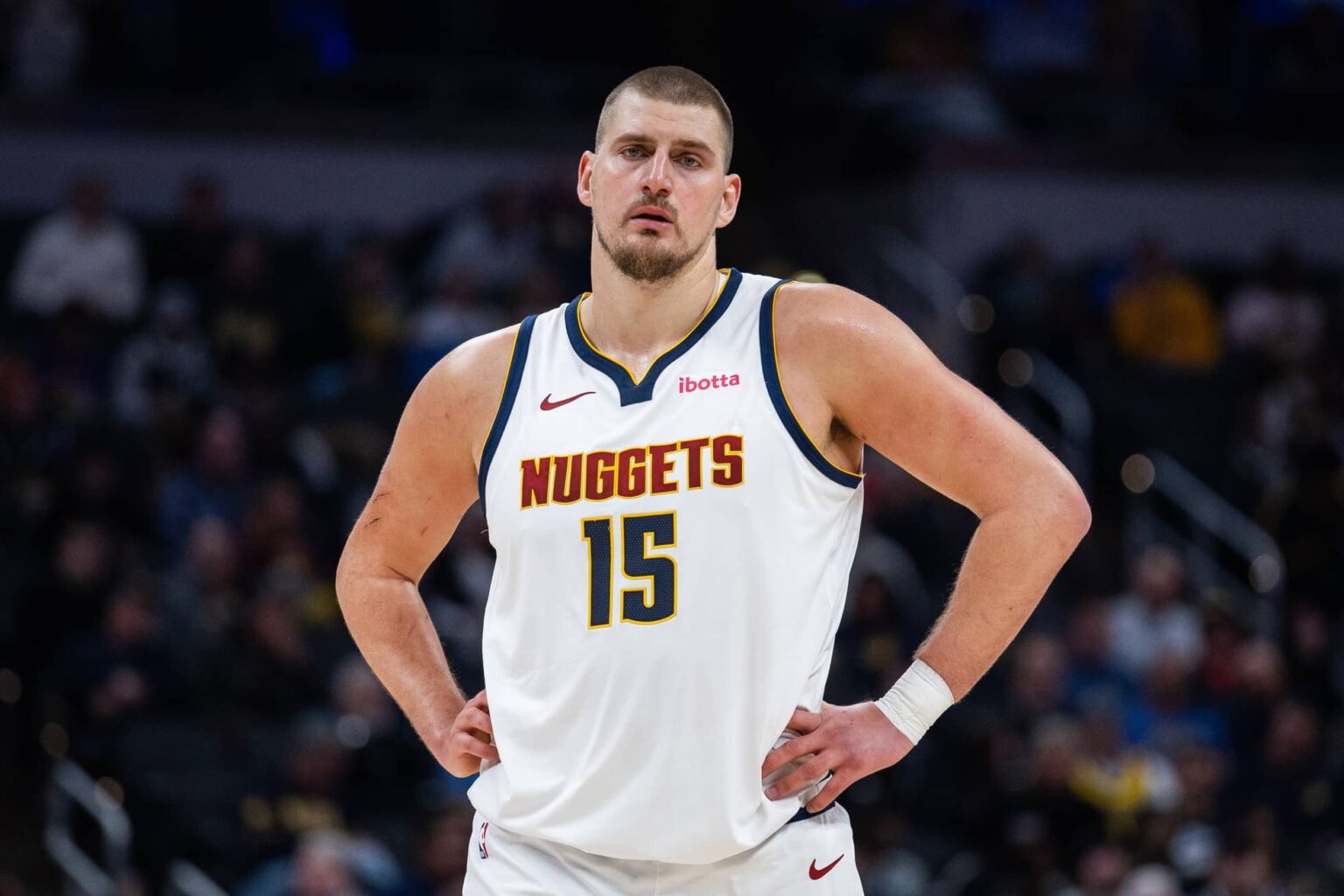
After a 128–117 loss to the Golden State Warriors, a game in which Nikola Jokic delivered a monster 35-point, 20-rebound, 12-assist performance, the reigning three-time MVP did not hide his frustration.
“I’m definitely concerned because we are losing the games, and we’re not creating open looks. That’s something that we need to change. Hopefully, we get better. I don’t know what it is, but we need to figure it out.”
For a player who is usually calm and measured, the tone mattered.
On paper, Denver’s 36–22 record looks solid as they sit third in the West, and they own the best offensive rating in the league. Jokic is averaging 28.8 points, 12.5 rebounds, and 10.5 assists while shooting 58.4% from the field and 42.1% from three-point range. Jamal Murray is having a career year as well, posting 25.5 points, 4.4 rebounds, and 7.5 assists, shooting 48.3% from the field and 42.3% from three-point range.
Yet the eye test and the underlying trends tell a more complicated story.
The Nuggets have lost six of their last 10 games. They are just 16th in the league in clutch performance, dropping 14 of 30 games that have come down to the wire. When they build comfortable leads, they can cruise. When games tighten, they have been vulnerable.
Defensively, the concerns are louder. Despite leading the league in offensive rating, Denver ranks 22nd in defensive rating. That imbalance is jarring for a team that entered the season as a serious challenger to the Thunder. Championship teams typically anchor themselves on at least one elite side of the ball. Right now, the Nuggets are overwhelmingly reliant on outscoring opponents.
Injuries have played a major role.
Christian Braun has appeared in just 22 of 58 games. Aaron Gordon has played only 23 and remains sidelined. Peyton Watson is out for an extended stretch. Cameron Johnson has suited up for just 34 contests. Even Jokic missed 16 games earlier in the year with a hyperextended knee.
That instability has disrupted rotations and defensive continuity. Braun, Gordon, and Watson, in particular, are critical two-way pieces. Without them, Denver’s perimeter resistance and transition defense have suffered.
Head coach David Adelman did not sugarcoat the Warriors’ loss.
“Yeah, we didn’t take care of the ball. I thought we had some empty possessions that, even though they weren’t turnovers, led to poor shots and runouts for them. So it was really poor execution at the start of the fourth.”
“But the bottom line is this game came down to the start of the game. We were not ready to play. This has been a tough weekend for us with the game time, the back to back, and all that, but that has nothing to do with your approach to the game.”
“We gave them confidence early. Their energy surpassed ours. They played harder. And to your point, we had to work so hard to get back into it. They had more energy than we did at the end of the game. That’s the bottom line.”
“Your approach to these games has to be different. It wasn’t good enough tonight. And this is one of those losses during the season where you’re going to look back and really wish we had a different approach to start the game.”
That comment may sting more than Jokic’s statistical brilliance. Effort and approach are controllable. Injuries are not.
The upcoming stretch does not get easier. If the defensive issues persist and the injury list remains long, Denver could slide further down the Western Conference ladder. Still, everything circles back to one fact: the Nuggets have the best player in the world. Jokic continues to produce at an MVP level, and when he is healthy, Denver always has a chance.
The question now is whether health will stabilize the rotation in time. Offense can carry you through February. Defense, effort, and cohesion determine who survives in May and June.