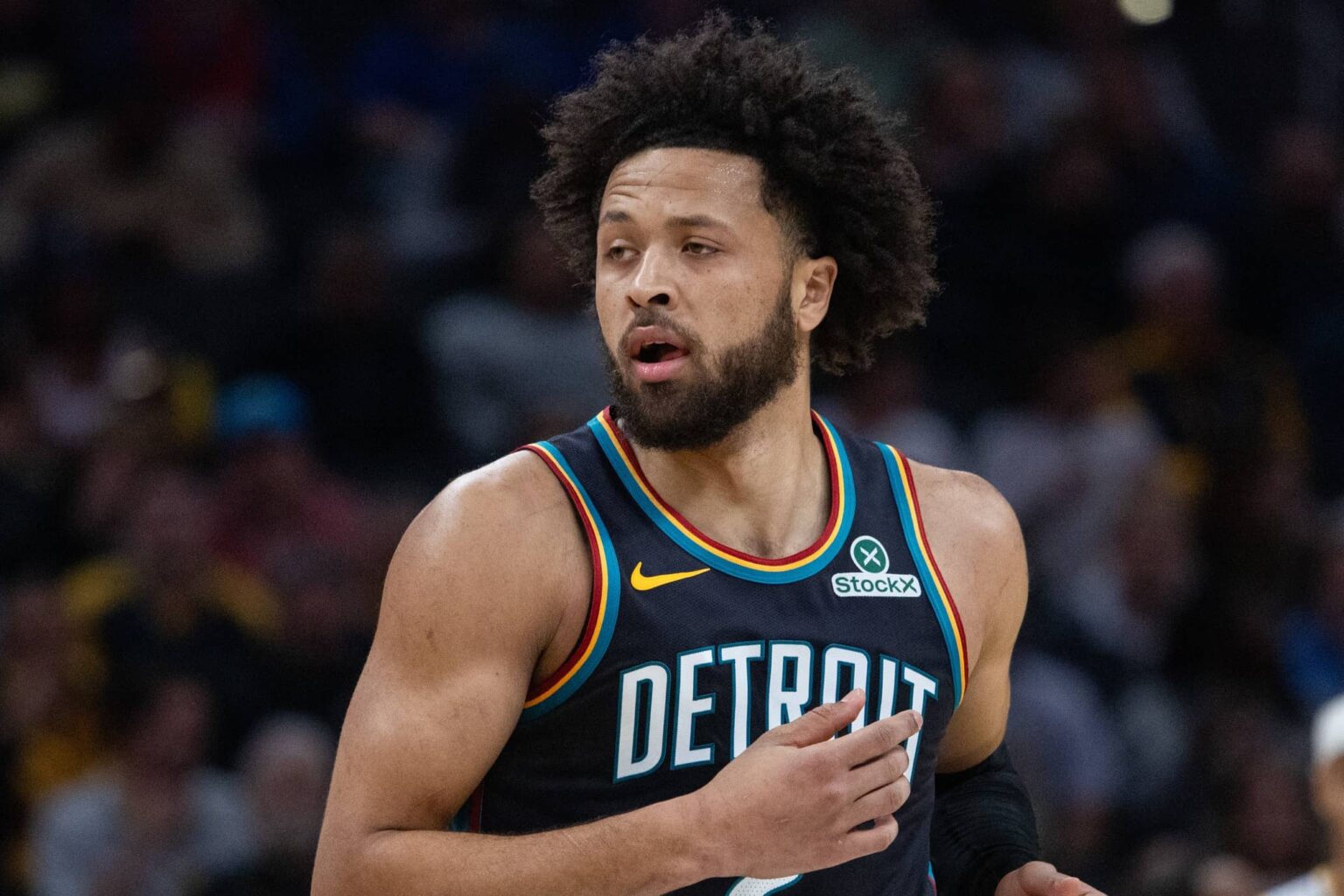
The Detroit Pistons saw their impressive winning streak come to an end after a 119-108 loss to the Toronto Raptors. Despite a dominant performance from franchise star Cade Cunningham, Detroit struggled to match Toronto’s balance and physicality throughout the night.
Toronto controlled much of the game thanks to strong performances from Brandon Ingram, RJ Barrett, and Jakob Poeltl, who helped the Raptors dominate the glass and maintain offensive pressure. While Detroit shot efficiently, several key factors ultimately led to the defeat.
1. Cade Cunningham Continues His MVP-Level Season
Even in defeat, Cade Cunningham delivered another performance that strengthens his growing MVP case. The Pistons’ star guard finished with 33 points and nine assists, consistently creating offense for himself and his teammates.
Cunningham shot 12-24 from the field and attacked the defense throughout the game. His ability to generate shots in isolation and orchestrate the offense kept Detroit competitive, especially during stretches when the rest of the lineup struggled to produce.
While he did commit four turnovers, Cunningham remained the focal point of the Pistons’ offense. Performances like this highlight why he has become the clear leader of Detroit’s resurgence this season.
2. Toronto’s Frontcourt Dominated the Glass
One of the biggest differences in the game came on the boards. The Raptors outrebounded the Pistons 48-39, including a dominant 20 offensive rebounds that created numerous second-chance opportunities.
Center Jakob Poeltl led the charge with an outstanding performance, finishing with 21 points and 18 rebounds, including nine offensive boards. His activity inside constantly pressured Detroit’s interior defense.
Toronto’s rebounding advantage allowed them to control the tempo and extend possessions. Even when the Raptors missed shots, they frequently recovered the ball and reset their offense.
3. Brandon Ingram Took Over As The Primary Scorer
The Raptors relied heavily on Brandon Ingram’s scoring ability, and he delivered in a big way. The star forward poured in 34 points on 12-25 shooting, including four three-pointers.
Ingram’s ability to create shots from the perimeter and midrange forced Detroit’s defense to constantly adjust. Whenever the Pistons attempted to make a run, he responded with timely baskets.
His offensive rhythm helped Toronto maintain control for most of the game, particularly during the second half when the Raptors gradually extended their lead.
4. Detroit Lacked Consistent Secondary Scoring
While Cunningham took nearly a third of Detroit’s attempts at scoring, the rest of the starting five struggled to provide the necessary support. For example, Duncan Robinson had a rough outing with a stat line of 1 point, 0-2 3PT, in 24 minutes.
There were some positive performances in scoring from Tobias Harris and Jalen Duren with a combined 41 points on very good shooting numbers. However, the scoring contributions from the rest continued to be poor.
Toronto was able to shift their defensive focus to Cunningham, which Detroit did not have enough scoring depth to counter.
5. Raptors Controlled The Paint
An example of the overall difference in scoring was the points inside the paint. Toronto scored 56, while Detroit scored 50.
Toronto was able to have a presence in the paint because of the defensive and offensive play of Scottie Barnes and Jakob Poeltl. Barnes himself finished with a good stat line of 14 points, 10 rebounds, and 8 assists.
Toronto was able to score by having inside pressure, which collapsed the Detroit defense outside and afforded more opportunities to the Toronto perimeter players.