This is the same concept we just did for the Spurs, Warriors, Lakers, and Bulls, now applied to the Nuggets. Same rules, same grading curve, same focus on what the franchise actually got from each first-round pick, not what the player became later somewhere else.
The Nuggets are a different case study because their last decade includes both the build and the maintenance phase. Some picks were made when the roster needed talent injections. Others came when the Nuggets were already good, and the job was to find cheap, playable pieces that fit next to a high-level core. That changes the expectations, but it does not remove accountability. A late first still needs to become usable. A mid-first still needs to produce value, either on the floor or as an asset.
The categories stay strict. “Great” means the pick became a core-level contributor for the Nuggets, not just a name who eventually popped elsewhere. “Good” means real rotation value, clear on-court impact, or a return that mattered in a trade. “Bust” is not an insult. It is a straight outcome label when the pick did not deliver sustained Nuggets value relative to its slot and the time invested.
The goal is simple: list every Nuggets first-round pick from the last 10 years and grade what the Nuggets actually received.
2016 NBA Draft
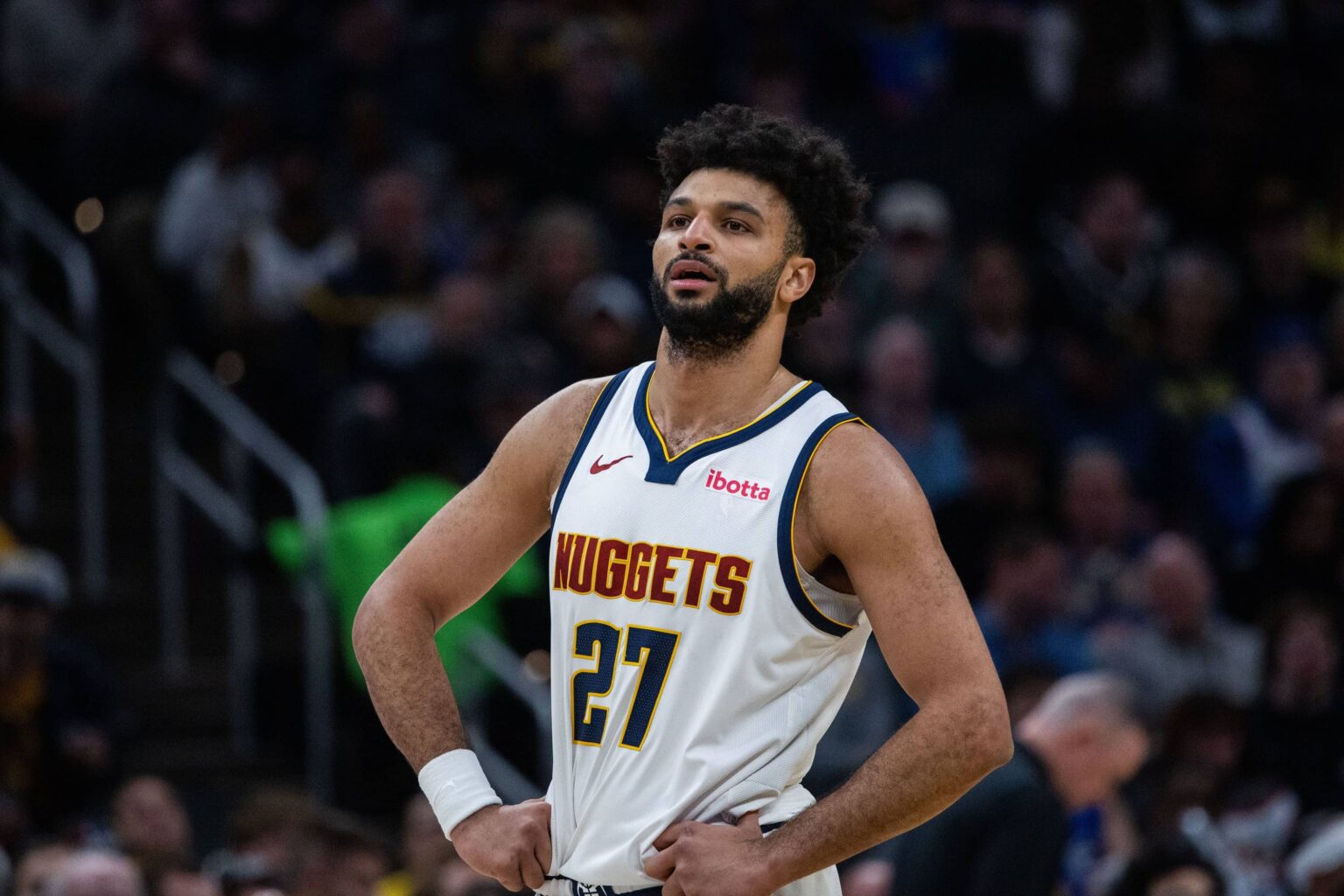
Jamal Murray – 7th Pick
Stats: 18.6 PTS, 3.8 REB, 4.9 AST, 0.4 BLK, 1.0 STL, 45.8% FG, 38.6% 3PT
Jamal Murray is the defining first-round hit of this era for the Nuggets. Murray was drafted as a shot-making guard who could score off the dribble, but the real value is how he scales next to Nikola Jokic. Murray can run pick-and-roll, play off handoffs, punish switches, and still live off-ball when the offense is built around a center. That is a rare pairing skill, and it’s the reason the pick aged so well.
The Nuggets got championship value, not just decent regular-season numbers. In the 2023 playoffs, Murray averaged 26.1 points, 7.1 assists, and 5.7 rebounds across 20 games on the way to a title. That is co-star production, the kind that changes series. The Nuggets didn’t need Murray to become “solid.” The Nuggets needed him to be the second engine when defenses sell out on Jokic, and he delivered exactly that.
This season adds even more to the résumé. He’s putting up 25.7 points and 7.6 assists per game in 2025-26, and was selected as a 2026 All-Star for the first time in his career.
Rating: Great
Juancho Hernangómez – 15th Pick
Stats: 4.7 PTS, 3.1 REB, 0.6 AST, 0.2 BLK, 0.4 STL, 42.9% FG, 35.0% 3PT
Juancho Hernangómez was a classic mid-first “fit” pick for a team that wanted spacing and size on the wing-forward line. Hernangómez had a real path on paper: a stretch forward who could hit open threes, run the floor, and survive as a bench piece in lineups built around Jokic.
The problem is that he never became a locked-in rotation player for the Nuggets. Hernangómez had moments, and also had a season where the minutes climbed, and the shot looked usable, but the role never stabilized. When the Nuggets got deeper and started tightening the rotation, Hernangómez was the kind of player who drifted into the “situational” bucket instead of the “trusted” bucket.
The ending matters for this grading. Juancho was moved in the big four-team trade on February 5, 2020, to the Timberwolves, when the Nuggets cleared a roster logjam and pivoted their asset base.
The Nuggets did get pieces and a first-round pick back in that deal, but Juancho himself never produced sustained Nuggets value relative to a mid-first slot.
Rating: Bust
Malik Beasley – 19th Pick
Stats: 7.4 PTS, 1.8 REB, 0.9 AST, 0.1 BLK, 0.4 STL, 42.3% FG, 37.7% 3PT
Malik Beasley was a very common late-first swing that basically worked as a talent evaluation, even if it didn’t fully cash out for the Nuggets. He had one elite translatable skill from the start: He could really shoot and wasn’t afraid of volume. On a bench unit, that matters. It bends defenders, it opens driving lanes, and it gives lineups a simple scoring outlet when the offense stalls.
The issue is that Beasley’s best version never fully belonged to the Nuggets for long enough. Beasley was productive in spots and clearly trending upward, but he was also stuck behind a crowded guard-wing rotation, and the contract timeline was getting tight. That’s the late-first problem when the player is good: you either pay, or you move him before you lose leverage.
So Beasley got moved in that same four-team trade in 2020, with the Nuggets sending out Beasley, Hernangómez, and Jarred Vanderbilt. Beasley later popped with a bigger offensive role last season with the Pistons, which almost makes this one sting more, because the Nuggets were right about the skill; they just didn’t keep the payoff.
In this exercise, the grade is about the Nuggets’ return. Beasley gave them a real shooter for a few seasons, then became a trade asset in a real deadline move. That is not “great,” but it is clearly valuable.
Rating: Good
2017 NBA Draft
Donovan Mitchell – 13th Pick
Donovan Mitchell was selected by the Nuggets at No. 13, then immediately moved on draft night. The Nuggets traded Mitchell’s rights to the Jazz for Trey Lyles and the rights to the No. 24 pick, Tyler Lydon.
Because Mitchell never played for the Nuggets, there is no grade to apply to the player in this format.
Rating: N/A
Tyler Lydon – 24th Pick
Stats: 0.9 PTS, 0.7 REB, 0.2 AST, 0.0 BLK, 0.1 STL, 50.0% FG, 40.0% 3PT
Tyler Lydon was the second part of the same draft-night decision. The Nuggets used the extra first-rounder as a late first swing on a stretch forward profile: size, touch, and the idea that he could grow into a bench spacer who fits next to Nikola Jokic because he wouldn’t clog the lane.
That version never arrived. Lydon barely played as a rookie, then got short, low-leverage minutes the next season. The production reflects it. He appeared in 26 games total for the Nuggets and averaged just 3.7 minutes, which tells you he never earned real trust as part of a functional rotation.
The Nuggets declined his third-year option in 2018, which is basically the organization telling you the development curve did not justify the roster spot. After that, he was no longer viewed as a long-term piece, and his Nuggets run effectively ended.
For a No. 24 pick, you are not demanding a starter. You are demanding a playable bench guy or a prospect who at least trends toward that. Lydon did not become either in a Nuggets uniform.
Rating: Bust
2018 NBA Draft
Michael Porter Jr. – 14th Pick
Stats: 16.2 PTS, 6.4 REB, 1.4 AST, 0.6 BLK, 0.8 STL, 50.0% FG, 40.6% 3PT
Michael Porter Jr. was a swing that only makes sense if you accept the risk. The talent was lottery-top-five level, but the back history was the reason he slid. The Nuggets took him anyway, basically betting that one elite scoring forward on a rookie-scale deal could change the ceiling of their roster if the medical side held.
The first part of the story is patience. Porter effectively lost his runway early, then had to ramp up from a development track into real rotation expectations on a contender. When he did get established, the value was obvious: efficient scoring, real size on the wing, and shooting that fit perfectly next to a Jokic-centered offense. Those Nuggets career numbers are not “nice for a late lottery pick,” they’re starter production with real spacing gravity.
The second part is that the Nuggets got real years of value in their own uniform. He wasn’t a one-season flash. He became a full-time starter, a main floor-spacer, and a major part of the championship-level core around Nikola Jokic and Jamal Murray. Even with the injury management always hovering in the background, the pick produced exactly the type of player teams chase at No. 14: a high-end role star who can swing playoff lineups with shot-making.
Then the ending flipped the evaluation into an “asset timeline” question. Porter’s contract and the roster’s needs eventually pushed the Nuggets toward a big move, and he was traded to the Nets in a deal centered on Cam Johnson, with the Nuggets also attaching an unprotected 2032 first-round pick.
That doesn’t erase what the pick was. It just closes the Nuggets chapter with a clear summary: they drafted elite shooting and size, they got multiple seasons of high-level starting production, and he still had enough league value to headline a major transaction.
Rating: Great
2019 NBA Draft
No First-Round Pick (Traded Away)
The Nuggets did not make a first-round selection in 2019 because that pick had already been used as a salary-clearing chip. In January 2019, the Nuggets moved Kenneth Faried and Darrell Arthur and attached their 2019 first-round pick in a deal with the Nets.
Rating: N/A
2020 NBA Draft
Zeke Nnaji – 22nd Pick
Stats: 4.2 PTS, 2.3 REB, 0.4 AST, 0.5 BLK, 0.3 STL, 50.6% FG, 35.1% 3PT
Zeke Nnaji was the kind of late-first pick contenders talk themselves into. The pitch is easy: a frontcourt body who can hit open threes, survive defensively in short stints, and keep the floor spaced next to the stars. For the Nuggets, that meant a big man who could play minutes without stepping on Jokic’s oxygen.
The return has been real in the narrowest sense and limited in the ways that matter. Nnaji has lasted in the league, played a lot of regular-season games for the Nuggets, and he was technically part of the championship group in 2023, even though the role was mostly fringe. That is nothing for the 22nd pick. It also isn’t the outcome you want when you’re trying to find a reliable seventh or eighth man on a cheap deal.
What’s kept this from turning into a clean “good” is that the minutes never became stable. He’s had spot starts when the roster was banged up, but it has never been consistent enough that you think the Nuggets found a dependable rotation big for the games that matter. When the bar is “playable when the playoffs tighten,” Nnaji has mostly been on the outside.
Rating: Bust
RJ Hampton – 24th Pick
Stats: 2.6 PTS, 2.0 REB, 0.6 AST, 0.1 BLK, 0.2 STL, 41.7% FG, 27.8% 3PT
RJ Hampton was a different type of swing. The Nuggets used the late first to take a speed guard with real transition juice and upside as a downhill creator. The idea wasn’t complicated. If the shot comes along and the decision-making stabilizes, you might have a cheap rotation guard who can bend the floor.
The problem is he never got a real runway in the Nuggets rotation. Hampton played 25 games, mostly in low-leverage minutes, and the production reflects exactly that kind of usage. He never earned a consistent role behind the guard depth, and the team was too competitive to spend a full season developing a project in real minutes.
Then the story ended fast. He was traded in March 2021 as part of the Aaron Gordon deal, along with Gary Harris and a future first-round pick. That trade worked for the Nuggets at the top, but for Hampton as a pick, it means the value was basically “as an extra piece in a package,” not as an actual Nuggets contributor.
Rating: Bust
2021 NBA Draft
Nah’Shon Hyland – 26th Pick
Stats: 10.9 PTS, 2.5 REB, 2.8 AST, 0.2 BLK, 0.6 STL, 40.1% FG, 36.2% 3PT
Nah’Shon “Bones” Hyland was a very Nuggets type of late-first bet at the time: microwave scoring, deep range, and the confidence to take playoff-level shots without needing the offense to change shape for him. The role was simple. Come off the bench, juice the second unit, and survive next to Nikola Jokic because the shooting threat is real.
For a No. 26 pick, the production in a Nuggets uniform was real. Hyland gave them an instant offense guard who could swing regular-season games when the starters sat. He also got real playoff reps early, and his 2022 postseason run shows the profile: shot volume, pull-up attempts, and the kind of scoring bursts teams actually need when rotations tighten.
The ending is where the evaluation gets sharper. On February 9, 2023, he was traded to the Clippers for two second-round picks. That tells you how the Nuggets ultimately viewed the fit and timeline. He had value, but not enough to be treated like a long-term piece once the roster was pushing all-in around the core. For a late first, becoming a usable scorer and then turning into draft capital is a clean outcome.
Rating: Good
2022 NBA Draft
Christian Braun – 21st Pick
Stats: 9.2 PTS, 3.8 REB, 1.8 AST, 0.4 BLK, 0.7 STL, 52.4% FG, 37.3% 3PT
Christian Braun is the cleanest example of what the Nuggets actually want from a late first. Athletic wing, runs the floor hard, defends with real effort, and doesn’t need the offense built around him to matter. The fit was obvious right away because he could play next to the core without asking for touches, and he could survive defensively without being hidden.
The Nuggets got value fast. As a rookie, Braun played real minutes on a team that was trying to win every night, not develop prospects. That alone is a win for the 21st pick. Then he was part of the 2023 title run, which is the highest-stakes environment you can grade a role player in. He wasn’t a star, but he wasn’t a passenger either. He defended, ran, finished, and gave the Nuggets a real “energy wing” option they could trust in short bursts.
The real swing in the evaluation is what happened after he stopped being “young bench guy.” Braun became a full-time starter in 2024-25 and exploded to 15.4 points and 5.2 rebounds on 58.0% from the field, which is outrageous efficiency for a perimeter player living off cuts, transition, and quick decisions. The Nuggets rewarded it with a five-year, $125.0 million extension in October 2025, which tells you how the franchise views him: not a nice story, an actual long-term piece.
For a No. 21 pick, this is exactly what “good” looks like. He became playable immediately, contributed to winning at the highest level, and then leveled up into a starter that the Nuggets chose to pay.
Rating: Good
Peyton Watson – 30th Pick
Stats: 8.6 PTS, 3.5 REB, 1.3 AST, 1.1 BLK, 0.6 STL, 48.1% FG, 36.1% 3PT
Peyton Watson was not a typical “last pick of the first round” flyer. The Nuggets went out and bought the pick. They moved JaMychal Green and a protected 2027 first-round pick to get Watson plus two future second-rounders, which tells you how much they liked the long-term defensive wing bet.
The early version was exactly what you expect from that profile. Watson was a development player, not a rotation lock. He was on the 2023 title roster, but he was not a playoff needle-mover yet. That’s fine. The real evaluation starts when the coaching staff actually trusts you with nightly minutes on a team trying to win.
That trust arrived in 2025-26, and it changed the pick’s entire story. Watson moved into a real role and even started a big chunk of the season, averaging about 14.9 points and 4.9 rebounds while the roster dealt with injuries. He also had the type of breakout game that signals a leap is real, dropping a career-high 32 points and 12 rebounds in November. The defense has always been the baseline, but this season showed he can score enough to stay on the floor in higher-leverage minutes.
The frustrating part is timing. He’s now out at least four weeks with a right hamstring strain, which pauses the momentum right when the role was getting serious. But as a pick No. 30, this is already a strong return: a real two-way rotation wing who has started games on a contender-caliber team and produced. That’s value.
Rating: Good
2023 NBA Draft
Julian Strawther – 29th Pick
Stats: 6.9 PTS, 1.8 REB, 1.1 AST, 0.2 BLK, 0.5 STL, 41.9% FG, 33.0% 3PT
Julian Strawther is a very typical late-first Nuggets bet: shooting, size, and a plug-and-play role that doesn’t ask for the ball. The front office didn’t draft him to be a creator. They drafted him to survive next to Nikola Jokic, keep spacing alive, and punish teams for loading up on the stars. That’s a simple job, but it’s also the exact job that decides whether a contender’s bench is functional.
The early return was uneven, which is normal for a rookie shooter on a team trying to win. Strawther’s minutes fluctuated, the shot ran hot and cold, and he mostly lived in low-leverage pockets. Even then, you can see the shape of why he sticks: he gets the shot off cleanly, he’s willing to fire, and he doesn’t freeze when the game speeds up.
Then the role started to matter more. In 2025, Strawther had a real “this is why they drafted me” stretch in the playoffs, where he gave the Nuggets scoring bursts when the rotation was desperate for someone who could swing a quarter. That kind of contribution is not about averages, it’s about timing. It’s also the best-case path for a late first on a contender: you aren’t a nightly starter, but you win a game or two when it counts.
He’s also already had proof-of-concept nights in the regular season, including a 20-point game in January 2026 when the Nuggets were short-handed, which is exactly the type of game a bench scorer has to steal for you.
This is not “great” because the efficiency and the two-way impact haven’t settled into something you can bank on every night. But for pick No. 29, becoming a usable floor spacer with real playoff utility is a clean outcome.
Rating: Good
2024 NBA Draft
DaRon Holmes II – 22nd Pick
Stats: 4.1 PTS, 1.7 REB, 1.1 AST, 0.3 BLK, 0.0 STL, 44.2% FG, 41.2% 3PT
DaRon Holmes II was not a “plug him in” first-rounder. DaRon Holmes II was a bet on a modern frontcourt skill set: quick decisions, vertical pop, and enough touch to keep spacing alive around the core. The Nuggets didn’t need a rookie to come in and take shots. The Nuggets needed a big who could survive in the Jokic ecosystem, sprint, screen, finish, and make the easy pass without slowing the whole possession down.
Then the year got wiped. Holmes tore his right Achilles in the Summer League in July 2024, which effectively deleted his true rookie runway and pushed the development curve back an entire season. For a late-first, that’s brutal because the value of the pick is supposed to be cheap minutes while the roster is expensive. Instead, the Nuggets got a redshirt year and uncertainty.
The actual NBA sample starts in 2025-26, and it’s small but readable. Holmes has been a low-usage role big so far, with a light stat line and a clear “earn the trust” trajectory, but the shooting number matters because it hints at the pathway: if the jumper is real, he can fit next to basically any lineup configuration the Nuggets want to play.
Right now, this is not something you can grade as good or bust without forcing it. The real story is what happened: the injury stole the critical first-year reps, and the Nuggets are basically restarting the evaluation in year two.
Rating: N/A
2025 NBA Draft
No First-Round Pick
The Nuggets didn’t make a first-round selection in 2025 because that pick was already owed out from the Aaron Gordon trade. The pick landed at No. 25, and the Magic used it to select Jase Richardson.
Rating: N/A
Final Thoughts
The Nuggets have one clear “great” from this stretch, and it’s the pick that defines everything else. Jamal Murray is the standard. He became an actual co-star level guard next to Nikola Jokic, and the Nuggets got the payoff in their own uniform, including the championship run. That is what “great” looks like in this exercise.
The “good” bucket is where the Nuggets’ draft identity shows up. Michael Porter Jr. belongs here at the high end even if you want to argue “great,” because the injury risk was real and the timeline mattered, but the Nuggets still got multiple seasons of elite shooting gravity and starter production from a mid-lottery slot. Malik Beasley qualifies because he gave the Nuggets a real rotation shooter and later became part of a meaningful deadline asset play. Nah’Shon “Bones” Hyland qualifies because a No. 26 pick becoming a usable bench scorer, then turning into draft capital, is clean value. Christian Braun qualifies because he became playoff-usable early and then grew into a real starter track piece, same as Peyton Watson, who’s shown tremendous growth this season when it mattered the most. Julian Strawther qualifies because a No. 29 pick giving you functional spacing and real playoff moments is exactly the late-first outcome contenders chase.
The “bust” bucket is blunt, but it’s about Nuggets value, not whether a guy stayed in the league. Juancho Hernangómez never became a stable rotation piece for the Nuggets. Tyler Lydon never became playable. Zeke Nnaji and R.J. Hampton never turned into reliable Nuggets rotation pieces in the games that mattered, and Hampton’s Nuggets stint ended quickly, with the pick functioning more as a trade add-on than a contributor.