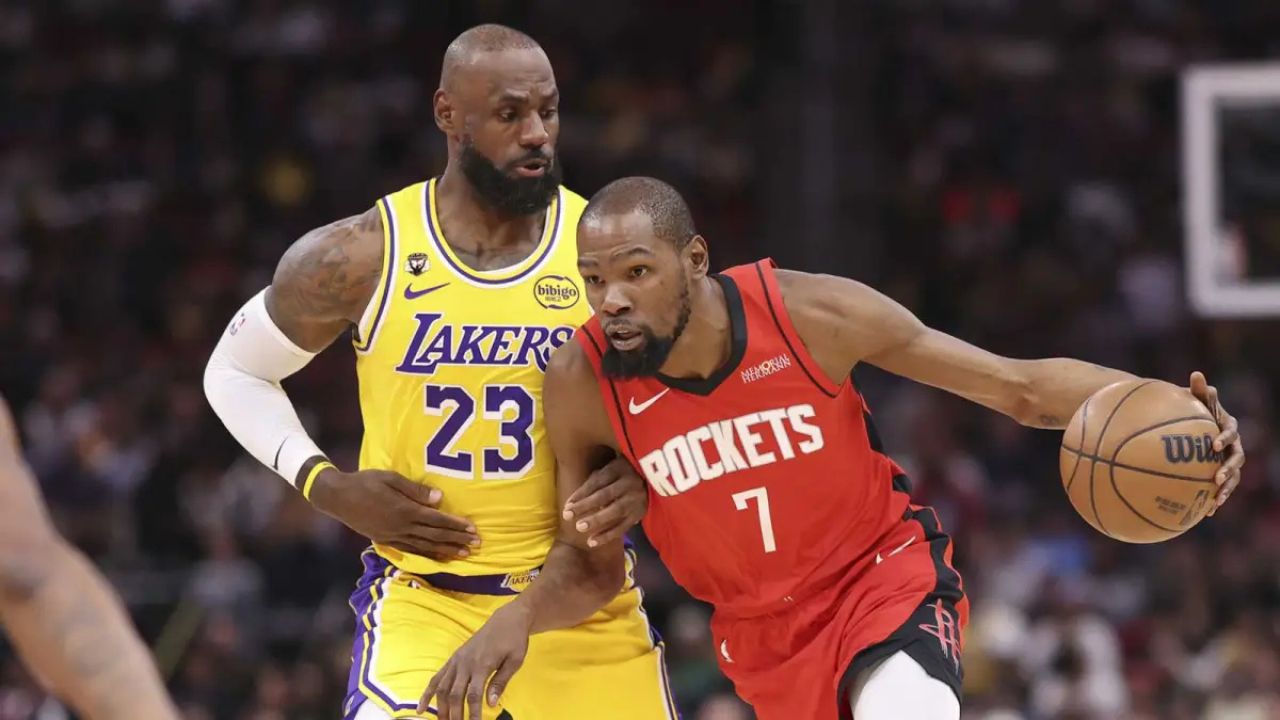
The Houston Rockets entered Game 2 with a clear defensive intent against LeBron James, choosing to test him with physicality from the opening moments in an effort to disrupt his rhythm and reduce his control over the game.
That approach showed up early in the second quarter when Jae’Sean Tate initiated contact even before the ball was inbounded, bumping LeBron and engaging in a physical battle that continued through the possession. The Rockets were attempting to wear him down, force him into mistakes, and make every touch uncomfortable, but the sequence quickly turned into a perfect example of why that strategy is risky against a player of LeBron’s experience and control.
Look at this sequence between Lebron James and the Rockets. They tried to get physical with him. He IMMEDIATELY COOKED THEM and let them know about it
BRO WAS PISSED 😳💀 pic.twitter.com/vIy8vt13sE
— Hater Report (@HaterReport) April 22, 2026
After absorbing the contact, LeBron calmly navigated the possession by using a screen to force a switch onto Alperen Sengun, instantly identifying the mismatch and slowing the game down to his preferred pace.
With Sengun isolated, LeBron created space with controlled footwork and knocked down a three-pointer over the contest, marking his second consecutive triple at that point in the game. The response was immediate and emphatic, as he turned back toward the defense and made it clear that the physical approach was not going to rattle him, but rather motivate him to take control.
That moment reflected the broader theme of the game, where the Los Angeles Lakers consistently out-executed the Houston Rockets despite Houston’s effort and physical edge in certain areas.
Los Angeles secured a 101–94 victory to take a 2–0 series lead, with LeBron leading the way through a composed and commanding performance that finished with 28 points, 8 rebounds, and 7 assists, shooting 8-20 from the field and 2-5 from three-point range, 10-14 from the free-throw line, while repeatedly dictating tempo and decision-making across all four quarters.
Across the first two games of the series, LeBron has averaged 23.5 points, 8.0 rebounds, and 10.0 assists, shooting 48.6% from the field and 42.9% from three-point range, while playing 38.8 minutes per game, reinforcing the idea that the Lakers’ entire structure currently flows through him in the absence of other primary creators.
His ability to read defensive coverages, exploit mismatches, and control pace has neutralized many of the Rockets’ strengths, including their physical defense and rebounding advantage.
However, the win was not a one-man effort. Marcus Smart delivered a complete two-way performance, scoring 25 points while also recording 5 steals that disrupted Houston’s offensive rhythm at critical moments. His defensive pressure created transition opportunities and forced rushed decisions, which became a major factor in the outcome.
Luke Kennard added 23 points and provided elite spacing, knocking down perimeter shots at a high rate and punishing the Rockets whenever they overcommitted to LeBron. His ability to stretch the floor ensured that Houston could not fully collapse on drives or overload defensively without paying the price.
On the other side, Kevin Durant led the Rockets in scoring with 23 points, but his overall impact was limited by inefficiency in key moments and nine turnovers, several of which directly led to Lakers scoring opportunities. Those mistakes proved costly in a game where margins were already tight.
The Rockets’ attempt to impose physicality ultimately worked against them because it played directly into LeBron’s strengths as a decision-maker and matchup reader, allowing him to dictate the flow rather than react to it. Instead of slowing him down, the contact sharpened his approach, leading to a performance that combined patience, control, and timely scoring.