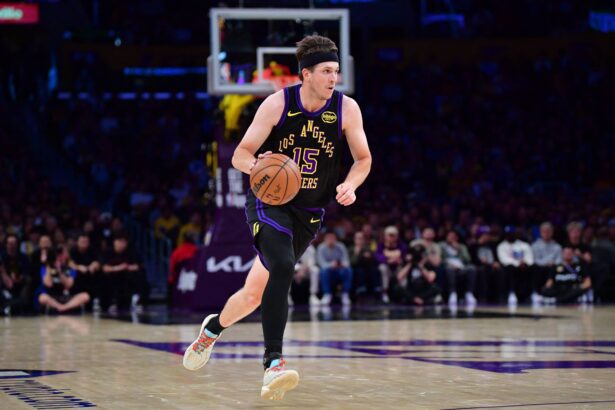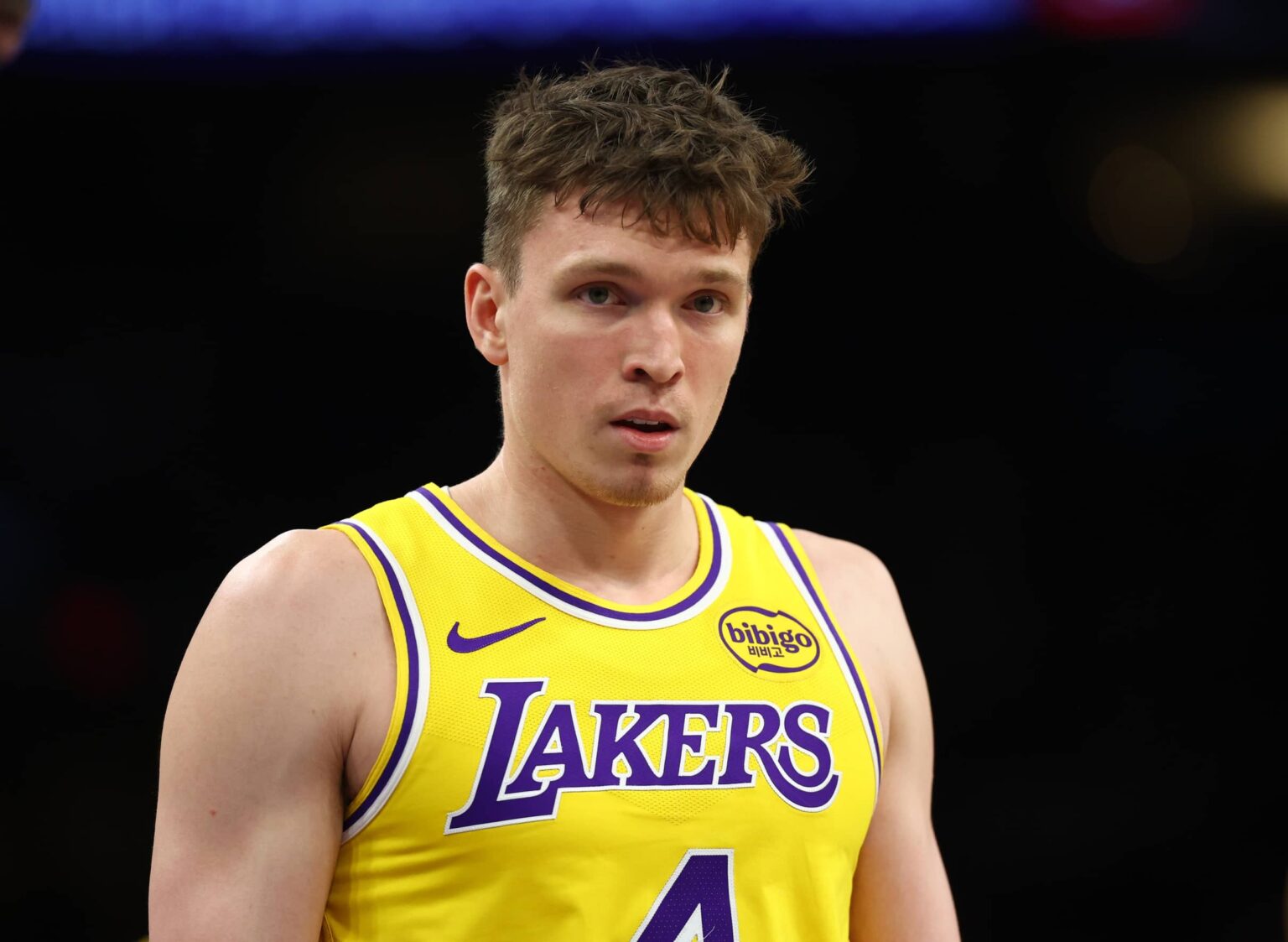
Los Angeles Lakers fans found a new source of frustration this week, and it centered on Dalton Knecht and one painfully revealing possession. It was not a missed shot or a blown defensive rotation. It was something far more alarming. Knecht did not appear to know the play.
Knecht is… still learning the playbook.
Watch JJ and Smart. pic.twitter.com/PqJEZ1uRoT
— Cranjis McBasketball (@Tim_NBA) January 3, 2026
Marcus Smart had the ball in his hands against the Memphis Grizzlies. The action was simple and familiar within the Lakers’ offense. Knecht was supposed to cut hard to the rim off a screen from Jaxson Hayes, then flow to the weakside corner as Hayes flipped into a ball screen. Instead, Knecht hesitated. He did not cut to the rim with purpose. He drifted, doubled back, and then inexplicably came up to set a screen for Smart, blowing up the entire timing of the possession.
Smart immediately waved him off, visibly frustrated, yelling for him to clear out and get to the corner. On the sideline, JJ Redick threw his hands up in disbelief. The body language told the whole story. This was not a young player missing a read at full speed. This was a player who did not know where he was supposed to be.
For a fan base already on edge, that moment felt like a breaking point. Knecht is in his second season. He is not being asked to run the offense or improvise. His role is narrow and defined. Space the floor. Cut hard. Be where you are supposed to be. When a player cannot execute the basics of the playbook, trust disappears fast.
That frustration spilled over immediately online, and the reaction from Lakers fans was brutal.
One fan summed it up with a harsh nickname, calling him “DisKnecht,” a play on words that reflected how disconnected he looked from the offense.
Another comment cut even deeper, saying, “It’s embarrassing and unprofessional at this point,” pointing to the idea that this is not a rookie mistake anymore.
Others went straight for the jugular. “Such a low IQ player,” one fan wrote, while another bluntly added, “He’s not an NBA player.”
Perhaps the most telling reaction captured the mood best: “Hopefully he’ll learn someone else’s playbook on a different team.”
What makes the frustration sharper is that Knecht’s rookie season showed real promise. He averaged 9.1 points in 19.2 minutes, shooting 46.1% from the field and 37.6% from three. On a rookie deal, he looked like one of the Lakers’ more valuable rotation pieces. A low-cost shooter who could fit next to stars is gold in this league.
That optimism has evaporated. This season, Knecht has appeared in just 27 of 32 games and is averaging only 13.2 minutes. His production has dipped to 5.4 points per game, with shooting splits of 46.7% overall and 34.8% from deep. More telling than the numbers is his usage. He barely plays, even in blowouts. He rarely sees the floor in important stretches and often gets skipped entirely unless the roster is depleted.
The reason now feels obvious. Trust is gone. Coaches will live with missed shots. They will live with young players getting hunted defensively. What they will not live with is a player who cannot execute assignments. Offense in the NBA is about timing and spacing. One missed cut ruins the possession for everyone else.
Ironically, Knecht just reminded everyone of his talent in the G League. Playing for the South Bay Lakers, he erupted for 30 points, knocking down six threes and looking completely comfortable with the ball. That performance only deepened the debate. The skill is there. The confidence with the ball is there. The issue is everything else.
Scouts have quietly raised concerns about his decision-making and processing speed. This play put those concerns front and center. If Knecht wants real minutes on a team trying to win now, knowing the playbook is non-negotiable. For Lakers fans, this was not just a bad clip. It was a clear explanation for why a once-promising piece has fallen so far down the rotation.