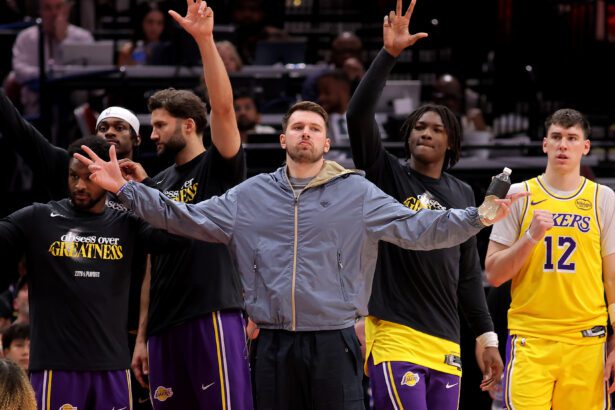
The Lakers return to Crypto.com Arena for Game 3 against the Thunder on Saturday, May 9, at 8:30 p.m. ET, already down 0-2 and under pressure to stop the series from slipping away. They were more competitive in Game 2 than in Game 1, but the result was still clear: 125-107 Thunder, with another second-half separation.
Austin Reaves had 31 points and six assists in Game 2. LeBron James added 23 points and six assists. Rui Hachimurascored 16 points on 6-of-10 shooting and 4-of-7 from three. The Lakers shot 50.0% from the field, which is usually enough to stay in a playoff game, but 19 turnovers changed the math. Those turnovers became 26 Thunder points.
The Thunder lead the series 2-0 and are still unbeaten in the playoffs. Shai Gilgeous-Alexander and Chet Holmgren each scored 22 points in Game 2. Ajay Mitchell had 20 points, and Jared McCain added 18 off the bench. The important number was the bench gap: 48-20 for the Thunder.
Injury Report
Lakers
Luka Doncic: Out (left hamstring strain)
Jarred Vanderbilt: Questionable (right finger dislocation)
Thunder
Jalen Williams: Out (left hamstring strain)
Thomas Sorber: Out (right ACL surgical recovery)
Why The Lakers Have The Advantage
The Lakers’ best argument is that their Game 2 offense was not broken. They scored 107 points, shot 50.0% from the field, and got efficient production from Reaves, James, and Hachimura. Reaves went from 3-of-16 in Game 1 to 31 points on 10-of-16 shooting in Game 2. That is a real correction, not a small one.
The issue is possession control. The Lakers had 19 turnovers in Game 2 and the Thunder scored 26 points off those mistakes. That is the first Game 3 adjustment. The Lakers cannot beat this Thunder team while giving them a full quarter of free offense.
James also has to control the tempo better at home. The Lakers cut the deficit to six early in the fourth quarter in Game 2, but the Thunder answered again. That has been the problem in both games. The Lakers can stay close for stretches, but they have not sustained good offense after the Thunder increase pressure.
The Lakers also need more from their bench. They lost bench points 48-20 in Game 2. That is too large. Luke Kennard had 10 points, but the rest of the second unit did not give enough. If the Lakers are going to win Game 3, they need Kennard, Marcus Smart, and any Vanderbilt minutes to at least hold the score when James sits.
The home floor matters because the Lakers need a normal shooting environment. Hachimura made four threes in Game 2. Smart added 14 points and five assists. Kennard gave them 10. If those role players make enough shots at home, the Thunder cannot load every defender toward James and Reaves.
Why The Thunder Have The Advantage
The Thunder have the advantage because they have won both games without needing a perfect Shai Gilgeous-Alexander game. That is the key point. In Game 2, he played only 28 minutes because of foul trouble and still scored 22 points. The Thunder still won by 18. That says more about their depth than any single number.
The Game 2 run was the whole matchup. Gilgeous-Alexander went to the bench with four fouls, the Lakers went up by five, and the Thunder answered with a 25-7 run. That was the series in one stretch. The Lakers had the opening they needed, but the Thunder’s role players won the minutes without their best player.
Chet Holmgren has been a major problem. He had 24 points and 12 rebounds in Game 1, then followed with 22 points, nine rebounds, four steals, and two blocks in Game 2. He is scoring, protecting the rim, spacing the floor, and creating extra possessions. The Lakers have not found a clean way to punish him defensively.
The Thunder are also winning the physical small details. In Game 2, they had 17 second-chance points, 26 points off turnovers, and 48 bench points. Those are three different ways to separate. They did not just shoot better. They won the possession game, the bench game, and the pressure game.
The season matchup also matters. The Thunder went 4-0 against the Lakers in the regular season and won those games by 29.3 points per game, the largest same-conference point differential in the league this season. Now they are 2-0 in the playoffs. That is six straight wins over the Lakers this season.
X-Factors
Austin Reaves is the Lakers’ main X-factor. Game 2 was the needed response: 31 points, six assists, 10-of-16 from the field. He touched the paint more, used his floater better, and found better rhythm after a poor Game 1. The Lakers need that same version again. If Reaves is under 20 points, the offense becomes too dependent on James.
Rui Hachimura is the second Lakers swing piece. He had 16 points on 6-of-10 shooting and 4-of-7 from three in Game 2. That is the exact role they need: quick shots, strong closeout attacks, and enough size to defend Thunder wings. If Hachimura is not efficient, the Lakers lose one of their few clean spacing options.
Luke Kennard has to be more than a small bench scorer. He had 10 points in Game 2, but the Lakers lost bench points by 28. That gap cannot repeat. Kennard has to make threes early and force the Thunder to guard deeper into the floor. If he is quiet, the Lakers’ second unit does not have enough offense.
Chet Holmgren is the Thunder’s biggest X-factor because his production has been consistent and damaging. He has 46 points and 21 rebounds through two games, with four steals and two blocks in Game 2 alone. He is also forcing the Lakers into difficult decisions with Deandre Ayton: stay big and defend in space, or go smaller and give up size at the rim.
Ajay Mitchell has been the Thunder bench pressure point. He scored 20 points in Game 2 and helped change the game when Gilgeous-Alexander was in foul trouble. That matters because Williams is out. Mitchell gives the Thunder another downhill guard, and the Lakers have not contained him well enough.
Jared McCain is another Thunder bench piece to watch. He scored 18 points in Game 2, and his shot-making helped the Thunder win the bench minutes by 28. If McCain and Mitchell combine for anything close to 35-40 points again, the Lakers will not have enough depth to match it.
Prediction
The Lakers should be better at home. Reaves looked much better in Game 2, James is still producing, and Hachimura gave them efficient scoring. But the Thunder have more answers. They can win SGA minutes, survive non-SGA minutes, force turnovers, and dominate the bench scoring.
The Lakers’ path is ball security and a big James-Reaves scoring night. The problem is that the Thunder have already won one game with Gilgeous-Alexander in foul trouble and Williams out. That is hard to ignore. The Lakers can make Game 3 closer, but the Thunder still have the better depth and cleaner two-way profile.
Prediction: Thunder 114, Lakers 106