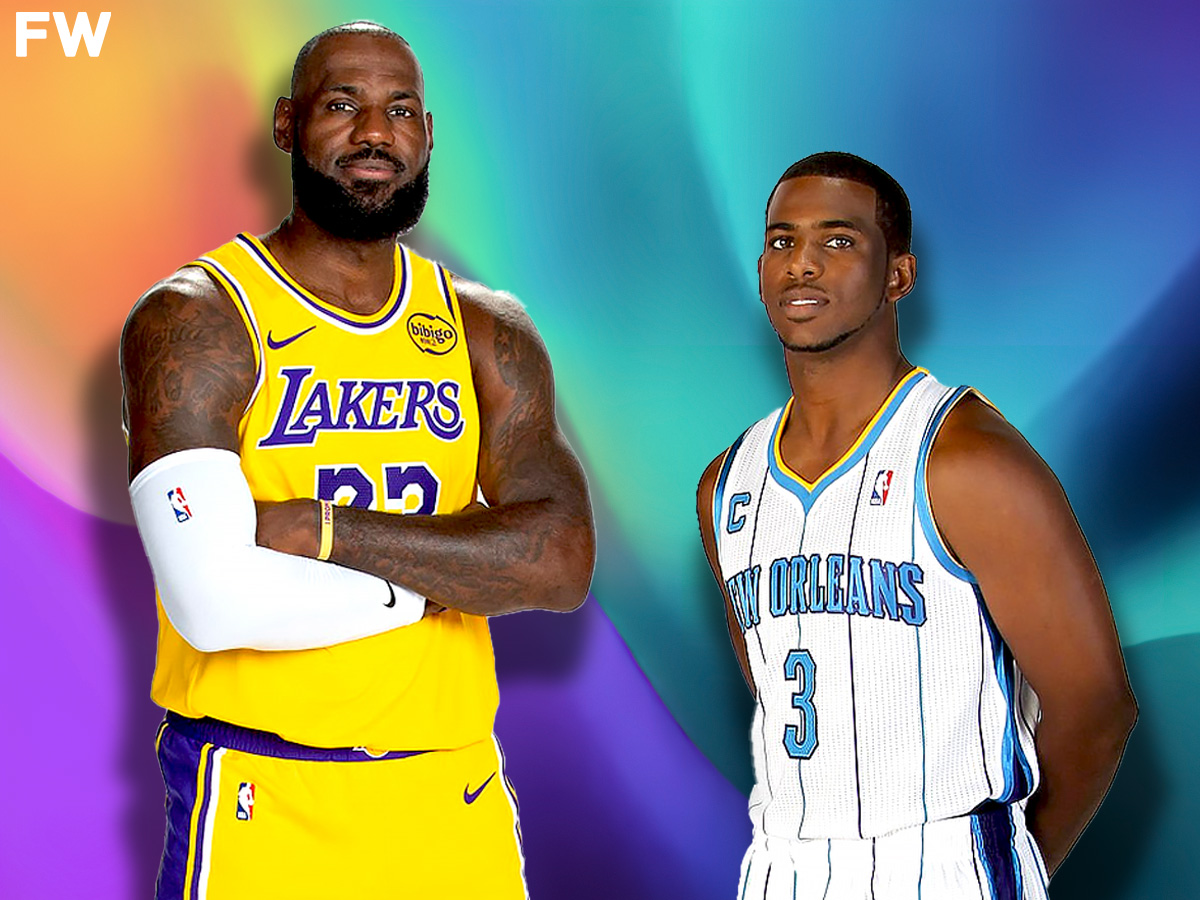
Nick Wright made a sharp comparison after Game 1. He said 41-year-old LeBron James now plays like prime Chris Paul. The point was clear. LeBron no longer relies on constant athletic bursts. He controls the game with pace, reads, and precision.
Speaking on First Things First, Wright framed it in simple terms.
“Something I’ve said before, and I’ll say again, he’ll always be good. He’ll never not be good. 1,900 games, 73,000 minutes in. What does that version of LeBron James look like? Prime Chris Paul. That’s what 41-year-old, Year 23 LeBron looks like. A version of a player that was called the Point God. That’s what it is.”
“He’s still, and he proved last night for a lot of people, he’s still, without any age addendums, a top 10 guy you would want for the postseason. For the postseason, there are not 10 guys in the league I would rather have on my team running the show than LeBron. And the fact that he really does diagnose on the fly what the team needs.”
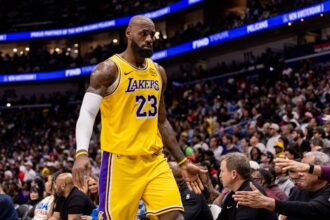
That version showed up in Game 1 against the Houston Rockets. LeBron finished with 19 points, 13 assists, and eight rebounds. He shot 9-15 from the field and 1-2 from three. The numbers tell part of the story. The timing tells the rest. He had eight assists in the first quarter and had 10 by halftime. The priority was clear: Get teammates involved, set rhythm early, and control tempo. Then, when the game tightened, he shifted gears and scored.
This is the evolution. Earlier in his career, LeBron imposed himself physically. Now, he manipulates defenses mentally. He reads coverages before they form, knows where the help is coming from, and exploits it. His full season supports Wright’s claim. LeBron averaged 20.9 points, 6.1 rebounds, and 7.2 assists while shooting 51.5% from the field and 31.7% from three. That came in a reduced role behind Luka Doncic and Austin Reaves.
But once injuries removed both stars, his numbers spiked. In that stretch, he averaged 25.5 points, 11.0 assists, and 6.8 rebounds, shooting 55.7% from the field and 37.5% from three. The responsibility increased, and production followed.
Now compare that to prime Chris Paul. In 2007-08, Paul averaged 21.1 points, 11.6 assists, and 2.7 steals on 48.8% shooting and 36.9% from three and finished second in MVP voting. The next season, he posted 22.8 points, 11.0 assists, and 2.8 steals on over 50.3% shooting and 36.4% from three-point range, finishing fifth in MVP voting.
The similarities are clear. Both control pace and prioritize decision-making. They create high-quality shots for teammates. But the difference is in size and scoring versatility. LeBron still carries a scoring burden Paul never had.
At 41, sustaining this level matters more than the comparison itself. The Lakers need structure and someone to organize possessions in Game 2 and beyond. With Doncic and Reaves out, every possession runs through LeBron.
The challenge now is consistency. Houston has depth and athleticism. Even without Kevin Durant at full strength, they can pressure ball handlers and switch defensively. That puts more pressure on LeBron to maintain control. There is also the physical factor. Heavy minutes add up, and playoff intensity raises the demand on every possession. LeBron has managed that better than anyone in league history, but the margin is thin.
Wright’s comparison works because it focuses on style, not age. LeBron is no longer the fastest or most explosive player on the floor. He does not need to be. LeBron dictates the game through reads and positioning. That is what elite point guards do. That is what Chris Paul did at his peak. Now LeBron is doing it at 41, in Year 23, in the middle of another playoff run.